He Sees You | Understanding Whitetail Vision
Posted 2026-08-27 by
Understanding what whitetails see and how they see it can help you become a better hunter
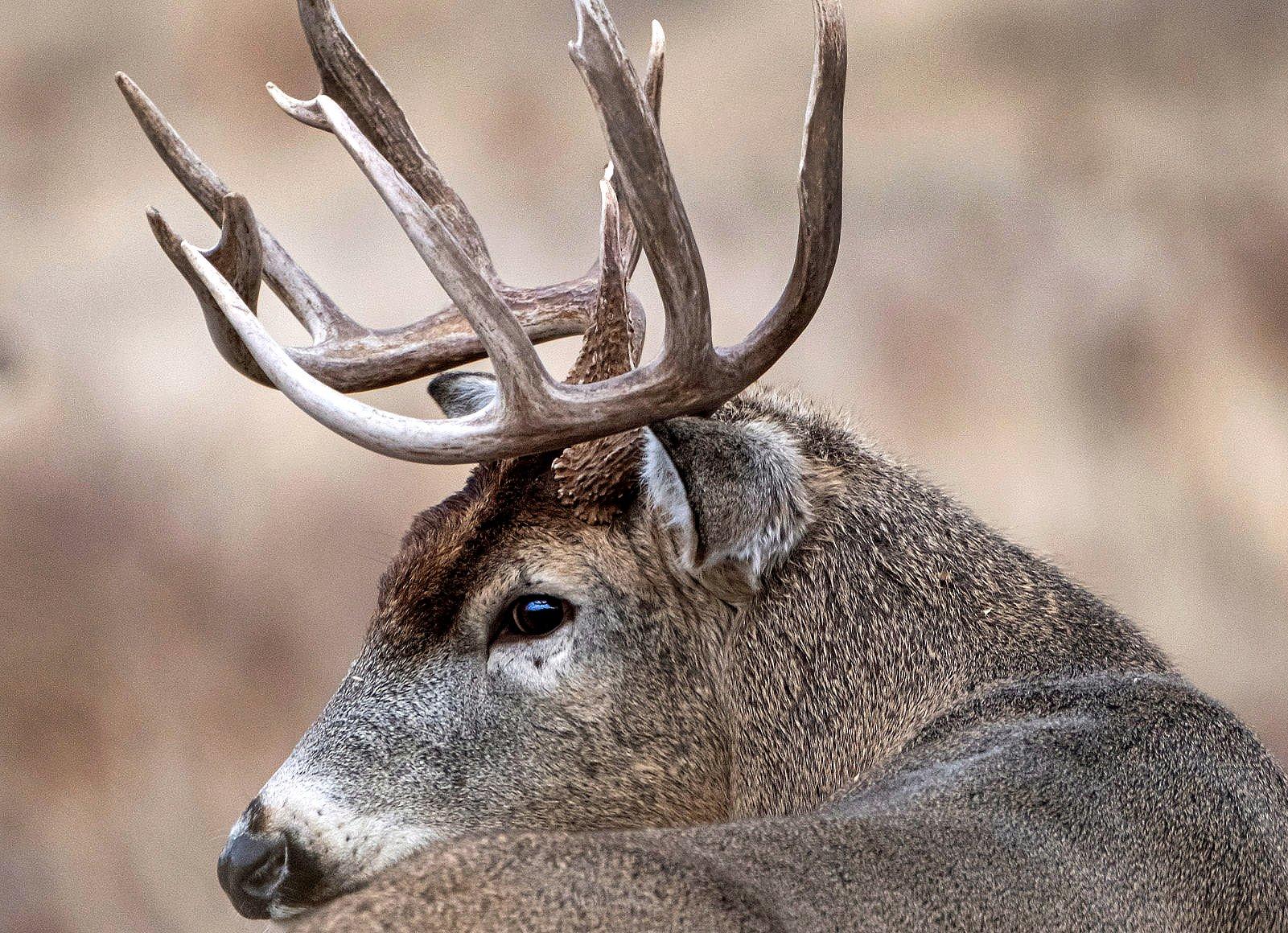
Science shows that deer are not fully colorblind, as some myths suggest. Image by John Hafner
Has a deer ever caught you drawing your bow or raising your gun? If you’ve done any amount of deer hunting, the answer is almost certainly yes. Knowing what deer see and how they see it can boost considerations such as camo selection, crafting better setups, and knowing when and how to move to avoid being detected.
Longtime wildlife biologist Brian Murphy had his sleeves rolled up in some of the earliest deer-vision testing conducted at the University of Georgia in the early 1990s, and he continues to study all things whitetails.
Here are some insights Murphy shared — information you can use to become a more detailed hunter.
WAIT, DEER AREN’T COLOR BLIND?
Maybe you’ve heard or read that deer are completely color blind. Murphy set the record straight.
DON’T MISS: Wisconsin DNR Seeking Volunteers to Teach Hunting Skills
“The allegations that deer are completely color blind are false,” he said. “Their vision is essentially the same as a human who is red-green color blind. Basically, their vision is limited to short- and middle-wavelength colors (blues and greens). That’s why they don’t see reds and oranges the way humans do. To deer, these colors appear dark yellow or brown.”
THE DIFFERENCES BETWEEN DEER VISION AND HUMAN VISION
To truly understand how deer eyeballs differ from a human’s, view things through a scientific lens.
“Mammals have two types of cells in their eyes known as rods and cones,” Murphy said. “Rods are nighttime cells; cones are daytime and color cells. Deer have a higher concentration of rods than humans but a lower concentration of cones. This enhances their nighttime vision but restricts their daytime and color vision.”
Deer pupils open substantially wider than human pupils, giving them nine times the ability of humans to gather light, Murphy said.
“They also have a reflective layer in the back of their eyes called tapetum,” he said. “Its mirror-like properties cause the eyes to appear shiny when light contacts them and allow deer to use the same light twice, whereas humans only get to use it once.
DON’T MISS: Don’t Overlook These 4 Antelope Hunting Details
Murphy said that ultraviolet light also has a bearing on deer vision.
“Human eyes have a protective filter that blocks almost all UV light from entering, which helps us distinguish fine detail,” he said. “In contrast, deer eyes aren’t equipped with a UV filter. Though they see colors in the UV spectrum better than we do, they can’t distinguish fine detail.”
According to Murphy, deer have a 300- to 310-degree field-of-view. In contrast, a human’s FOV falls into the 120-degree neighborhood.
“The difference is in the eye placement,” he said. “A deer’s eyes are located on the sides of its head, which means they have only two blind spots — right in front of their face and directly behind them.”
Nighttime vision and spotting movement are a whitetail’s strong suits.
“People often conclude that deer have better eyesight than humans,” he said. “That’s really not true. They beat us at night and at spotting movements, but they’re poor at identifying three-dimensional objects. That’s why they bob their heads once they’ve spotted a human who isn’t moving. It helps them gain a better dimension of the subject so that they can identify it.”
TAKING IT TO THE WOODS
As mentioned, understanding a whitetail’s vision can help you become a more detailed hunter.
“Applying these scientific facts to hunting can seem confusing, so I’ll translate them into discernible suggestions,” Murphy said. “First, you can shine a blue light on your clothing after dark to check for UV. If it doesn’t shine, you’re fine. If it shines, you are ‘UV-hot.’ And there are products out there that kill UV.”
Because deer see blue and light colors exceptionally well, Murphy suggests avoiding such colors while hunting and scouting.
Check Out Our Latest Camo Pattern: Realtree APX
“Tons of hunters wear blue jeans into the deer woods,” he said. “That’s a detriment to staying undetected since deer see deep into the blue spectrum. Wear camo that blends with your surroundings, and be mindful of every movement you make. Deer are wired to identify sudden movements, so make them fluid, and avoid moving at all when they’re alert.”
As for the best camo to wear? Well, you’ve come to the right place for that.
?fmt=auto&qlt=default&fmt.webp.qlt=65&fmt.png.qlt=73&fmt.jp2.qlt=35&fmt.jpeg.qlt=60)