Giant Bucks on Tiny Properties
Posted 2025-10-08 by
Small suburban woodlots give up big whitetails every season, but hunting these spots is far from easy. An expert shares his advice on mapping, access, deer recovery, and more
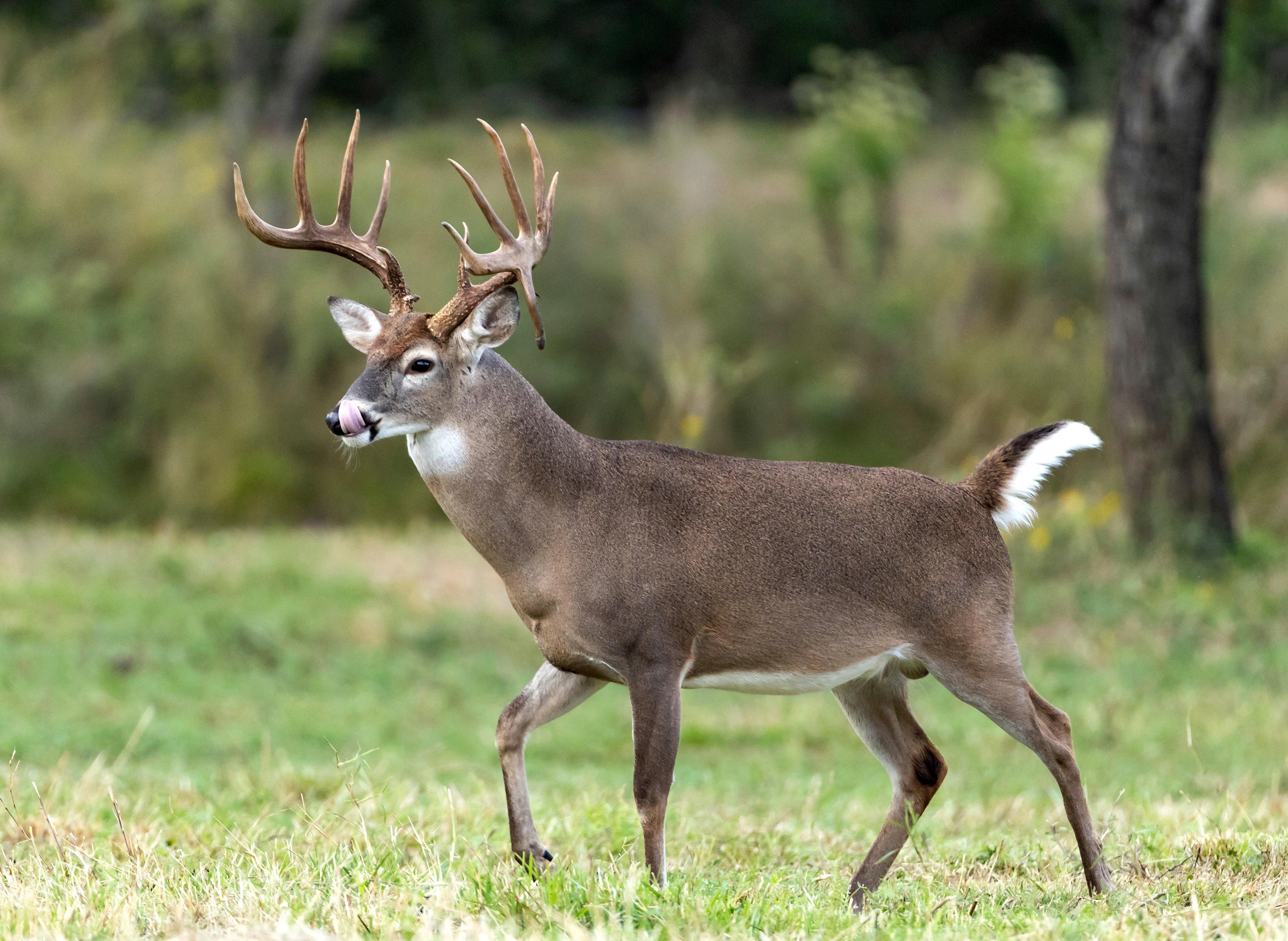
Have you ever thought of deer hunting that wood lot down the street? You could be missing out on some huge opportunities right in your own neighborhood. Image by Dennis Donohue
The unmistakable footfalls of a deer got Jason Whitlow’s attention. Whitlow, a member of the Seek One crew, peered over his shoulder and spotted a world-class buck eating acorns only 20 yards away. How the deer got so close before he noticed it was bewildering, but there the buck was, well within bow range. And it was the deer Whitlow was targeting.
The monster moseyed closer, approaching Whitlow’s 12-yard shooting lane, so the hunter drew his bow. The deer paused behind a branch, and Whitlow was left at full draw for at least 30 seconds, his heart slamming inside his chest.
Suddenly, the monarch spun 180 degrees, quartering away. Whitlow released his arrow, and the 190-inch buck ran a short distance. That all of this unfolded on a 2-acre property is practically unfathomable, but it happened, and you can read the full account here.
DON’T MISS: Bowhunter, Sick with Fever, Climbs 40-Foot Stand and Arrows Giant Buck
The hunt wasn’t just a one-off for Whitlow. He and many other hunters consistently take big bucks on tiny properties. But hunting those spots, particularly in suburban areas, comes with plenty of unique challenges. If you want to try it yourself, these tips will help guide the way.
STAY LEGAL
Some urban settings have special hunting regulations, such as being archery-only. In a few instances, hunting of any sort might be illegal. Some municipalities also have very specific regulations for city-limit hunting, such as that arrows must be shot downward from an elevated position.
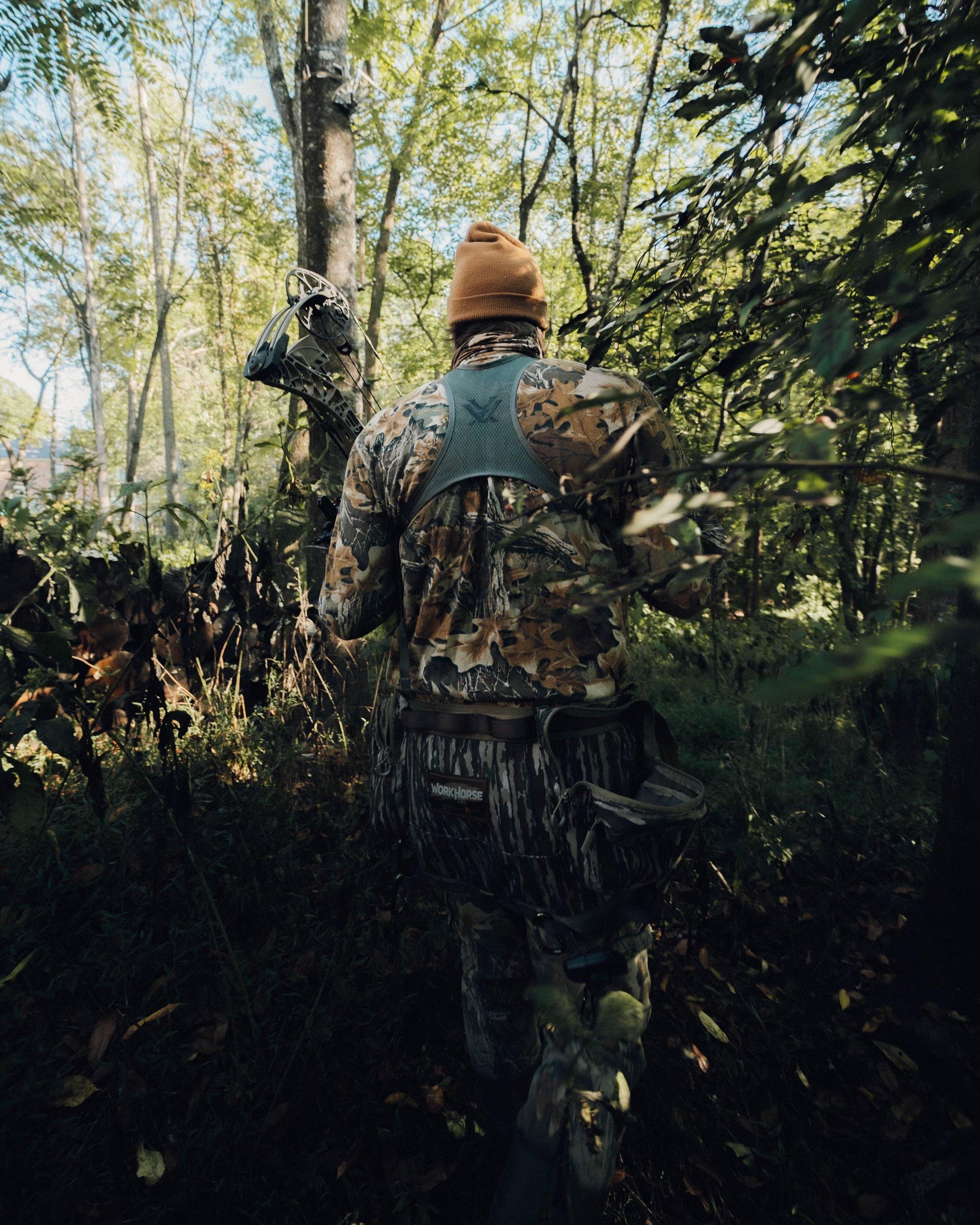
Hunting small woodlots in suburban settings is often limited to archery equipment. Be sure to know the regulations for the area you plan to hunt. Image courtesy of Jason Whitlow
Regardless, you don’t want to get on the wrong side of the law over a deer, so study state and local regulations. Before hunting in city limits, contact the local law enforcement department. Ask if hunting is legal and if any special regulations apply. The department should be able to furnish a copy of city-specific deer-hunting regulations.
MINE FOR THE IDEAL PROPERTY
For most suburban hunters, online mapping is the first step in dialing into a small property with big-buck potential. But what do you look for?
“I spend tons of time during the offseason identifying spots in new areas that I want to hunt,” Whitlow said. “I look for properties that have a creek, river, and terrain. In more rural settings, it’s a good idea to look for small properties that are surrounded by larger properties. The surrounding large-acreage properties might be heavily hunted, but the small property might not be hunted at all, and it could be a great place to intercept a huge buck.
“When I make trips to other states, I also do a lot of door-knocking throughout the day,” he continued. “I usually quit around 6 p.m. when people are settling in and having dinner because I don’t want to bother them. At that time, I switch gears and start driving around in areas that I think could be good. I’m looking for deer from roadways, and sometimes, I’m looking for a specific deer if I know a huge buck is in the neighborhood that I’m scouting. If I find what I’m looking for on a property that I don’t yet have permission to hunt, I get on the app to figure out who owns the property so that I can try to make contact with the landowner the following day.”
DON’T MISS: The Ultimate Guide to Hunting Scrapes
Whitlow explained that if a property doesn’t have any desirable terrain features or food sources, it probably won’t produce a big buck outside of the rut. If you want to peg and pattern a buck before or after the rut when he’s most predictable, you’ll want to focus on properties with food and or terrain that both funnels deer movements and provides discreet, low-impact access. More on access later.
LEARN THE NEIGHBORHOOD
Before you commit to hunting on a small property, you must understand that a poor shot could severely complicate the recovery of your deer. A wounded animal can go a long way and will almost certainly end up on someone else’s property if the lines are close. When you’re only hunting a few acres, even a double-lung hit doesn’t guarantee that your buck will tip over where you have permission to retrieve it.
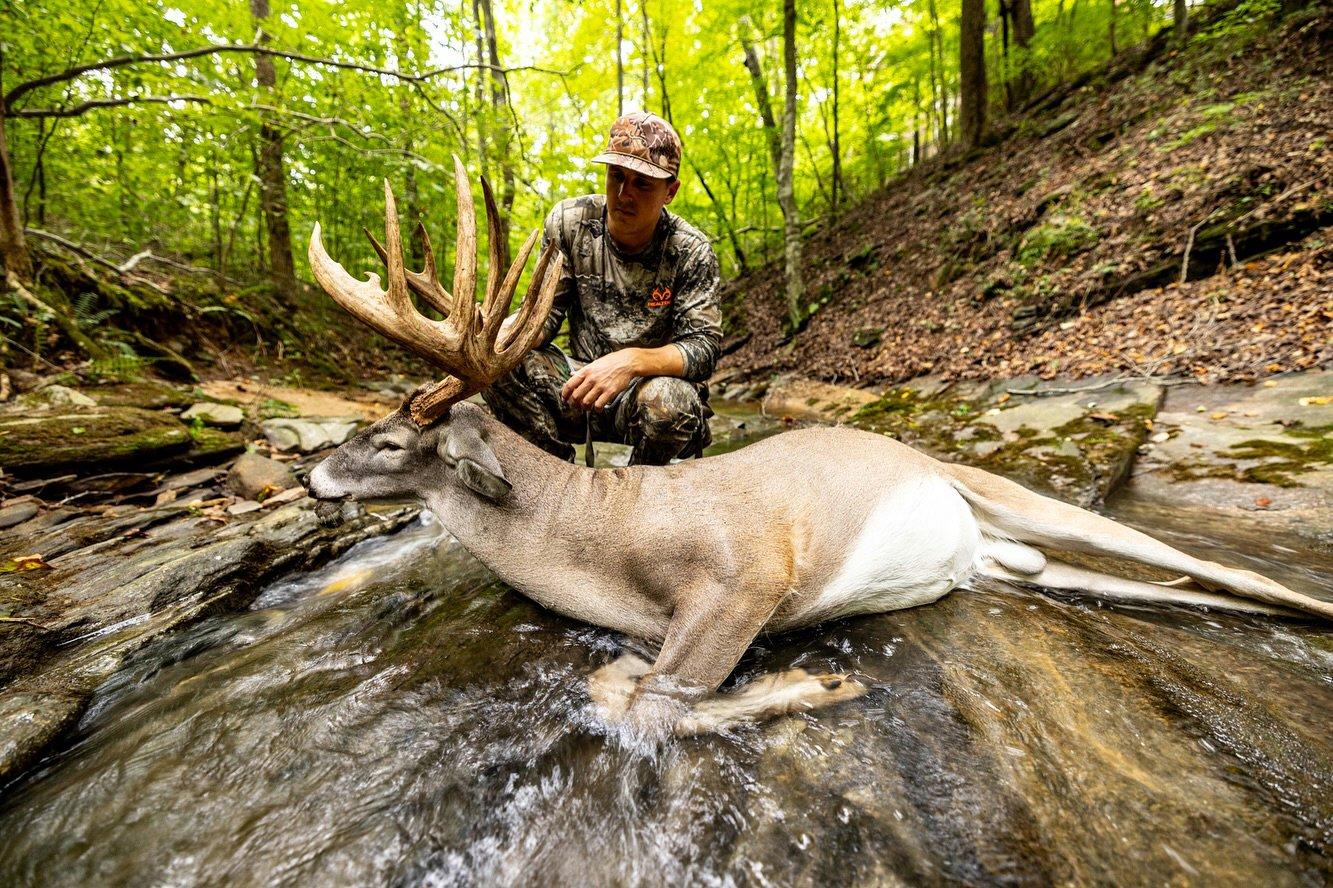
Before hunting on a tiny property, consider how you will retrieve a buck if he runs onto an adjacent property. Get to know the neighboring landowners and try to secure permission in advance. Image courtesy of Lee Ellis
“It doesn’t matter if you’re hunting inside of the city limits, in farm country, or in the mountains,” Whitlow said. “Wherever the small property is located, you must ask yourself, ‘How am I going to recover a buck if he runs off the property I’m hunting?’ Personally, I find ways to get in touch with adjacent landowners and try to create relationships before the hunting season. I explain which property I’m hunting, and then I ask those neighboring landowners if it would be OK to recover a deer on their property if I hit one and it leaves the property I’m hunting.
“If I feel any pushback, it’s possible that I might not hunt the property or at least hold off for a very special animal that I feel is worth the risk,” he continued. “In many instances, you’ll be able to retrieve the deer one way or another, especially if you involve a game warden and he or she sees that you were hunting legally. But it smooths things out to have conversations with neighbors before a situation unfolds. You don’t want to burn bridges if you don’t have to.”
PRESSURE AND ACCESS
Movement patterns for small properties are generally very fragile as soon as hunting pressure is introduced. In any given fall, while hunting in three different states, Whitlow hunts only about 20 days for bucks. He relies heavily on his wireless trail cameras to inform him when to hunt so that he isn’t overly pressuring his target deer.
“In states where baiting is legal,” he said, “I wait until a buck reveals a pattern. I don’t hunt a spot until I start seeing some daylight activity on my cell cameras. Or, if I’ve been seeing a lot of nighttime buck activity on the cameras and a cold front is coming in, I’ll hunt.
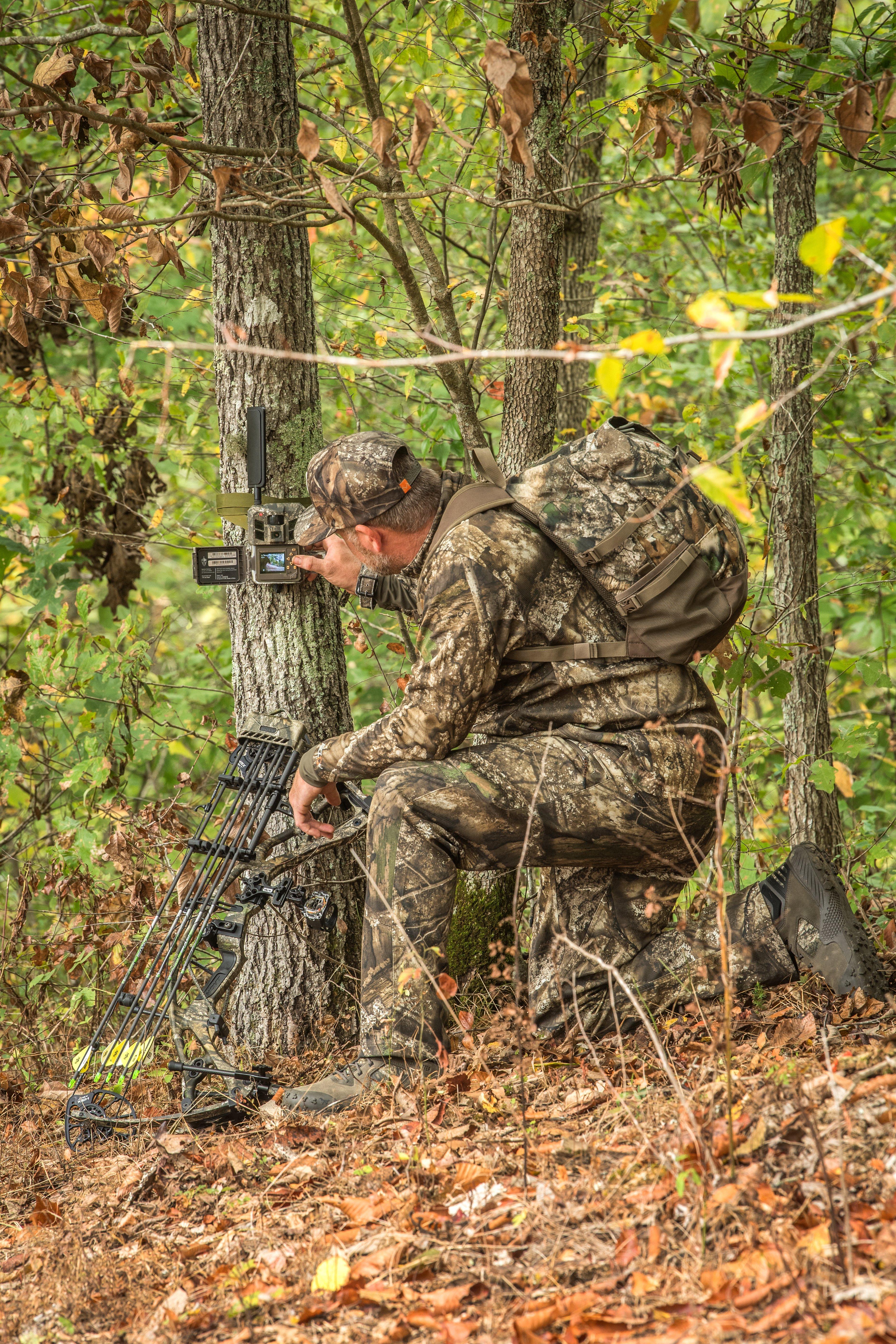
If you like to hunt as many days as possible, small properties might not be for you. The strategy is to wait until a buck reveals a pattern on your trail camera, then strike. Image by Bill Konway
“In states where baiting is illegal, I still look for patterns, but without bait, a buck can easily travel 10 yards behind your camera, and you’ll never know he was there,” he added. “If I have a good feeling that a buck I want to kill is using the property, I’ll hunt, especially if a weather front is coming in.
Check Out Our Latest Camo Pattern: Realtree APX
“You can’t hunt a small property 50 times in a year because you’ll burn it out,” Whitlow added. “You have to be very intentional about when you hunt. If you aren’t, the hunters up the road who are intentional will kill the big bucks because they won’t be going in and out every single day and pressuring the deer.”
In addition to limiting pressure, Whitlow said that mastering access is one of the chief principles of small-property hunting. How you access a property can completely alter your odds for success.
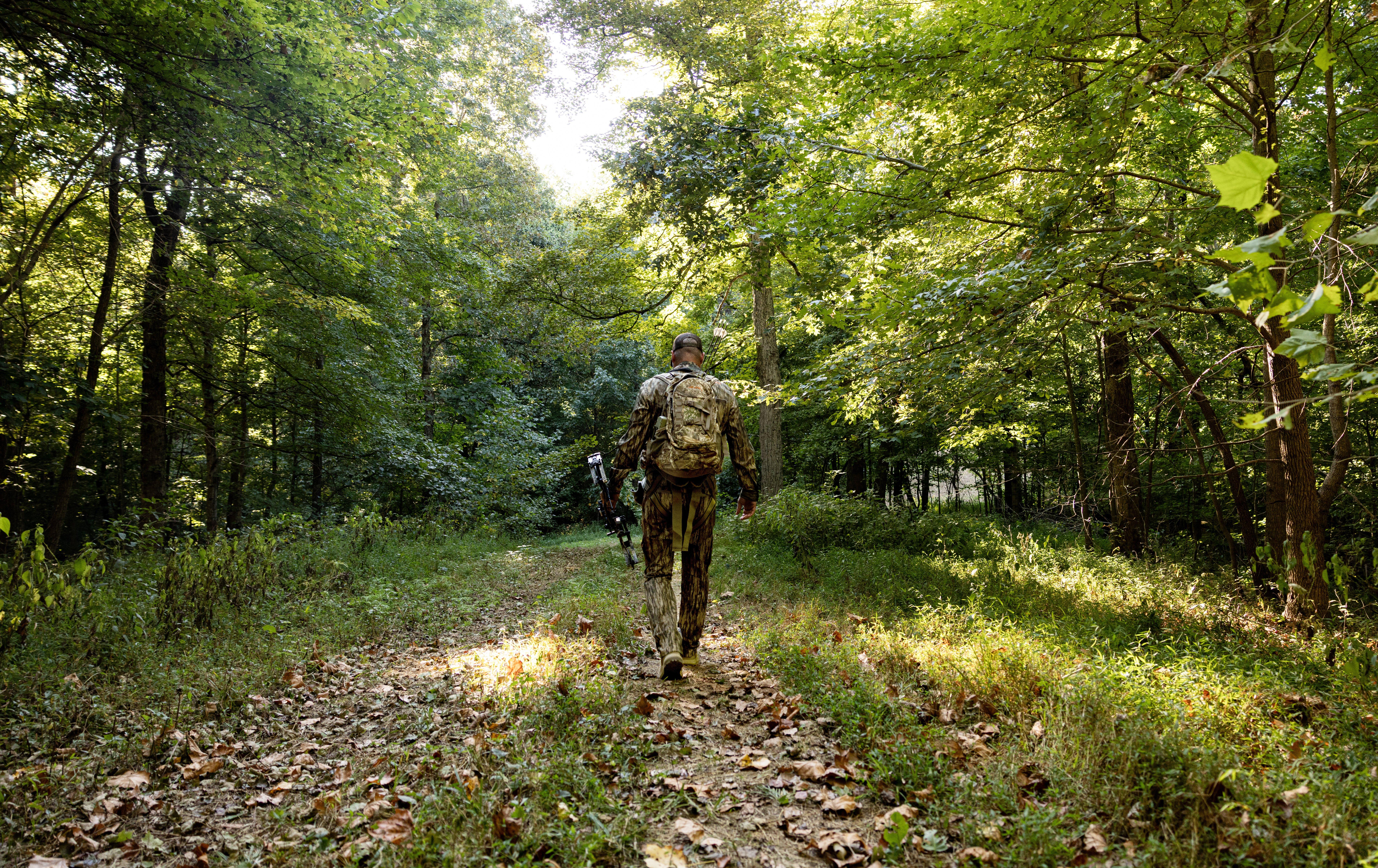
Small properties are fragile in that deer will quickly sense changes in pressure. Be detailed and discreet, and also limit how often you hunt to avoid burning out the property. Realtree image
“A lot of times, access is the biggest issue with small properties,” he continued. “The access is terrible on some of the properties that I hunt, so I minimize how much I’m on those properties, for starters. Then, I look for more discreet ways to access my stands. Water is often the best way. On one property I hunt, my route to the stand is mostly through a creek. If water isn’t an option, I wear rubber boots and douse them with a scent-eliminating spray. It helps minimize my ground scent. I also avoid walking directly on deer trails.”
The biggest bucks live and grow old on properties where they aren’t pressured and where they feel safe. To effectively hunt those properties, you must do everything possible to maintain the calm. “The less you do on a small property, the better off you’ll be,” Whitlow warned. “In 2023, I killed three bucks at or over 150 inches, and I hunted for less than 10 days.”


?fmt=auto&qlt=default&fmt.webp.qlt=65&fmt.png.qlt=73&fmt.jp2.qlt=35&fmt.jpeg.qlt=60)