The Ultimate Guide to Hunting Scrapes
Posted 2025-10-03 by
Blending the science of why deer use scrapes with the art of a good setup is an effective way to tag a big pre-rut buck this month
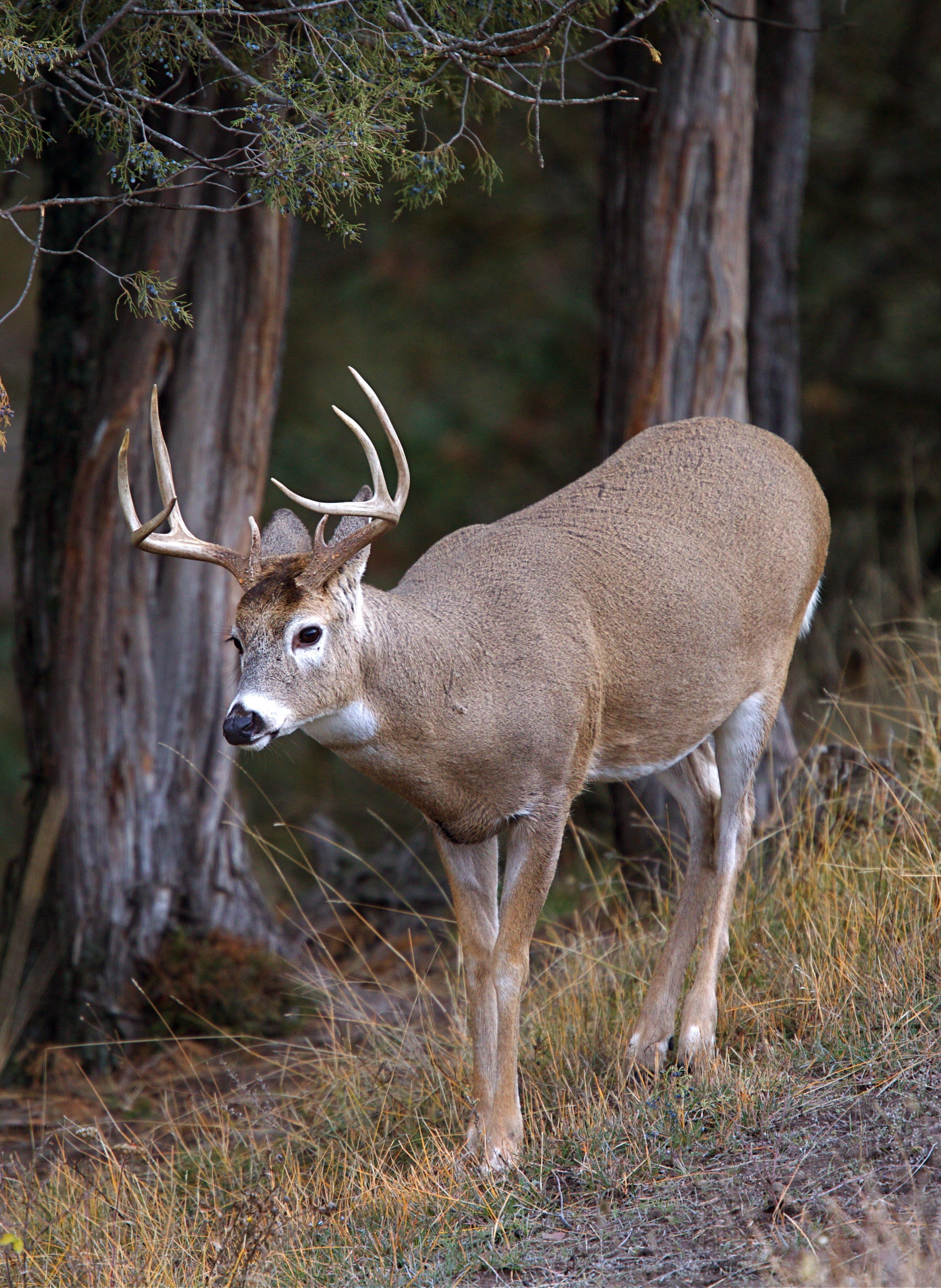
Bucks use scrapes to establish social hierarchy during the breeding season. (Photo by Tom Reichner)
Big tracks are nice to find, and a shredded cedar tree as thick as your calf revs your motor. But nothing fires up a deer hunter quite like a truck-hood-sized patch of freshly pawed dirt with a snapped branch dangling above it like a broken hood ornament. The mere sight of a big scrape can cause you to holler, “All right!” as you rush in and set a stand nearby — and then maybe hunt for a week and not see a buck.
Their allure to hunters aside, buck scrapes are the most complex and misunderstood rut sign in the woods. Here’s how to read and interpret scrapes correctly, and how to work the sign into your strategy.
WHY BUCKS SCRAPE
While science shows that whitetail bucks sometimes make scrapes in the summer, the serious scraping phase occurs from late October through early November in most regions (a month or so later in some Deep South states). Bucks paw scrapes and work overhanging “licking branches” to serve as both olfactory and visual signals to other deer in the area. The unique scent an individual buck leaves at a scrape is a clear message of his presence and dominance. When a buck runs across a rival's scrape, he may mark it with his own scent to challenge the first buck. Multiple bucks may then come to a scrape and pile on their scent. Biologists believe such a display of marking and aggression is a key element in the buck social hierarchy of a herd during the breeding season.
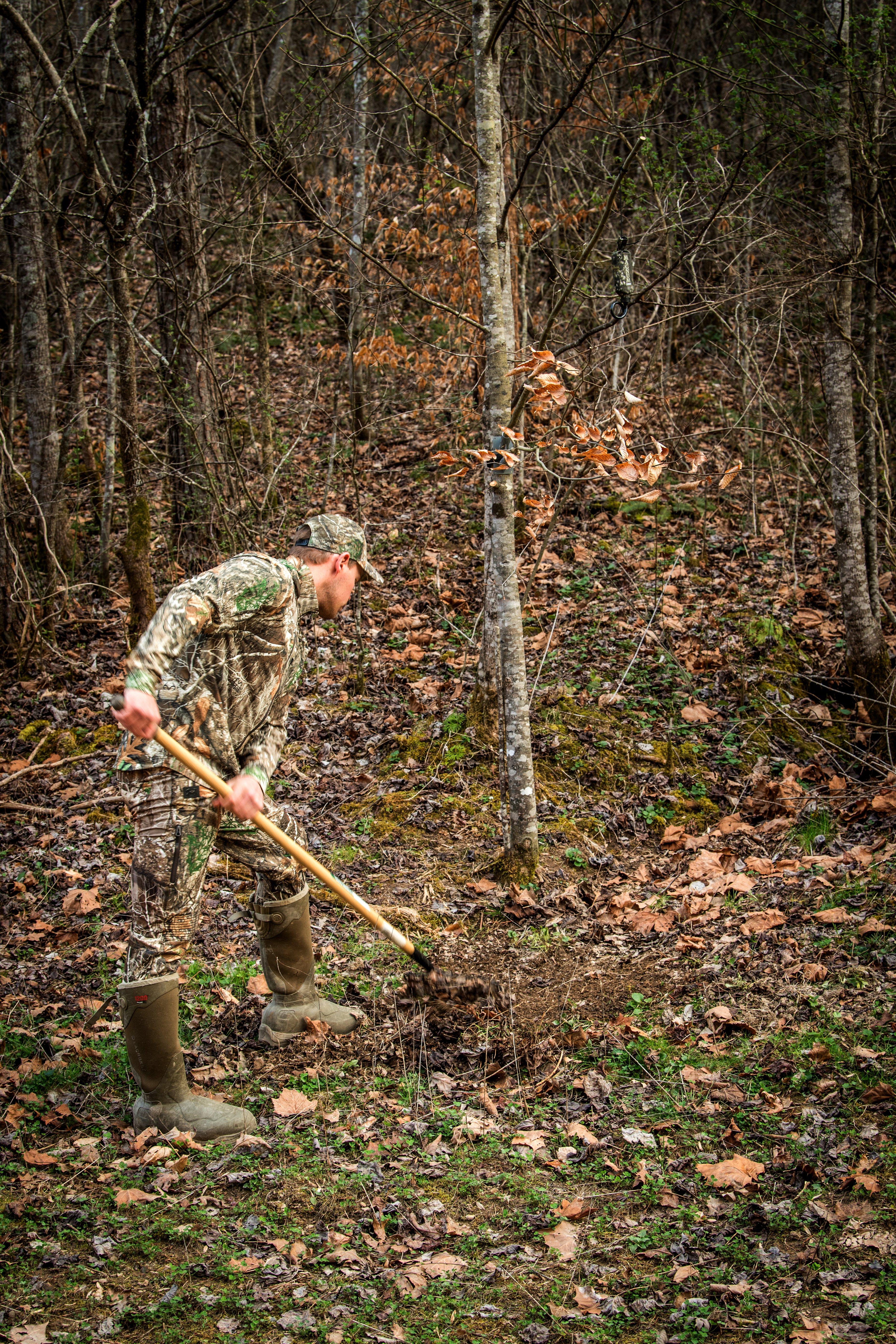
The more you entice a buck back to check his scrape, the more likely you’ll have the chance to see him in shooting light. (Photo by Wildlife Research Center)
Does are curious animals, and they readily visit scrapes to sniff out clues left by bucks. Scrapes signal to does that a buck (or bucks) is working the area and ready to breed. Some scientists believe that the powerful scent deposited by bucks in a scrape help to prime a doe's reproductive cycle and bring her into estrus. A doe in heat will readily urinate in a scrape to alert bucks that she is receptive.
THE SCRAPING RITUAL
When a buck makes a scrape, it’s a multi-step ritual that involves various glands and scents. He typically begins by licking, chewing, and rubbing his forehead and eyes on an overhanging limb that’s 2 to 5 feet off the ground. The licking branch is often snapped and always saturated with a buck's saliva and preorbital scent. The buck then paws the ground beneath the branch, flinging away leaves and debris to expose fresh dirt. The coupe de grace is “rub-urination,” when a buck rubs his hind legs together and urinates over his tarsal glands. The urine and musky glandular scent mix and drip into the pawed soil, creating a strong, individual scent signature.
Don’t Miss: 3 Sneaker Bucks and How to Handle Them
A buck that goes to all that work to open a scrape may never return to it, and other deer may snub it as well. It becomes what I call a “random” or “barren” scrape, and it has little to no value to you. You need to keep looking for what I call a “hub” scrape, one that is located in a high-traffic deer area and visited by multiple deer. Research shows that every buck that hits a hub, or primary, scrape will chew and rub the lick branch, and half the bucks will paw the dirt and/or rub-urinate in it. Many does will smell and interact with the branch, and few will paw the dirt and pee as well. All this activity makes a scrape bigger, fresher, and muskier, and as explained below, that’s one to watch.
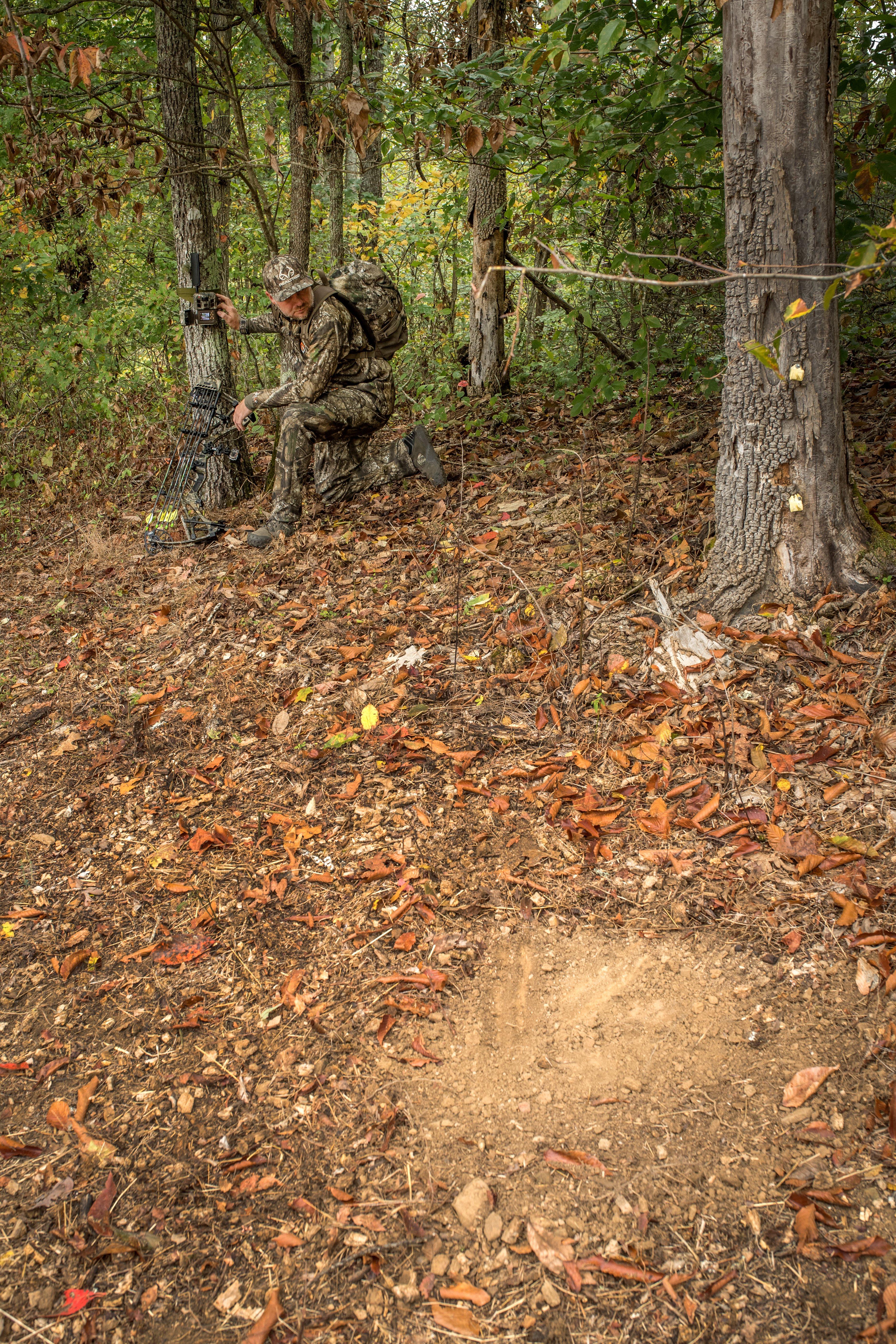
Monitor the freshest and most active-looking scrapes for several days to a week, with both ground scouting and trail cameras. (Photo by Bill Konway)
SCRAPE-HUNTING STRATEGIES
Focus on Hot Scrapes: Researchers at the University of Georgia conducted a two-year scrape study on a 3,500-acre low-fence property in the northern part of the state where the rut peaks in mid-November, as it does in most regions. The land was managed for a healthy whitetail population, and the age structure of the bucks was good. Since the bucks were wild and hunted, this research carries a lot of weight with me.
Aiming trail cameras at every scrape they could find, the researchers got reams of videotape and images of deer interacting at scrapes. One major finding: while multiple bucks of all ages (in one case 13 different animals) might eagerly paw one set of scrapes, similar scrapes only 200 or 300 yards away might go stone cold at any time. This explains much of our futility in the past. We found a good-looking scrape, hung a stand and hunted sign that the deer had abandoned for whatever reason.
As mentioned, don’t waste your time on unproductive “barren” scrapes anymore. When the serious scraping phase begins, cover ground and find as many pawed areas as you can. Monitor the freshest and most active-looking scrapes for several days to a week, with both ground scouting and trail cameras, and hone in on the ridge or bottom where bucks continue to move and dig more scrapes. Look for ovals that grow bigger and are pawed to bare dirt, and have chewed lick twigs above. Look for fresh rubs and big tracks nearby. If the bucks are rutting hot and heavy, you’ll smell them. Play the wind, set a stand and you’ve got a good shot. If you get lucky and get a trail camera image of a giant at one of those hot scrapes, you’ve got a great shot. Move in and hunt him tomorrow and for the next several days.
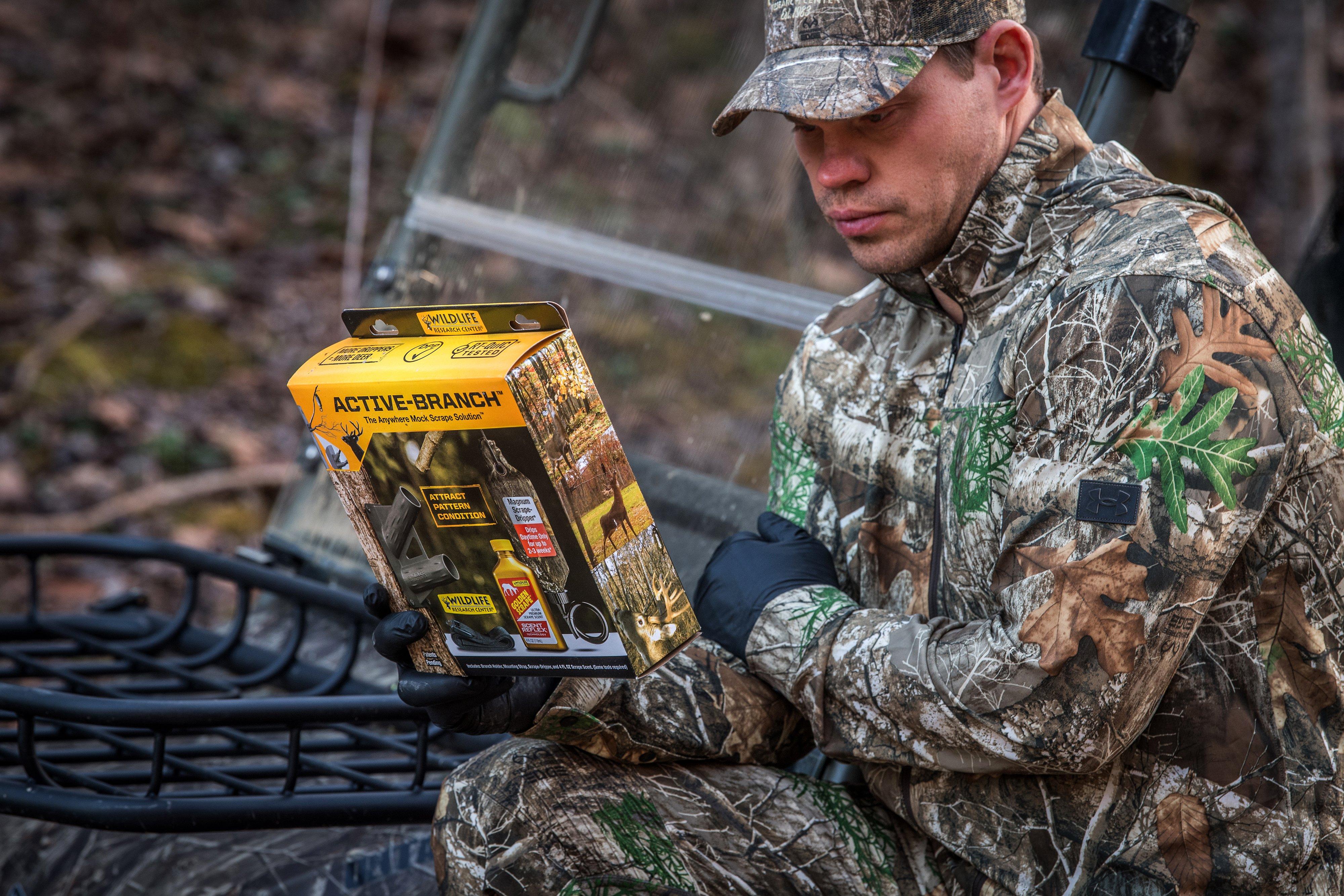
Juice a scrape you’re hunting with a good dose of tarsal to signal a challenge to other bucks in the area. (Photo by Wildlife Research Center)
Scout for Junction Scrapes: Been watching scrapes on field edges and in logging roads, or in semi-open woods or bottoms? Well, forget those and heed the advice of deer scientist and hard-core hunter Dr. Mickey Hellickson. Having conducted trail-camera surveys from Iowa to Texas for decades, he’s charted, cross-referenced and analyzed tens of thousands of buck photos around scrapes. Hellickson’s data clearly show two terrains where older-age bucks move and scrape the most in the pre-rut: the intersections of two or more drainages, and the junction of two or more timbered fingers deep in the woods. “The thicker the cover in and around either of these intersections, the better,” says Hellickson.
Check aerials and maps on your app, and scout for terrain junctions like that where you hunt. Some draws and ditches in the woods will be well-defined and evident, while others, like two or three shallow swales coming together in a grass field, will be more subtle. Hunt well downwind of an intersection with thick cover and the freshest scrapes. Pack a lunch, sit all day, and watch for a giant.
Don’t Miss: 5 Reasons Why Target Bucks Vanish
Hunt Scrapes in the Afternoon: The aforementioned Georgia study had two major and ominous findings for hunters: data revealed that 85 percent of all scraping occurs at night, and a 3½-year-old or older buck is rarely observed at a scrape. Take that at face value, and you’d be inclined to never hunt scrapes again. But not so fast, read between the lines for some useful data.
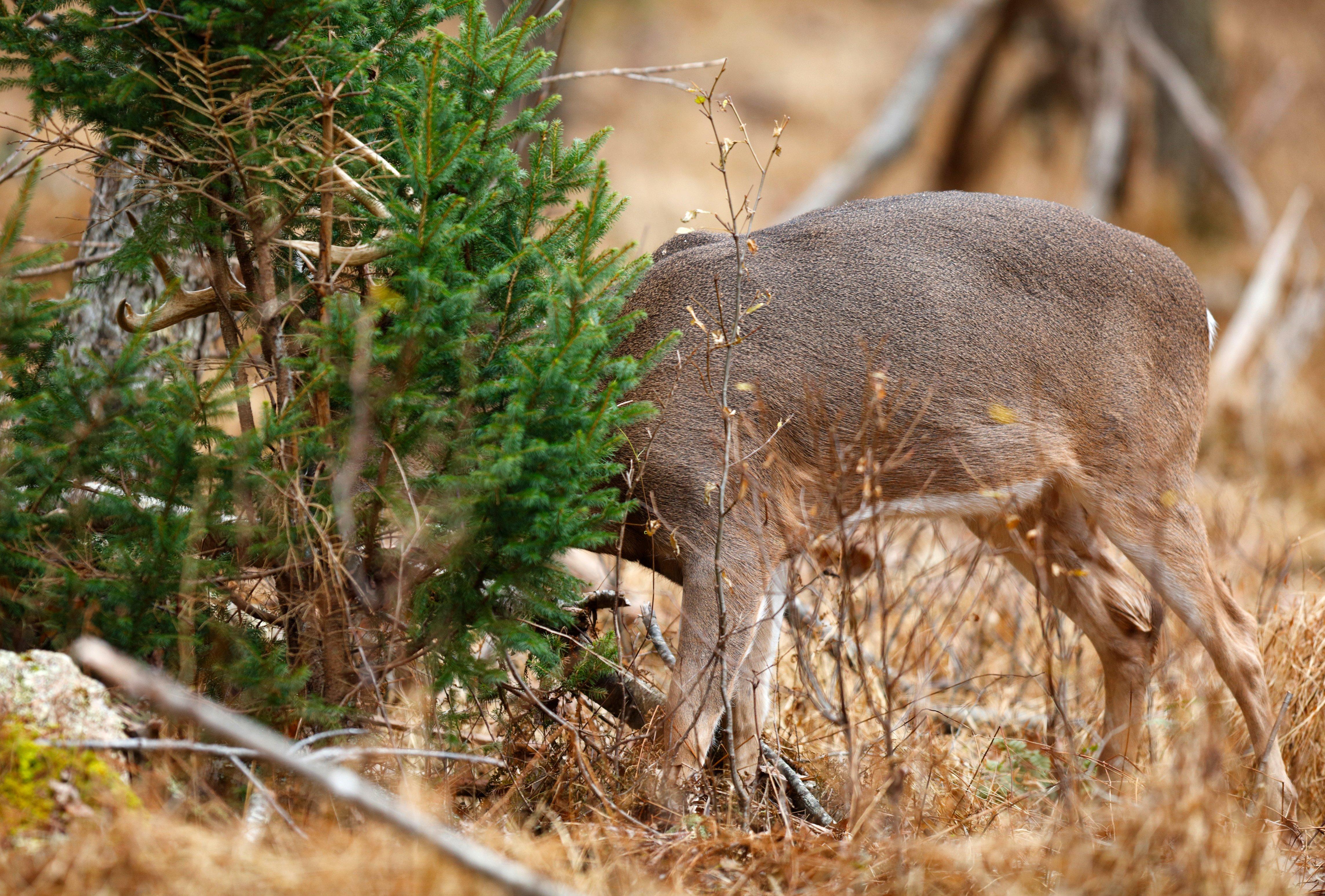
Junction scrapes, left where several trails or blocks of cover intersect, are usually the most productive ones to hunt. (Photo by Paul Tessier)
When analyzing the time codes on their trail-cam images and video reels, the researchers noticed that a flurry of heavy scraping occurs right at or just after dusk on many November days. Hmm…so scout for a doe trail, draw, thin ridge or the like that connects a thick bedding area with a food source, like corn, beans, or acorns. The more scrapes along that trail or in that travel corridor the better. Set up 100 to 200 yards or farther off the feed and at least halfway back toward bedding cover. A big deer might pop out of the cover at dusk and work a couple of scrapes near his bed before moving out toward a feeding spot. Perched back in the cover, you might pull an ambush in those last glimmering minutes of legal shooting time.
Think Downwind: During the two Novembers of the Georgia study, only a couple 3½-year-old bucks were recorded at any of the scrapes, and no fully mature bucks were seen at the dirt. That’s fascinating, especially when you consider that hunters killed several 4½-year-old deer within a few hundred yards of camera-rigged scrapes. The researchers surmised that the old bucks were not only nocturnal, but they also they checked the scrapes from well downwind and out of camera range. But the mere fact that the bucks were moving in shooting light and in the vicinity of the scrapes gives us hope. Again, hunt on a trail or funnel in cover and 100 yards or farther downwind of a heavily scraped area; you might get lucky and catch a big boy moving in the first or last 10 minutes of shooting light one day.
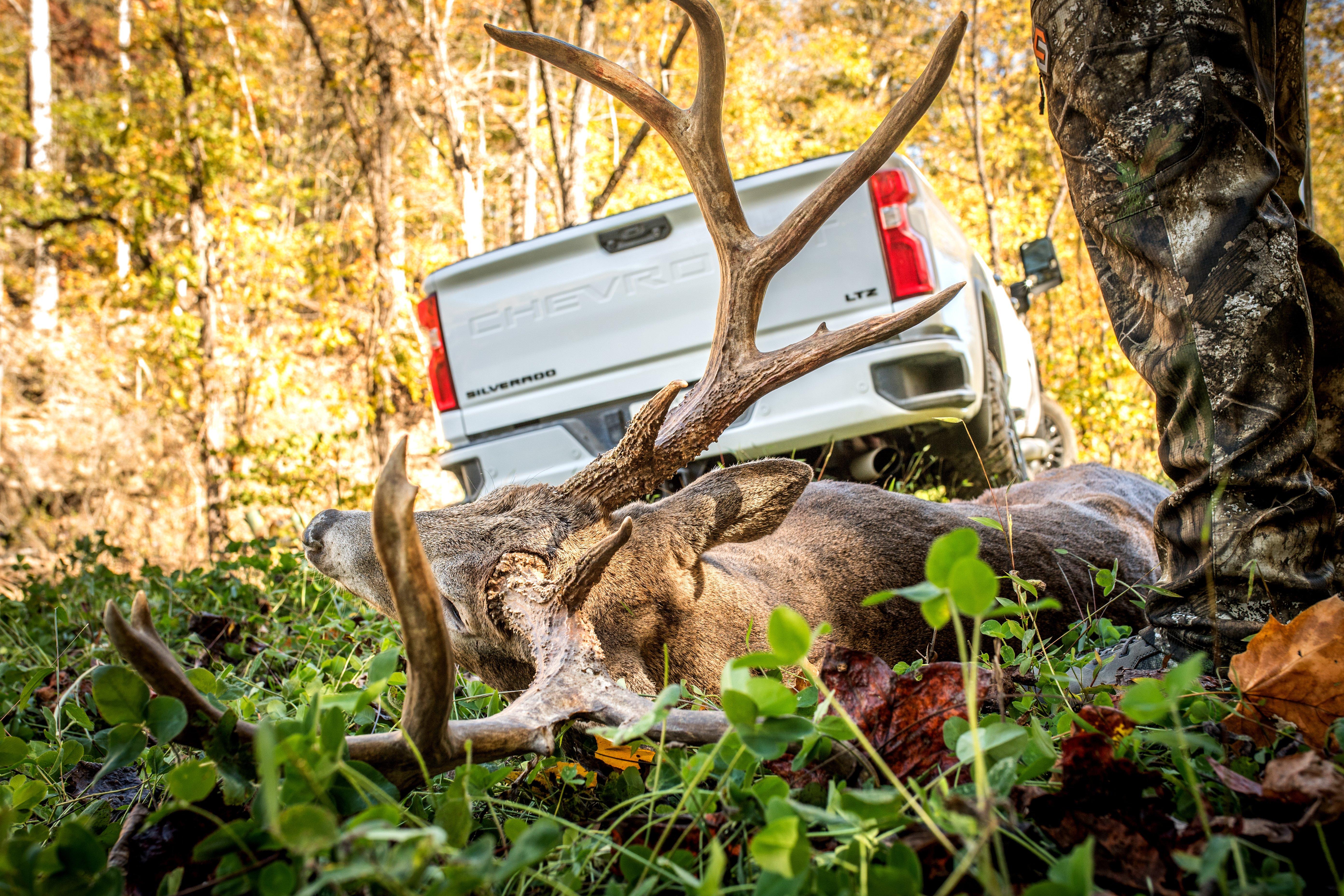
It’s believed that many mature bucks scent-check scrapes from well downwind. Setup your ambushes accordingly. (Photo by Bill Konway)
Stink the Dirt: When he was head honcho of the University of Georgia’s Deer Lab, Dr. Karl Miller conducted a study of the whitetail deer’s tarsal gland. His investigation showed that as the rut approaches, the wet, dark hair ball on a buck’s hind legs becomes a wick for myriad bacteria. These microorganisms, along with gland secretions and urine, cause the hocks to stink and emit a buck’s individual odor that advertises his dominance and breeding status to other bucks and does.
For us hunters, here is the takeaway: It never hurts to juice a scrape you’re hunting with a good dose of tarsal to create the ruse of a rival buck. Miller, another biologist who is a hard-core hunter, said, “By placing tarsal from a mature buck into the scrape of another buck, you signal a challenge. If the buck thinks another buck is trying to invade his turf, he may return to the scrape more often.” Keep juicing a scrape every day, and dump in a bit of hot-doe scent too. The more you entice a buck back to check his scrape, the better chance you have to one day see him in shooting light.”