How to Deer Hunt a Heavy Acorn Crop
Posted 2025-09-09 by
Abundant mast is great for the deer herd and wildlife in general, but it can make hunting tough
It’s early September as I work on this, and in my part of the world, it looks as though we have a mixed mast crop for this fall. August squirrel hunts showed an abundant hickory crop, but glassing into the canopies of various oaks has revealed some limbs hanging heavy with acorns while others seem completely barren.
A few white oak acorns are beginning to hit the ground, and the nuts will really be dropping in another couple of weeks. A spotty mast crop, like the one we seem to have in this area this year, can be advantageous for deer hunters. Fewer productive trees mean fewer places for deer to feed, which means movement is concentrated and predictable. Hopefully we don’t need to explain why that’s helpful to a deer hunter.
But mast crops can vary greatly by region, and some areas are bound to have heavier crops than others. I live in a heavily forested area of Kentucky, and in country like that a big mast crop can seriously affect deer movement for the entirety of the season. In fact, many states that track such things show marked harvest declines during big mast crop years — not because the deer aren’t there, but because they become more difficult to hunt.
Two seasons ago, we had a bumper acorn crop that really seemed to keep deer in the woods, and plenty of whitetail hunters in the eastern United States will experience the same thing, if not this season then in some season to come. As a hunter, particularly a bowhunter, how can you adapt your tactics to hunt feeding whitetails when the deer seem to be feeding just about everywhere trees grow? In my experience, which includes 30-plus seasons of hunting oak-hickory forest, you still have to learn to narrow things down as best you can. Here’s what I’ve learned.
Don’t Miss: The Best Days to Deer Hunt in 2025
BIG TIMBER HUNTING IS TOUGH
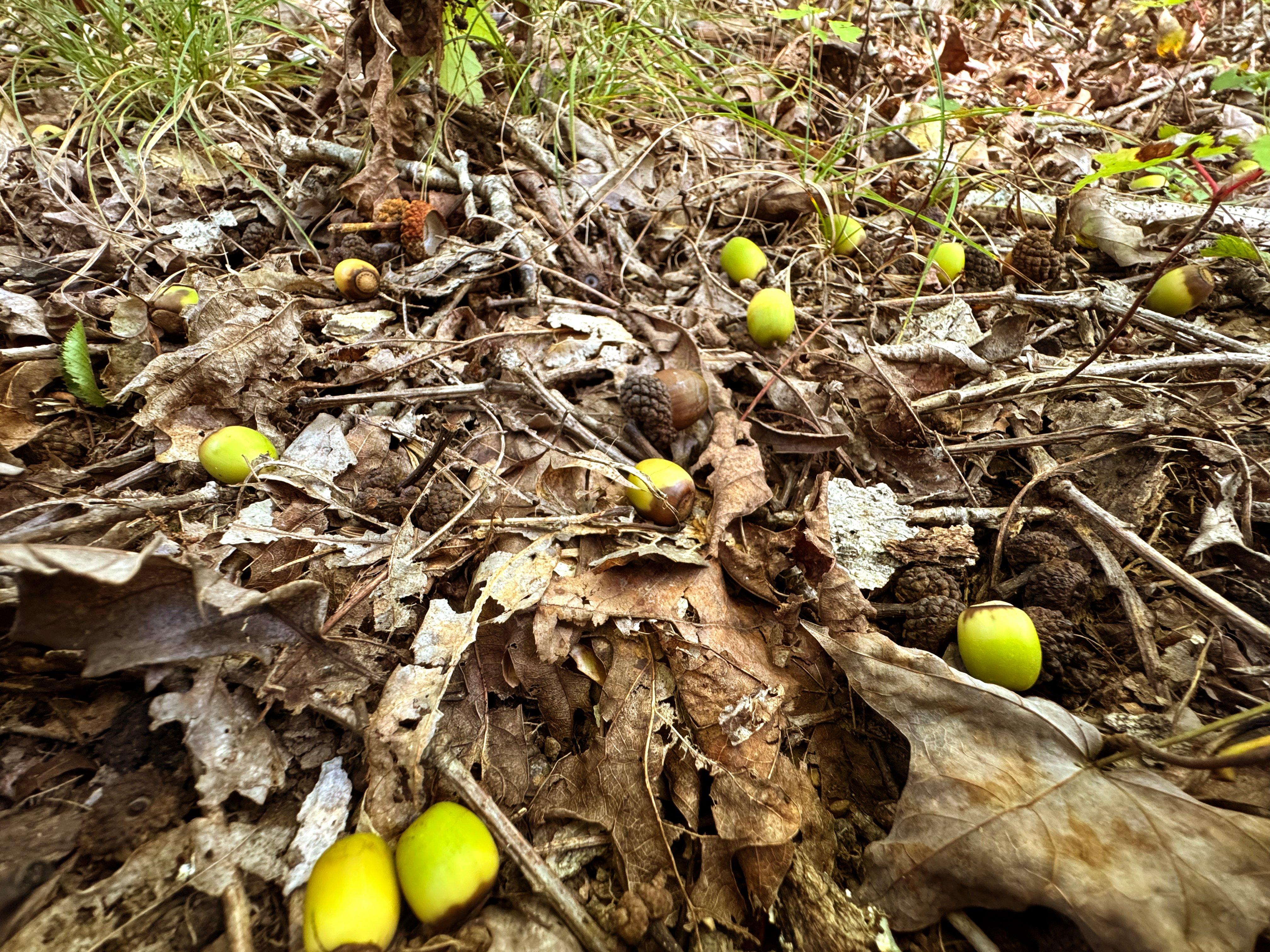
Wildlife of all kinds benefit from a bumper mast crop, but it doesn’t make hunting easy. Image by Bill Konway.
When I was a young bowhunter, one of my go-to tactics during mid-season was to walk ridges, from one white oak to the next, looking for upturned leaves and deer droppings, and then hunting from a climbing stand after I found it. I shot some does and little bucks that way, and the autumn aesthetics were always nice. But the deer action was frequently disappointing. This is a fun, old-school way to hunt, but it’s not very effective for shooting mature bucks because it’s almost impossible to maintain the element of surprise. Deer will often bed right next to a productive tree, where it’s impossible not to spook them. And any time you’re spooking deer, the odds of killing a big buck plummet.
Even if you don’t bump a deer, finding sign under a white oak that was left the previous day is no guarantee that the deer will return the next day. When there are lots of options, deer might only focus on a particular tree for a day or two before moving on to the next one.
This is disappointing advice, I know. But sometimes in hunting, ruling out what doesn’t work is the first step in finding a strategy that will work.
Don’t Miss: 10 Tips for Better Bow Stands
TAKE ADVANTAGE OF NATURE’S BAIT
Yes, deer love acorns — but it’s important to remember that they don’t feed on them exclusively, even when the mast is heavy. I actually like to think of oaks as nature’s bait pile. In the early season, a field full of green soybeans might be the ultimate feeding destination for area deer, but a corn pile placed strategically (and legally) between the bedding cover and beans provides an advantageous ambush site for a bowhunter.
One thing a heavy mast crop absolutely will do is pull deer off of a corn pile. Now, I’ve never eaten much dry shelled corn myself, or one acorn, but I am convinced that deer crave acorns in part because they’re a carbohydrate-rich treat, same as corn (though acorns have many more nutritional benefits than that). When those treats are raining from every other tree, the shelled corn on the ground becomes less attractive.
How does that rambling on about corn and acorns help you as a hunter? Well, think first about other potential primary food sources in your area, especially green stuff. This time of year, green browse is beginning to fade, and that makes hayfields planted in alfalfa and clover, as well as food plots and remaining green soybeans, especially attractive to deer. My absolute favorite oaks to hunt, then, are those towering ones left in old fencerows and on field edges. It’s not that trees like that necessarily produce more acorns than those in the woods, but if they are dropping, deer flock to them, and it’s far easier to hunt one productive tree that you can see from a distance than a ridge covered in dozens of productive trees.
BE PATIENT; IT DOESN’T LAST ALL SEASON
For squirrels, turkeys, the deer herd, and all sorts of other critters, there are many benefits to a heavy mast crop. Several deer biologists have explained to me that during heavy mast years, deer are able to put on extra fat reserves early in fall, which means they head into the rut in peak physical condition. That often results in an earlier, more pronounced, and more productive rut event. Plus, it makes those deer that you are able to shoot really fatty and delicious to eat.
But white oak acorns begin germinating not long after they hit the ground, and they lose much of their appeal to deer not long after that. You’ll start seeing deer in fields and on your corn piles again, and that’s a good sign that patterns are shifting away from the hardwoods. If you’re after a particular buck that seems to disappear when the acorns start falling, the best play, rather than go stomping through the woods to find him, is often to just be patient, hunt the fringes and wait until he appears again on your trail cameras.
Don’t Miss: 6 Facts You Should Know about EHD
HUNT THE LATE-SEASON REDS
White oaks get most of the attention from deer and hunters early in fall, but my favorite acorn pattern — the one that’s helped me shoot the most deer — is to focus on red oaks in the late season. Various red oak species don’t germinate until the next spring. Although they seem to be less preferred by deer than white oak acorns when both are available, there’s no doubt deer will scarf down red oak acorns later in the season, when their options are more limited.
Big mast-producing red oaks aren’t as abundant as white oaks in my area. But many of the best trees are found in those old fencerows and along the field edges that I alluded to earlier, making them even more productive for late-season hunting. And the productive window of time to hunt a red oak seems to be longer than it is under a white oak, perhaps because the acorns are palatable for longer. If you’re hunting big-woods country and can’t use bait, there’s probably no better place to hang a cell cam in the late season than over a towering red oak. When you see deer hitting it, make your move in a climber, saddle, quiet lock-on, or whatever mobile setup you have.
It’s still not easy, but in a hot-and-heavy acorn year, you have to capitalize on any advantage you can get.