10 Tips for Better Bow Stands
Posted 2025-08-25 by
Follow this approach to make sure your stands are in perfect position to arrow a buck this fall
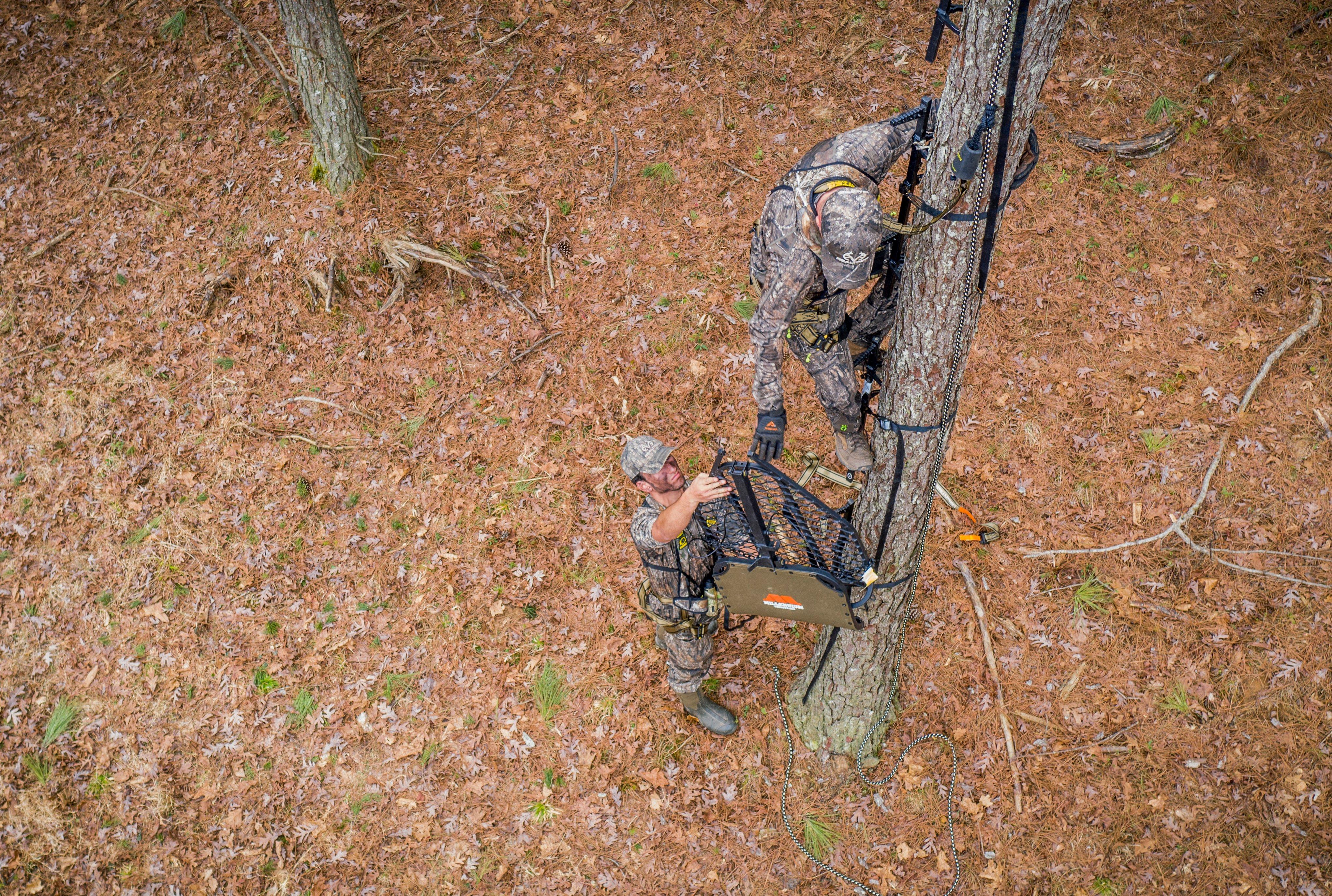
For morning hunts, set stands to face to the northwest or south. Position evening stands so you’re looking northeast to south. That will hide you in shadows. Image by Realtree Media.
If bowhunting whitetails is not a game of inches, surely it is one of feet. You can do some great scouting and find a killer spot ripped with buck sign, but if you move in with a stand and set it too low or high, or angled a foot or two on the wrong side of a tree, you are probably not going to get a good shot at the buck you’re after. This plan will help fine-tune your tree stand placement.
STEALTH ENTRY
At your truck, spray your camo and boots with Scent Killer. With rope or bungees, batten down the stand, ladder steps and all your gear in a tight backpack and bundles so you don’t clang and bang on the walk in to a stand location. Study your mapping app, and chart a downwind path that avoids funnels, cover pockets and other high-traffic deer areas. Plan and execute quiet and scent-free ingress every time you go in to set a stand.
Don’t Miss: What Makes a Deer’s Sense of Smell So Powerful?
SIZE MATTERS
After hanging hundreds, maybe thousands, of fixed-position stands through the years, I think a straight tree 19 to 20 inches in diameter is about perfect for a lock-on. It is easy to wrap your arms around it as you strap on ladder steps and then hang the platform. When you’re up and hunting, a tree that size is as wide as your body to break your outline but narrow enough so you can turn and peek back, or lean right or left a bit to draw and shoot without the tree impeding your moves.
GET A BUCK’S PERSPECTIVE
After you’ve chosen a tree that looks good, back up 60 to 70 yards, bend and look up into the top of it from a deer’s perspective to see which height and angle provide the best backdrop for a stand. Big limbs that shoot out and back from the sides of a tree are good. A big fork 20 feet up is great.
HOW HIGH?
As a rule, I like to hang stands at 17 to 18 feet. That’s high enough to stay above the eyes and noses of deer, but low enough to feel safe and solid when standing, turning, shifting my feet and drawing my bow. Plus, 18 feet is the ideal height from which to view a buck’s vitals from the side and then zero in and deliver a double-lung shot.
DO A 180
Most of the time, it makes sense to face a stand where you can see and cover 180 degrees of ground in front of you. You want to spot a buck as early and as far away as possible and get ready as he angles in from the left or right. If you shoot right-handed, angle a platform on the tree so the prevailing wind hits somewhere on the left side of your body (vice versa for southpaws). That positions you to stand, draw and shoot with minimal movement when a buck shows up out front. The wind won’t blow perfectly prevailing every day, but unless it’s dead wrong, tweaking your stand like this works on most hunts.
Don’t Miss: 6 Facts You Should Know About EHD
STEP LADDER
One of the best things you can do is run ladder steps two or three feet higher than where you’ll hang the platform/seat on a tree. For example, if you’ll set a lock-on at 18 feet, run steps up to 20. On entry, climb to the top of the ladder, and then step safely down onto the platform. No more dangerous lunging, pulling up or squirreling into a stand.
LEVEL IT UP
Position and lock the platform/seat as level as you can or tipped slightly up. If the configuration of a tree is such that the platform leans down even a few inches (or if you hang it sloping down), that is no good. You won’t feel safe and stable when you stand to shoot.
A straight tree is best, but one that leans slightly back and toward your downwind side will work OK. Hang your stand on the “up” front side of the tree, and it will be comfortable for sitting, standing and shooting.
SUN AND SHADOWS
For morning hunts, set stands to face to the northwest or south. Position evening stands so you’re looking northeast to south. That will hide you well in shadows, and deer that look into the rising or setting sun at your back won’t bust you. Plus, that gives you the best visibility, with enough light to shoot a buck right until legal begins or ends.
Check Out Our Latest Camo Pattern: Realtree APX
TRIM IT OUT
When a stand is set, rope up your bow, sit and look around. Stand, extend your bow and move it through an arc left to right to cover every spot where you think you might shoot. Saw any limb or twig that might grab a bow limb or cable, knock an arrow off the rest or otherwise mess you up.
I like to trim at least three shooting lanes out to 50 yards or so on the upwind side of a stand. Don’t do a pulpwood job and cut too much, but make sure you’re clear to shoot a buck in three spots. Drag cut limbs and saplings downwind and behind the tree stand so they can’t possibly block a shot.
SAFETY FIRST
Realtree note: Never leave the ground to hang a stand or hunt without using a lifeline and a safety harness. This is not negotiable.