There's Something Special About Drop Tines
Posted 2026-10-20 by
Whether caused by genetics, injury, or pure luck, drop-tine antler points are rare, and always fascinating to hunters
A visiting hunter told me that he saw a buck with weird-looking antlers. “He had 10 points going up and two points going down, one from each beam,” he said. “Must be something wrong with him. I was afraid to shoot him.”
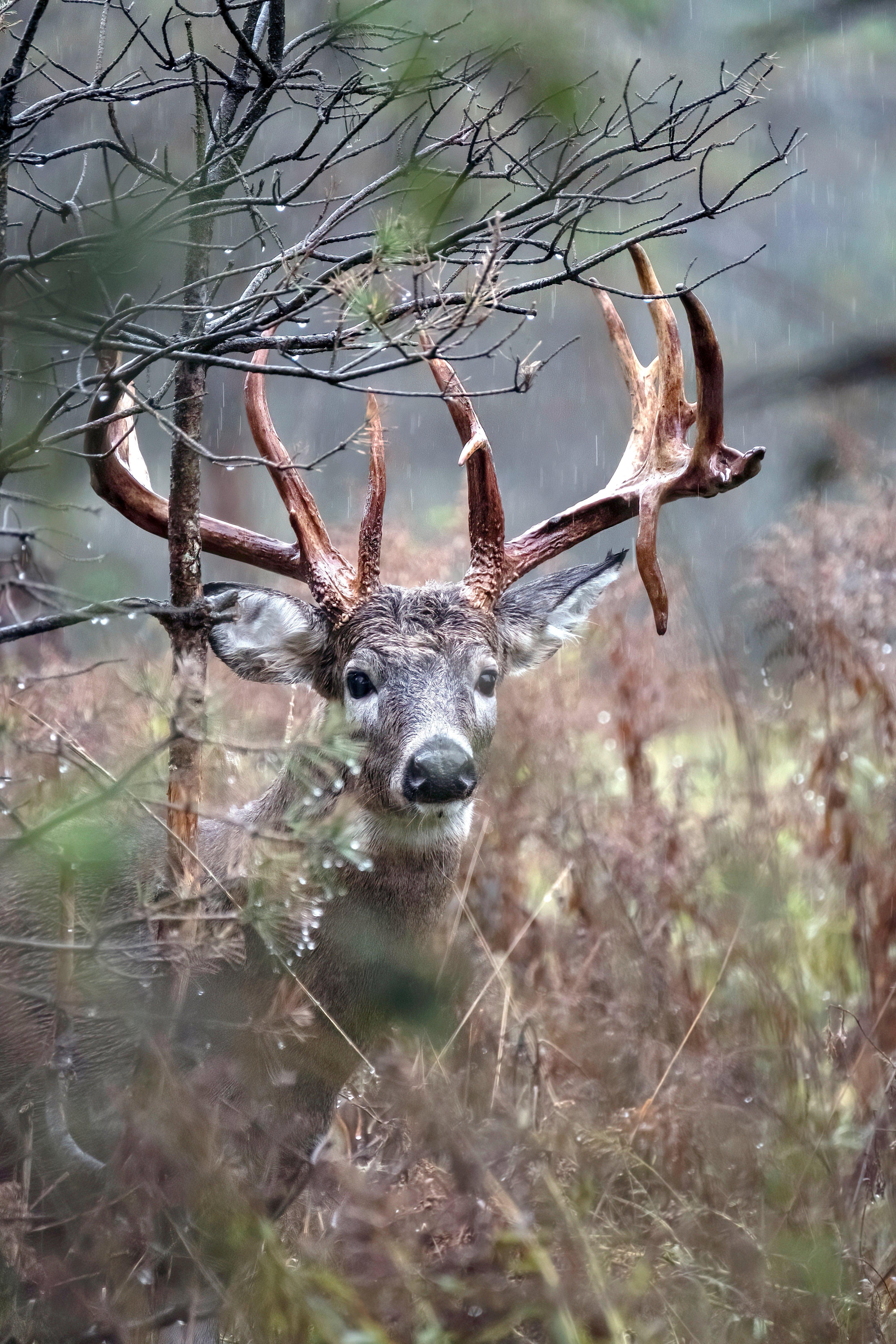
Because they are rare and different, drop tine bucks have long fascinated deer hunters. Image by John Hafner
“Yes sir, you made the right decision,” I replied. “No doubt, something is definitely bad wrong with him.” I hesitated and said, “Tell me again what area you were hunting this morning?” The hunter then told me where he had seen the buck with the downward points.
I confess, I was being bad by not telling him that bucks with drop tines are highly prized by serious deer hunters — especially me. When I worked as a wildlife biologist, I spent thousands of hours in helicopters doing deer census work and kept records of the many bucks I saw each year. The only antler style that was rarer than bucks with single or double drop tines was a typical 7-by-7 buck. When I looked at about 3,000 bucks each fall, about one in 1,000 had double drops and about 500 had single drops. That included flying over extremely well-managed properties across the famed Brush Country of Texas, which is known for big-antlered bucks. Drop tines on true wild deer are extremely rare.
Don’t Miss: Story of a Georgia Drop-Tine Giant
WHAT CAUSES DROP TINES?
There are basically two reasons bucks develop drop tines. One is injury to the developing antler. For a drop to develop because of injury, the growing antler bone must be chipped or broken. Then a drop might form, but not always. Many years ago, when I worked for Texas’s Wildlife Disease Project, we learned we could create a drop by crushing the lower part of the growing main beam at the current apex. The bone splinter would then attach again and generally grow downward, but the main beam continued growing forward. But we needed to do that without breaking the velvet. At the time, we were doing a lot of research on antler development, including working with several human medical investigators from the Mayo Clinic.
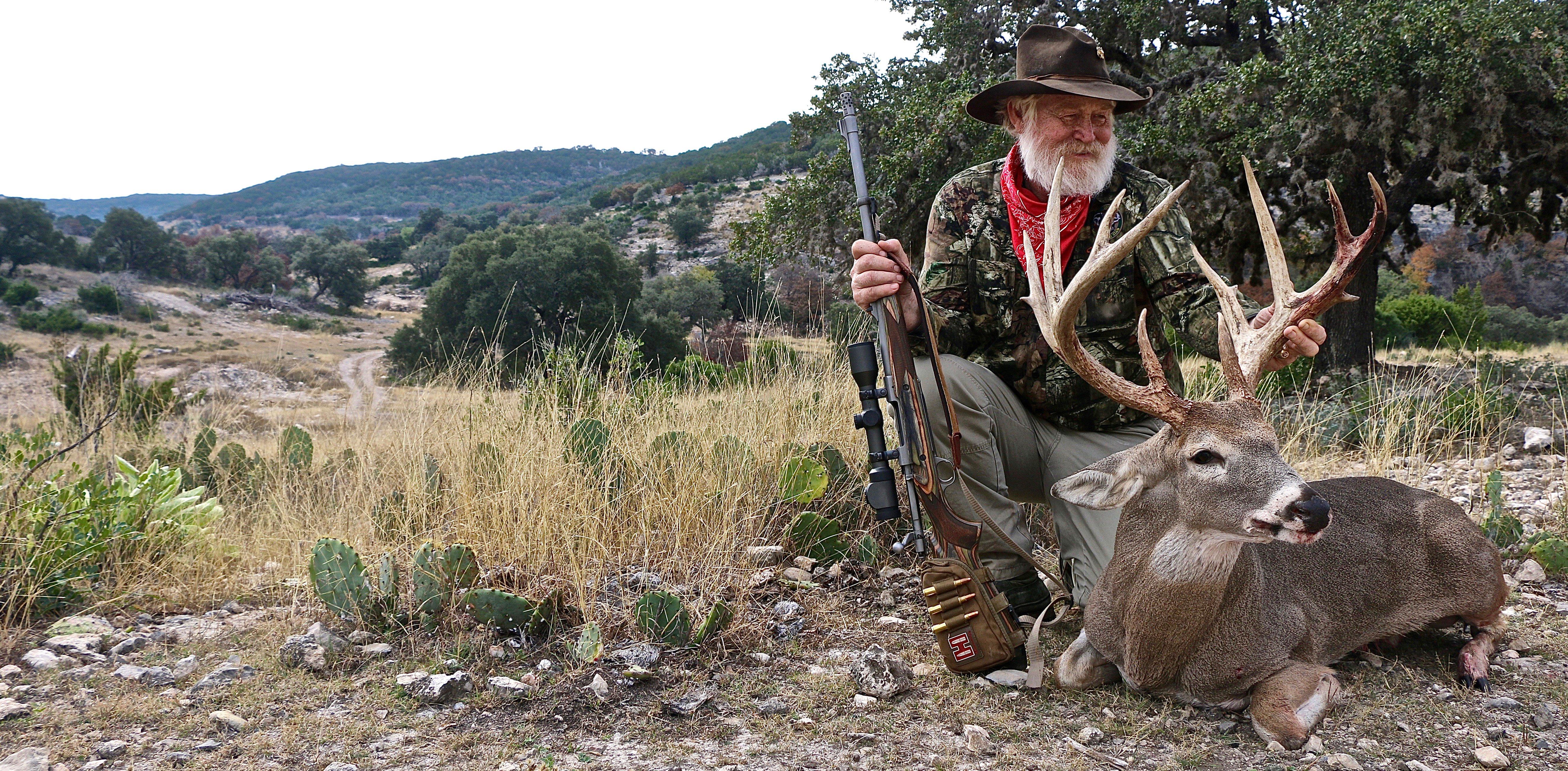
Drop tines can form because of genetics or from damage to the antler during the growth process. Image by Larry Weishuhn
Drop tines can also result from genetics. In wild deer, drops seldom appear until a buck is at least 3 to 4 years old, but there are exceptions. With genetic drop tines, I’ve seen them occur on the right beam one year but then possibly manifest on the left main beam the next year. Or, a buck might have one or double drops one year, skip having any drops the next year, and again have a drop or double drops the year after. In other deer, they might be present every year, starting from the time the buck had its first set of antlers. One buck I watched for six years had double drops, one on each beam, as a 6-point yearling and every year thereafter. He was taken as a 6-year-old. That year, he had a typical 12-point rack with a 6-inch drops on each antler. Impressive.
Don’t Miss: A NODAK MONSTER WITH DOUBLE DROP TINES
DROP-TINE MEMORIES
I took my first drop-tine buck years ago on the Wild Horse Desert of southern Texas, long before Bill Jordan created Realtree. The deer was a 4-by-4 with a 2-inch drop on his right side and a nearly 2-inch drop on the left. Not a monstrous double-drop, but a double-drop nonetheless.
My second drop-tine buck was one I hunted for several years, again before Realtree was available. The only time I saw that buck each year was while doing our annual helicopter game survey. The ranch’s vaqueros, however, saw him every year. Each year, they would tell me “Rojo’s Buck” had at least 10 points up and always at least two points down. By accident, I finally took him one evening in late December as I walked a trail headed back toward camp. His antler style had not changed much, but that year, he had three drops on one side and a total of 15 points. He gross-scored just shy of 160 Boone and Crockett gross. That buck was 13 years old, based on centum aging, when I shot him.
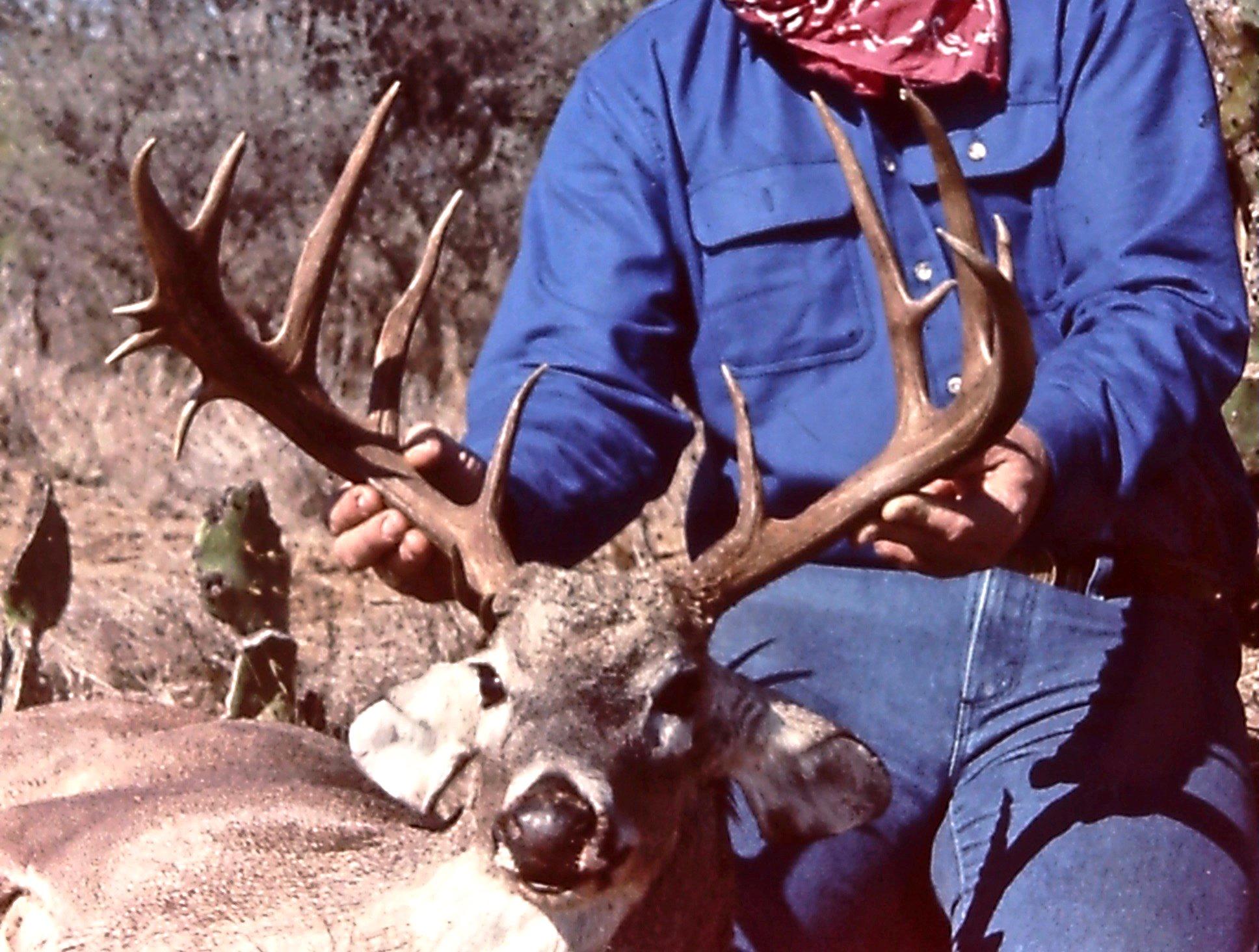
The author took this ancient Texas buck with multiple drops after hunting him for several seasons. Image by Larry Weishuhn
Since then, there have been other drop-tine bucks. I spent the better part of a hunting season looking for a tall, massive double-drop tine a landowner had told me about. The deer was a basic 10-point with several kicker points, and his rack likely scored in the high 180s to low 190s. I saw him a few times at a great distance and after dark that fall. That was before we had reliable trail cameras. I almost got a shot at him one morning, but he disappeared before legal shooting time. The last time I saw him that year was 40 minutes after sunset with three days remaining in the season. He crossed the road in my headlights. I did not again see him until the velvet was coming off the next fall. He was feeding in a grown-over food plot that had not been plowed or planted. However, it had been heavily fertilized the previous year, and the native weeds and brush regrowth were nutritious and to his liking.
Don’t Miss: 9 MUZZLELOADER DEER HUNTING TIPS
I did not get to hunt the property that year until the first days of December, a week before the rut kicked off. Upon my arrival, I built a natural ground blind adjoining the grown-over field.
I had been my blind barely 30 minutes when I spotted the drop-tine buck. That year, he had only had a single drop rather than two. But his antlers were more massive and with longer tines than the previous year. Problem was, he was more than 400 yards away. I was hunting with a .30-06 single-shot handgun, a T/C Encore, using 180-grain Hornady ammo. With that combination, I felt comfortable shooting out to 200 yards.
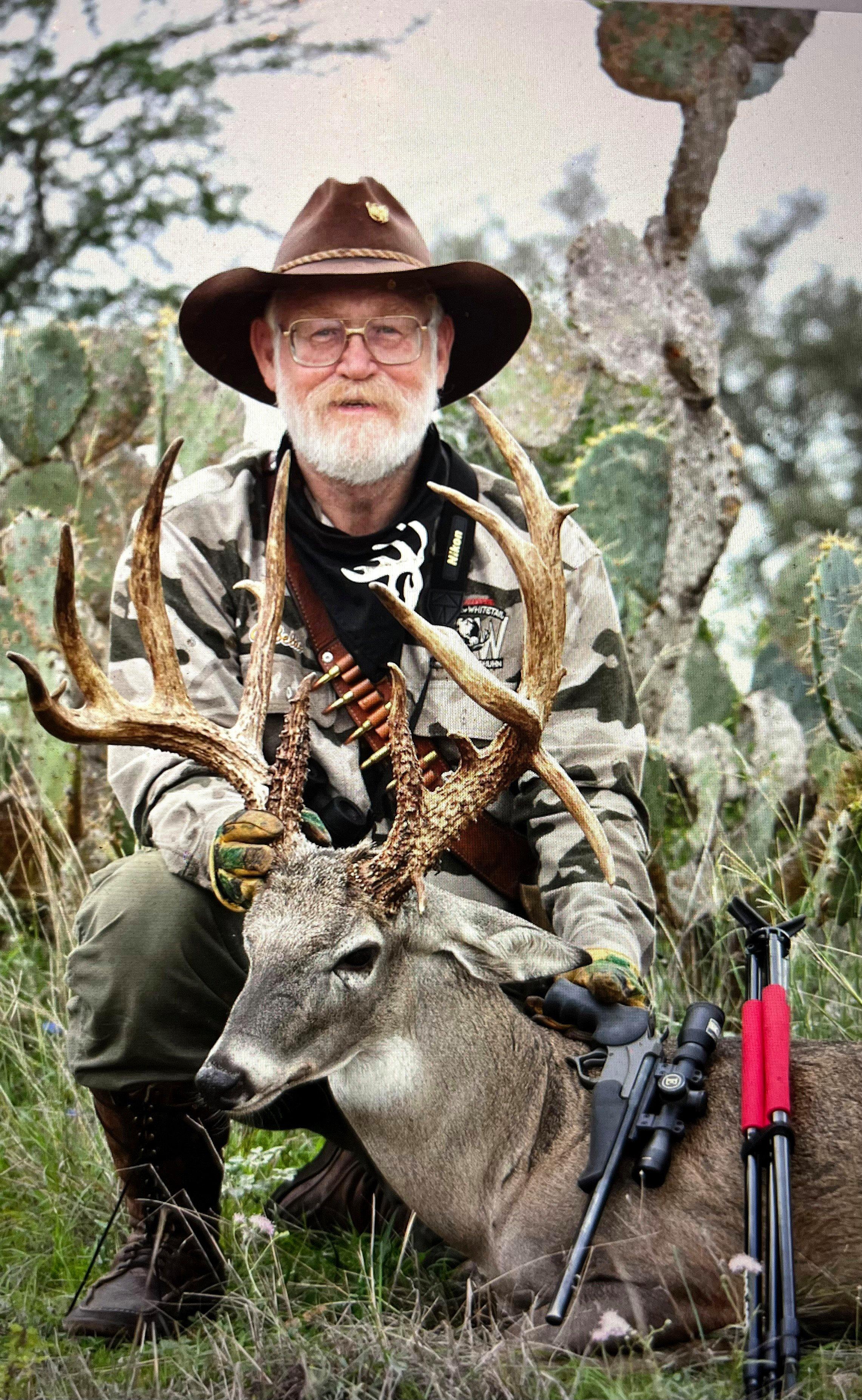
The author took this drop tine buck in Texas with a single-shot Encore handgun. Image by Larry Weishuhn
The buck started feeding my way, and I watched him through my binos. He kept coming until he was 325 yards away. Then he suddenly bolted into the brush. Well, there was always tomorrow.
Twenty minutes later, I spotted a deer in the brush directly in front of me, 100 yards away. All I could see was the deer’s backside. But I saw his tarsals. They were darkly stained; no doubt, a mature buck. Most bucks 4 years and older have darkly stained hocks during the rut.
The buck stepped clear of the dense brush. It was the big drop tine. Moments later, he walked into the overgrown field toward me. When he looked back where he had come from, I raised my handgun, rested it on my tripod shooting sticks, cocked the hammer and started settling the crosshairs of my long-eye-relief scope on his vitals, and then waited for him to give me a lethal shot.
He took two steps and then turned broadside. He was only 25 steps away. Crosshairs planted on his vitals, I pulled the trigger. The buck ran 10 steps before he fell. As he did, I quickly reloaded. If he so much as kicked after he went down, I was prepared to shoot him again. He didn’t move.
At his side, I let out a Texas Aggie war whoop heard all the way back to Aggieland in College Station.
No doubt, there’s truly something special about taking a buck with drop tines.
Don’t Miss: SHOOT OR PASS? THE RISKIEST SHOTS YOU'LL FACE IN THE WHITETAIL WOODS