Double Your Duck Stamps for Conservation
Posted 2026-09-10 by
The “Buy Two Duck Stamps” campaign is gaining traction, and organizers say it’s an easy and effective way to invest in wetland conservation
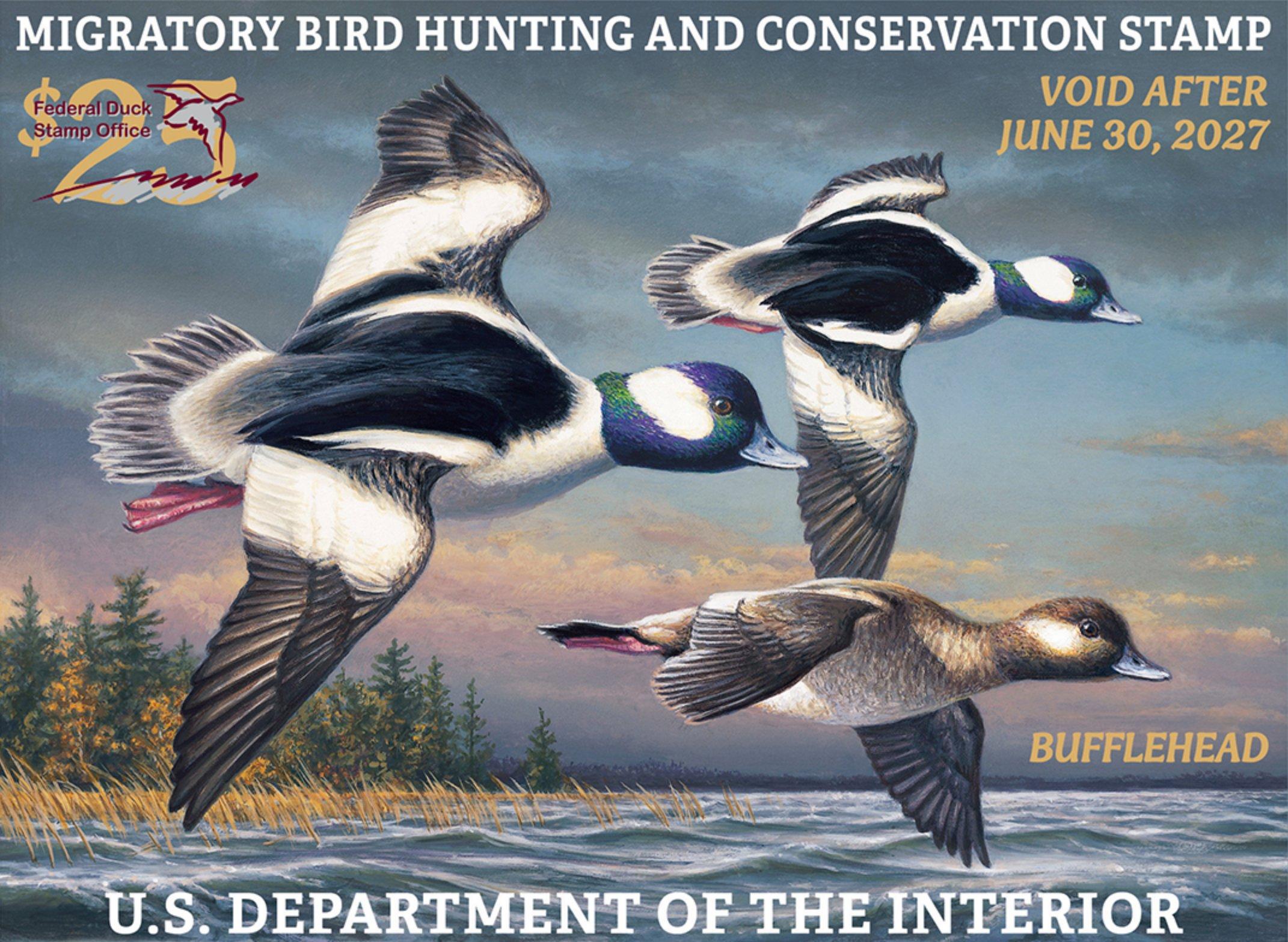
About 98% of federal duck stamp revenue goes to acquire and protect wetlands and conservation easements. Buying an extra stamp can make a huge impact. Image courtesy of the U.S. Fish and Wildlife Service.
Two passionate Arkansas duck hunters are asking fellow waterfowlers to spend a little extra money as a voluntary investment in wetlands and waterfowl habitat. And the effort is gaining traction.
In late August, The Standard Sportsman podcast launched the Buy Two Duck Stamps campaign, which encourages hunters and conservationists to purchase a second federal duck stamp each year. Waterfowl hunters 16 and older are required to possess an annual $25 federal stamp while hunting. The campaign asks people to purchase another stamp to boost conservation revenue. The effort’s message is simple: Buy one because you have to. Buy the second because you want to.
Don’t Miss: How Waterfowl Limits are Set
“The North American conservation model is built on hunters supporting the resource,” said Standard Sportsman co-host Brent Birch, a lifelong Arkansas duck hunter, author and founder of Greenhead: The Arkansas Duck Hunting Magazine. “The second stamp is a direct, affordable way for each of us to do a little more. One extra purchase might feel small, but multiplied across the waterfowl community, it can put meaningful dollars on the ground for habitat.”
Standard Sportsman podcast co-host Cason Short said the effort is not limited to duck hunters.
“Anyone who cares about wetlands and wildlife can buy a stamp,” he said. “We want purchasing two stamps to become an annual habit. One for the privilege of hunting and another as a deliberate contribution to conservation.”
Birch said the campaign’s goal is to make purchasing a second duck stamp the best $25 a hunter can spend for conservation. More than 98% of duck stamp revenue goes to the Migratory Bird Conservation Fund to acquire and protect wetlands and conservation easements within the National Wildlife Refuge System. Since the duck stamp program began, sales have generated more than $1.3 billion and helped conserve more than 6 million acres of habitat.
Don’t Miss: Waterfowl Migrations are Changing. Here’s What That Means for Hunters
“These are highly targeted funds, with 98 cents of every $1 going to protect and acquire habitat,” Birch said. “Not marketing budgets, not salaries — nothing but habitat work through the Migratory Bird Conservation Fund.”
The campaign went live Aug. 27 on social media, and with text messages and emails. It has received support from some of the most recognized names in the outdoor industry, including Ducks Unlimited, Benelli, Banded, and Realtree.
“The buzz online has been excellent,” Birch said. “We don’t have a way of tracking how many folks have bought two stamps thus far or who will between now and the first day they go afield, but the support has been fantastic — not only by many of the big brands in the sport, but by the hunters themselves.”
Even with the positive initial response, Birch acknowledged that the initiative’s success will hinge on hunters rallying fellow sportsmen. “This will take way more than social media to really make a difference,” he said. “Hunters who believe in the cause will have to leverage their networks, online and off, to make a notable difference. Social media is passive in an effort like this. Active hunter conservationists will have to stay in the ear of their family and friends to make buying two or more duck stamps a season a routine. The latest [breeding population report] shows the ducks need our help, and what duck hunter doesn't have an extra $25 available for the ducks?”
Don’t Miss: 7 Reasons Public Waterfowl Hunting is Better Than You Think
The federal duck stamp, previously called the migratory bird hunting and conservation stamp, was created in 1934 when Congress passed the Migratory Bird Hunting Stamp Act, which was then signed by President Franklin D. Roosevelt. The first stamp featured artwork by renowned political cartoonist and conservationist J.N. “Ding” Darling, then chief of the Bureau of Biological Survey, the predecessor of the U.S. Fish and Wildlife Service.
Learn more at buytwoduckstamps.com.