The 3 Best Clay Target Games for Dove Hunting Practice
Posted 2025-08-21 by
You’re familiar with skeet, trap and sporting clays. But for real hunting practice ahead of opening day, have you tried FITASC, 5-stand or Super Sporting?
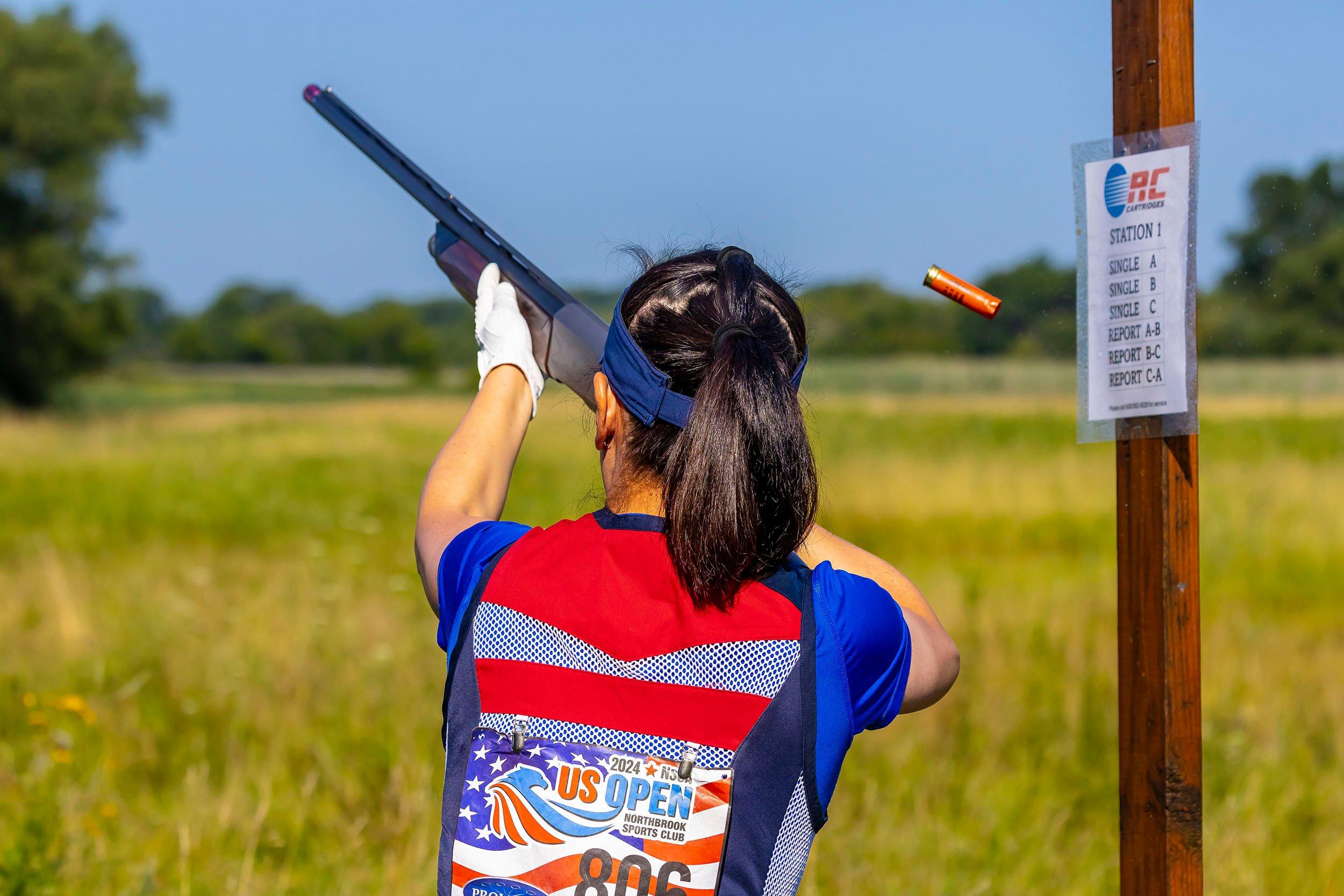
Super Sporting offers tremendous target variety, and you don’t get to view the pairs before shooting them, which is great for mimicking the on-the-fly shots you’ll get in the dove field. (Photo courtesy of the NSCA/Lefty Ray Chapa)
If your shotgun skills could use a little refresh ahead of opening day, likely your first instinct is to head to the local skeet, trap, or sporting clays range and bust some clays. And that’s great — skeet will give you great practice on crossing shots, trap will present you with plenty of going-away targets, and sporting clays offers a variety of both and more. But they aren’t the only clay target games on offer in the U.S. If you can find a 5-stand, a FITASC event, or a Super Sporting course near you, you’re in for some excellent practice and a lot of fun. On top of that, these games are even better practice for real-world hunting conditions, each for its own reasons. But what are they?
HOW TO SHOOT 5-STAND
You might already be familiar with this one. Many sporting clays clubs also have a 5-stand, which is basically what it sounds like: five shooting platforms in a row. This game is a compact, fast-paced version of sporting clays; it moves quickly because only five people play at a time, and you don’t have to move more than a few steps in between stations.
There will be between six and eight trap machines on a 5-stand course, and you’ll shoot all of them at some point during the game. Each shooter stands in one of the five cages, where they’ll find a menu card listing what they’re supposed to shoot from this position — it might say something like 5 and 3, true pair; 4, single; 1 and 6, report pair. (A true pair is when both targets are thrown at once and you have to decide which to shoot first; a report pair is when the second target isn’t thrown until you fire at the first target.)
Don’t Miss: Grilled Dove Poppers
You’ll find all manner of targets on a 5-stand, with different trajectories, speeds, and distances. That makes it great practice for doves or ducks, and unlike regular sporting clays, 5-stand moves so quickly that you won’t have much time to overthink your shots or analyze your targets — just like you can’t analyze and make a plan to hit a dove. If you want to make 5-stand even more challenging and an even better simulation of actual hunting, try ignoring the menu card so you’re totally surprised by where the targets are coming from and what they’re doing. Your scores will probably tank, but it’s excellent practice for real-life hunting.
HOW TO SHOOT FITASC
FITASC, pronounced “FEE-task,” is an acronym for…well, a bunch of French words I can’t pronounce, because it’s basically the French version of sporting clays. It was originally designed to better mimic the shots you’d actually see when you’re hunting, much like sporting clays did in its early days — although, like sporting, FITASC has gotten a little away from that in recent years.
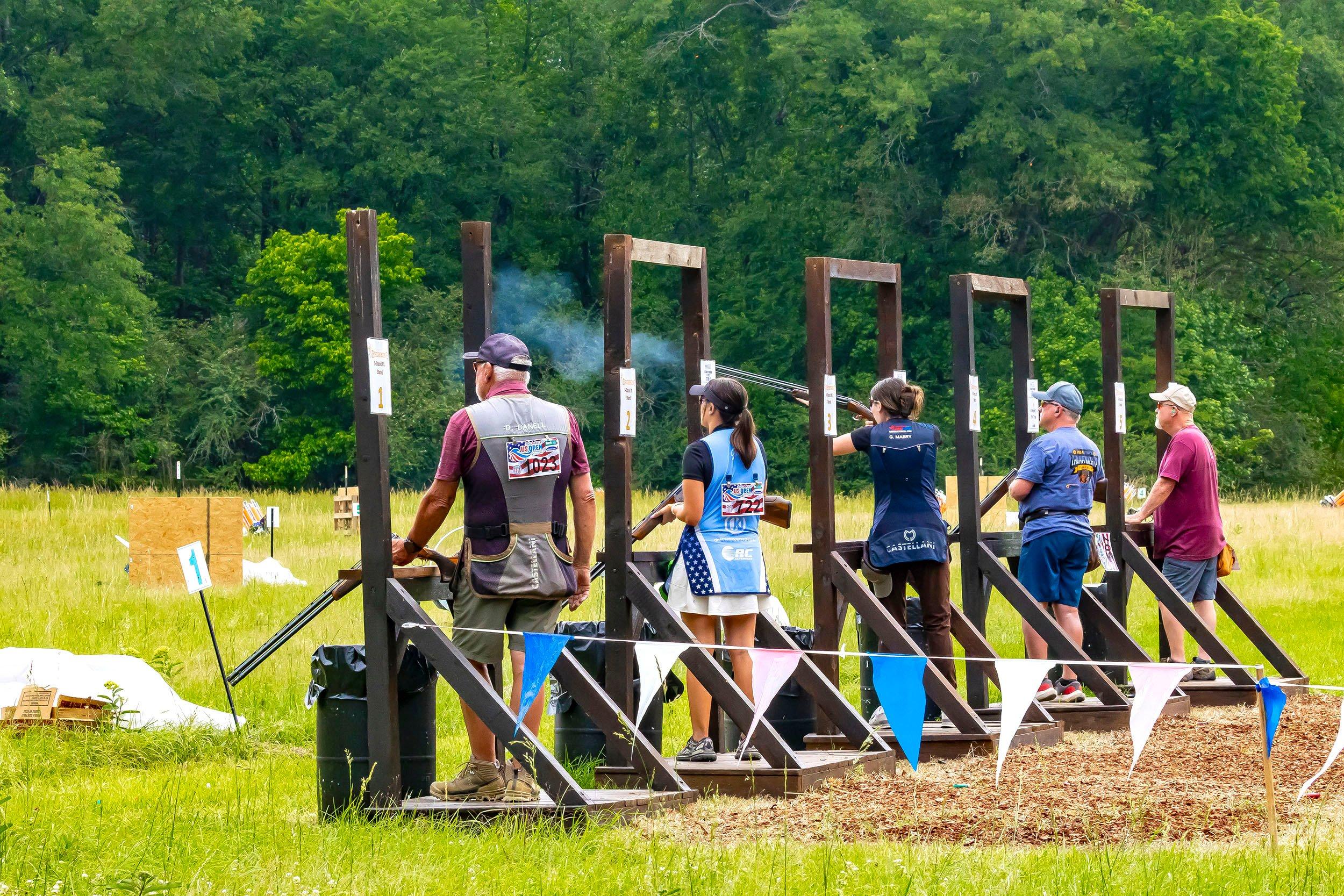
5-Stand moves quickly and gives you little time to think or plan your shots, making it a real mental challenge. (Photo courtesy of the NSCA/Lefty Ray Chapa)
FITASC is shot on a layout known as a “parcour,” with typically three stands or “pegs” per 25-bird parcour. Each parcour has its own set of five traps, labeled A, B, C, D, and E. You’ll typically shoot four parcours for a total of 100 targets. The big challenge in FITASC is that you’ll be shooting the same layout from different angles as you walk 20 or 30 yards between the pegs. This allows for a relatively wide variety of angles that you won’t fully understand or anticipate.
Don’t Miss: It’s Opening Day of Dove Season. Don’t Suck It Up
As in 5-stand, each peg will have a menu card that lists the combination of singles and pairs you’ll shoot there. You will stand not in a wooden or PVC cage as in sporting clays, but inside a hula hoop on the ground, and your feet must stay within the hoop as you shoot. The other thing that makes FITASC a challenge — and excellent hunting practice — is that it is shot with a low-gun mount. Premounting the gun, which is common in sporting clays, is not permitted in FITASC. If you shoot this game in formal competition, you will have a line on your shirt or vest that measures 25 cm below the top of your shoulder (similar to international skeet), and the buttstock must remain below this line until you call “pull.” There are also restrictions on shot size and charge, and for competition, there’s even a dress code: Sleeveless shirts, open-toed shoes and shorts more than 5 cm above the knee are prohibited.
In FITASC, you will shoot singles and pairs, so you load two shells at a time, but you have full use of the gun. Like in hunting, if you miss your first shot, you are free to shoot at it again.
FITASC is catching on in the U.S., and it’s common at large NSCA (National Sporting Clays Association) tournaments. Smaller sporting clubs are not likely to have heard of it, but if you have a larger club near you, chances are good that they set up FITASC for big competitions and probably leave it up for a few weeks afterward, so you might be able to find a parcour in your area.
HOW TO SHOOT SUPER SPORTING
Super Sporting is another side event at big NSCA tournaments, but my relatively small local club has a course, so you might not have too much trouble finding it near you. You could call it a more advanced form of sporting clays (hence the name), and the two games are similar. Both are shot on a course that requires you to move through spread-out stations, but one major difference is that Super Sporting has three or more trap machines per stand (A, B, C, etc.), as opposed to just two for sporting clays. The great thing about Super Sporting is that it offers no repeat pairs at all. You’ll be shooting 50 or 100 unique combinations in a row, so there’s a ton of variety without the repetition of sporting clays or the restrictive rules of FITASC. That means Super Sporting lacks the predictability of skeet and the repetitive, miss-one-and-try-again-on-the-next-pair planning inherent in sporting clays.
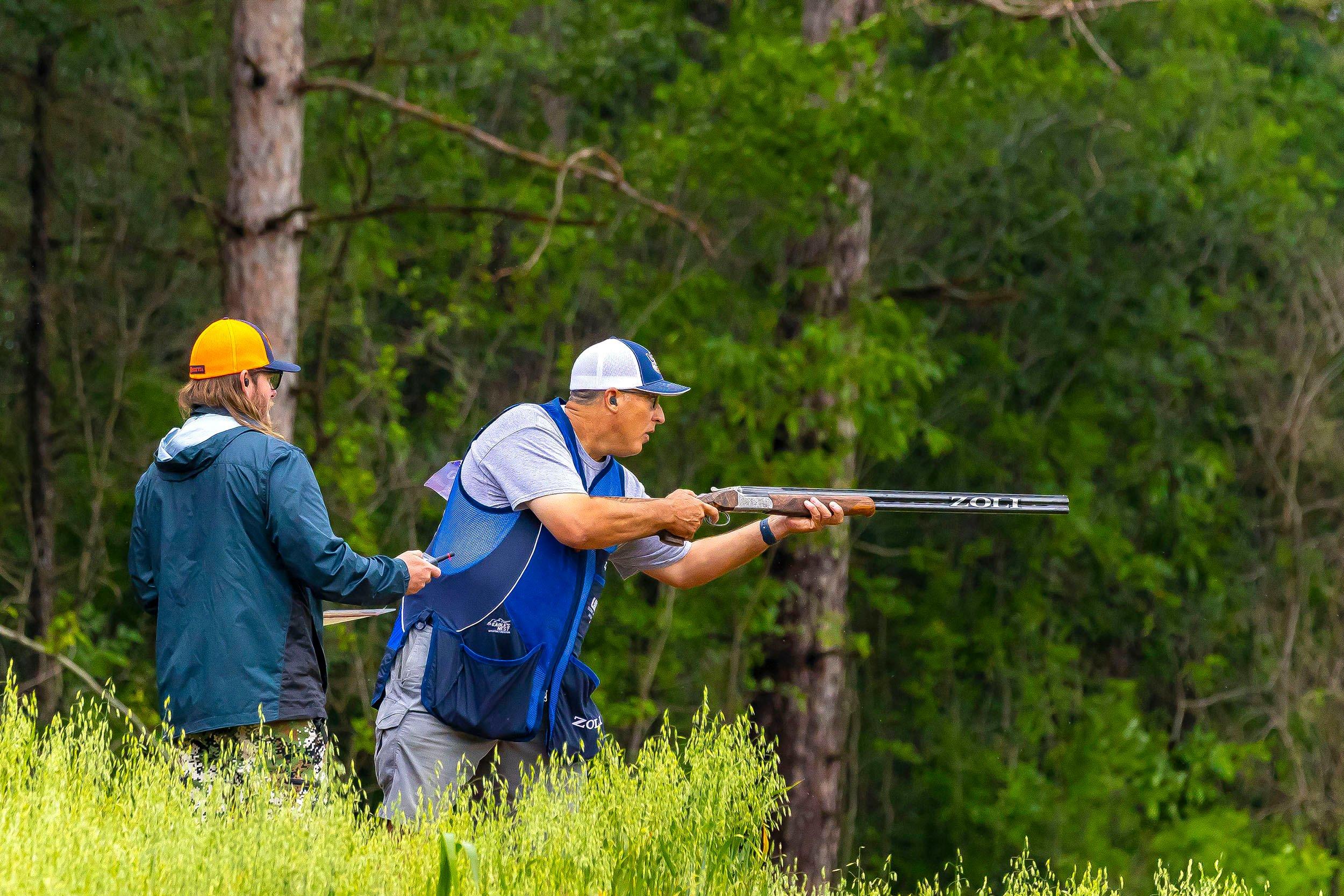
Like hunters, FITASC shooters take their shots free-standing without being confined to a cage or stand, and they must start with a low gun as hunters would afield. (Photo courtesy of the NSCA/Lefty Ray Chapa)
As in the other games, each Super Sporting station has a menu card that tells you the combination of singles and pairs you’ll be shooting. What makes it challenging, and realistic from a hunter’s perspective, is that you get to view the singles but not the pairs. So, while you will have an idea of what each target of the pair is doing, you won’t get to see them together until you have to shoot them and make a plan on the fly. When’s the last time a dove told you exactly what he was going to do so you could plan in advance how to move, mount, and shoot him?
Super Sporting offers you a ton of diversity in target presentations along with plenty of spontaneity that will train you to “see the bird, shoot the bird” as you would in wing-shooting. There’s no settling in and finding your rhythm — you must be on your toes and ready for each new presentation.
WHAT’S BEST FOR YOU?
Trap, skeet and sporting clays are great practice for wing-shooting, but these other games all offer more variety and a unique challenge or two that can better prepare you for the unpredictability and spontaneity of hunting. Chances are good that you can find at least one of these at a club near you, but if you can’t, you can at least take some of the principles from them and apply them to other games. For example, you could take a page from FITASC and shoot your next round of skeet or sporting clays with a low-gun mount, or you could mimic Super Sporting’s unknown pairs by intentionally avoiding the menu card on the regular sporting clays course and letting the targets take you by surprise.
Regardless, in any of these games, you’ll find a wide variety of targets that spring, dip, dive, curl and just plain trick your eyes with speed and distance the way fast-flying doves and early-season teal can. And the more target presentations you can embed into your memory, the more luck you’ll have afield this season.