Looking Back at 9/11 | A Fireman's Story from Squad 41
Posted 2026-09-09 by
A New York City fireman reflects on the letter he sent to Realtree 25 years ago, requesting support for the widows of fallen first responders at Ground Zero
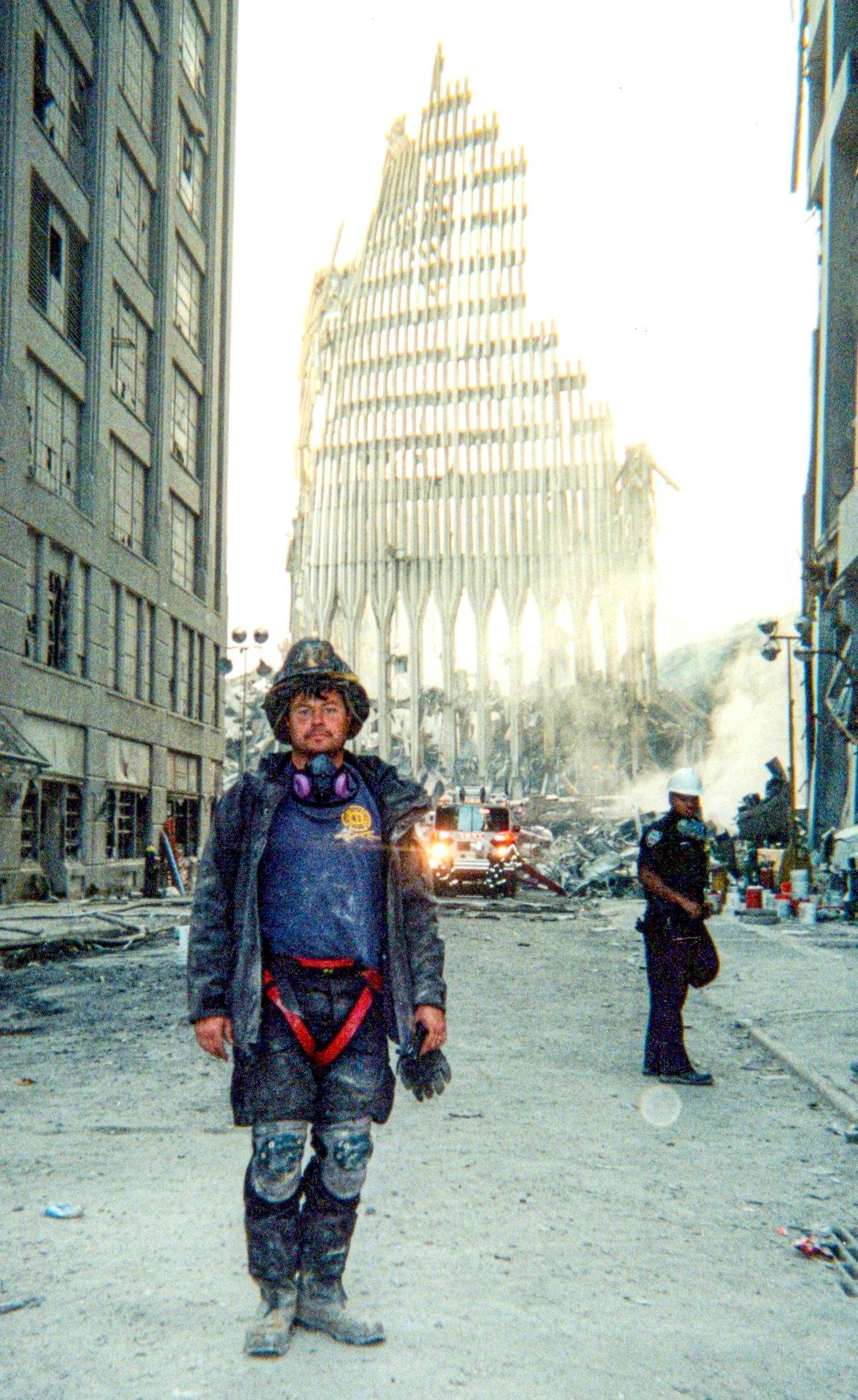
Ed Walsh stands in front of part of the facade of one of the Twin Towers after the terrorist attack on 9/11. (Photo provided by Ed Walsh)
Twenty-five years ago, FDNY firefighter Ed Walsh sat down to write a letter to Realtree with a simple request: Help him raise money for the widows and families of first responders who died during the terrorist attacks on September 11. What followed became a partnership and lasting connection between Walsh, the men and family members of Squad 41, and the Realtree team.
Back then, Walsh was a firefighter with Squad 41 in the Bronx, which was part of the FDNY's Special Operations Command. Due to specialized training, Walsh’s unit responded to some of New York's toughest emergencies including structure fires, building collapses, train wrecks, plane crashes, and rescues throughout the South Bronx, Harlem and Washington Heights. On the morning of September 11, Squad 41 was called to a tragedy more devastating than anything they’d ever witnessed and experienced a loss greater than they could imagine.
A DAY THAT CHANGED EVERYTHING
Walsh was originally scheduled to work on Sept. 11 but was at home due to a routine shift swap. “My 10th wedding anniversary was on September 10, so I traded shifts with another fireman to work on September 11, so I could sleep late after being out for my anniversary the night before,” he said.
Don’t Miss: The Best Days to Deer Hunt in 2026
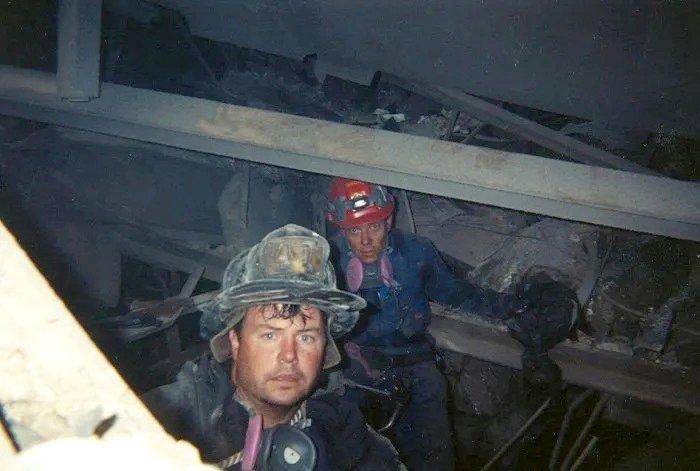
FDNY Squad 41 members Ed Walsh and Lt Charles Schmid search through the rubble at Ground Zero. (Photo provided by Ed Walsh)
Walsh was upstairs at his home when his wife called him downstairs to watch what was unfolding on the television. The first plane had hit the World Trade Center. “It took me a minute to figure out what was happening,” he said. “At first, I thought a tourist helicopter had crashed into the building, but then I saw that it was something much bigger. Then a plane hit the other building. I said to my wife, ‘This is terrorism. I have to go help.’ My son was only 18 months old at the time. Terrified for my safety, my wife was standing at the door asking me not to go. I promised her I’d be OK.”
A total of 2,977 people were killed that day in the attacks, along with the 19 al-Qaeda terrorists responsible. Thousands more were injured. Two airplanes, hijacked by terrorists, were flown into both towers at the World Trade Center. Another hijacked plane was flown into the Pentagon in Washington D.C., and a fourth plane, presumably headed for the White House or the U.S. Capitol, was diverted by heroic passengers who fought back against their hijackers. That plane ended up crashing in a field in Pennsylvania. It was the deadliest terrorist attack in American history.
By the time Walsh reached lower Manhattan, both towers had fallen and he feared, and later confirmed, that six members of his squad had perished in the rubble, including the fireman that he’d switched schedules with.
A total of 343 New York City firemen were killed that day, and Walsh knew 80 of the firemen who lost their lives. Many were friends, and others he’d trained with or met over time in the course of his career.
10 MONTHS AT GROUND ZERO
For Walsh and the first responders who survived the aftermath of the attack, it was a time of heartbreaking loss, but it was also a time for action and bravery. During the days and months that followed, Walsh and the rest of the Squad 41 team worked at Ground Zero around the clock, rotating with other special operations companies. Their specialized equipment and training made them particularly valuable in the enormous, dangerous recovery operation. They searched and dug through the rubble, knowing that at any moment the fragile structure that remained could collapse on top of them.
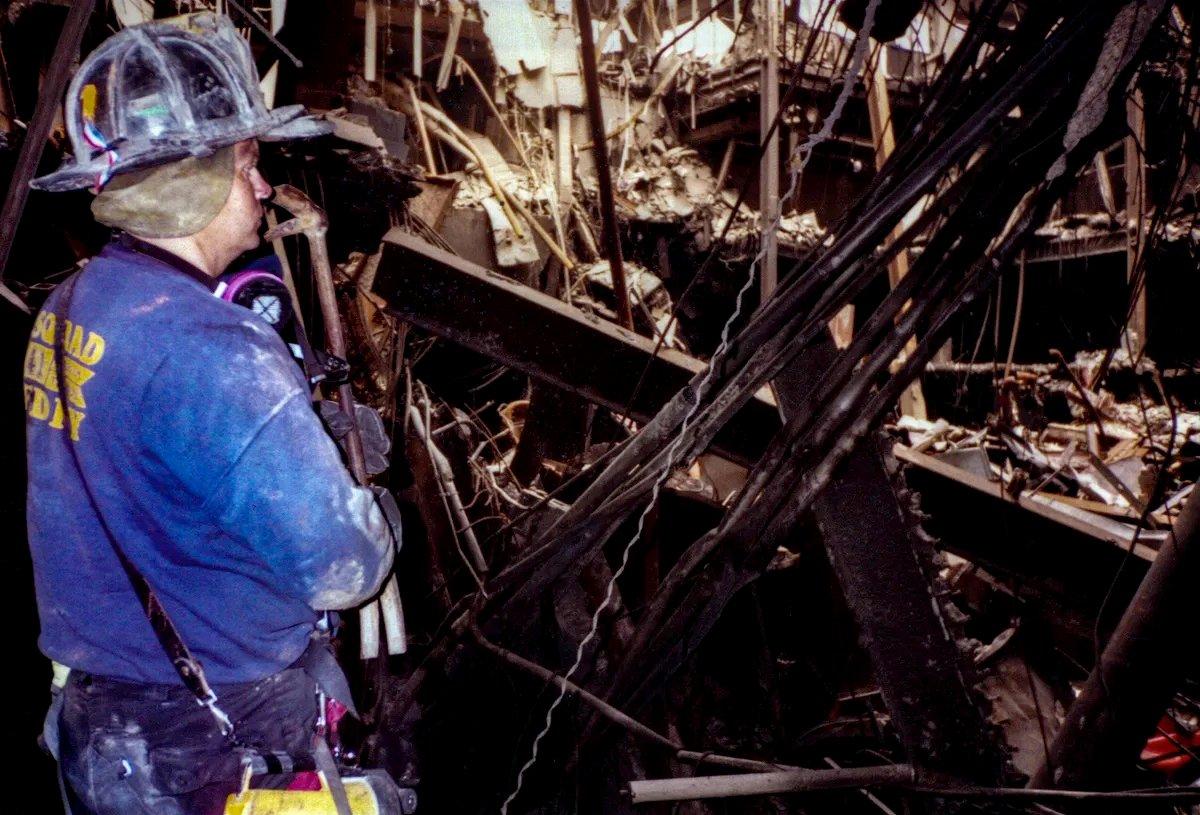
FDNY firefighter Ed Walsh surveys the aftermath of the attacks on the World Trade Center. (Photo provided by Ed Walsh)
“We maintained a presence at Ground Zero 24 hours a day for 10 months,” Walsh said. “Our squad would rotate with other special units that knew how to work the special equipment. Even on the days when we were off duty, most of us would go down there for a few hours to help. In all, there were around 10,000 firemen that worked the scene. By January 2002, more than 100,000 first responders had provided their services from all over the world. But the core group of our men from Squad 41 was in the midst of that monster of a place from day one.”
Eventually, Walsh and the men of Squad 41 recovered remains of all six of their own. In some cases, they were able to identify them by the tools they’d carried. “Squad 41's equipment was marked with the company name, welded onto the tools so there would be no question where they belonged,” Walsh said.
Those discoveries were heart-breaking reminders of the people behind the tragedy. In addition to the six friends on his squad, Walsh also lost his dear friend Tom Foley, of Rescue 3. Walsh and Foley were both avid outdoorsmen who enjoyed watching hunting shows at the firehouse, going on company fishing trips, rock climbing, driving Winston Cup cars, and just spending time together. Foley was, Walsh said, “a great guy” and one of the best firefighters he ever knew.
HELP FOR THE FAMILIES
Walsh, who worked part time as a product manager for Eders.com, was a Knight Rifles pro staffer, and a Jones Beach Fishing Station manager, had connections to Realtree. He reached out for help raising funds for the widows of Squad 41. He wrote about Foley in his letter, which read: “We lost six of our men at the World Trade Center. I, myself, lost a good friend and longtime hunting partner Tom Foley of Rescue 3. He was a great friend and a skilled bowhunter. We spent many quiet mornings at the firehouse watching your show. Words cannot express the sadness and pain my brothers and I suffered over their losses. We are starting to take action to provide for our six widows and their nine children by way of the ‘Squad 41 Association Heroes Fund.’”
Don’t Miss: The 5 Best Bullet Styles for Deer Hunting
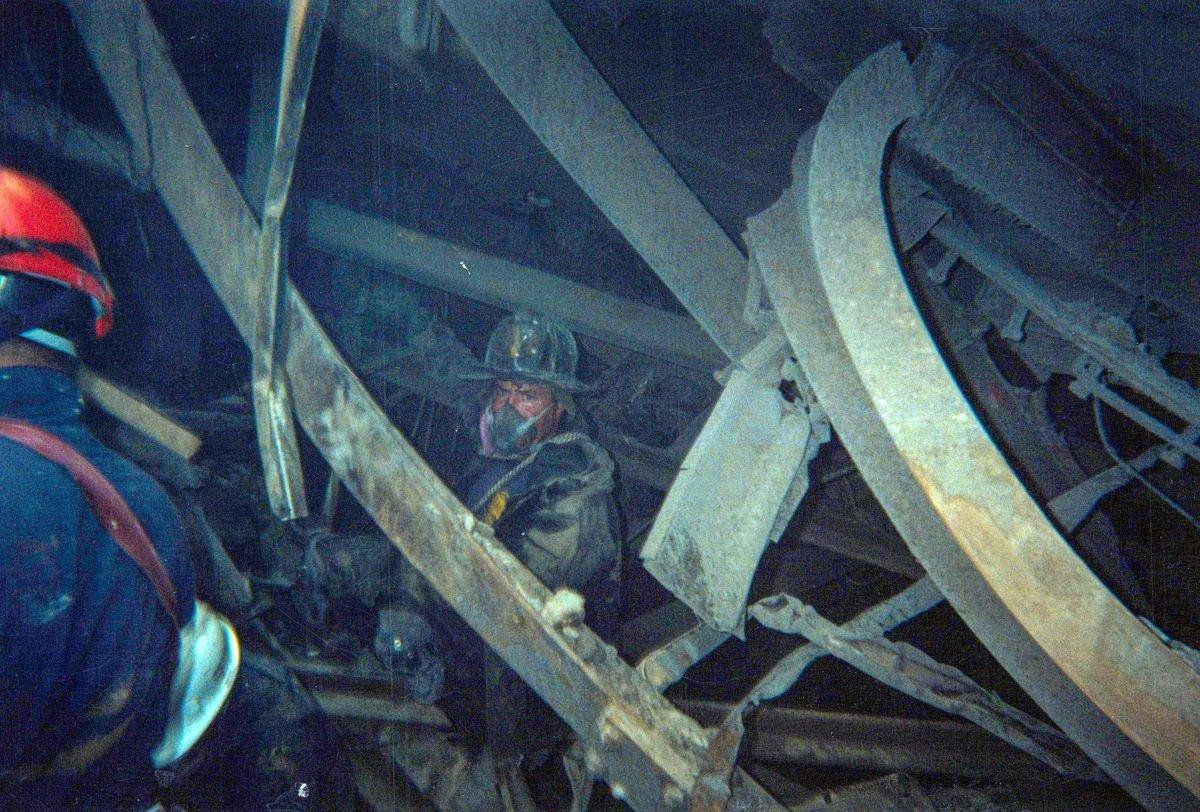
Ed Walsh and Squad 41 spent months searching through the rubble for human remains. (Image provided by Ed Walsh)
Walsh asked Realtree to post a link to the Squad 41 Association Heroes Fund on Realtree.com, and also asked if Realtree could post something about his brothers who lost their lives. Realtree not only posted a piece about Walsh, the firemen who lost their lives and his request for financial support on Realtree.com, but the company also raised funds for the widows and children through selling Squad 41-United We Stand camo shirts. During this time, Squad 41 received outreach from hunters nationwide providing support both financially and through kind letters of encouragement.
REMEMBERING THE BRAVE, 25 YEARS LATER
Twenty-five years have passed and Walsh is now retired from firefighting with Squad 41 in the Bronx. He lives in Jensen Beach, Florida. Although it is many miles away from his former home, Walsh says he often thinks about his friends who lost their lives that day and how brave they were.
“They knew what they were getting themselves into and they ran into the building anyway,” he said. “They knew there was going to be a cost. They understood the scope and magnitude. They went in after the second tower was hit with the attitude of ‘let’s see how many people we can save.’”
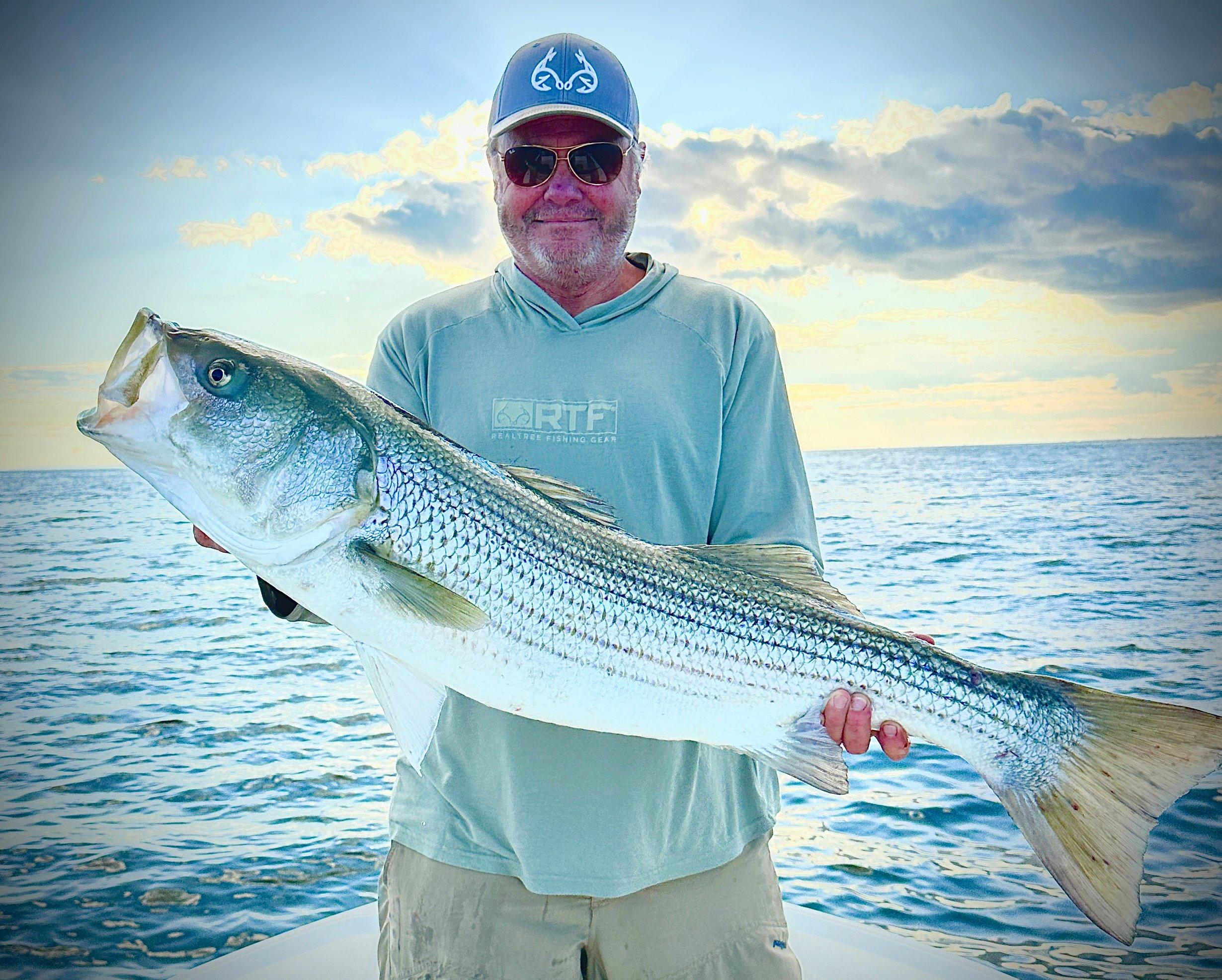
Now retired, former FDNY Squad 41 member Ed Walsh finds comfort in the outdoors. (Image provided by Ed Walsh)
Walsh hopes younger generations never lose sight of that aspect of September 11 — the decision to run toward danger while everyone else was trying to get away. 9/11 took a physical and mental toll on many first responders. Walsh is doing OK himself, and he says he finds comfort in the outdoors. He fishes often and has taken part in hunting trips and other outdoor adventures connected to his post-9/11 journey, and he hopes to enjoy more hunting opportunities in the future.
Walsh has also become deeply connected to the 9/11 Memorial and Museum. Several photographs of him that were taken during the search and recovery effort are part of the museum's story. One Reuters photograph captured Walsh near a column during the final stages of the Ground Zero cleanup. The image shows the connection between the firefighter and the place where his colleagues had been lost.
His experience also led him to become a docent for the September 11th Families' Association, where he has helped guide family members through the museum. He was even selected to provide the docent class for a new fire commissioner.
NEVER FORGET
Twenty-five years can make an event feel distant to people who did not experience it. For Walsh, time has not erased the pain of losing so many friends or the pride he feels when he thinks about their bravery and sacrifice. He believes younger generations should understand the cost paid not only by firefighters, but by police officers, members of the military, and others who chose careers that were built around service. When it comes to honoring those who were lost on September 11, 2001, Walsh says, “The simplest thing is not to forget.”
Twenty-five years later, Ed Walsh hasn't.