Spring 2026 Snow Goose Hunting Forecast
Posted 2026-02-10 by
Snow and Ross’s goose numbers look good, but guides are keeping a close eye on weather conditions
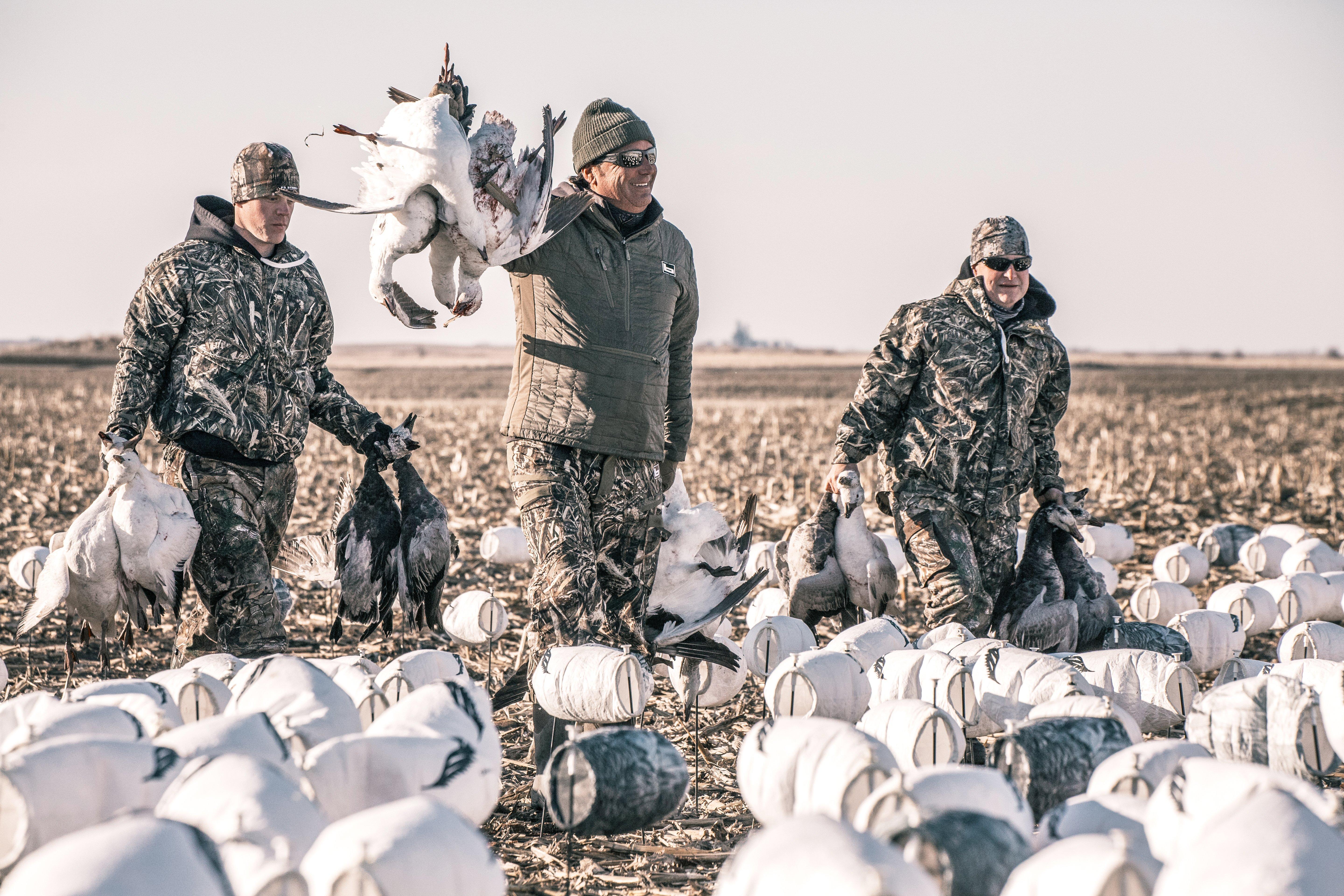
Waterfowl guides encountered lots of juvenile snow geese this past fall, bolstering hopes for a solid spring conservation season. Photo by The Fowl Life.
As duck season fades and winter wanes, many waterfowlers have already turned their attention to light geese. And if conditions cooperate, they might be in for a memorable spring campaign.
Recent reports from goose guides and waterfowl biologists indicate that Spring 2025 light-goose production was solid, which bodes well for hunters. Success during the spring conservation season (for snow, blue, and Ross’s geese) typically depends on goose production the previous year, because juvenile birds are easier to decoy than experienced adult geese.
“Snow numbers seemed really strong this fall,” said veteran waterfowl guide Cooper Olmstead, of Habitat Flats. “We had some great hunts later in the season in Saskatchewan, with lots of juvies. I think this spring conservation season could be very good after the numbers we saw this autumn.”
Don’t Miss: How to Set Up a Snow Goose Gun
Reports from light-goose breeding grounds back that up. According to a 2025 article by Delta Waterfowl, critical populations of North American light geese, which primarily nest in the Arctic, increased.
“Arctic geese have had relatively poor production in the last decade, but we’ve been climbing out of it the last three or four years,” Frank Baldwin, a waterfowl biologist for the Canadian Wildlife Service, which focuses on arctic nesting geese, said in the article. “This year is another year where there were no big busts in production, and average in some areas and above average in others.”
The article said the Midcontinent population of lesser snow geese increased by about 71% to 7.99 million, although that’s still 12% below the 10-year average. Baldwin said crews observed above-average production in the central Arctic, average production in Southhampton and West Hudson Bay, and slightly below-average production on Baffin Island for Midcontinent snows, which is good news for juvenile Midcontinent populations.
The news on Ross’s geese was also good, as the article said spring production was above average. The most recent breeding estimate was 3.41 million, a 217% increase, although that was still 7% below the 10-year average.
Don’t Miss: Snow Goose Shooting Strategies
“In less enthusiastic news for greater snow goose hunters from New Jersey to North Carolina, that population has declined 32% from 2024, estimated at 428,000,” the article said. “However, banding reports suggest good production for this population. Meanwhile, the Western Arctic population declined 11% to 1 million, 2% below the 10-year average.”
Of course, spring goose hunting prospects hinge greatly on weather conditions. Light geese typically follow the snow line north during spring. During cold years with a protracted thaw, they might stage at stops for relatively long periods. But during warmer years with rapid melting, they can shoot north quickly. Winter 2025-2026 has seen extended periods of cold and good snowfall through the middle of the country, but that doesn’t predict the next few weeks.
“These recent cold temperatures should have pushed [light geese] well south,” Olmstead said. “The only thing I could see being an issue is there isn’t much of a snow line north of us in Missouri, so once it warms up and the water starts to open, they could push right through. Hopefully it doesn’t happen, but it’s hard to tell. You can never really predict the weather or what they will do, either.”
Don’t Miss: Concealment Tips for More Snow Geese
The breeding population of lesser snow geese has increased by more than 300% since the 1970s, leading to concerns in the 1990s that the birds would destroy tundra habitat at their Canadian nesting areas. The first spring season, enacted by a special conservation order, was held in 1999, featuring increased or unlimited bag limits, and allowing the use of new methods, including electronic callers and unplugged shotguns.