How to Freeze and Store Chanterelle Mushrooms
Posted 2025-08-08 by
With the proper preparation, a bounty of summer chanterelles can complement a variety of tasty meals this fall and winter
My Grandfather was fond of the saying, “Gotta make hay while the sun shines.” He was usually referring to building houses, getting outside work done, or catching fish while the weather was nice. But the saying applies to stocking up on one of summer’s tastiest foods as well.
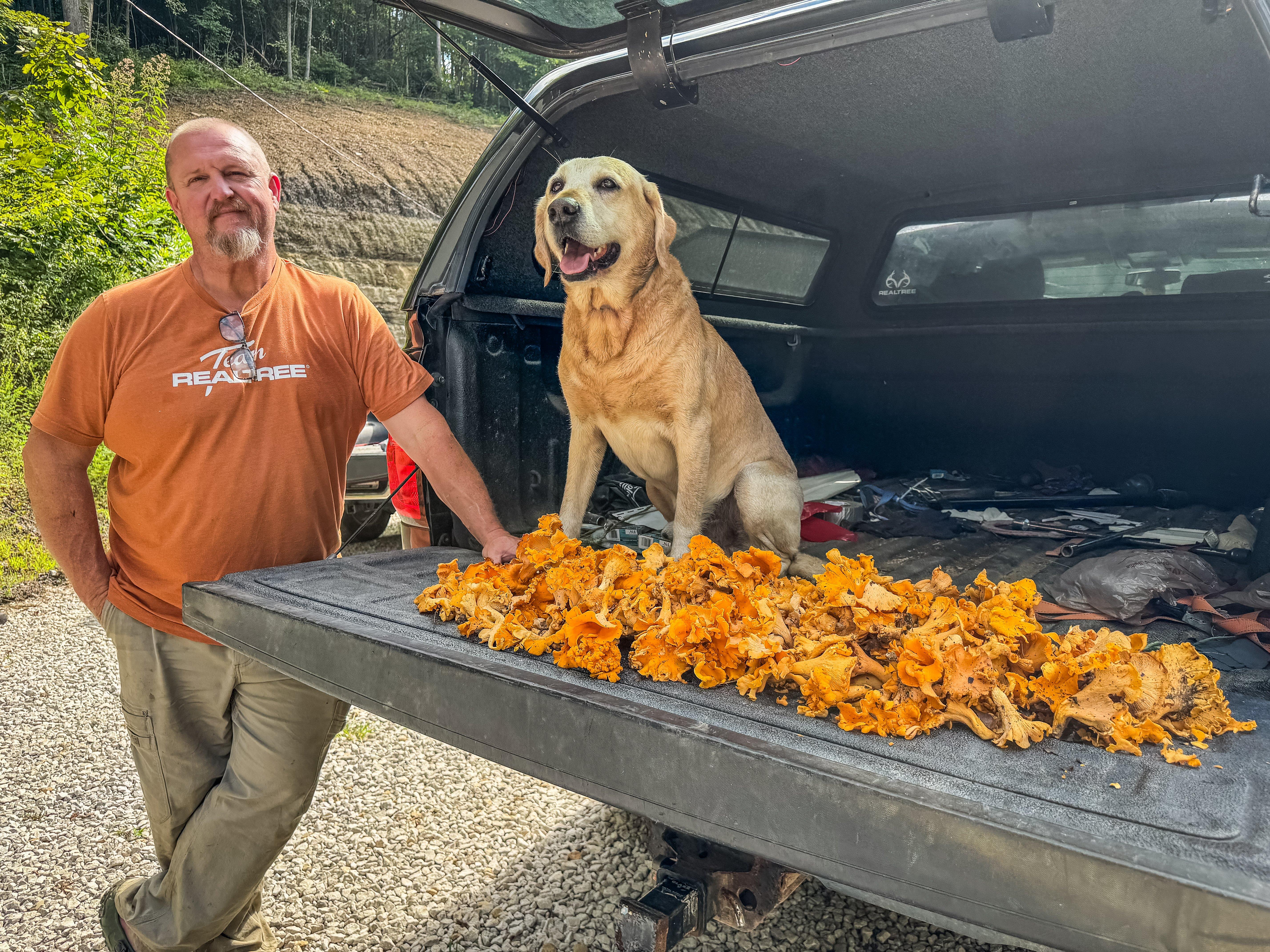
Summer is the time to stock up on chanterelle mushrooms that you can put up for later use. Image by Bill Konway
For most of the country, now is the time of year to find chanterelle mushrooms in abundance. Strong summer rains can bring flush after flush of the tasty shrooms. But, like most mushrooms, chanterelles don’t last long after you pick them.
What if you want to use them in recipes this fall and winter? A tasty mushroom soup on a cold day just hits right. So does mushroom gravy over fried rabbit or quail. Don’t worry, there are ways to maintain the summer goodness of a chanterelle for long term use.
First, you can dehydrate the mushrooms and store them in jars or vacuum sealed packages. But, unlike some other mushrooms, chanterelles loose some of their flavor when dehydrated. They are still good, just not the umami bombs they are when fresh.
After trying several ways to store chanterelles, I’ve settled on this one as my favorite. The mushrooms first get cooked, then vacuum sealed and frozen. The resulting product still has nice body and texture that will hold up in most recipes, and the flavor is very near fresh mushrooms.
If you find yourself with a motherlode of chants this summer (it is easy to do, they do stand out in the woods and you often find several growing close to one another), give this method a try.
- WASH
Wash the mushrooms. I’m sure I’ll get some feedback on this one. Many mushroom aficionados shy away from water, preferring to brush off any loose soil with a soft brush. That works for commercially grown mushrooms in controlled environments, but the chanterelles I find in the woods are growing in often muddy or damp conditions with lots of leaf litter and insects. In short, they are dirty. And you aren’t going to get them clean enough to eat without a little water.
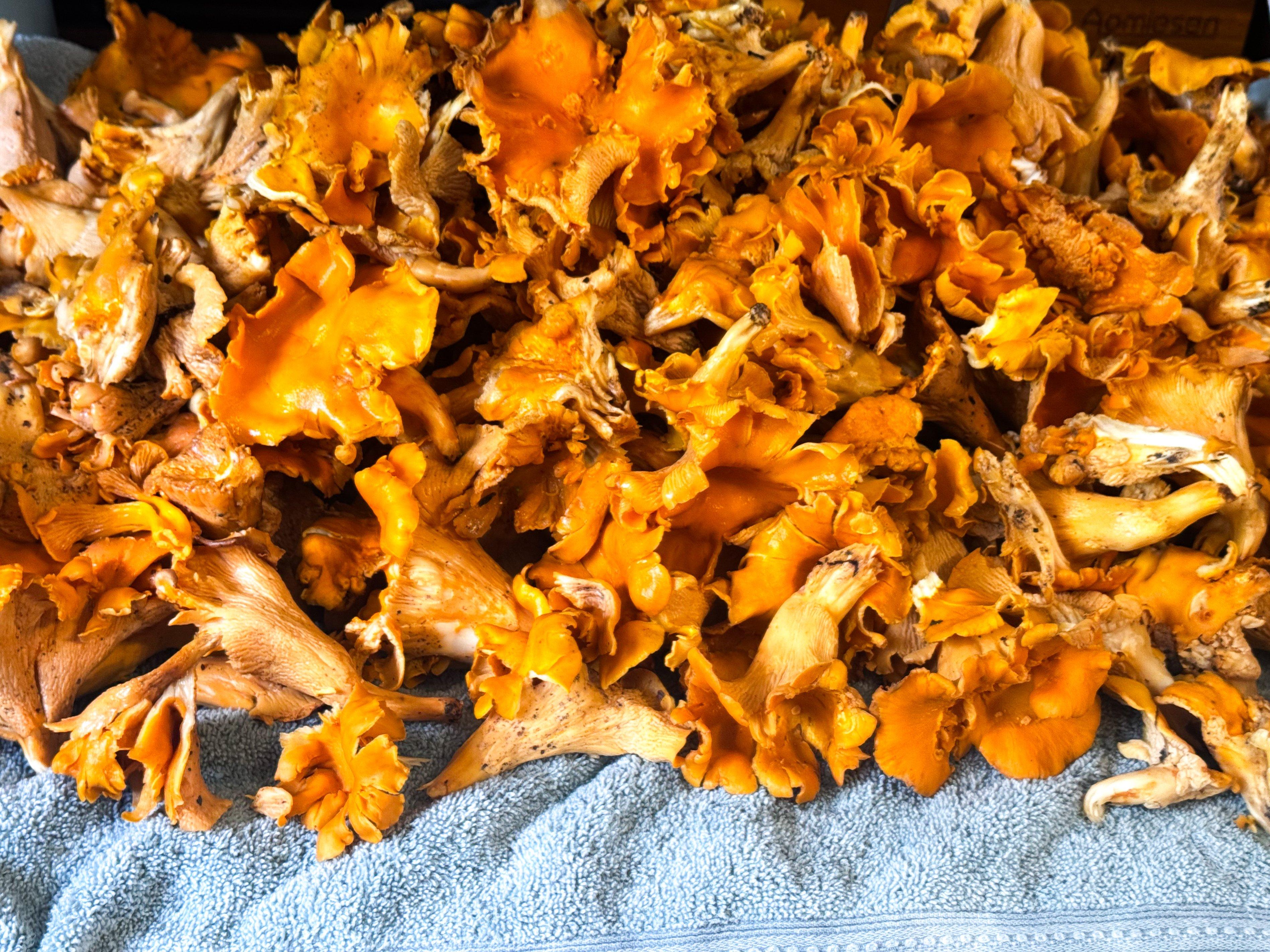
Wash the mushrooms and brush away dirt, leaf litter and insects, then dry on a towel overnight. Image by author
Don’t Miss: 19 GOOD WAYS TO COOK A SQUIRREL
I start by dumping the mushrooms in my sink and running cool water over them. I use a combination of running water, a soft brush or, my favorite, a damp paper towel to wipe away leaf debris, soil and any hitchhiking insects I run across.
After rinsing and trimming away damaged and soft spots on the mushrooms, I transfer them to a large towel spread over my kitchen counter. I normally leave them overnight like this to allow any excess moisture to wick away.
- START THE SKILLET
Chanterelles hold a tremendous amount of moisture in their cells. That is one of the main reasons they don’t freeze well straight out of the woods. Most of my chanterelles recipes start the same way, in a dry skillet or in a skillet with just a little bit of water to get the cooking process started. Do this over medium or slightly lower heat and take your time. You don’t want to burn the mushrooms, but simply cook away the excess water. It sounds counterproductive, but adding a tablespoon or two of water to the pan often helps to get the cooking process started. Just keep turning the mushrooms so that all surfaces spend some time on the bottom of the pan. The mushrooms will slowly start to give off their excess water. Just let it steam away.
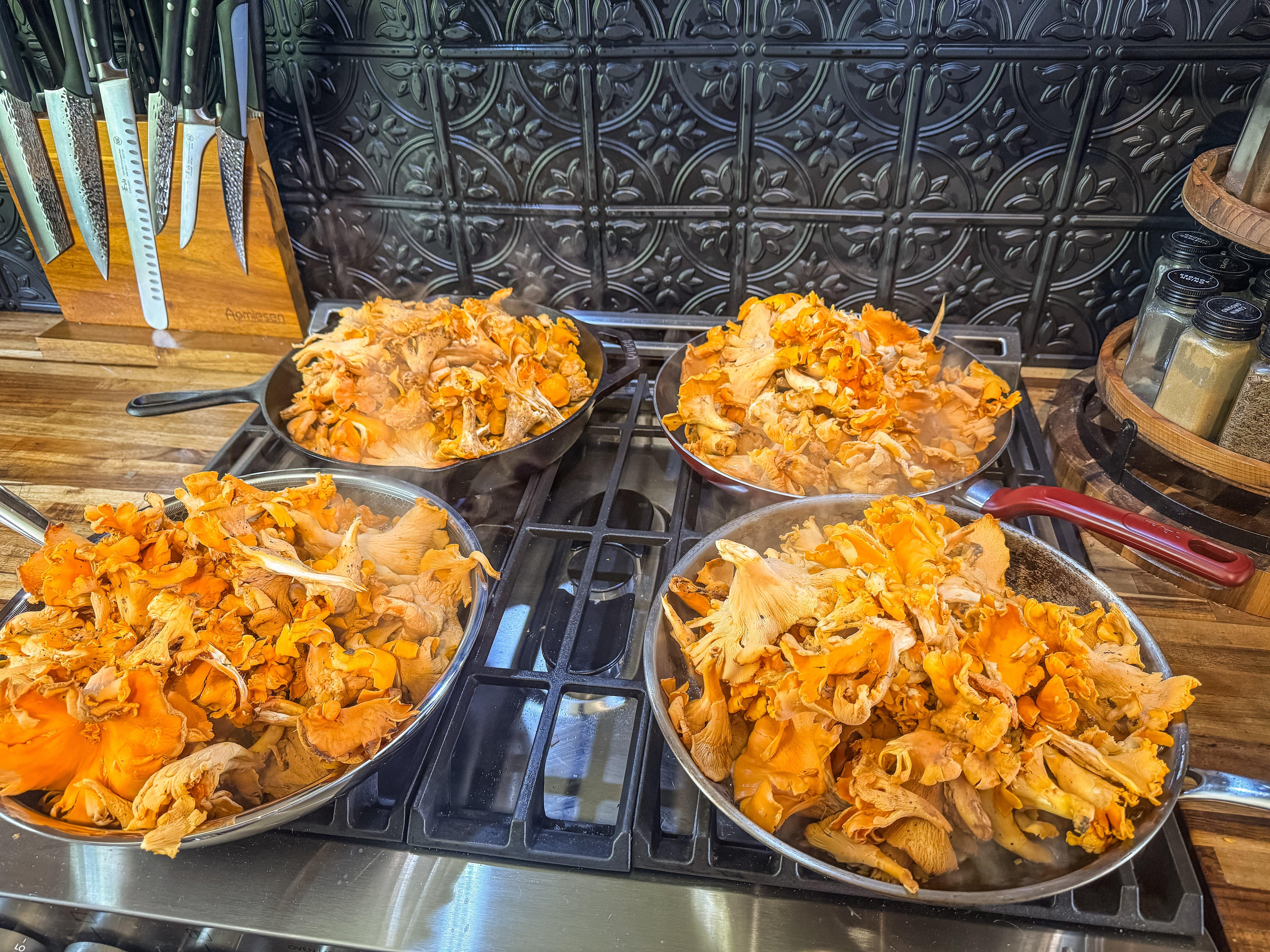
Put the mushrooms in a dry skillet or add just a bit of water to start the cooking process. Image by author
Once the mushrooms have stopped giving off moisture, usually after about 10 to 15 minutes, they will start to soften and reduce in size.
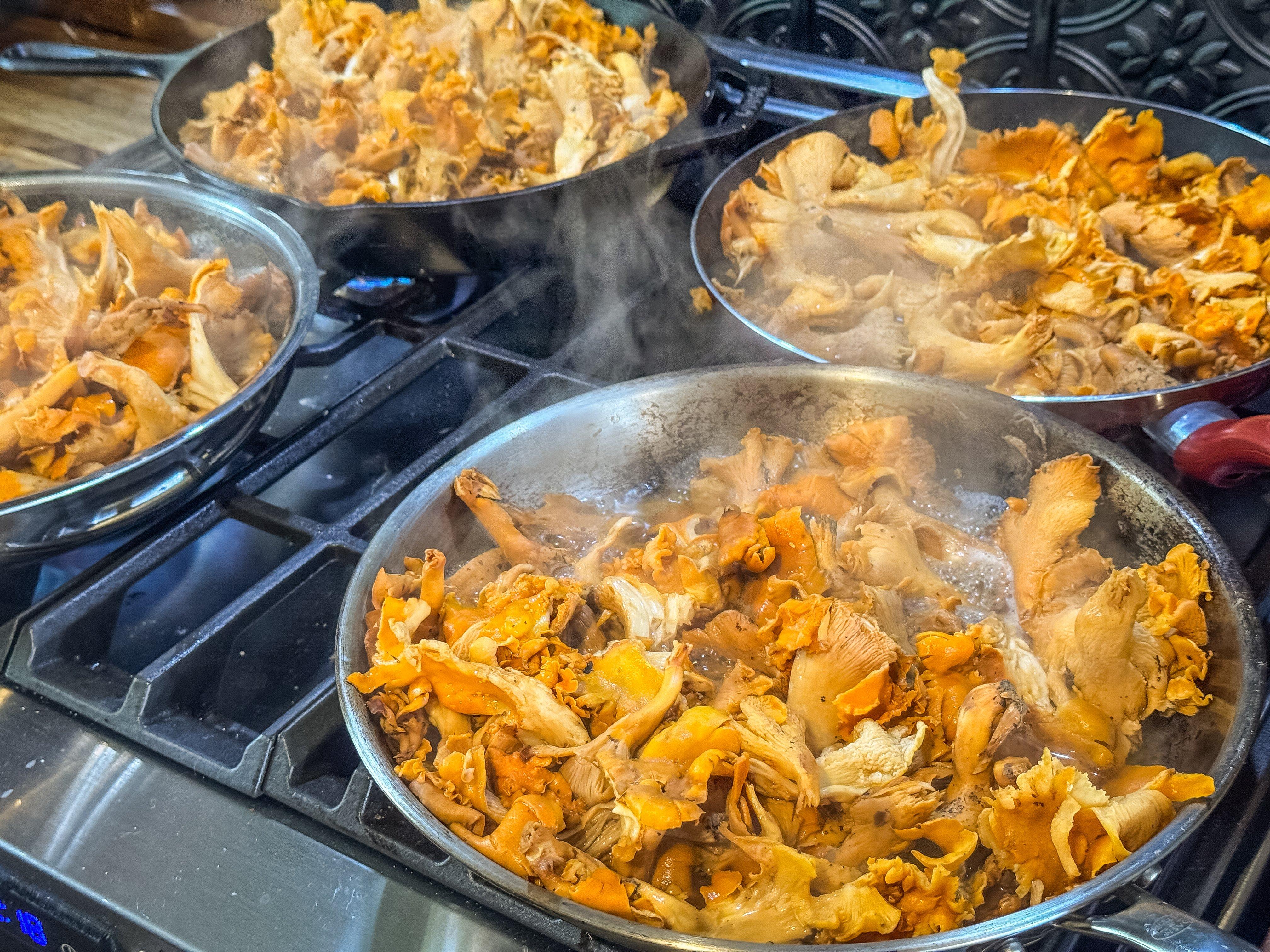
As the mushrooms start to cook, they will release excess moisture. Image by author
At this time, give them a light sprinkle of salt and add a couple tablespoons of butter or oil to the pan. Sauté the mushrooms for another three to five minutes in the butter or oil, then remove the mushrooms from the skillet and allow them to cool.
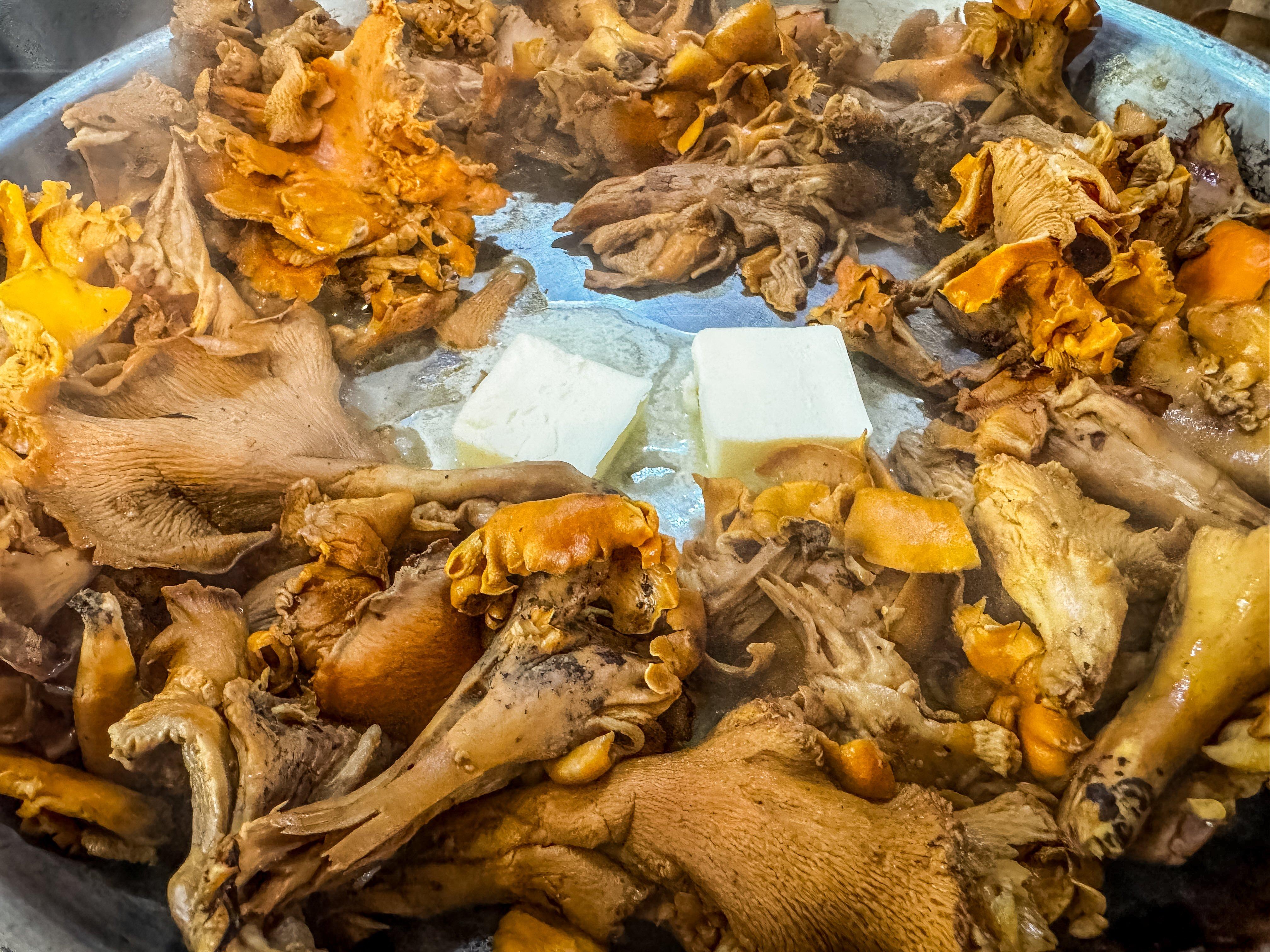
After the mushrooms stop releasing moisture, add a bit of butter. Image by author
To give you an idea on how much moisture the mushrooms will lose during this process, I weighed this batch before and after cooking. The fresh weight was 10.6 pounds, and the cooked weight was 7, a loss of about 30%.
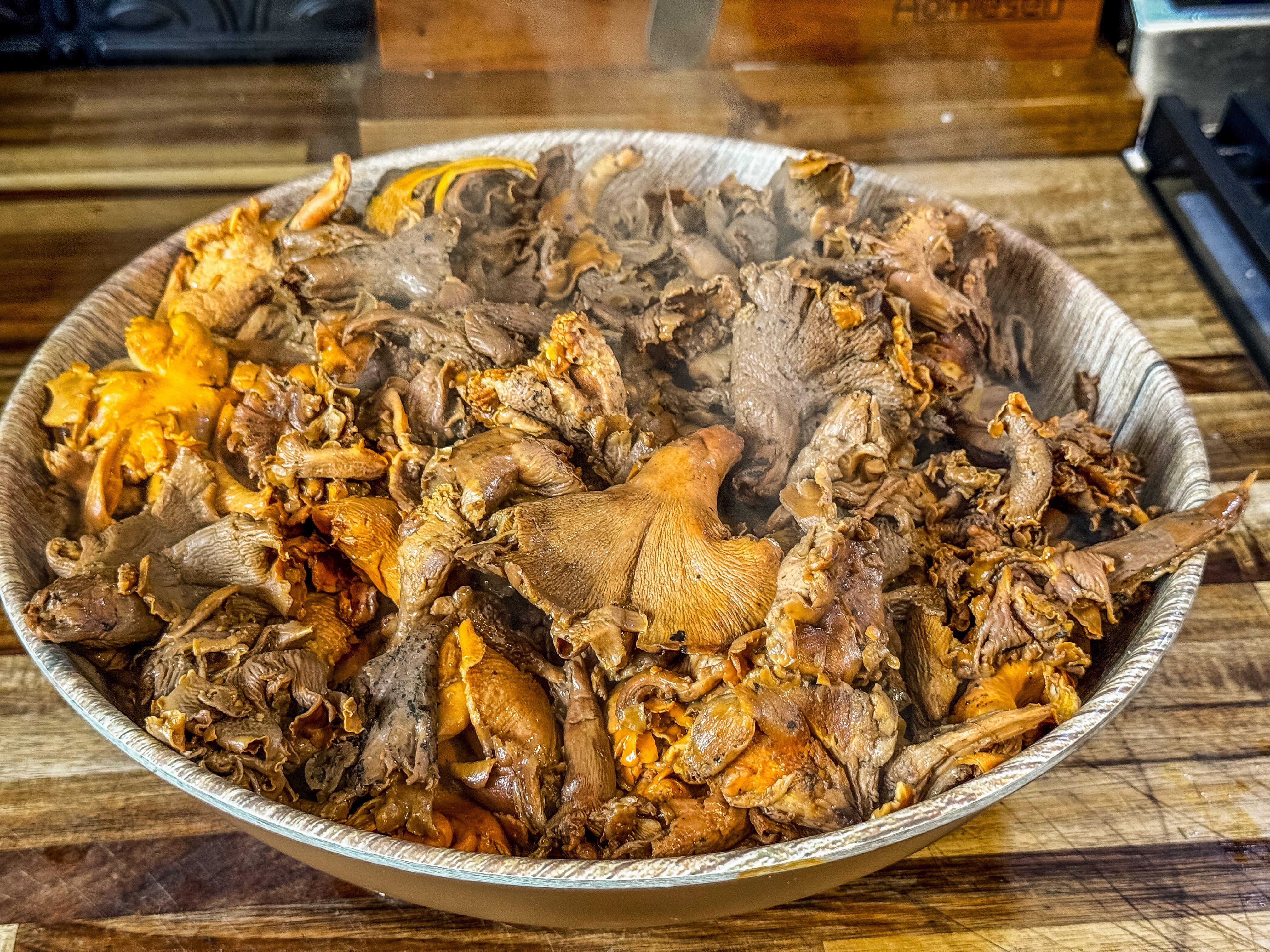
After the mushrooms cook, allow them to cool a bit before packaging. Image by author
- PACKAGE
I like to vacuum seal the prepared mushrooms in either 8-ounce or 1-pound packs. I do some of both for different recipe needs. You can also store them in freezer style zip top bags if you don’t have a vacuum sealer. Just package the mushrooms, label and freeze. That’s it.
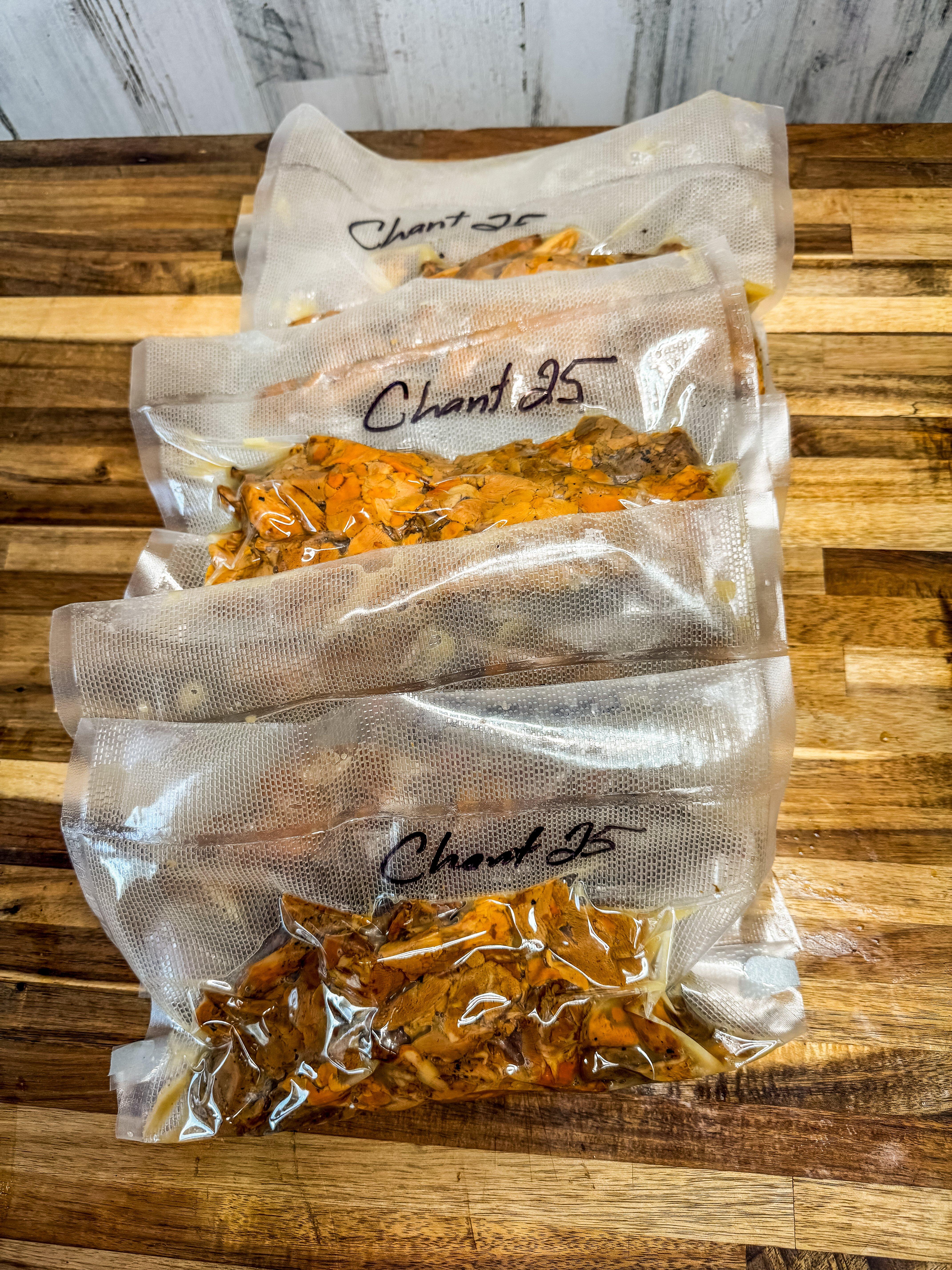
Package the mushrooms by vacuum sealing or placing in a freezer Ziplock. Image by author
- ENJOY
Enjoy the bounty of summer all year long. Use your mushrooms just like you would the fresh version. They don’t fry up as well, but they are perfect for soups, stews, sauces, or just sautéed with a bit of cream and a sprinkle of good parmesan cheese. That makes a killer side dish.
Get out and find yourself some chanterelles this summer. Like any wild mushrooms, make sure you have the correct species. Always go with an experienced forager or use multiple guide books and cross reference every aspect of the mushroom before consuming. Wild mushrooms can be deadly if you accidentally get the wrong one. Luckily, chanterelles are one of the most common and easily identifiable edible wild mushrooms. If you find an abundance, and you often will, use this method to store them for many great recipes to come.
Don’t Miss: 5 REASONS CHANTERELLES ARE BETTER THAN MOREL MUSHROOMS