Turkey Scouting Tactics for Modern Hunters
Posted 2026-03-19 by
Scouting is the most critical aspect of successful turkey hunting, and blending digital tools with old-school, in-the-woods intel is the best way to do it
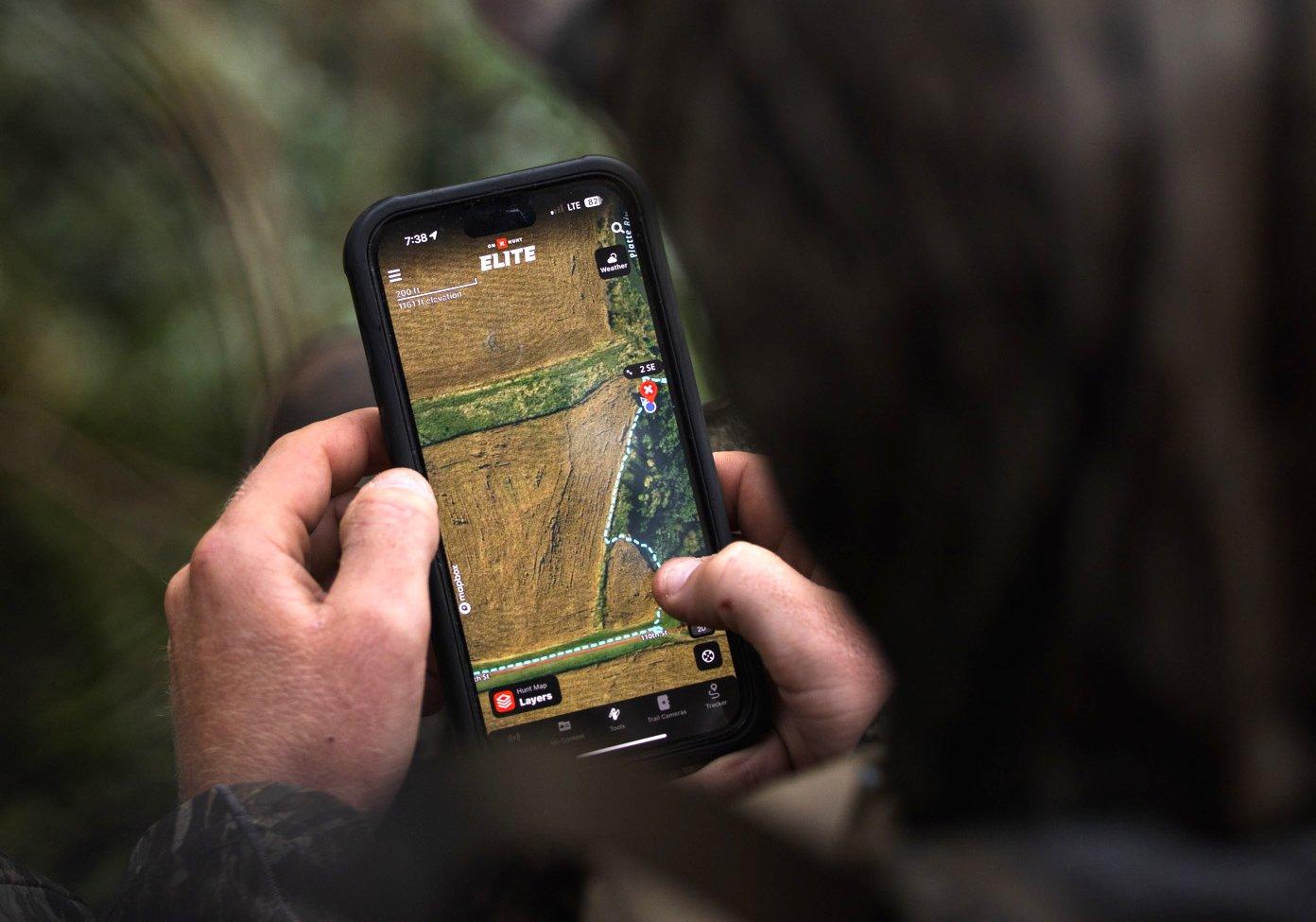
Mapping apps such as onX Hunt can help you scout remotely and in the woods. Image by Realtree.
Pre-season scouting is one of the most important factors of successful turkey hunting. But like hunting itself, scouting is a skill set that is developed through time and experience, and it’s critical to focus on scouting practices that provide real benefits.
Of course, scouting methods vary quite a bit from the national forests of Mississippi to the mixed timber and farmland of the Midwest to the river breaks of South Dakota. But some general best practices will typically serve you well when scouting anywhere in turkey country.
TAKE A REMOTE LOOK FIRST
Most modern hunters have experience with online mapping apps such as onX Hunt that allow you to view topography, public land and private property boundaries. These apps can help identify specific terrain features and access routes long before you put boots on the ground.
Don’t Miss: Finding Strut Zones, the Key to Late-Season Turkey Hunting
Whether you’re hunting private land or public, mapping boundaries is one of the most useful features of these apps. Knowing where “the line” is can be critical for spring turkey hunting, whether you’re seeking chunks of public ground that border private plots, trying to find small patches of public dirt that other hunters might overlook, or attempting to find out who owns a farm you’d like to hunt. It takes the guesswork out of identifying property boundaries and terrain features and puts you a step ahead for in-person scouting.
Also, onX Hunt’s crop data layer can be handy in ag country. It displays previous-season crop data via a color-coded map overlay. This feature is popular with upland-bird hunters, but it has benefits for turkey hunting. It can reveal crop fields that might attract spring turkeys, such as harvested bean or corn fields, hay (alfalfa) plots where turkeys might seek insects after green-up, and even clover plots, which can really attract early season birds.
If you plan to hunt country with varying topography such as bluffs, ravines, valleys, or mountains, it’s helpful to view onX in hybrid mode, which combines detailed aerial imagery with overlaid topographic contour lines. This really helps you identify likely travel and feeding routes, plus rough spots you’ll want to avoid.
Don’t Miss: How to Get Your Gobbler Opening Day
ON THE GROUND
As spring nears and conditions allow, visit current or potential hunting spots to collect in-person info. This can involve listening for morning gobbles from a good vantage point, glassing large pastures or fields from afar, or strolling through the woods looking for fresh sign. Whatever method you prefer, make sure to take a low-impact approach. You do not want to bump or otherwise disturb turkeys you might hunt later. Studies have shown that a good percentage of gobblers that experience negative human encounters actually change their habits or relocate somewhat within their home range for a time.
When listening for gobbling, use onX’s compass mode feature, which lets you see your location and current direction on the map, basically acting as a compass on your phone screen. This helps you navigate by visually aligning your phone in the direction you want to go and estimating distances to specific spots — like where a longbeard roosted or gobbled on the ground. You can also use compass mode to mark waypoints at various distances and directions from your location. That provides obvious benefits for turkey hunting, especially when coursing the location of a gobbling bird and trying to figure out how to approach that bird during the season.
Check Out Our Latest Camo Pattern: Realtree APX
No matter your scouting approach, note any clues on the landscape, and piece them together like a puzzle. Seeing turkeys consistently at a spot obviously provides a big advantage. Tracks and strut marks along roads or field edges can reveal good setup locations. Areas with lots of droppings and wing feathers can reveal roosts. Scratching shows you where turkeys travel and feed, but pay careful attention to how fresh it is. The leaves and exposed dirt in old scratching will be dried. Fresh stuff will typically be moist. Dust bowls — where turkeys create depressions and cover their feathers in dust to control parasites and stay cool — are overlooked hotspots. Look for all of these, and drop pins at good spots.
THROUGH THE SEASON
As Mike Hanback recently explained in his blog “How to Hunt the 4 Phases of Spring Turkey Season,” spring is not a static event. Turkey behavior and location changes almost constantly, from the early breakup of winter flocks right through nesting. Throughout that time, turkeys will use various portions of their home range. That’s why it’s critical to continue scouting efforts up to and throughout the season.
Often, this is just a process of observation. It’s easy to scout while you hunt, whether noting tracks or droppings as you walk and call along a logging road, or simply glimpsing turkeys at a spot you hadn’t seen them before. Every bit of recon can help fill a tag, but the most current information is especially critical.
Always watch and listen. Use mapping apps to connect the dots. After a while, you’ll find that the scouting process is almost as fun as the hunt itself.

?fmt=auto&qlt=default&fmt.webp.qlt=65&fmt.png.qlt=73&fmt.jp2.qlt=35&fmt.jpeg.qlt=60)