Southern Turkey Seasons Begin with Mixed Reports, High Expectations
Posted 2026-03-23 by
Early conditions vary across the region, but hunters remain optimistic as strutting and gobbling activity increases
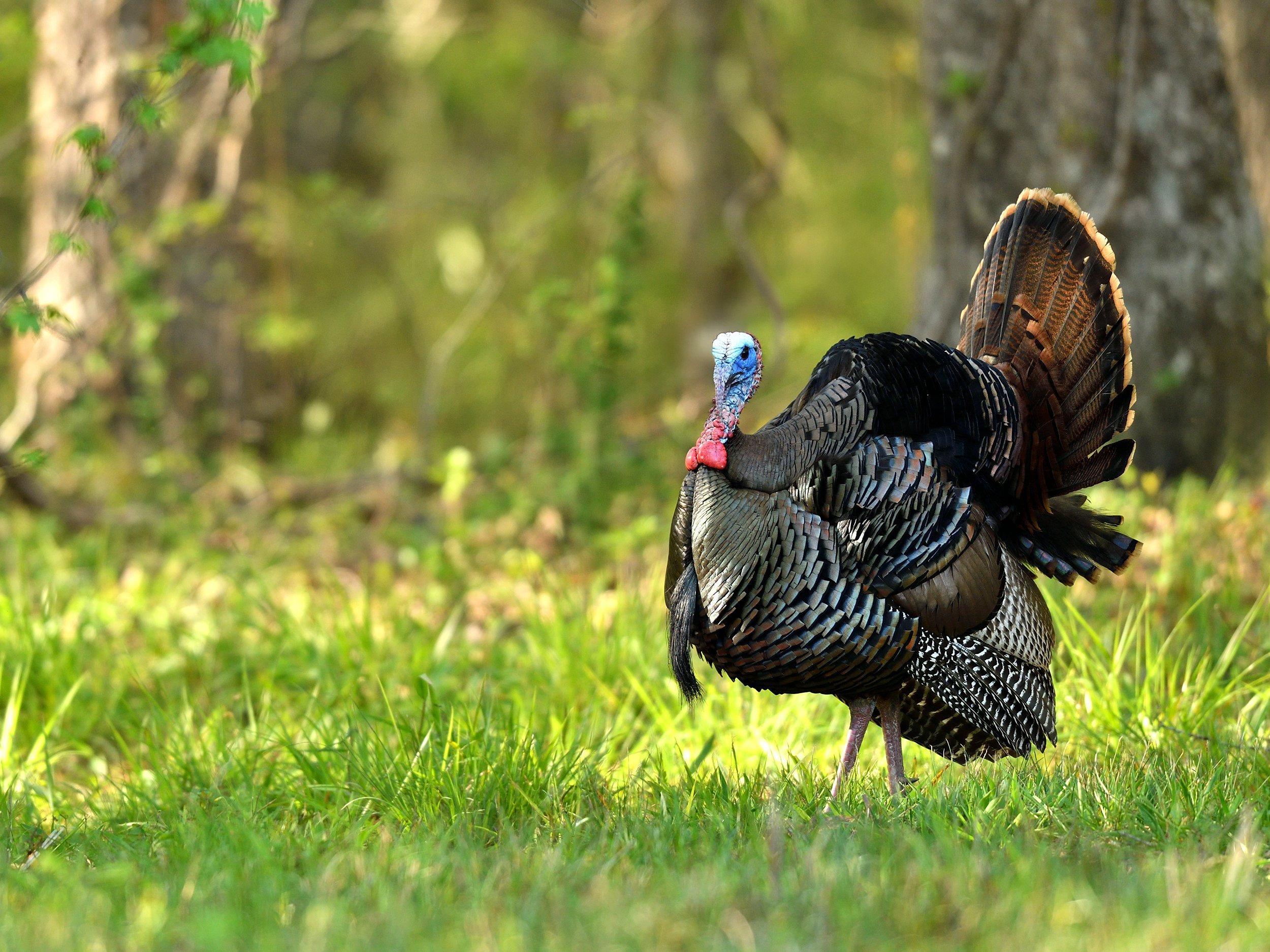
Early green-up in many southern states has the turkeys right on schedule as hunting seasons begin. Image by Tes Jolly
As spring turkey season opens across the South, early reports show a mix of conditions and growing excitement. From Florida’s youth hunts to Mississippi’s patchy gobbling activity and Texas’s dry start, turkey behavior is already reflecting weather and breeding cycles.
Youth weekend in Florida’s north zone went pretty well according to Ricky Lackey, National Wild Turkey Federation (NWTF) district biologist.
“Thirty-seven kids registered for a NWTF north Florida youth event that I participated in, and nine birds were checked in. That's a little above average success rate for youth hunts, in my experience. Folks are certainly excited for the general opener,” Lackey said.
He said bird activity in Georgia is looking good as well. “The youth opener should be great, with a lot of gobbling!”
Turkey for Tomorrow (TFT) board member Terry Rhom faced some challenges during opening week in south Florida in the Lake Okeechobee area, but his group still managed to tag some birds.
"Conditions were hot and the area was extremely dry. Gobbling was sparse with very little on the limb. We did manage to shoot a few. This week with cooler temps should be awesome," Rohm said.
Don’t Miss: Turkey Scouting Tactics for Modern Hunters
Mixed reports are coming in from Mississippi, with some experiencing a lot of gobbling and great success, while others are complaining about henned-up birds. Caleb Hinton, Mississippi wild turkey program coordinator, says the state seems to be experiencing an early spring and early green-up.
“Right now, we have over 1,000 more birds reported than this time last year. From what I am hearing, gobbling activity is better in the northern half of the state than the southern half. Birds down south are very henned up. I expect that to get better as the season progresses and hens start nesting,” Hinton said.
Despite those reports, TFT CEO Jason Lupardus said he had great success with the birds in southern Mississippi. "The birds were on fire and gobbling before sunrise with the crescent moon shining. We saw a ton of activity throughout the entire day with action in the middle of the day and late afternoon. Gobblers were very active in the areas that were prescribed burned over winter, as the green-up in these stands was tremendous. Be on the lookout when chasing gobblers, because the snakes are on the move," Lupardus said.
Johnny McKinion, NWTF Mississippi regional director, agrees that the birds are hot, but says they’re getting a little tougher to hunt every day as they get henned up more and more.
The Mississippi birds gobbled great on opening morning for Realtree’s David Blanton, but that was the highlight of his hunt. “I got there the following day and the storms were rolling through and then it turned off really cold. I only heard a couple of gobbles on the limb, maybe one gobble after they hit the ground and then nothing. I think they’re henned up.”
Things are off to a slow start due to dry conditions in Texas’s Rio Grand range, according to Annie Farrell, NWTF district biologist.
“Birds are still in large flocks, gobbling on the roost, but there’s not great hunting. Hunters are still bagging birds, but more so based on knowing how birds are using the landscape than gobblers actually running into calls and decoys,” Farrell said. “We have seen some spotty rain showers that will lead to green up in local areas. That will benefit the birds and eventually the hunters in those areas, but most of the landscape needs rain soon if we are going to have any chance at a quality season and eventual recruitment.”
She said turkeys are on the move in East Texas, with lots of observations near NWTF release sites along the Trinity, Sulphur, and Neches Priority Areas.
“People are seeing lots of banded and un-banded birds. That’s a good sign for the season to come,” Farrell said.
<span>Jason Hardin, Texas Parks & Wildlife wild turkey program leader, agrees with Farrell, saying that although birds are being harvested in the Rio Grande range, they aren’t seeing much green-up due to the dry weather.</span>
<span>“Most hens are not yet in a condition to promote breeding activity, and many hens are still in large flocks. Those hens are keeping gobblers occupied and gobbling is ramping down quickly once they are off the roost,” Hardin said. “This is making for some tough hunting. Hunters are bagging birds based more on knowing how birds are using the landscape rather than gobblers running in to calls and decoys. We have seen some spotty showers in south Texas (South Zone) that will lead to green up in local areas. That will benefit the birds and eventually the hunters in those areas.” </span>
<span>He said mandatory harvest reporting shows harvest on-par or slightly higher than 2025, but mandatory harvest reporting only became the law last year and he believes hunters are reporting at higher rates than last year.</span>
Outdoor Photographer Tes Jolly says she’s seeing plenty of gobbler action in Alabama, where the season opens this week.
“The breeding flocks are in place. Gobbling on the roost has been strong and hens are roosting nearby. Hens are ready to breed and toms are holding tight all morning to the hens for an opportunity,” Jolly said. “The jakes are tagging along. One bold jake struts every day and has a gobble that would fool just about any turkey hunter. I witnessed it live and was amazed. Some toms have not secured hens and are covering ground. I observed two dominant toms chase two intruders for 200 yards yesterday. They weren’t welcome even in the vicinity of those hens.”
Derek Alire, NWTF district biologist (AL, KY, TN) says where he lives in northwest Alabama, the birds are grouped up and they’re hitting the ground together off the roost.
“Gobbling is good on the roost, but not so much after fly-down,” Alkire said.
Things are happening earlier than normal in Tennessee according to land manager Michael Arnold. He says the early behavior is probably due to the warmer weather the state’s been experiencing.
“Winter flocks have busted up and some gobblers are alone as well, but for the most part, gobblers are in groups of three to five traveling together. They’re still getting the pecking orders determined,” Arnold said. “Gobbling has been intense both on the limb and on the ground, even throughout the day. This is probably the earliest I’ve ever witnessed so much gobbling throughout the day. I’ve even seen a hen or two broken off from the group out looking for nesting sites. I watched two gobblers breed the same hen and then they fought for a while and then bred her again. I'm seeing really good numbers of 2-year-olds, and older birds as well, and tons of jakes. The youth hunt is still a couple weeks away, but it's looking great.”
Don’t Miss: 40 Years of Turkey Hunting with Team Realtree
Realtree.com Editor Will Brantley said things are progressing in southwest Kentucky as well. “I’ve seen several strutters in fields with large groups of hens over the past week,” he said. “I went out listening the other morning, and there was great gobbling on the limb, but they seemed to shut up pretty fast after they flew down. Overall, I'd say the turkeys are on schedule, and winter flocks should really be busting up in the next two weeks.
“Our season opens a little later this year, April 18, but runs to May 10,” Brantley continued. “I expect birds to be pretty henned up around the opener, but the latter part of the season should be good. The early season is always fun, but many of my best hunts around here seem to happen from about April 27-May 5. My guess is a bunch of hens are nesting then, and gobblers are getting lonely.”
Overall, hunters are remaining optimistic as the season progresses. With cooler temps, green-up, and hens beginning to nest, gobbling activity should improve, setting up solid opportunities for those willing to put in the time.

?fmt=auto&qlt=default&fmt.webp.qlt=65&fmt.png.qlt=73&fmt.jp2.qlt=35&fmt.jpeg.qlt=60)