How to Read and Understand Mountain Wind
Posted 2025-09-12 by
Knowing how elevation and terrain affect wind and thermals will make you a more effective mountain hunter
Sitting on the nose of the ridge in the dark, I was already doing the math of my packout. I could carry two boned-out front quarters on the first trip, then trade my hunting pack for a frame pack and fetch at least a hind quarter per trip. At that rate I’d have the elk in my coolers by sunset. Maybe afterward I’d have time to grab a beer and a burger in town.
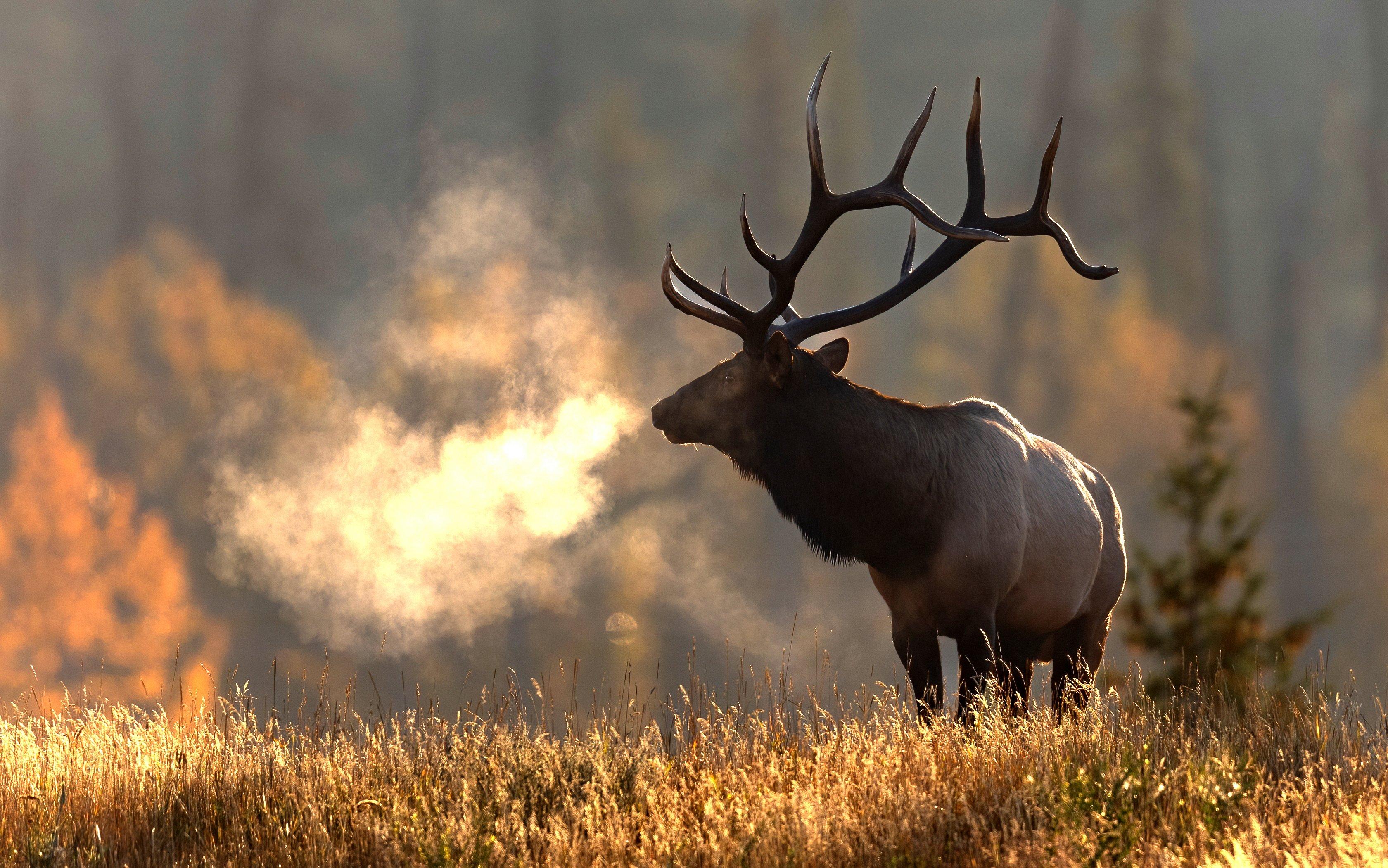
Even the best hunting plans can fall victim to fickle mountain thermals. Image by Harry Collins Photography
I had earned this moment. I left my pickup at 3 a.m. and hiked uphill for three hours, keeping the light breeze in my face the whole time and using my headlamp judiciously. Now I was above where I had seen the herd bed down at sunset last night, and as I waited on the sun I allowed myself to picture the surprised lead cow and how I’d wait for the milling elk to separate before taking the biggest bull in the bunch.
The sun did its part, but as I sat there peering down into the timber I felt the wind puffing on the back of my neck. The elk never materialized, and I spent the rest of the day glassing empty meadows.
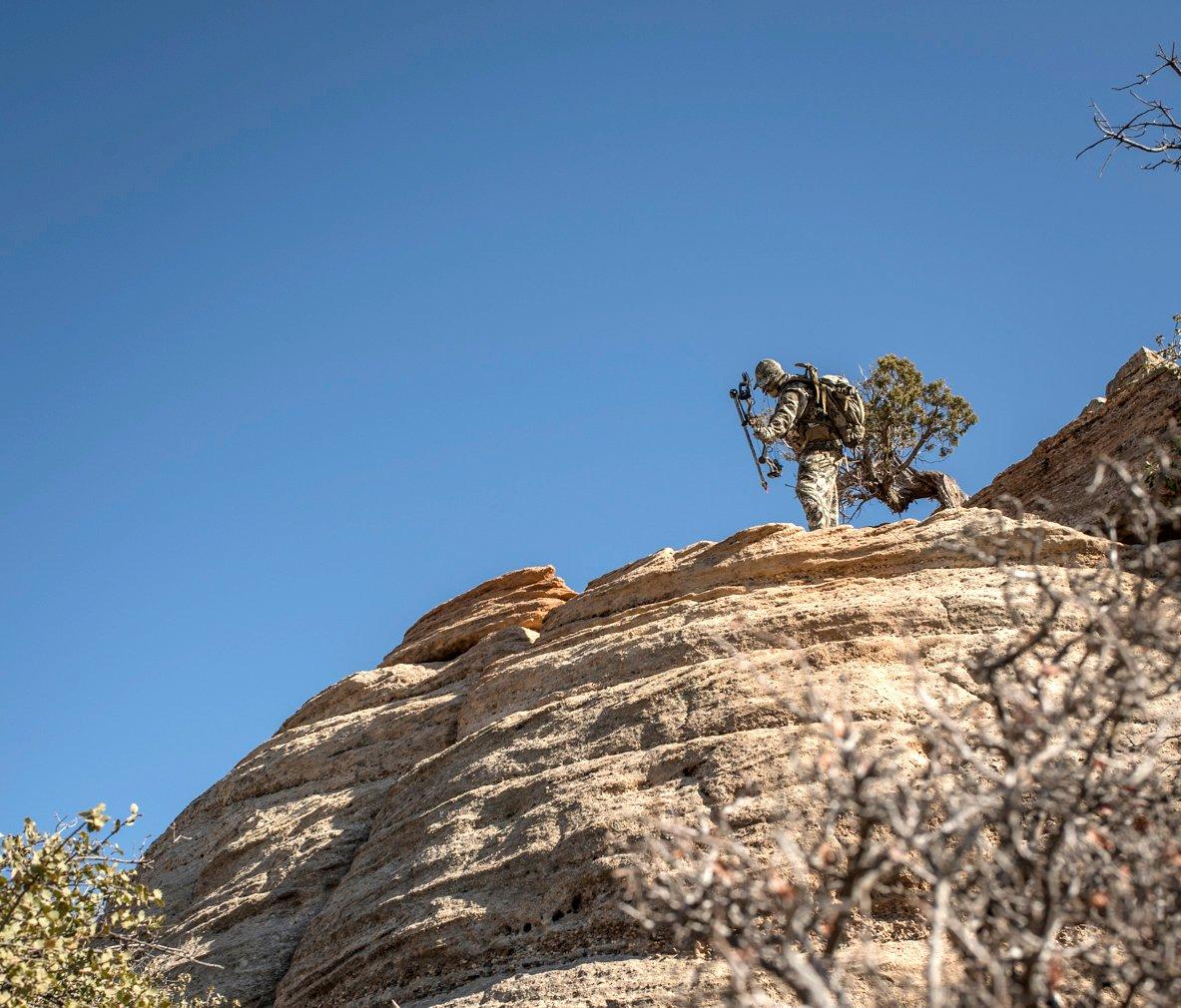
Even with a precise wind forecast, hunters need to understand how terrain affects ground level wind movement. Image by Bill Konway
Mountain thermals had busted me, spreading my scent to all those unseen elk bedded in the timber below me. It was a cinch for them to simply stay put in the cover or to depart that drainage for points unknown. And it was a necessary lesson for me, a low-country whitetail hunter at the time, to understand that wind and its behavior is fundamentally different in the mountains.
Don’t Miss: 10 MISTAKES THAT’LL RUIN AN ELK HUNT
THERMAL UPDRAFTS AND DOWNDRAFTS: BASIC BEHAVIOR
The background for understanding site-specific wind patterns is prevailing wind. These are the winds that appear in broad-scale National Weather Service forecasts and will be influenced by cold and warm fronts, active storms, and seasonal variation.
These prevailing winds are fairly easy to predict and to plan for. Simply consult any weather app for the 24-hour local forecast. The Weather Service has spent a ton of money and computational power to bolster its wind forecasting capabilities, and as much as we love to trash weather forecasters, it’s a sort of magic that we can get a very precise forecast a day or two out, and some pretty accurate week-away forecasting.
Especially when they’re stiff, like over 20 mph, these prevailing winds will trump the winds that really matter on the ground, the terrain-specific thermals that have saved more mountain game than bad shooting and out-of-shape hunters.
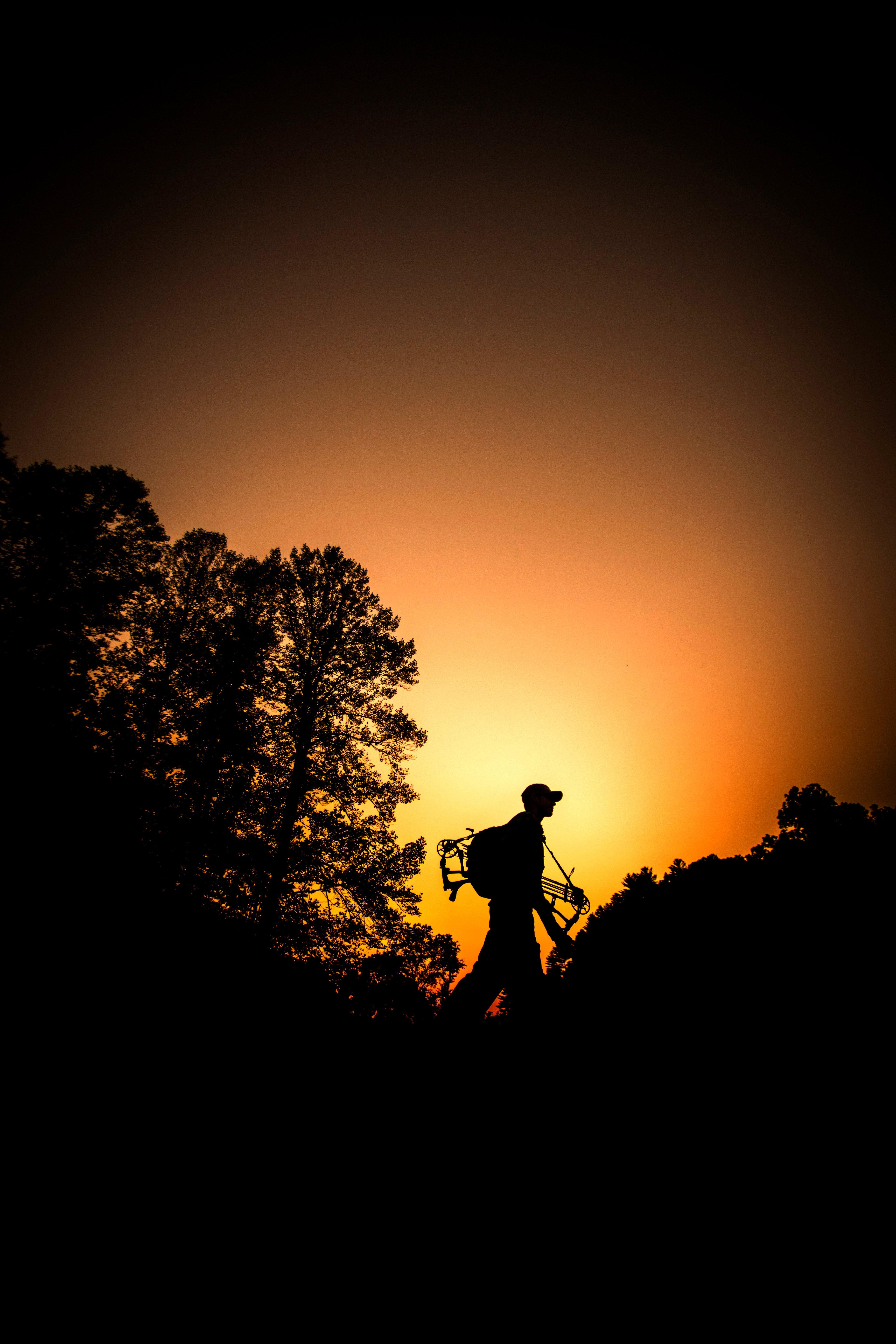
When prevailing winds are less than 20 mph, ground thermals, particularly early and late in the day, can override wind direction. Image by Bill Konway
Thermals, those light breezes that change direction and velocity over the course of a day, are a constant of every mountain hunt, and they are knowable in the way that your spouse is knowable. About 50 percent of thermal behavior is predictable. But the other 50 percent changes from day to day and depends on season, specific terrain, and even cloud and vegetation cover.
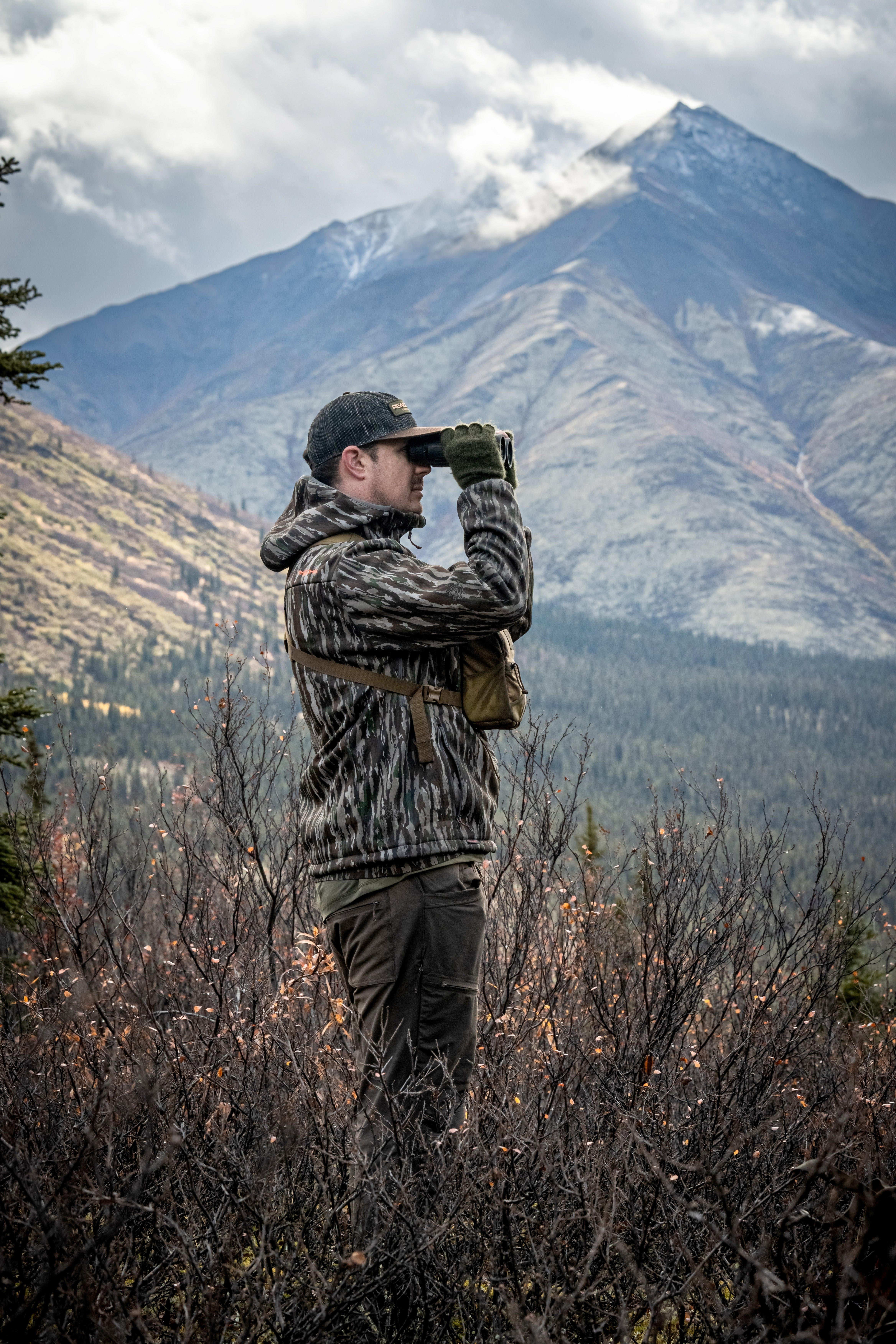
Thermal winds can be hard to predict, changing with the season, terrain shape, temperature, and vegetation. Image by Realtree
But it’s important to note that thermal behavior is not forecastable in any formal sense. It happens on too fine a scale, with too many variables to consider.
With those caveats out of the way, thermals are essentially sun-influenced upswells and downswells. The rule of thumb is that thermals drift upslope in the mornings as the rising sun warms higher-elevation peaks and rocks. The warming air rises, pulling lower-elevation air up where it’s warmed and also rises.
In the evenings, as shady low-elevation canyons lose their heat, the heavier cool air descends, pulling higher-elevation air downslope.
You’ve seen this if you’ve spent any time in the mountains, or even in especially hilly terrain. Morning breezes blow toward the sun-touched peaks. Evening breezes blow toward the valley floors.
Again, if there’s a prevailing wind, say a major cold front moving across the mountain, the pressure of incoming cold air can influence all these thermal patterns, which is why it’s important to know the big picture before you apply your knowledge of the small patterns.
Don’t Miss: THE 2025 WESTERN DEER SEASON FORECAST
TERRAIN’S INFLUENCE ON THERMALS
But it’s those small patterns that will make or break your mountain hunt.
Just as a stream doesn’t flow linearly but instead swirls around rocks, gathers in pools, and shoots down chutes, so is wind influenced by variations of slope, vegetation, and ambient temperature. But if you apply those big wind patterns — up in mornings, down in evenings — then you can start to tease out the little patterns.
Here’s an example based on the experience I shared at the start of this story. From way below in the last light of evening, I had glassed elk feeding in a meadow between the high peak above them and the start of dense timber of the deep drainage below them. I based my approach on where I last saw those elk before I lost light and my understanding that as I started my nighttime hike, thermals would be drifting downhill.
What I didn’t recognize is that where I lost sight of the elk, there were two small drainages funneling thermals downhill. Sometime in the wee hours, I crossed one of those little wind funnels, sending my scent right down to the herd I hoped to encounter.
If I had pictured wind as water, I might have recognized how the downslope thermals would flow and mix, creating swirls. It’s these non-directional winds that wild animals depend on, because it protects them from intruders from every side, and they’ll find places to rest, feed, and bed where winds swirl and mix.
If you’ve hunted Western mountains or more significant Midwestern and Eastern ranges, you’ll know that north-facing slopes tend to have more vegetation, hold more snow and moisture, and stay in shade longer than the dried-out and sun-baked south-facing slopes. Now that you know the behavior of thermals, you can understand that upslope thermals are stronger on south-facing slopes than on cooler north-facing slopes.
The opposite is also true. Heavily timbered lower country, especially north-facing streams that tend to hold ice and snow, can intensify those downslope afternoon thermals.
Don’t Miss: 100 YEARS OF HUNTING WITH THE .270 WINCHESTER
ANTICIPATING ANIMAL RESPONSE TO THERMALS
Simply understanding how temperature-influenced wind moves across landscapes is cool and all, but how does it help you kill more elk, mountain whitetails, and mule deer?
You should know that all those species, especially where they’re hunted hard, are using those same thermals to stay alive and to get a snoot full of your scent long before you see them.
As herding animals, elk are especially responsive to thermal dynamics. They’ll bed where they can catch those swirls, or mixing of upslope, downslope, and cross-slope thermals.
In my case, that was at the head of a couple of avalanche chutes. But you’ll often find late-season bulls in lower elevations, near those thermal sinks where cooler water or dense vegetation mixes thermals and creates swirling.
In other cases, you’ll find mature mule deer bedded just below prominent ridgelines. They’re selecting that place because they can pick up scent from the prevailing wind behind them but also detect danger from upslope thermals, and they generally use the open ridges to visually detect incoming danger.
PUTTING IT ALL TOGETHER
Successfully hunting mountain terrain can sometimes be as simple as hunting downhill in the mornings, as thermals push air upslope, and hunting upslope in the evenings as cooling thermals push down.
But a more practical approach is to use those macro trends to your advantage — just as you factor in prevailing winds to your hunting master plan — but be ready to respond to terrain features that can be as small as exposed rocks that create micro thermals and nondirectional swirls or as big as broad glacial valleys that create their own weather and wind.
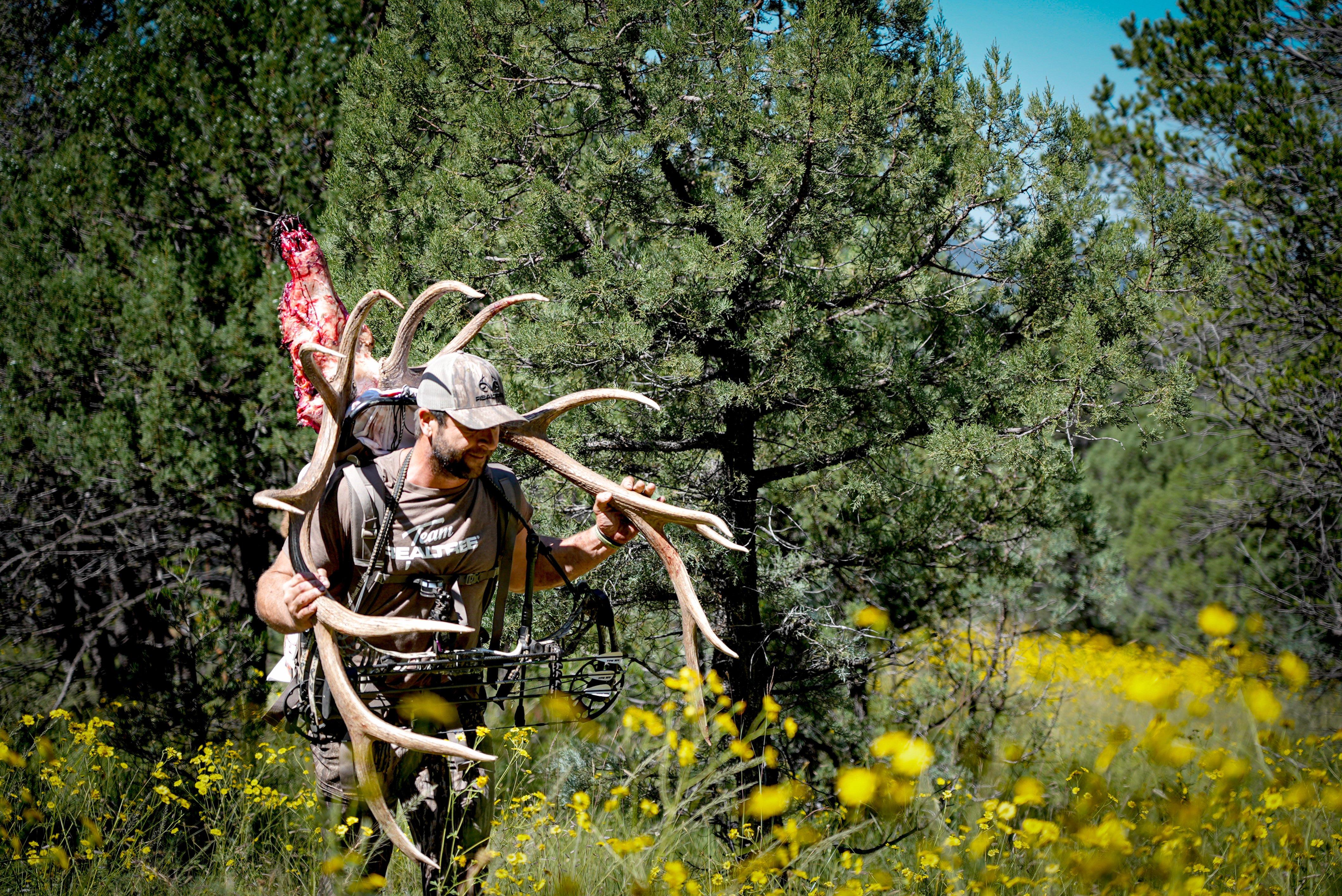
Understanding and using thermal mountain winds to your advantage can be the difference in punching your tag and going home empty handed. Image by Realtree
Just as I glass with my binocular in open country every 10 steps or so, in the mountains I’m deploying my wind-checker nearly as often. I want to see how the wind is moving and swirling wherever I am, and I often make big adjustments to my advance based on what my “windicator” tells me.
Knowing that it will change hourly, wind direction is as perishable as fresh fish, and when I have a path to success, knowing that a target animal or a herd is within striking distance, I don’t wait for either my luck or the wind to change and I snap to action.
Sometimes, the wind gods are on my side and I take the animal by complete surprise. More frequently, though, I get close enough to recognize that tell-tale, heart-sinking, ancient feeling of a slight breeze on the nape of my neck. And I know at that moment that I’m going to have to hatch a new plan, with a fresh approach, in a changing mountain breeze.
Don’t Miss: 5 TIPS FOR GLASSING MULE DEER