A 2-Stage Plan for Big December Bucks
Posted 2025-12-01 by
Punching a tag with a trophy during the final weeks of deer season isn't easy, but you'll be ahead of the game by following this advice
You’re reading this, so I bet you still have a buck tag and a hot desire to punch it. The first thing to do is think of December in two phases. For a week or so in phase one, mature bucks still rut and move around more than you might think (this is actually my favorite time of season to hunt). But then from mid-month on, these same deer become naturally programmed to shut down and enter a recovery period (this is an unpredictable and frustrating time to hunt). The two phases require different thinking and strategies.
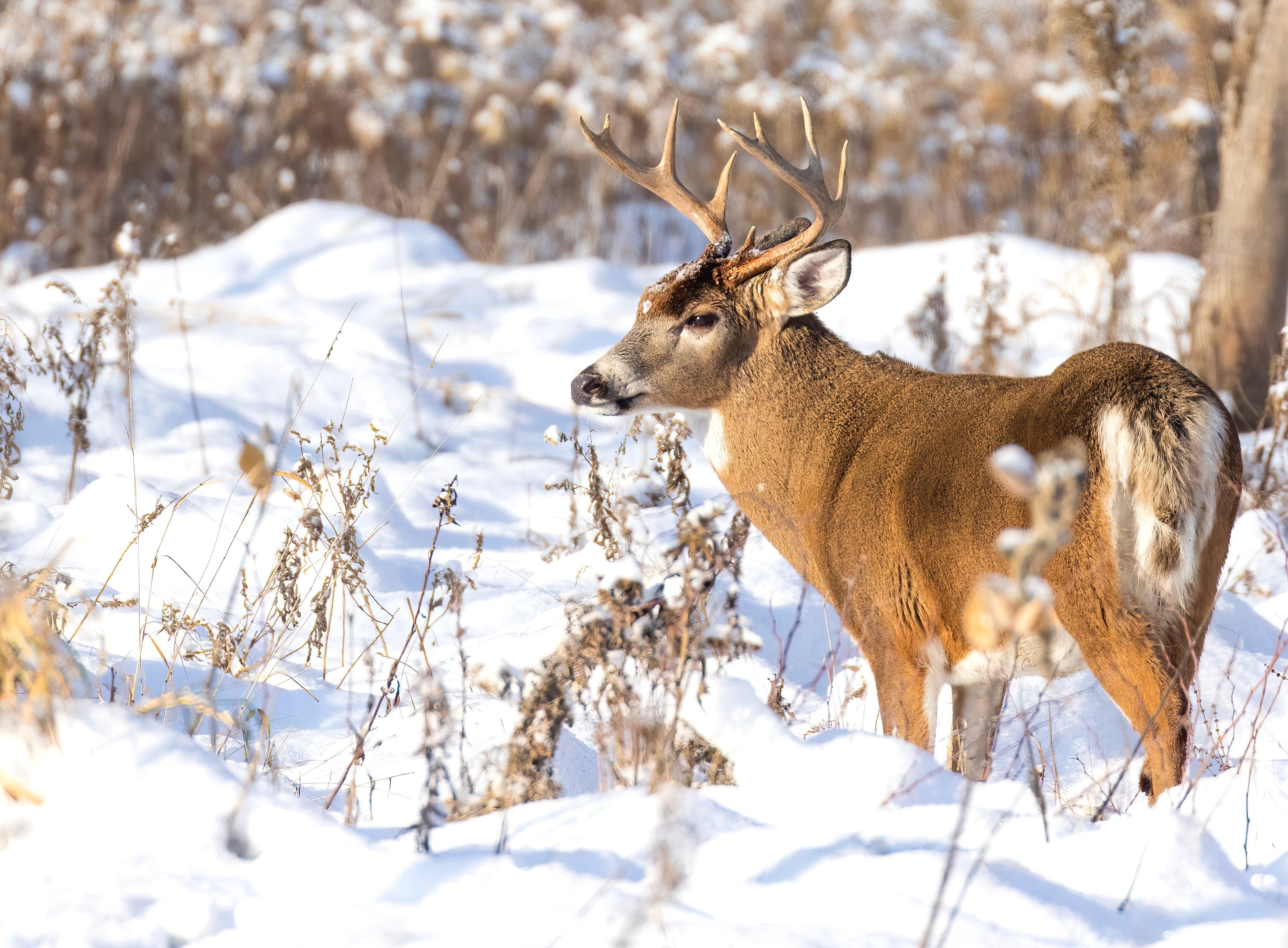
Staying on bucks after the rut can be tough, but hunters can still score if they follow these stages. Image by Mircea Costina
Stage 1: December 1-9
Deer Behavior
With the rut winding down, does come together in groups and focus on feeding to replenish their bodies and prepare for the upcoming winter. While the majority of adult does were bred and became pregnant during their first estrous cycle, some females are coming into heat at the end of the 28-day primary breeding period. While bucks are tired, beat up, and spooky from chasing does and eluding hunters, they are also on a hormone-driven mission to breed one last time before the fun is over for another year. They still cruise from one doe unit to the next, sniffing and checking for opportunity. Two reasons you might not see this last flurry of rut activity: there are far fewer does entering estrous now, so the buck movement is more confined and not as widespread as back in November; and much of that movement and activity happens at night.
Tactics for Stage 1
Go early and late: I have hunted the first week of December extensively for more than 20 years in multiple states. Every mature buck my friends and I have seen and shot moved at one of two times: either during the first hour of daylight, or during the last 10 minutes of legal shooting light in the afternoons. No exceptions.
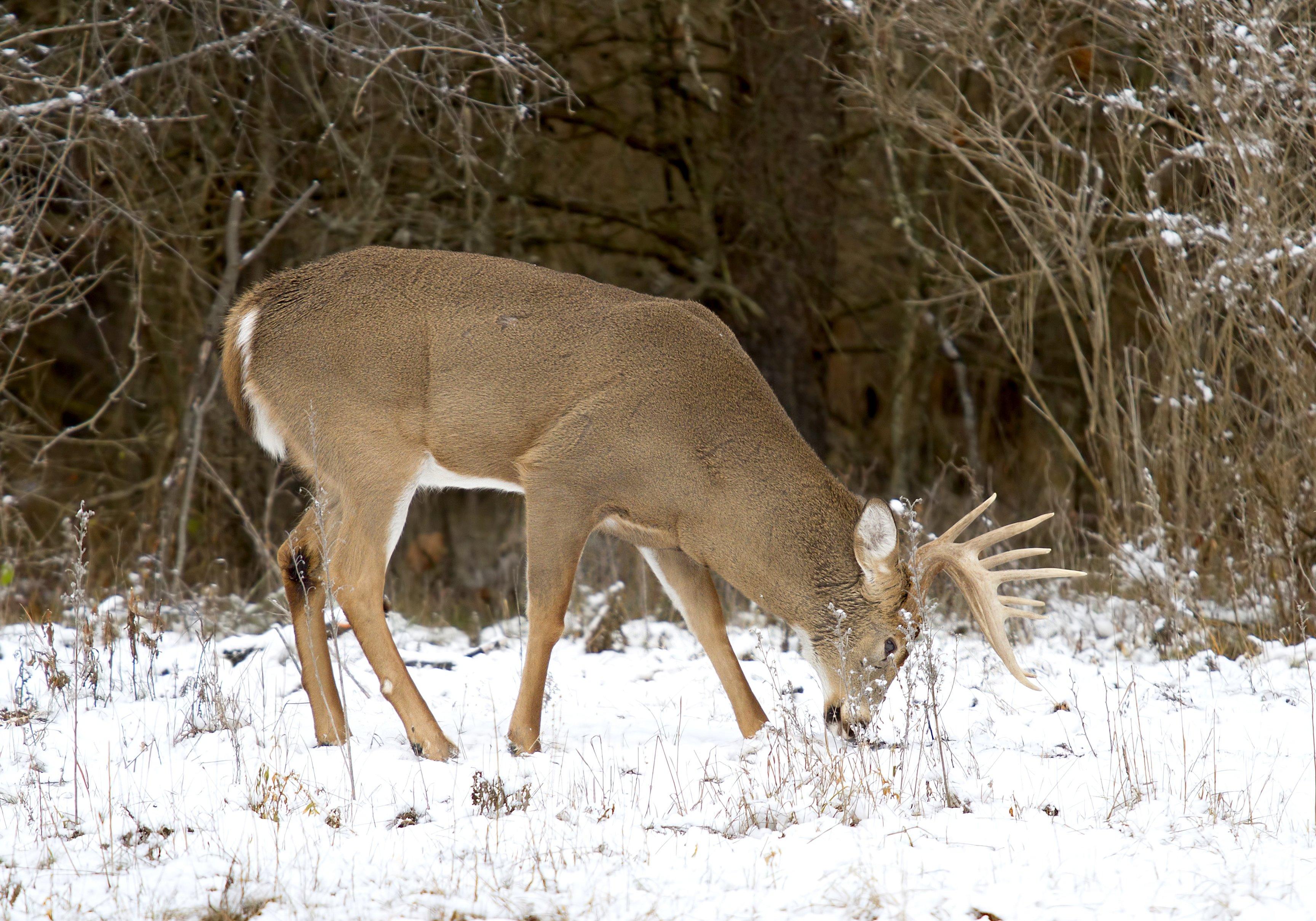
Hunt early and late for late-season bucks. Image by Jim Cumming
Try Scents: Hot doe scent can work better now than it did last month. Think about it. Bucks had lots of choices during the peak rut. But with only a few hotties ready to go now, the smell of one can attract a buck. Lay a doe-in-heat trail into your stand or blind. Try doctoring and freshening up a big old scrape near your set. The bucks are out there, moving and looking and sniffing.
Rattle one in: Deer scientist Mickey Hellickson conducted a three-year study in Texas and found that while the peak of the rut is the best time to rattle in the most bucks, the first week of the post-rut can be a better time to pull in a mature deer. Of the 29 bucks that responded to the crew’s 51 post-rut rattling sequences, 10 were 3 ½ to 4 ½ years old, and another 10 were 5 ½ years plus. “When old bucks cruise for the last estrus does of the year, they are primed to come to antler rattling,” said Mick.
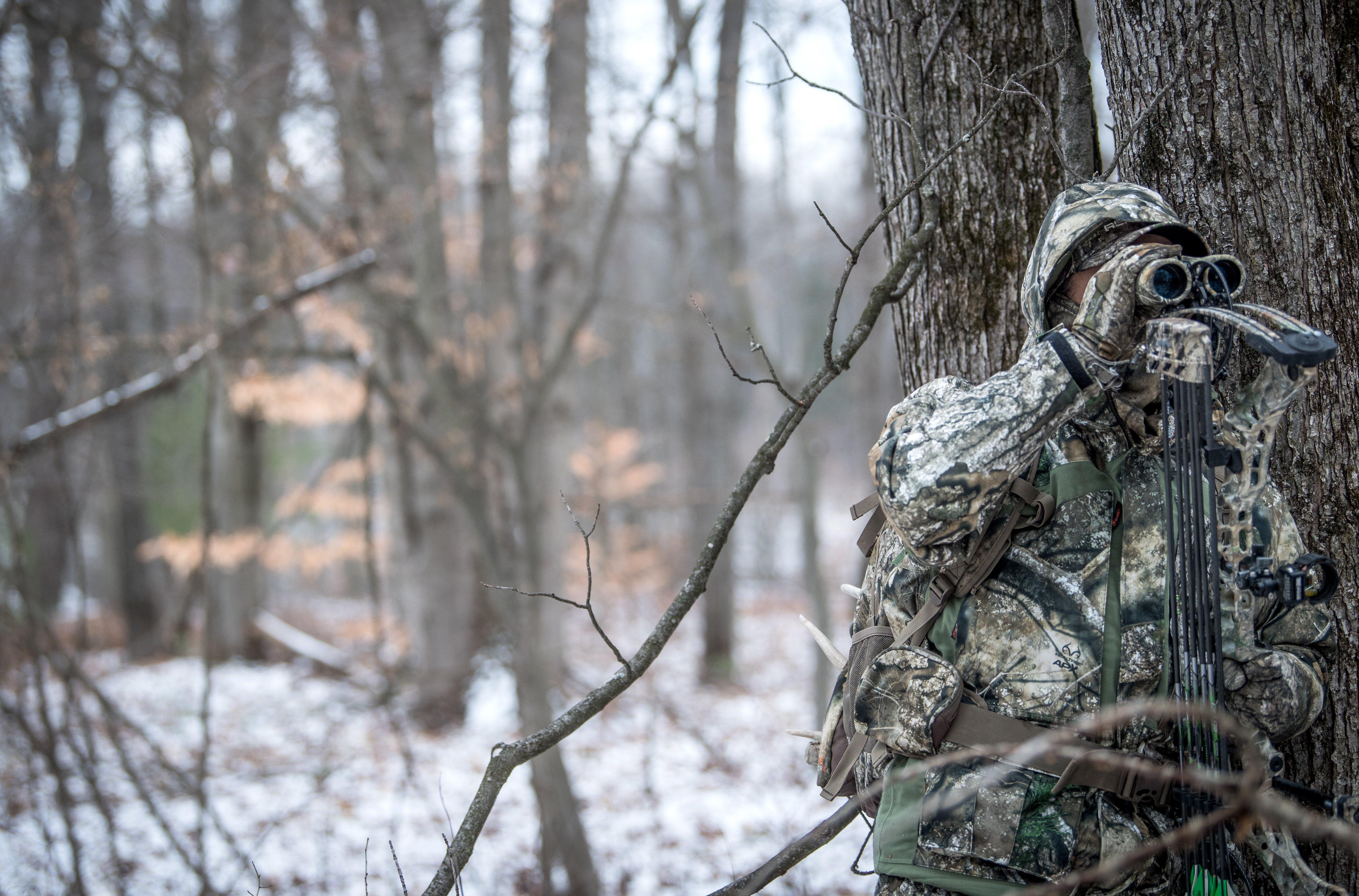
Don’t be afraid to give rattling a try for late season bucks. Image by Bill Konway
Using Mick’s advice, I have rattled in five old bucks the first days of December. All were on private land where the pressure was light or non-existent, so that is the first thing to keep in mind. I prefer a simple ground setup for a morning hunt. Slip in and hide on a hill or bluff with good visibility, and rattle hard and loud every 20 minutes. Lay down the horns, be still and watch for a buck circling in through the brush below.
Stands to Try
Rut redo: Bucks will sometimes cruise back through ridges, creek bottoms and draws where they blazed sign and hooked up with does a month ago, especially if there’s a doe unit or two still hanging around there and browsing thickets. Go back and sit your best rut stand where you found the most rubs and scrapes, and saw the most activity weeks ago, even though you might not have killed a deer there. You might catch one trolling in bow or gun range now. Remember to drag a scent line to your post in the morning, and hang a couple of wicks juiced with hot doe nearby.
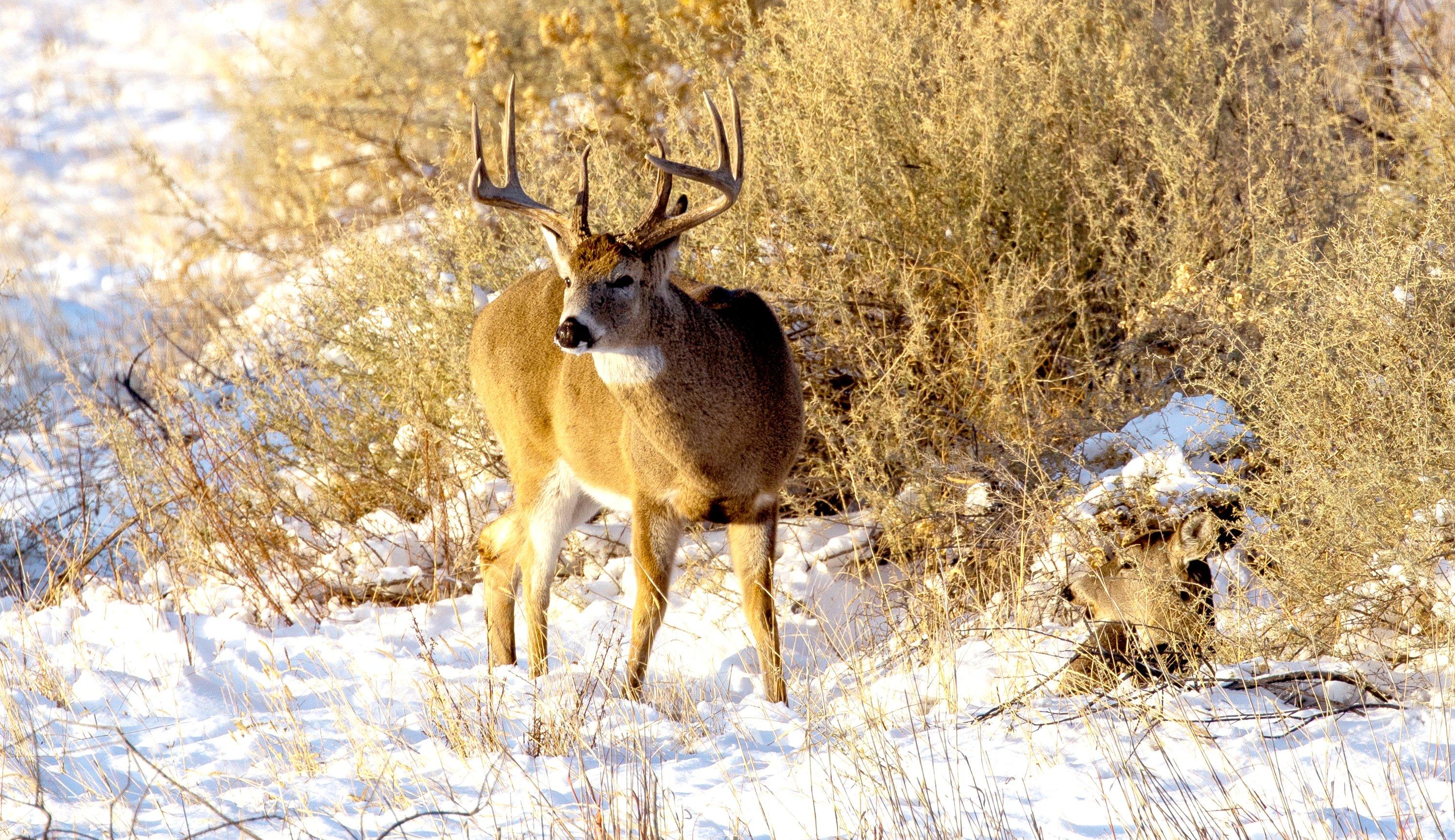
In early December, hunt the same cruising areas the bucks used during peak rut to catch bucks searching for late does. Image by J Edwards Photography
Plot/cover edge: One morning in Oklahoma a few years ago, I sat in a box blind that overlooked a narrow strip of green that funneled into a pasture of switchgrass dotted with cedar trees. A gaggle of does grazed in the wheat at as day broke, then drifted off into the tall grass as the pink sun rose higher. As if one cue, a 10-pointer popped out of a cedar thicket and circled downwind of the does, tipping up his nose to check each one. The rifle shot was an easy one, and my hunt was over by 7:30 am.
Two afternoons later, my friend John hunted the same blind, looking for a target buck the locals had named Splitter, which had eluded hunters for two months. As the sun sank, does filtered into the wheat strip to graze. At 5:32 p.m., a huge buck crashed from the cedars and beelined for the does. John shot the 160-inch buck with big forked G-2s with three minutes of legal shooting light to spare.
Don’t Miss: GIANT BUCKS ON TINY PROPERTIES
Look for similar terrain and habitat on your property, a spot where you can watch a strip of crop field or green plot that funnels into brushy cover dotted with cedars or pines. I guarantee that will be the ultimate spot for you to rifle hunt Stage 1, morning and afternoon, for years to come. Hang a tree stand where you can see or shoot 200 yards, or better yet, set a box blind there to break a cold December wind.
Stage 2: December 10-31
Deer Behavior
Around December 10, give or take a few days, nature throws a giant switch. Rut activity comes to a crawl, since most does have been bred. Stressed and weary bucks begin to deprogram and head for cover, where they bed down, rest up and lick their wounds from the previous six weeks. The driving behavior of both does and bucks is the need to feed and replenish fat reserves before winter; they are attracted to late-season food sources like standing corn, soybeans discarded after harvest, brassica plots or pockets of green browse in the timber. Whatever morsels they can find. In agricultural states like Iowa and Kansas, which provide ample food and nutrition for deer, some 7-month-old doe fawns that weigh 80 or 90 pounds might enter their first estrus cycle, leading to what some people call a second rut. But in my experience, “fawn heat” is so regionally limited and unpredictable that you cannot devise a strategy around it.
Target food sources once the rut winds down to catch bucks trying to replenish worn reserves from the rut. Image by Jim Cumming
Tactics for Stage 2
Hunt the afternoons: I have hunted too many mornings I care to remember in mid- to late-December with only cold feet and a bad attitude to show for it. A few doe sightings here and there, or no deer at all. Now I focus all my late hunts in the afternoons around food sources like corn or bean fields, turnip plots or whatever I believe the deer are hitting from week to week. Stage 2 is the time to hunt smarter, not harder. Sleep in, rest and regroup, and head for a stand near feed in early afternoon. If you’re in the right spot, some does will move early, and then a young buck or two an hour before dark. Keep grinding and one afternoon a shooter might stick his neck out late.
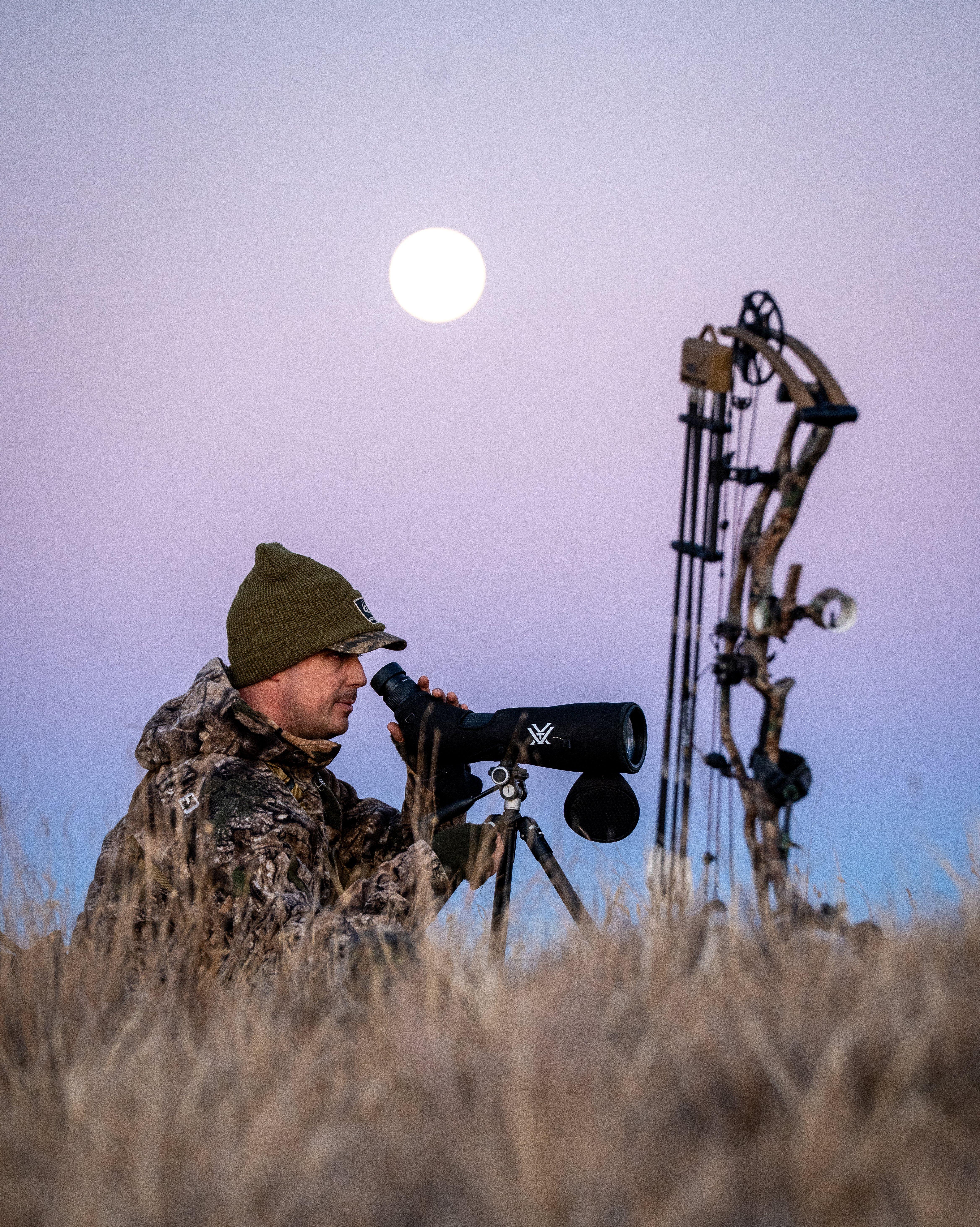
Focus late season hunting time in the evening around food sources. Image by Realtree
In and Out: Good access to a stand is critical now. If you can’t use something like a ditch or bluff to cover your walk in, or slip across a barren field or pasture where no deer hang out, don’t risk it. If you bump one doe, you’ll spook a bunch of deer. They’ll blow out, change pattern and feed somewhere else that night. Sneak to a stand early in the afternoon, at least three hours before dark. Wind-wise, it can’t blow back toward bedding cover and a trail into the feed, nor can it swirl out into a field where does will pop out first, smell you and spook.
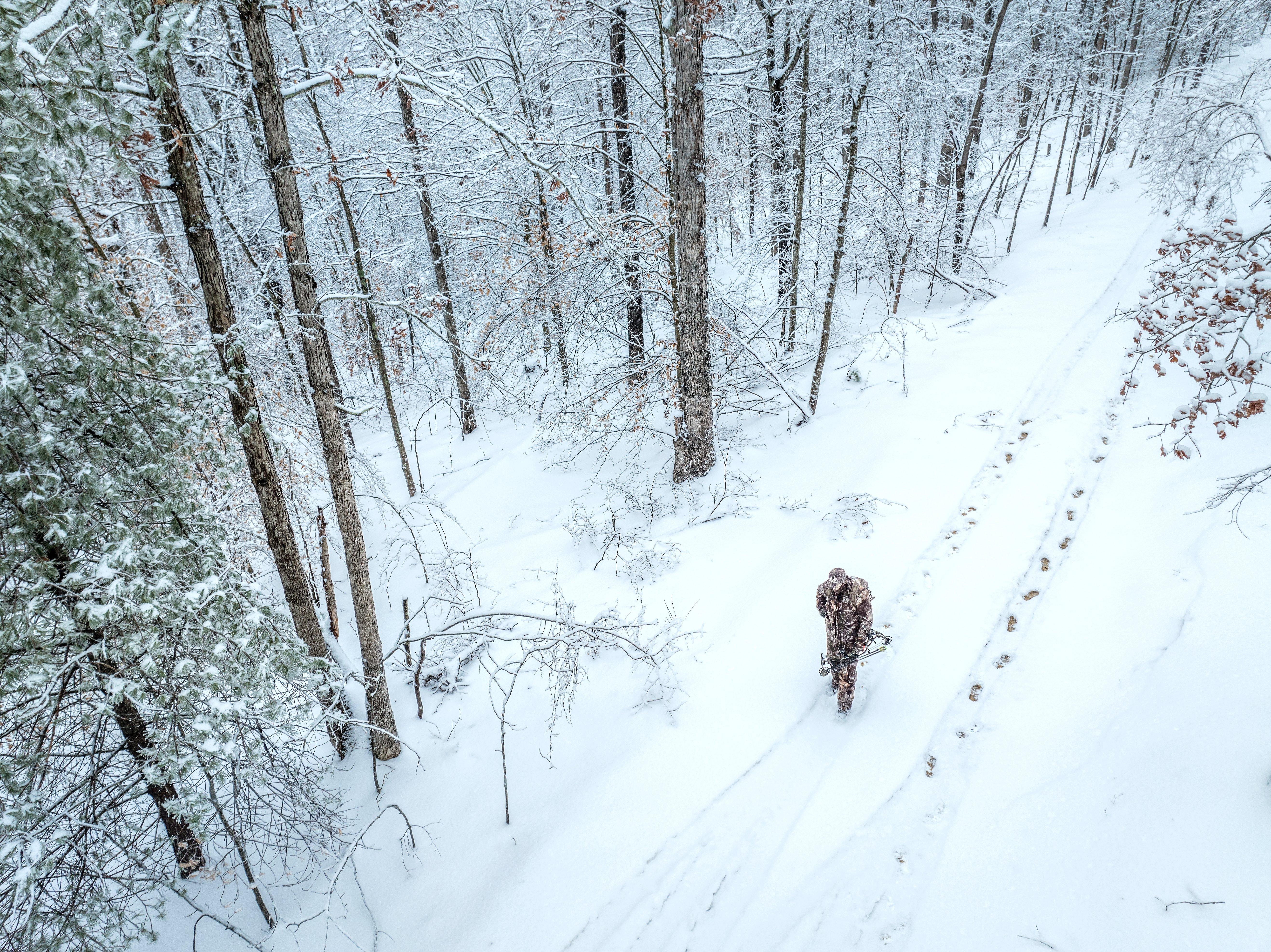
Good access to your stand with minimum noise is crucial to avoid spooking late season bucks. Image by Bill Konway
Think outside the box: Virtually every farm or woodland, public or private, has had a little or a lot of pressure now. Don’t fret, but rather factor it into your strategy. Numerous studies have revealed that bucks do not flee pressure by leaving their home ranges and heading miles for deep cover. Rather, they continue to live in the same places and seek out hidden spots where hunters never go. These spots are not necessarily remote, but always off the beaten path. A hard-to-access beaver swamp near a gravel road; a 2-acre thicket at the head of a rocky gully; an overgrown hog lot behind an old barn… A little sanctuary like that is where you can find a 10-pointer hiding and trying to ride out the season.
Stands to Try
Brassica plot: Last December in Indiana, I climbed into a box blind on a 2-acre turnip plot, ready to smoke a buck with my muzzleloader. I was in the midst of a brutal 17-day, three-state stretch during which time I had not seen a mature buck, much less shot one. I was ready to change my luck.
At 4 p.m. does started filtering into the turnips, followed by several small bucks. For an hour I watched deer pull up and eat the brassicas, gnawing the roots as the wilted green tops dangled comically from their mouths. A little after 5 p.m., more does entered the plot from the west, followed by a 7-point, and then a stout 8-point. A shooter! I raised my muzzleloader, clicked off the safety…and clicked it back on again. Rarely do I pass a pretty 4-year-old buck, but I did. It was the first afternoon of a five-day hunt.
I hunted the same stand for four more afternoons and saw a total of 45 deer. As the sun set on my last day in the box, none of the older target bucks I had on camera had shown. More tag soup.
Check Out Our Latest Camo Pattern: Realtree APX
Do I regret not shooting the 8-point that first evening? A little. But then over the next four days I watched and enjoyed the best late-season deer movement I’d seen in years. I was reminded that success is not always about killing an animal. The more you see and study deer, the more fun you have, and the better hunter you become.
Simple takeaway: If you have the land and the ability to do it, clear a plot and plant an acre or two of brassicas, like turnips, next summer. As the plants grow, hang stands and cameras around the plot, but resist the urge to hunt there until mid-December. By then, frost and cold weather will have turned the brassicas sweet, and deer will come from all over to feed there. It will become your go-to spot to kill a buck in Stage 2 for years to come.
Don’t Miss: 10 GREAT MODERN DEER HUNTING CARTRIDGES
Thermal cover: One time in Iowa, farmer and Realtree pro Don Kisky hunted a cornfield for a week in hopes of killing a double-drop-tine buck on camera. It was cold that December, the kind of cold that hurts, with highs in the teens and single digits. Kisky knew the buck had to feed a lot every day, so he kept sitting on the field in the afternoons, figuring it was a matter of time until the big deer showed in shooting light. He never did. Double Drop was smart, but so is Kisky. He knew of a narrow, south-facing ditch choked with CRP and pines that snaked from the corn back in the general direction the buck was coming from. One afternoon Kisky sneaked 200 yards back into the ravine and set up on the ground. At twilight he looked up and shuddered—Double Drop was walking straight to him. Kisky’s muzzleloader belched smoke, and the 160-inch buck went down.
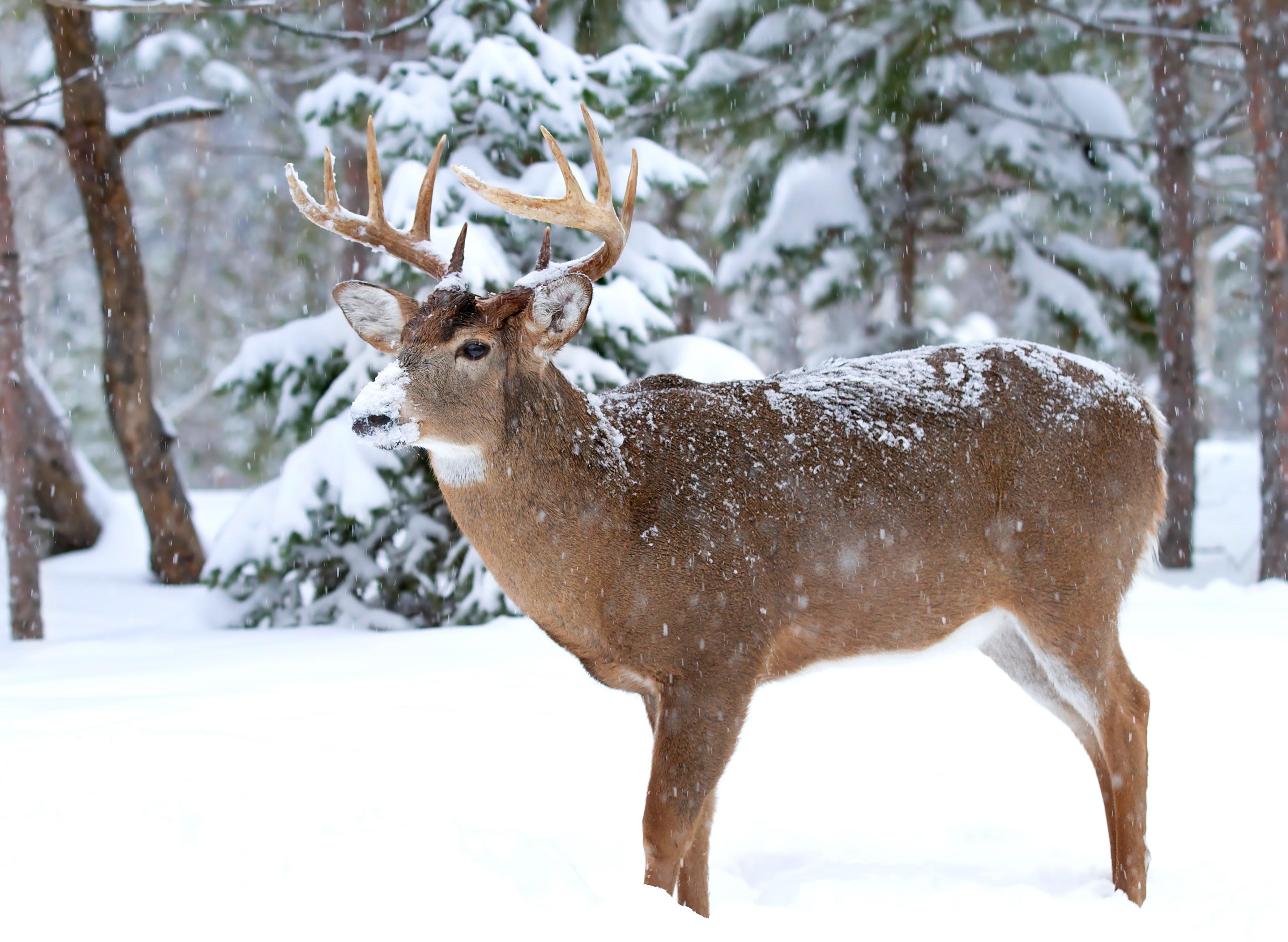
Late season bucks use heavy thermal cover both to hide and for protection from the cold. Image by Jim Cumming
“Late in the season, don’t get caught up in hunting only right at a food source,” Kisky said. “Many old bucks are so wired and spooky now, they hang up and stage back in cover until dark, regardless of how cold, snowy, and miserable it is. Sometimes you’ve got to go for it and sneak close to a cedar or pine thermal cover where you think a big deer walks and beds. You can shoot a giant in late December that way.”
Don’t Miss: 3 CLOSE-RANGE TACTICS FOR RUTTING BUCKS IN THICK COVER


?fmt=auto&qlt=default&fmt.webp.qlt=65&fmt.png.qlt=73&fmt.jp2.qlt=35&fmt.jpeg.qlt=60)