The 2025 Southeast Deer Season Forecast
Posted 2025-08-13 by
Deer numbers are outstanding down south, and solid age structures in many states create the potential for big bucks. There have been recent CWD detections, but the southern forecast overall looks great
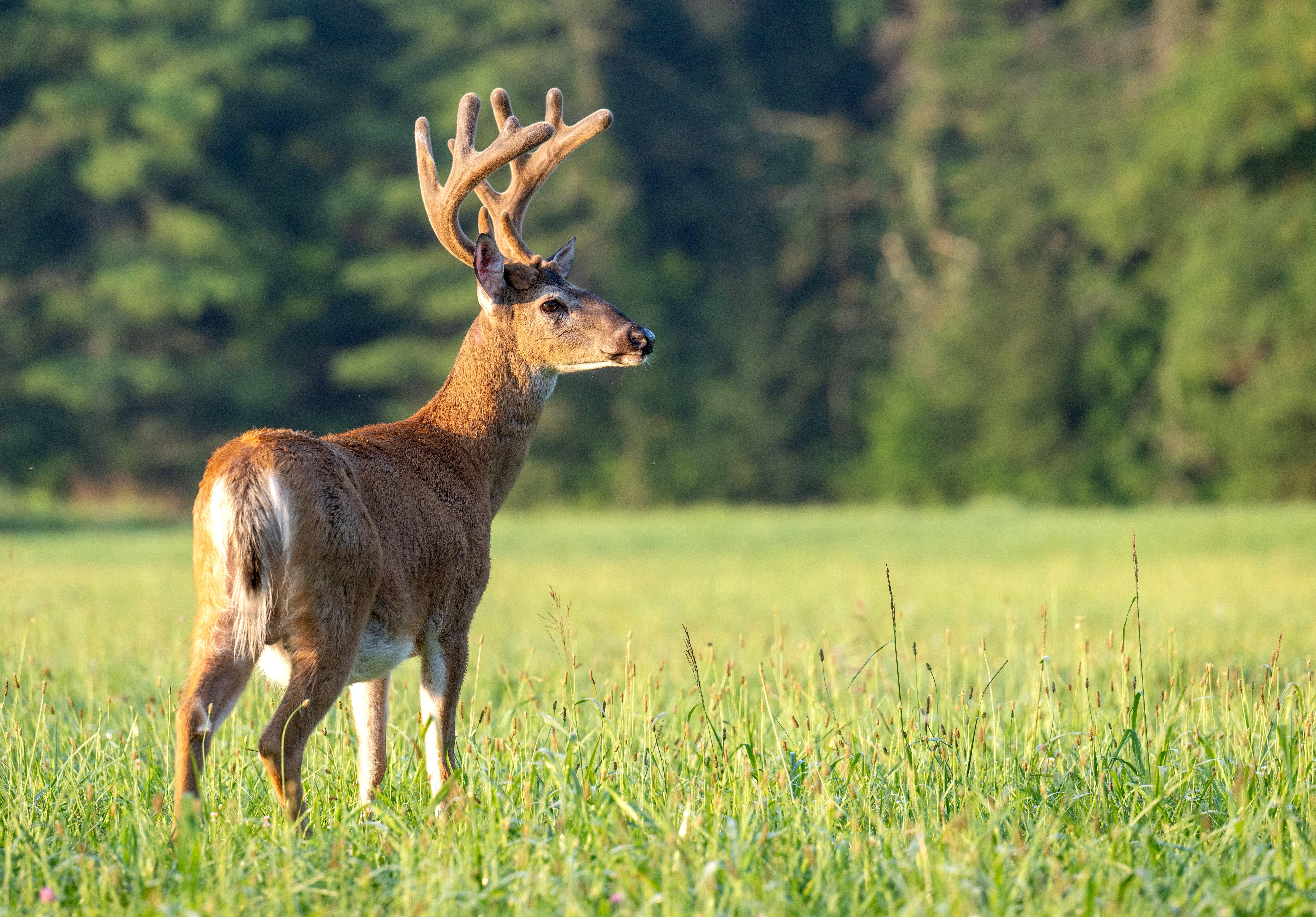
Southern hunters should be in for a great deer season in 2025. Photo by Tony Campbell.
It’s not hard to have a good time in the Southeast. There are world-class beaches, outstanding fishing and food, and the weather is usually nice. But the region also boasts great deer hunting. With mild winters, the deer herd isn’t often subjected to weather-related stress and mortality. EHD is a frequent occurrence in the Southeast, but it has been for generations, and the deer herd seems to be more resilient to it than in areas farther north. Most of the southern states don’t produce Midwest-quality bucks with any regularity, but a few such bucks do roam the region. Hunting pressure can be high at times, particularly during gun seasons, and there have been some recent CWD detections in several southern states. Still, it should be a great season in 2025 with a little help from the weather forecast. Here’s our latest rundown of each Southeastern state in Realtree’s Antler Nation.
Alabama
Does Alabama have big bucks? You bet it does! Roughly 60 percent of the annual buck harvest consists of bucks that are 3 1/2 years old or older, per the National Deer Association’s 2025 Annual Report. Success rates are also high. The Black Belt region of central Alabama is historically the top trophy producer. And Chris Cook, the Alabama Division of Wildlife and Freshwater Fisheries deer program coordinator, said that “the deer herd should be in great condition.” Here, Cook said hunters can follow the rut, as it “varies significantly across the state,” as he detailed.
Arkansas
Similar to Alabama, 3 1/2-year-old-or-older bucks make up more than 60 percent of Arkansas’s annual buck harvest. There are 261 entries in the Boone and Crockett records book, and William L. Lloyd took a 202 3/8-inch typical only seven years ago. The buck ranks 11th all-time in the typical category. Yes, Arkansas has the goods, thanks to careful management, antler restrictions and generally selective hunters. Despite some CWD prevalence, deer numbers are strong, and buck harvest has been rising slightly over the last few seasons. Further, there are gobs of public-land hunting opportunities across the Natural State.
Florida
With six million acres of wildlife management areas (WMAs), Florida has one of the country's most extensive WMA systems. There are also other public lands across Florida. Florida’s shortfall? Trophy potential. While 3 1/2-year-old-and-older bucks account for approximately 40 percent of the annual buck harvest, the Boone and Crockett records book has been stagnant since 1959, meaning the genetics just aren’t there. Hunters have only registered two book Florida bucks ever. Thus, it is more of an opportunity state, and filling the freezer is very doable, as the Sunshine State harbors approximately 750,000 whitetails. Hunting pressure can be high in some areas. The rut here ranges from July to February, depending on the corner of Florida you're hunting in, which keeps things interesting.
Georgia
With the herd estimated at more than 1 million animals, Realtree’s home state has plenty of deer to go around. That's probably why Charlie Killmaster, of the Georgia DNR, said that the good old days of deer hunting are now. With 253 bucks in the Boone and Crockett records book, the possibility of tagging a monster is within the realm of possibility, too. Liberal bag limits and long seasons are attractive attributes. Public lands can be busy, but getting away from population centers and hunting on weekdays can be productive. Georgia recently detected CWD in two different wild deer harvested by hunters, the kill sites separated by merely 400 yards. The DNR has enacted a response plan, so we’ll see if more cases are detected in deer harvested this season.
Kentucky
Kentucky ranks sixth in the nation for overall Boone and Crockett whitetail entries, but it gets second place for the most entries submitted in the last decade. Kentucky is no longer a best-kept secret among deer hunters. Nearly a million deer roam the Bluegrass State, and CWD prevalence is fairly low, at least so far. Diverse habitats range from flat, agricultural ground to mountains, offering all hunters everything in between. “Every county in Kentucky has produced trophy whitetails and continues to do so annually,” said Kyle Sams, deer and elk program biologist for the Kentucky Department of Fish and Wildlife. A significant number of the best bucks are taken along the Ohio River and the Green River. Known for its early-season velvet bucks, the Sept. 6 bow opener will make tagging a velvet buck hit or miss this season.
Louisiana
World-famous cuisine, fishing, and duck hunting aren’t the only things the Pelican State has going for it. The deer hunting can be excellent, too. Hunters who typically hunt the Midwest during November won’t miss the rut, either, as it is still going on in some regions through December and even as late as the end of February in others. Check this rut map for detailed Louisiana rut dates. Louisiana ranks third in the nation for the percentage of mature bucks in the harvest, according to the National Deer Association’s 2025 Annual Report. Further, some screamer bucks have been taken here recently: Amanda F. Smith’s 226 2/8-incher in 2018; Brennan T. Morris’s 275 5/8-incher in 2020; Tyler Jordan’s 190 4/8-incher in 2020, and his potential state record typical, which grossed 203 inches, taken in 2024.
Mississippi
Around 80 percent of bucks in Mississippi’s annual harvest are 3 1/2 years old or older, making it second in the nation in terms of mature buck harvest. And there are loads of deer here. “The total deer population is at or near an all-time high,” William McKinley, deer program coordinator for the state, said of the state’s 1.5-million-animal whitetail herd. “There are lots of opportunities for harvest,” he said. The rut ranges from early December through early February, depending on what corner of the state you’re in. Plenty of deer, lots of mature bucks, and abundant public lands make this a state to put on your to-do list.
North Carolina
Like the other states we’ve covered so far, the Tar Heel State is somewhat littered with whitetails, approximately 1,100,000 of them. However, the trophy potential is quite slim compared to Georgia, Kentucky, Louisiana, and Mississippi. Still, hunters can expect solid deer hunting, especially in the northern portion of the Piedmont area, where the better bucks tend to come from. With urban seasons and ruts transpiring as early as October 4 and as late as December 19, productive hunting abounds. Jonathan Shaw, deer biologist with the North Carolina Wildlife Resource Commission, said that buck age structure and buck-to-doe ratios have been improving lately. Who knows? Maybe North Carolina will someday produce another 228 4/8-inch monarch like the one that Don C. Rockett killed in Person County back in 1998.
South Carolina
Where can you hunt velvet whitetails with a rifle? South Carolina. Archers also have opportunities for a fuzzy-antlered buck. Despite a strong whitetail population, not many of the Palmetto State’s bucks reach Boone-and-Crockett status. In the past, two-thirds of the state at one time had no daily or seasonal limits on bucks, but some parameters were recently installed to hopefully improve the buck age class. Even so, the limit is still more than generous at five bucks for residents and four for nonresidents, although two of them must meet specific antler restrictions. Despite that, 140 days of firearms hunting in certain regions of the state can take a toll on young bucks, so South Carolina remains an opportunity state, not a trophy state.
Tennessee
Tennessee has emerged in recent years as a great deer-hunting state and even produced a 315 1/8-inch monster in 2016. The buck holds the 5th all-time spot in the Boone and Crockett non-typical whitetail category. Tennessee doesn’t have near the B&C entries that neighboring Kentucky has, but it had a much higher buck limit for many years, too. That’s changed, and word on the street from many Tennessee hunters is that the deer are getting bigger, with some of the best animals coming from the western and southwestern regions. CWD prevalence is high in some of those areas, but overall deer numbers are still generally great statewide. Tennessee has an August archery “velvet hunt,” which is pretty cool, and according to the NDA, 56 out of 100 hunters get their buck in the Volunteer State at some point in the season, which is a strong success rate.
Virginia
The Old Dominion very well could be a sleeper state, at least among the non-resident crowd. Trophy potential is strongest in south-central Virginia, though big bucks are liable to come from anywhere in the state. Speaking of big bucks, the Boone and Crockett book has 173 entries, the largest being 257 4/8 inches. Wowza. A new Urban Archery deer hunt is noted in the regulations. Virginia runs a pretty tight ship to manage CWD among its 1,270,000-deer whitetail herd. A high success rate and affordable licenses ice the cake.