Should Spike Bucks Be Culled from Whitetail Herds?
Posted 2026-01-22 by
Years ago, some folks believed that killing spikes was an effective method for removing inferior antler genetics. But research has unveiled a different story
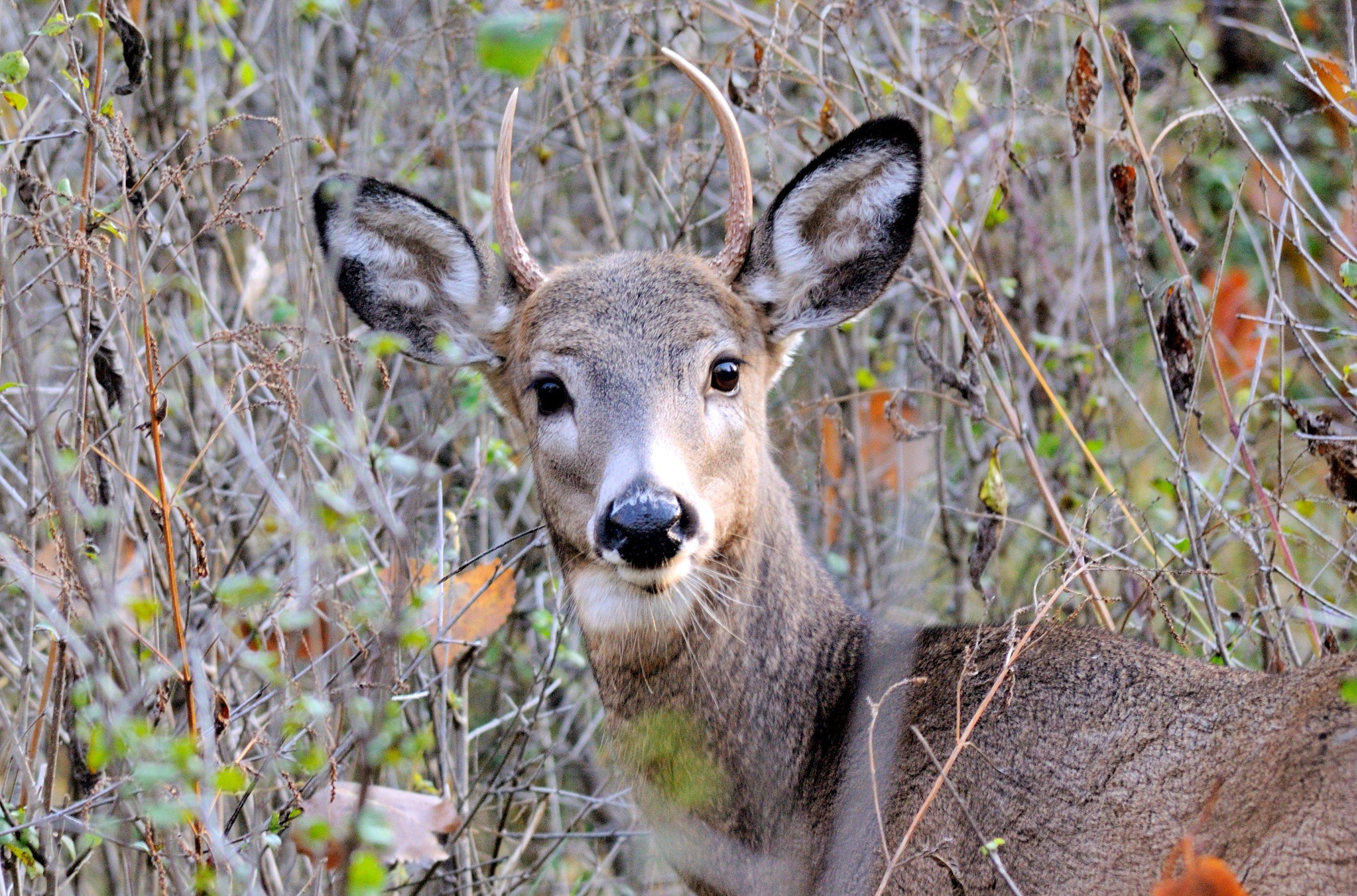
Is shooting spikes a sound management practice, or is it ridding your hunting property of future monster bucks? Image by Bruce MacQueen.
My heart rate jumped. It was my second bowhunt ever, and a spike buck was walking down a trail in front of my stand. I was 12 years old, my heart was pounding, and I had never killed a deer. However, I didn’t even attempt to draw my bow. The buck was puny, and I had lots of archery season left. I let him walk and didn’t regret my decision.
Have you ever shot a spike? If you live in a state where gun season standards are, “If it’s brown, it’s down,” I’m sure you or someone you know has hammered a 2-pointer. They’re far from being the smartest deer in the woods, so taking one obviously isn’t considered a lofty accomplishment.
Still, a few folks still maintain that shooting spikes is good for the herd. Science has pretty much debunked that idea, but the process has taken years. In fact, research conducted in Texas in the 1980s claimed that eliminating spikes through culling was sound management for antler genetics.
“The study suggested that every spike should be killed because they will always be inferior,” said Kip Adams, the National Deer Association’s chief conservation officer. “The research backed it up, and a lot of people across the country began culling spikes.”
DON’T MISS: Florida Hunters Take 52 Bears During 2025 Season
Adams said researchers from Mississippi State University eventually performed some of the same studies but reached an opposite conclusion.
“That research revealed that most spikes had been born late the previous year or simply lacked nutrition in their first year,” he said. “Thus, the lack of antler growth in that first year. The researchers said not to shoot spikes, finding that the lack of branch antlers is completely unrelated to genetics. This led to major opposition between Texas deer managers and other deer managers across the country. Both groups had good research to justify their conclusions, which left many hunters confused as to what they should believe.”
The MSU study found that spike bucks left to mature could actually produce huge antlers in some cases. Interestingly, the Texas study also tracked spikes as they matured into larger bucks and found that they never really caught up with bucks that were branch-antlered at 1-1/2 years old.
“The opposition continued,” Adams said, “but where the Texas study missed the mark is that the Kerr WMA, where the research was conducted, already had good adult sex ratios and excellent buck age structure, and the bucks had all of the nutrition they needed to excel. In other words, they had no excuses for growing spikes instead of 4-, 6- or 8-point racks. The study’s findings truly were a genetic reflection. The problem is that those conditions do not apply to areas outside of Texas and even some areas in Texas.”
DON’T MISS: Which Predators Kill White-Tailed Deer?
The takeaway, Adams said, is that if you hunt a really well-managed area of Texas, especially where the study was performed, there might be something to culling spikes rather than other deer of the same age class.
“Outside of those areas, I tell people to let them go and mature,” he said. “As the MSU study holds, spikes can sometimes become tremendous bucks.”
Biologists Donnie Draeger, Mickey Hellickson and others researched the culling topic in the 2000s and beyond, finding even more telling data that squashed the spike-shooting argument.
“The purpose of that study was to determine whether hunters can manage antler genetics via culling,” Adams said. “Many hunters think it’s best for genetics when the largest antlered buck does as much of the breeding in a given area as possible. The idea is that the offspring of that buck will have the same genetics. Through DNA work and some culling studies, it was found that the offspring of a buck don’t always feature his genetics. Antlers are actually not very heritable. In fact, we now know that a buck’s gross antler score is only about 35% heritable to his fawns. That means a huge buck can have small-antlered sons and vice versa. The study proves that selective culling does not improve antler genetics.”
On the other hand, there are some things hunters can control to have better bucks.
“First, we can allow bucks to reach the older age class,” Adams said. “And we can boost nutrition to improve herd health and antler growth. Many managers are getting away from selective culling and putting more emphasis on passing up bucks and providing nutrition.”
Check Out Our Latest Camo Pattern: Realtree APX
In conclusion, Adams said that modern research data supersedes previous data and the belief that culling spikes can improve genetics. However, he added, “You still might get into an argument in a few places in Texas that still practice and preach that culling spikes works if you talk about opposing data from more recent studies.”
The moral? Let those spikes go. And if you shoot an older buck with inferior antlers, be happy with it. Don’t call it a cull buck to justify its inferior antlers.