Atlantic Flyway States Suspend Spring Snow Goose Season
Posted 2026-10-08 by
Greater snow goose numbers are down, negating the need for population control
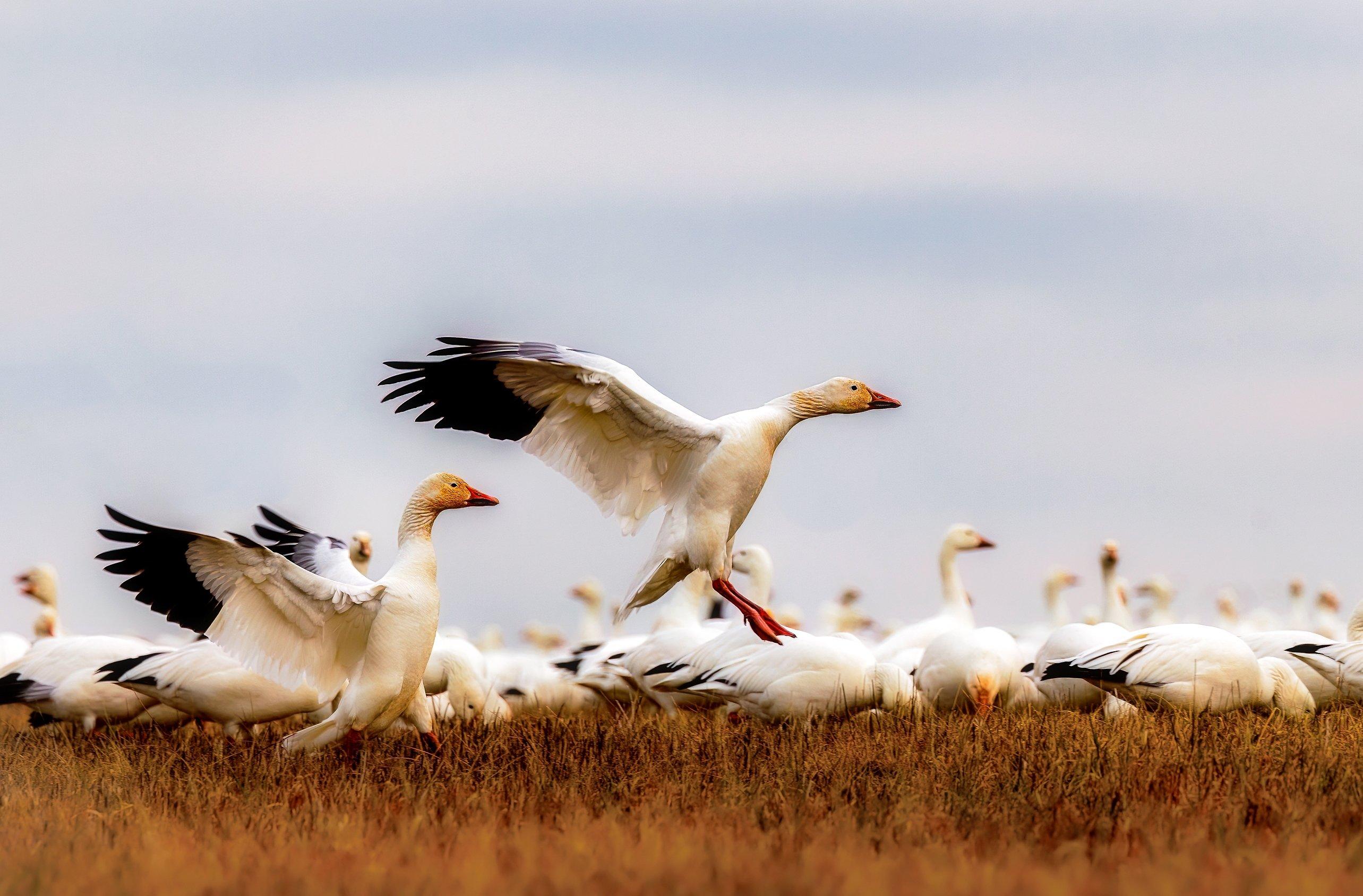
Greater snow geese breed in northeastern Canada and winter in the northeastern United States. Photo by Alexandra Syphard.
Eight Atlantic Flyway states and two Canadian provinces have suspended the 2027 Light Goose Conservation Order spring hunt because of a decline in greater snow goose numbers since 2019.
“The intent of the conservation order is to aggressively reduce the population of greater snow geese, and that is currently not necessary,” the New Jersey Division of Fish and Wildlife wrote on its Facebook page. “We have suspended the conservation order, rather than terminated it, because the population may surpass the upper population objective in the future.”
Don’t Miss: How to Avoid Opening Day Duck Hunting Disasters
Affected states and provinces include Quebec, Ontario, Vermont, Delaware, Maryland, Pennsylvania, Virginia, New Jersey, New York and North Carolina. Light goose hunting in the Atlantic Flyway will continue with a liberal 107-day season with a 25-bird daily limit in the United States portion of the flyway unless population decreases continue. Several state agencies have released updated waterfowl hunting schedules reflecting the conservation order pause.
Biologists said numbers of greater snow geese — which breed in northeastern Canada and Greenland, and winter in the northeastern United States — fell below the lower management goal in 2025.
“The population was below the lower population objective of 500,000 in 2025, and within the population objective range of 500,000 to 750,000 in 2019, 2022, 2023, 2024 and 2026,” NJDFW wrote, noting that the spring hunt could return if greater snow goose populations increase above the goal range again.
A news release from NJDFW said there might be several causes of the population decline.
Don’t Miss: Double Your Duck Stamps for Conservation
“Liberalized regular seasons and bag limits, as well as the conservation order, have allowed for harvest and hunting pressure for nine months of the year since 1999 in Canada and 2009 in the United States,” it said. “The conservation order has direct effects in the form of hunting mortality but also indirect effects of disturbance that may reduce body condition of breeding adults and subsequent breeding output. Since 2021, highly pathogenic avian influenza has circulated amongst wild birds, and in particular, wintering states such as Delaware and Pennsylvania have documented over 9,700 greater snow geese mortalities attributed to HPAI in Winter 2024-2025 and 2025-2026. Conditions on the breeding grounds, such as snow and ice cover, may also impact breeding success.”
NJDFW wrote that hunters can still hunt light geese during regular winter and late-winter seasons, but methods only allowed during the conservation-order season — such as electronic calls and unplugged shotguns — will not be allowed. Delaware and Maryland, however, said that hunters can use unplugged shotguns and e-callers during the portion of the regular snow goose season when no other waterfowl seasons are open.
Greater snow geese can be distinguished from the more common lesser snow geese because they’re slightly larger. Lessers commonly have two color phases — white and the gray-colored blue phase — but greaters are rarely seen in a blue phase.
Don’t Miss: Louisiana Announces First Whistling Duck Season
The Light Goose Conservation Order began in the 1990s, prompted by concerns that rapidly growing light goose populations would destroy tundra habitat at their Canadian nesting areas. The first spring season was held in 1999, featuring increased or unlimited bag limits and allowing the use of new methods, including electronic callers and unplugged shotguns.