How to Pull Off a Great Afternoon Duck Hunt
Posted 2026-10-15 by
It sounds like sacrilege, but setting up during daylight sometimes works well
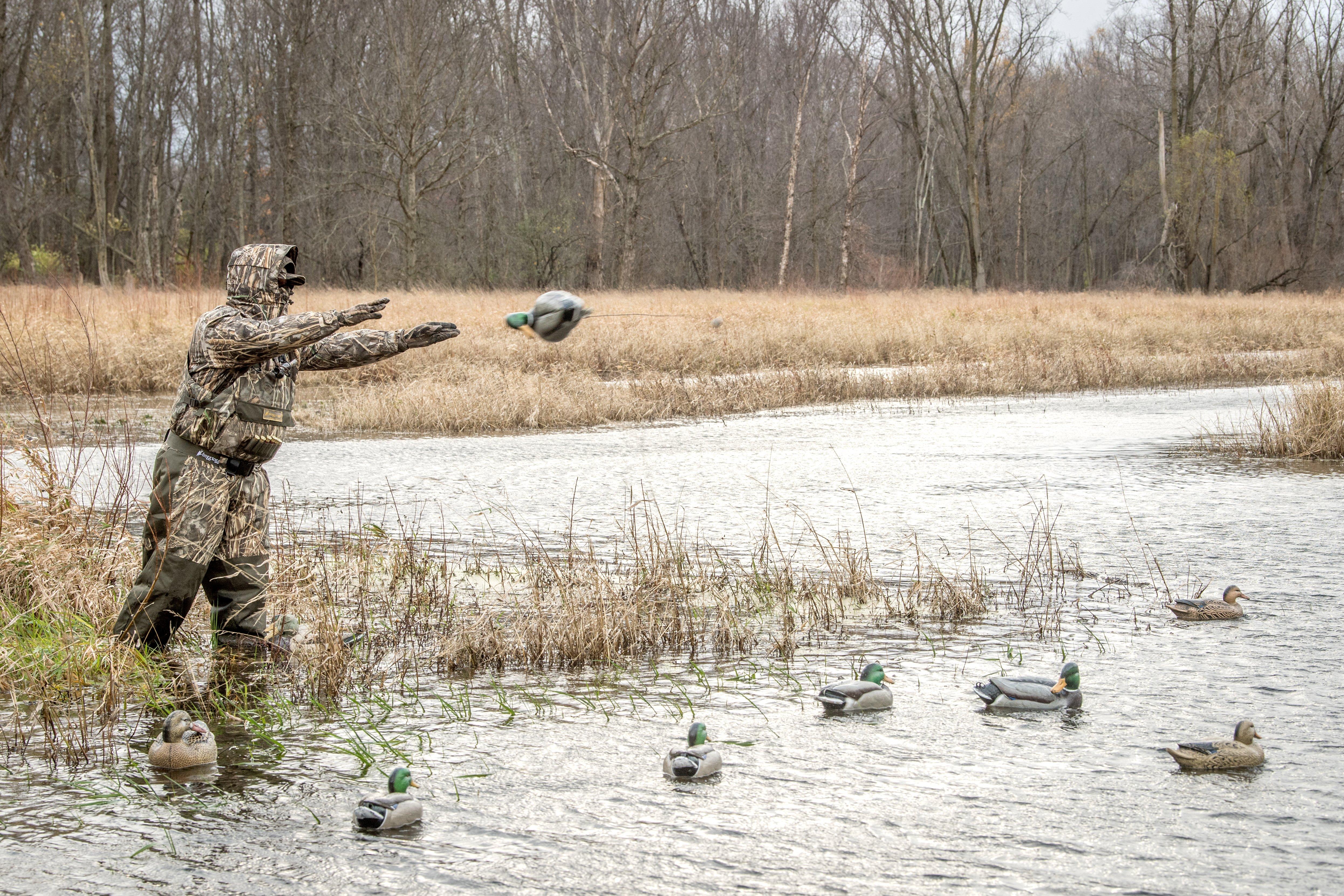
If you time it right, hunting during the afternoon as a front moves in can produce frenzied shooting. Photo by Bill Konway.
Skipping a morning duck hunt and going out during the afternoon seems as counterintuitive as setting up with the wind in your face. Yet in some situations, the second shift can actually be productive — maybe more so than the morning.
Feel like hitting the snooze button and trying an afternoon hunt this season? Look for these scenarios.
DRY-FIELD FEEDS
During relatively stable weather, ducks and geese often make two feeding flights per day — morning and evening. Setting up in a cut ag field at midday and waiting for the night flight can work well.
Before committing, confirm through scouting that birds are actually using the field during the evening. Further, avoid conditions that might change that behavior. For example, during a steady rain, ducks and geese might arrive later in the morning and feed most of the day. Or during unseasonably warm or very cold conditions (more on this later), they might arrive en masse right before shooting hours end.
Don’t Miss: Avoiding 7 Duck Hunting Setup Sins
If a field looks like a go, give yourself plenty of time to set up, and use the extra daylight to double-check your cover. You likely won’t get that opportunity if all the birds pile in during the last hour of daylight.
WATER NEAR REFUGES OR SMALL WATERS
It’s a duck hunting anathema to hunt the roost and potentially blow a bunch of ducks out of an area. Additionally, it’s wise — sometimes mandated by regulations — to get out of the marsh and let birds rest during afternoons and evenings. However, you can make it work in a couple of situations.
First, when hunting large waters that are connected to or near a large refuge, you can often traffic a few ducks during the last hour or two without spooking too many of them. Most of the birds will find safety in open water or the refuge anyway. Shooting a few that investigate your spread won’t change the big picture.
Also, you can sometimes hunt smaller waters that only hold a handful of ducks — say two to three dozen — picking off a few as they return for the night. Yeah, this will blow up that spot for a few days, but it’s not as if you’ll be firing into huge flocks and significantly altering the number of ducks in the area. And done maybe once a week, you can sometimes get a few hunts out of such little spots.
Don’t Miss: Double Your Duck Stamps for Conservation
CHANGING OR FRIGID WEATHER
When a major front whips up the wind and sends the barometer and mercury plunging, it often pays to get on the water (if you can do so safely). Try to set up before the change hits, and make sure you’ll be protected from high winds during your hunt and travel back to the truck. Ducks will usually begin moving right when the wind shifts and picks up.
Similarly, during frigid late-season conditions, ducks and geese might only make one feeding flight per day. Sometimes, that might be at midday. Other times, with pressured birds, it might occur right before dusk. Set up early in a field or feeding slough, or run traffic along a river or lakeshore, and be ready. Just don’t be foolish about it. If water and gear are freezing up to the point of being dangerous, wait for warmer weather.
NOCTURNAL FEEDERS
Ducks that feed at night and disappear before morning. Sounds like a fairy tale, right? I would never have believed such a thing even 10 years ago. Then I started to witness it daily. I’d watch thousands of bluebills pile into shoreline areas near reefs. The next morning, friends and I would slip into position and ready our layout boat to find … nothing. The ducks were gone.
Don’t Miss: Waterfowl Migrations are Changing. Here’s What That Means for Hunters
Solution: Hunt the afternoon. We began setting up our layout spread soon after noon in preparation for the final two or three hours of daylight. Scouting let us avoid blowing up hot feeding areas. Instead, we played the wind and targeted travel routes from open water sanctuaries to near-shore reefs and bays. Some days, we missed the X and watched scores of birds raft up 500 yards away. But many afternoons — especially those with a decent breeze and lower temps — we’d be off the water with our ’bill limits before dark. If divers are pulling nighttime maneuvers where you hunt, an afternoon counterattack might be the solution.