Avoiding 7 Duck Hunting Setup Sins
Posted 2025-09-25 by
A poor setup can quickly ruin your hunt. Get your hide and decoys right to maximize opportunities
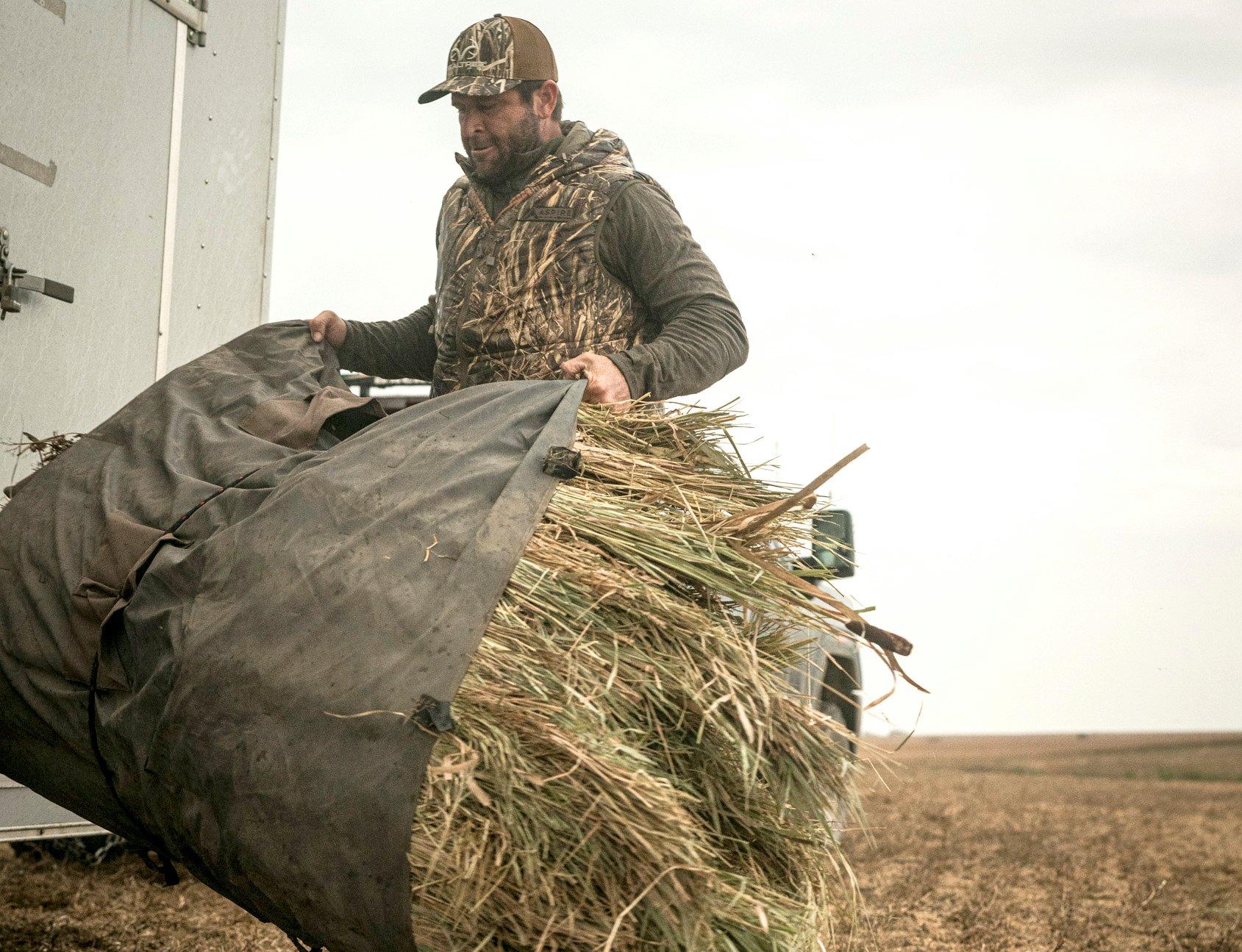
Never set your blind so that birds are looking directly at you as they approach. Even setting up perpendicular to your spread is better. Photo by Realtree.
Turkey hunting wisdom suggests that if you sit down wrong, you’re beat. That is, a poor setup will doom your hunt.
That principle also holds true for duck hunting. Gaffes while setting up blinds and decoys — especially before a morning hunt — can hinder your chances of attracting and finishing ducks. The result can be a day of bird watching or undertaking an exhausting and time-consuming move. Obviously, it makes sense to identify and avoid potential setup mistakes before they happen. Consider these common examples.
Don’t Miss: 2025-2026 Mississippi Flyway Duck Hunting Forecast
SHOOTING TOO STRAIGHT
Intuitively, most hunters want to set up with the wind at their back so birds approach and finish head-on, offering easy shots. In that scenario, however, ducks are often looking directly at your hide and can easily spot a rat. This is especially true during windy days, when they hover for longer periods over the decoys.
Easy fix: Set your hide so it’s 30 or so degrees left or right of the kill hole. Or, if it’s breezy, set up perpendicular to your spread, so birds approach at a 90-degree angle. You’ll greatly reduce the odds of approaching ducks spotting your blind yet should still enjoy quality shots when ducks finish.
NOT WATCHING THE SUN
On still days, many hunters still base their setup selection on wind direction. But when the morning breeze is fairly light, birds might approach from several angles. In such cases, you’re better off setting up with the rising sun at your back. That orange glow obscures the vision of incoming ducks and greatly boosts concealment. And if the wind kicks up later in the morning, you can always adjust your hide or decoys.
NOT THINKING LIKE A DIVER
Ever have a canvasback or bluebill land short of your shoreline spread or skirt the edge of the decoys at Mach II? Often, it’s because they didn’t feel comfortable landing there. And just as often, that happens when divers don’t see open water upwind of their buddies (the decoys).
Divers love the safety of open water, and they’re far less likely to finish in your blocks when they’re looking upwind at a shoreline, boat, trees, or cattails. Angle your spread and hide so birds are looking at open water when they flutter toward your spread. This is easier to do when hunting defined points or using open-water boat blinds, but you can still create the illusion when hiding along straight shorelines.
Don’t Miss: How to Pull Off a Great Free-Lance Duck Hunt
SITTING TOO CLOSE
Setting decoys too close to your hide might not doom a hunt, but it can limit your spread’s attraction and make shooting difficult. Fakes thrown just a few yards offshore often disappear in the shadows or amidst shoreline cover. And if birds actually finish to ultra-close dekes, your first shot might produce a pattern the size of a silver dollar. Set your decoys at the ranges at which you want to shoot ducks — say 20 to 30 yards. And remember, decoys always look farther away in the dark.
SITTING TOO FAR
Placing your spread too far from your blind also makes hunting tough. You can certainly kill a finishing duck at 40-plus yards, but that bird might flick its wings in the wind and be at 55 or 60 by the time you rise and shoot. Not good.
Hunters sometimes set blocks at unrealistic ranges because of tough situations, such as spots with several yards of mud flats between water and cover. It rarely works well. If you can’t set your blocks at decent ranges, find another place to hunt.
BEING STUBBORN
When scouting and assessing a potential setup, note where ducks want to work, how they approach that spot and the best spot to entice them in. Resist the urge to set up where it’s easier or more convenient.
For example, a point that bisects a small slough might offer the best opportunity to cut off ducks that could otherwise land in open water far from shore. Hunting that point might require a longer walk and more work to conceal your blinds, but that’s far better than hunting an easier setup and cursing your laziness.
Don’t Miss: How to Scout for Ducks and Geese in Dry Fields
BEING “THAT GUY”
One final setup consideration: Always be aware of other hunters around you, and avoid setting up too close to them or directly downwind. Of course, too close is relative. I’d never consider setting up even 200 yards from someone at a prairie pothole, as it’s easy to find another spot. And on the Great Lakes, plopping down an anchor even a quarter-mile from another rig might bring harsh words at the boat landing. In general, attempt to set up as far as reasonably possible from another group, and try not to shoot “swing birds” that are obviously working their setup. If you get into a situation where people crowd around you — opening day, for example — talk to the other hunters, and assure them you’ll only shoot at decoying birds and in a safe direction. Hopefully they’ll do the same. Basically, don’t be that guy.