All About Fish Hooks
Posted 2025-09-03 by
Do you need an octopus hook or a circle hook for catfish? What about an offset or EWG for flipping plastics? The right hooks will help you catch more fish, so here’s what to know
The oldest known fish hooks date back 20,000 years. They looked, surprisingly, a lot like fish hooks of today. Fish hooks have always been simple tools, but they’ve definitely become more specialized over the millennia. Today, dozens of hook shapes, sizes, and designs exist, and knowing which hook style works best for the type fishing you’re doing will help you be more successful. Before you go fishing, you need to go hook shopping. Here’s your guide.
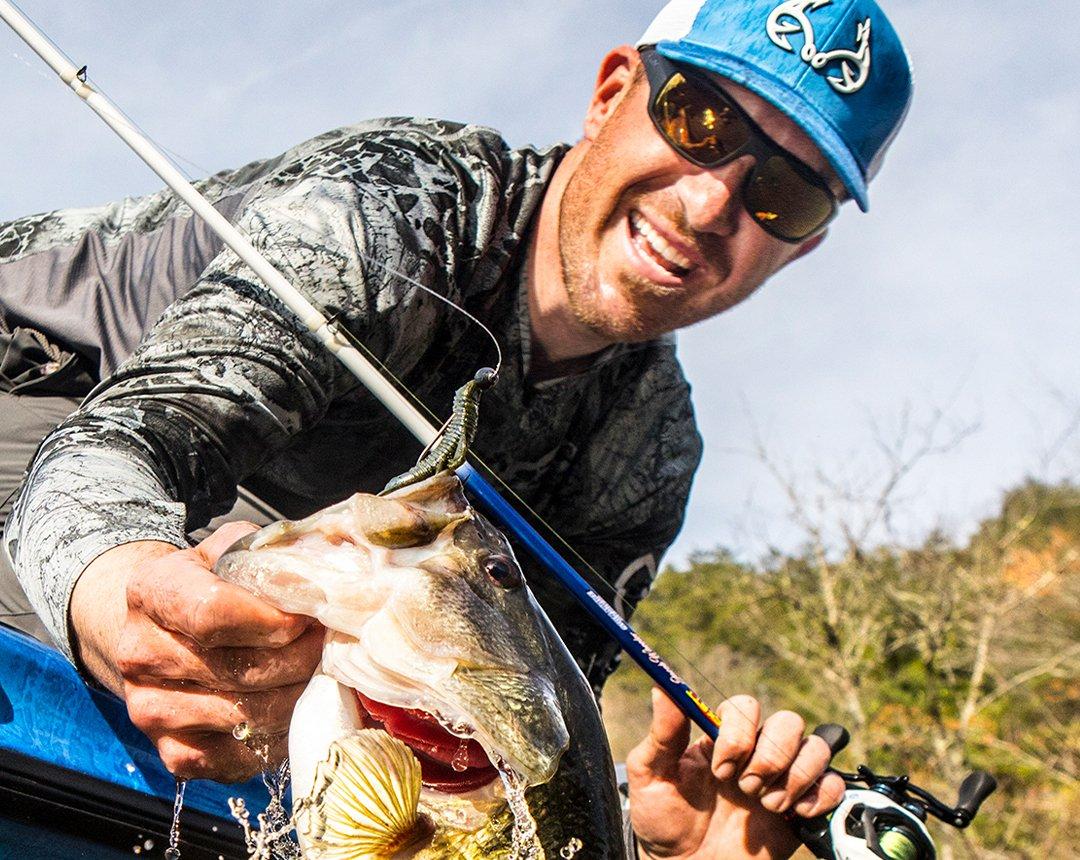
Choosing the right hook from the dozens of styles available today can be greatly improve your fishing success. Image by Realtree
STANDARD ROUND-BEND
- Common use: Freshwater live bait.
We’ll start with the easiest hook to identify. This is the iconic shape we all think of when defining a hook. It’s also known as a “J-Hook.” A round bend is the answer for many, and possibly most, fishing applications. Things to consider here are the size, strength, and sharpness.
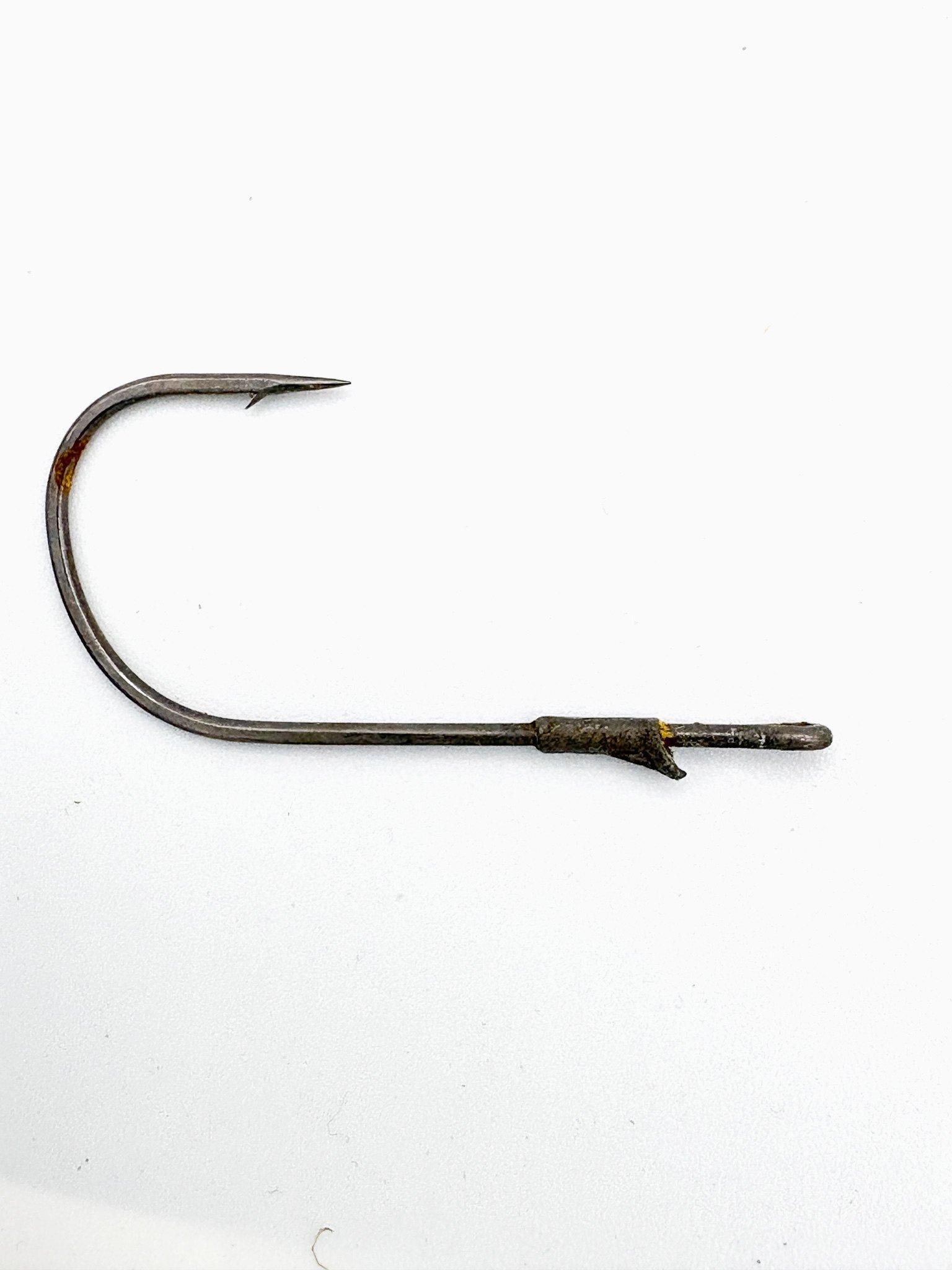
The J-Hook, also known as the round bend is the OG hook style and remains the best choice for a wide variety of fishing applications. Image by Joe Balog
Always try to match your bait or lure with a hook that’s big enough to do the job, but not so big as to overpower your offering. For a catfish cut bait, that might mean a 1/0, while a delicate crappie minnow requires a No. 8.
Strength is determined by a number of factors, but today’s forged models eliminate flex. This is important when fishing heavy cover where a strong fish could take you into no-man’s land. A little flex can be helpful, though, in situations where small hooks are required to hold a jumping, thrashing fish like a trout.
These days all hooks seem sharp, but chemically-sharpened hooks are another pay-grade. These are often more expensive than honed hooks, but the points need no touching-up. Keep an eye on those razor-sharp points, though, as they can roll after repeated contact with rocks. When that happens, change out and dispose.
Don’t Miss: HOW TO BUILD A PRECISION SQUIRREL RIFLE
OFFSET
- Common use: weedless plastic rigs; bass and inshore.
The “Texas Rig hook” jumped onto the scene in the 1970s, along with a boom in plastic worm fishing for bass. These hooks feature two 90-degree bends near the eye that allow an angler to pierce the head of the worm, run the hook out, then back in, and bury the point in the lure’s midsection, rendering the rig weedless while the lure stays straight.
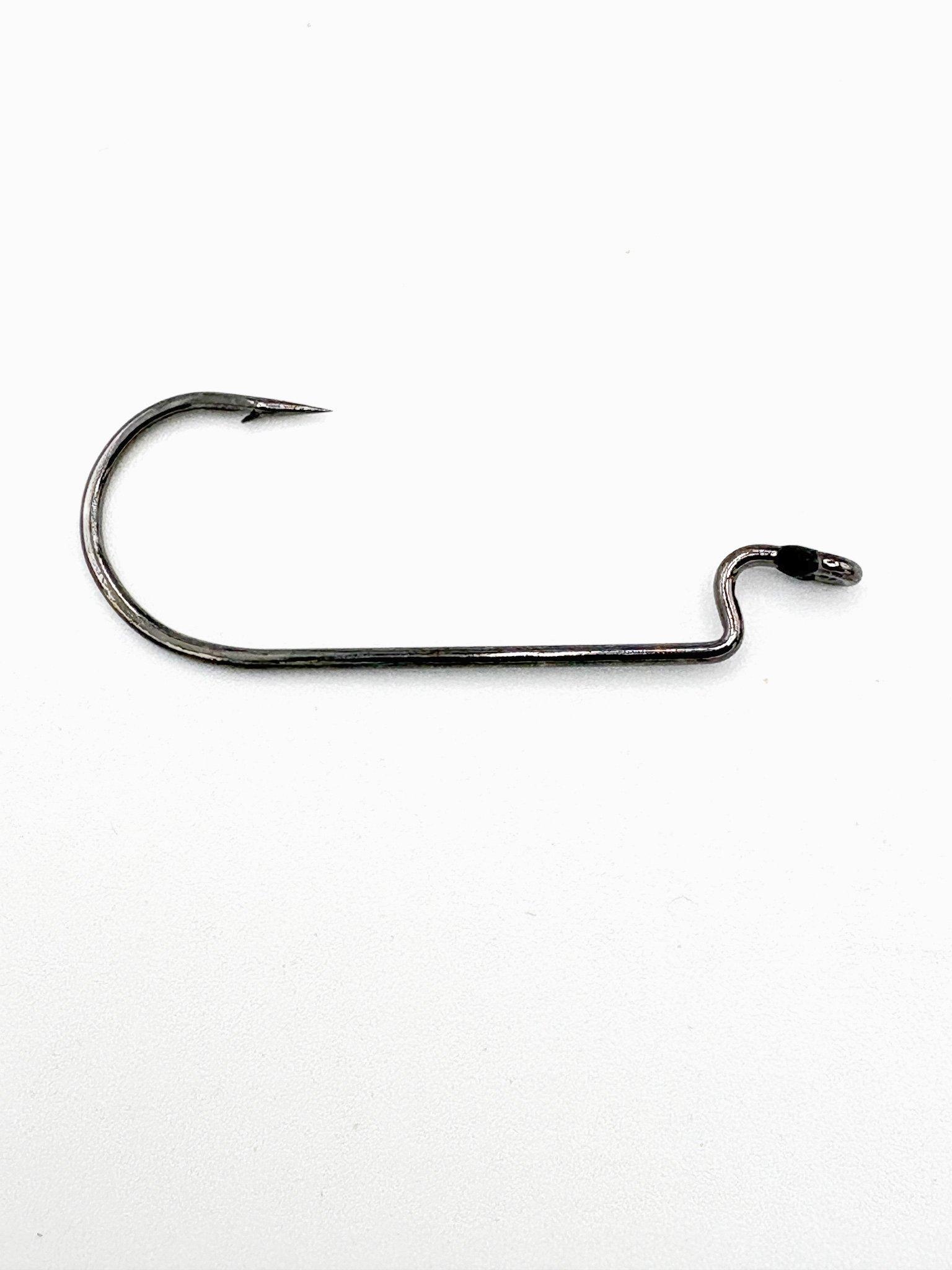
The offset hook is perfect for plastic worm fishing. Image by Joe Balog
Offset hooks are primarily a convenience item (anglers used the same rigging with J-hooks before the offset invention) but they have earned a permanent spot in nearly every bass angler’s tackle box.
Today, inshore anglers often use the same rigs for trout, flounder, and redfish. They’re wonderfully effective. The key here is to choose a hook that’s the correct size, based on length. Your hooks should run about 1/3 of the length of your lure. For a small, thin worm, that’s likely a 2/0. A 12-inch swamp snake requires a 6/0. Have a selection on hand.
WIDE GAP AND EXTRA WIDE GAP (EWG)
- Common use: weedless rigs for thick-bodied plastics.
The wide gap, or Extra Wide Gap (EWG), is a refinement of the standard offset, best used with bulky baits. It solves the problem of lures bunching up on the hook and preventing good penetration during a hookset. After plastic worms became the all the rage in the bass fishing world, other shapes took hold, including lizards, craws, creatures, and frogs. These are best fished on an EWG-type hook. There’s more gap to get the job done.
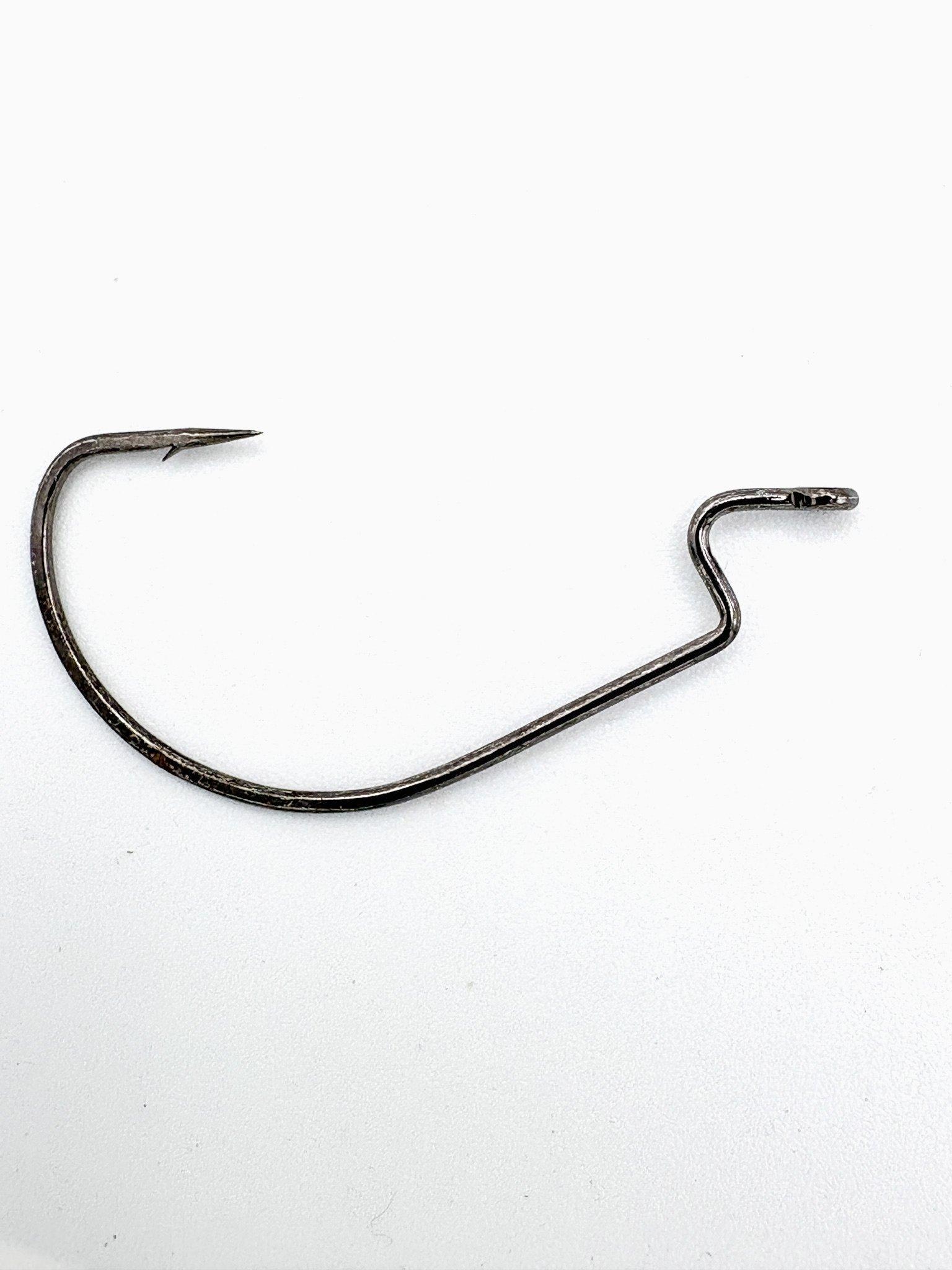
Wide and extra wide gap hooks come into play with large, bulky baits that can bunch up on a standard gapped hook. Image by Joe Balog
You need a wide-gap model if you pinch your Texas-rigged bait, and only the point of the hook is exposed, rather than the point and some gap.
Wide gaps come in a variety of strengths, depending on gauge, or thickness, of the steel. Choose the stout “2X” models for extreme applications, like buzz frogs in slop or flipping beaver-baits in the stumps. Stick to thinner models for lighter plastic applications like Carolina rigs.
O’SHAUGHNESSY
- Common use: saltwater trolling, stripers, catfish.
Legend has it a hook maker in Limerick, Ireland named O’Shaughnessy rediscovered classic models from the country’s historical salmon trade and brought this shape to the world. The elongated design and strong steel immediately resonated with offshore anglers in search of a hook that would hold up to extreme demands.
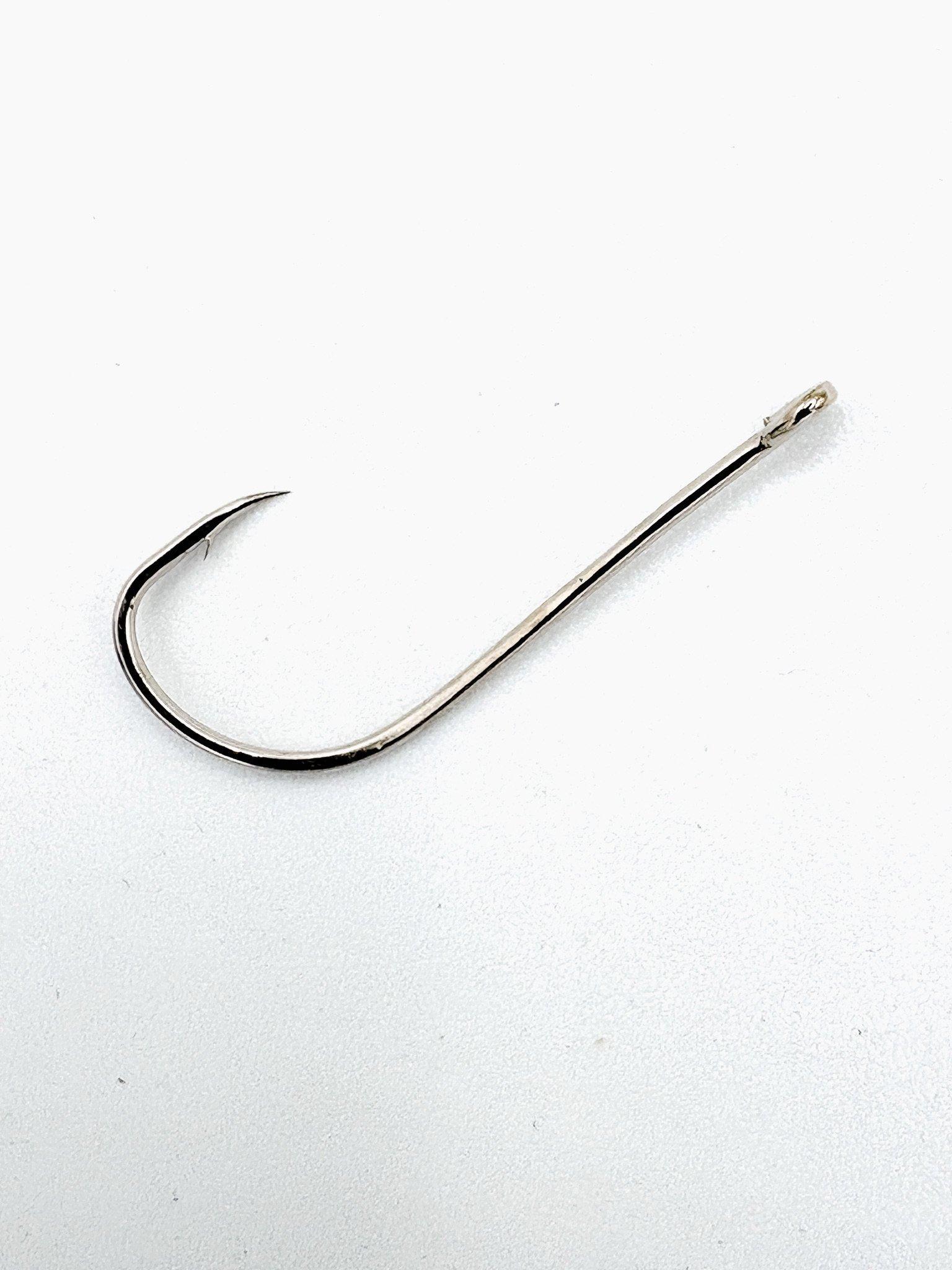
While possibly originally intended for large salmon, the O’ Shaughnessy hook excels today with saltwater anglers. Image by Joe Balog
The hook’s “throat” is pushed back and down, resulting in higher hook-ups when using large live baits. It also holds fish well. Today, some custom jighead makers use O’Shaughnessys in their products for this same reason. These are old-school, but very effective hooks.
Don’t Miss: WHAT’S UP WITH PIEBALD CATFISH IN THE TENNESSEE RIVER?
MOSQUITO, LIVE BAIT, AND OCTOPUS
- Common use: salmon, walleye, offshore live bait rigs.
These hooks are all adaptations of a round bend, featuring short shanks and strong steel. Some have turned-out eyes, others a deeper, wider gap. A few have almost a circle-hook-like in-turn to the point. In any case, this category of hooks includes specialized models that fish live baits well. Crawlers on a harness or salmon eggs in a stream fit the bill. These models are small and un-obstructive, but hook and hold.
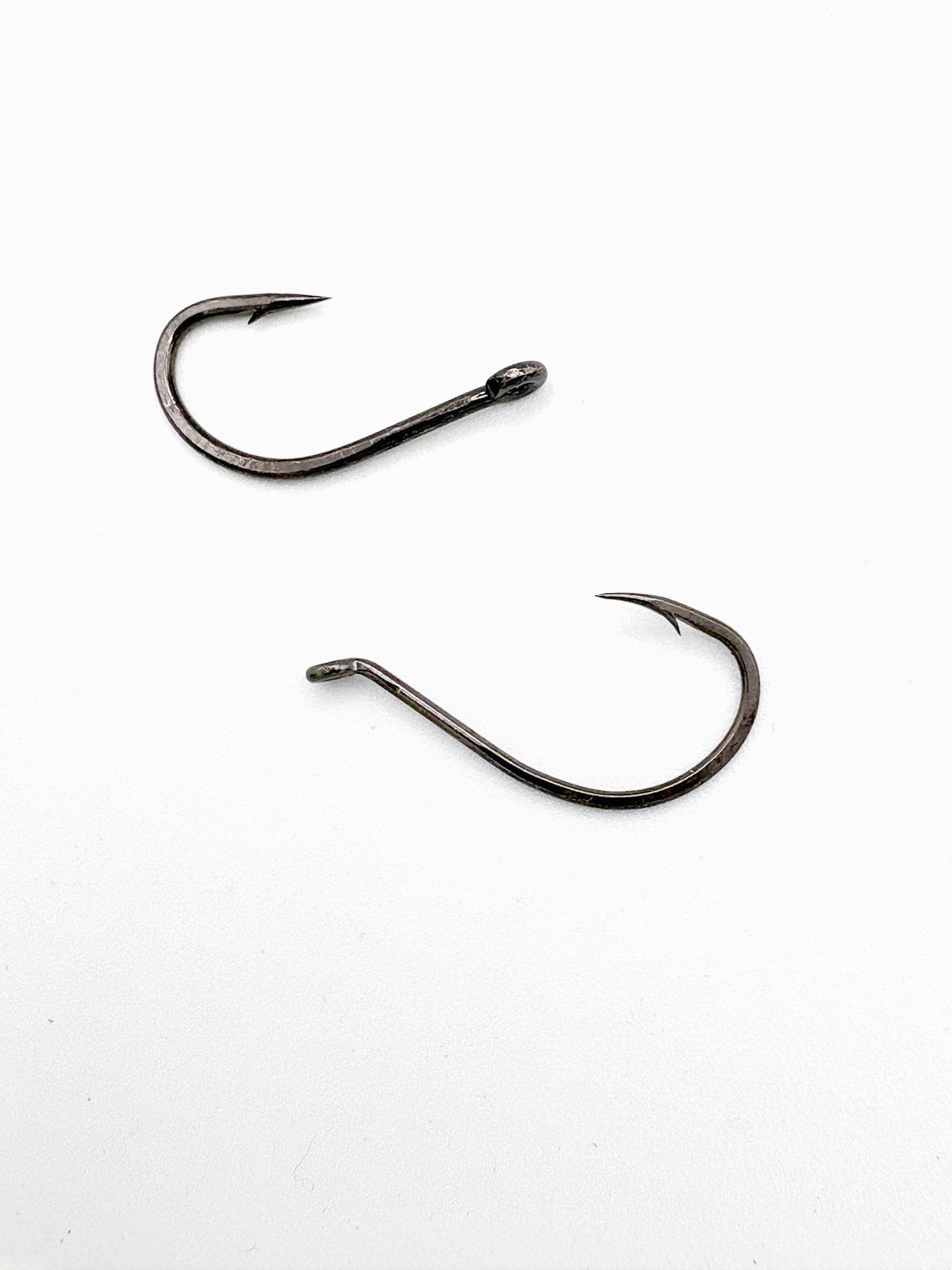
These short shanked hooks are perfect for certain live bait and salmon egg setups. Image by Joe Balog
CIRCLE
- Common use: All inshore species, catfish.
Circle hooks have permeated the saltwater world and are now the hook of choice for 90% of all salty fishing. In fact, circle hooks are mandatory for many applications. They’ve made waves in freshwater catfish circles and even a few bass and walleye applications with live bait. There’s lots to like about a circle hook.
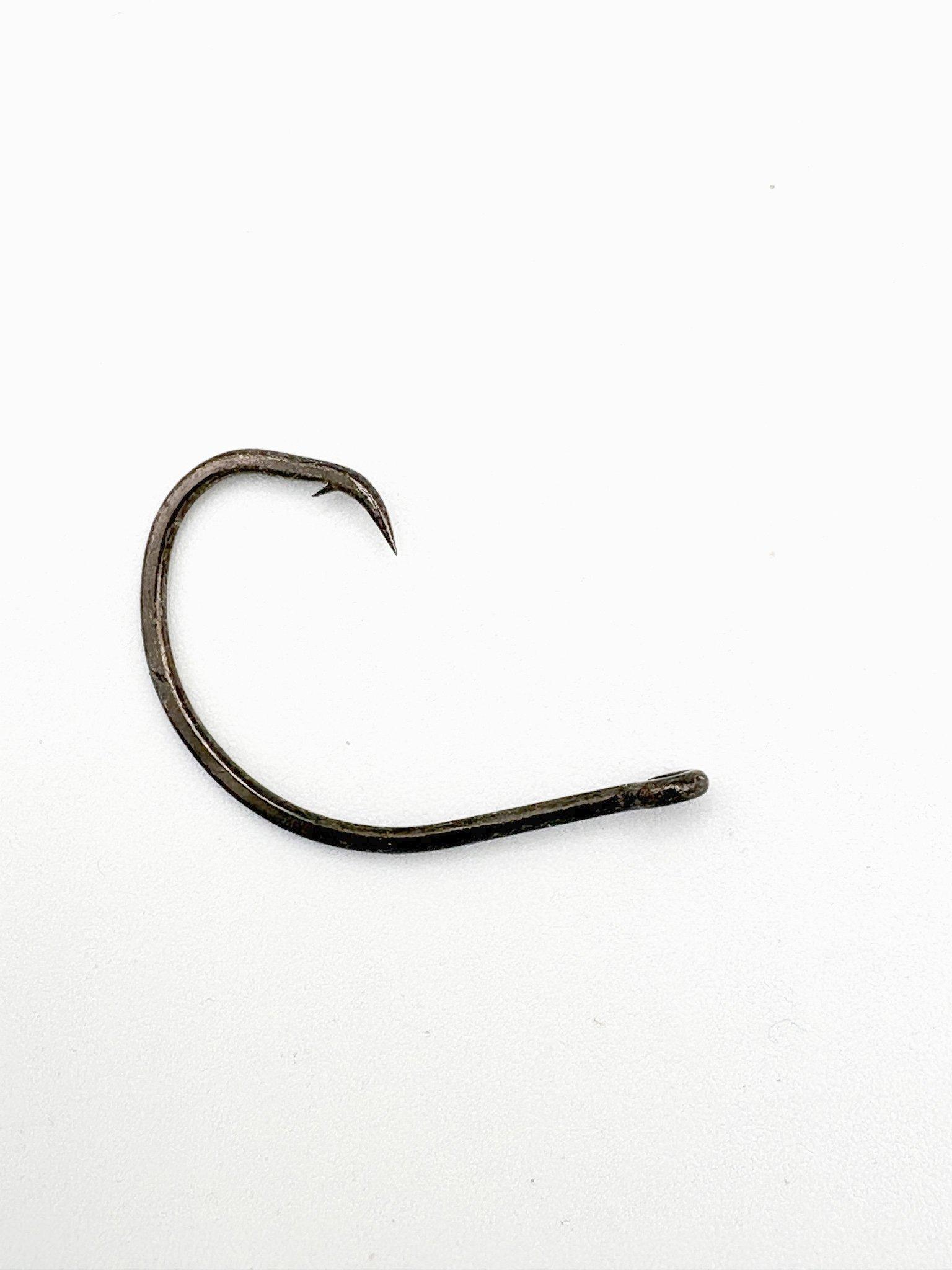
Because circle hooks tend to set themselves and cut down on hook caused mortality, they have become the standard for many salt and freshwater applications, even being required by law in some fisheries. Image by Joe Balog
These hooks feature an entirely new concept to many anglers. In essence, circle hooks hook fish on their own. No “hook set” is required, and in fact such a move prevents hooking fish.
The design of a circle hook is such that the hook rotates in the mouth of a fish when an angler increases tension. As it rotates, the hook pierces and holds in the corner of the fish’s mouth. No gut hooks. Circle hooks are perfect for catch and release fishing.
Another benefit of a circle hook is reduced hooking of anything but the fish. So there’s less of a chance of a crying granddaughter or painful bare foot.
The key to circle hook fishing is to choose a proper size; again, don’t overdo it, but scale up with big, fat baits. And you have to train yourself to not set the hook! Simply get tight and wind. Don’t lift the rod. You won’t catch them all, but that happens with any hook. And often a fish that doesn’t hook up immediately bites again, so be ready.
KAHLE
- Common use: catfish rigs, shiners for bass, flounder.
Kahle hooks look a bit like circle hooks, but without a turned-in point. A Kahle design is that of a short-shanked round bend with an extremely deep, elongated throat. The brings the point of the hook and much of the gap back, but doesn’t overly increase the gap itself.
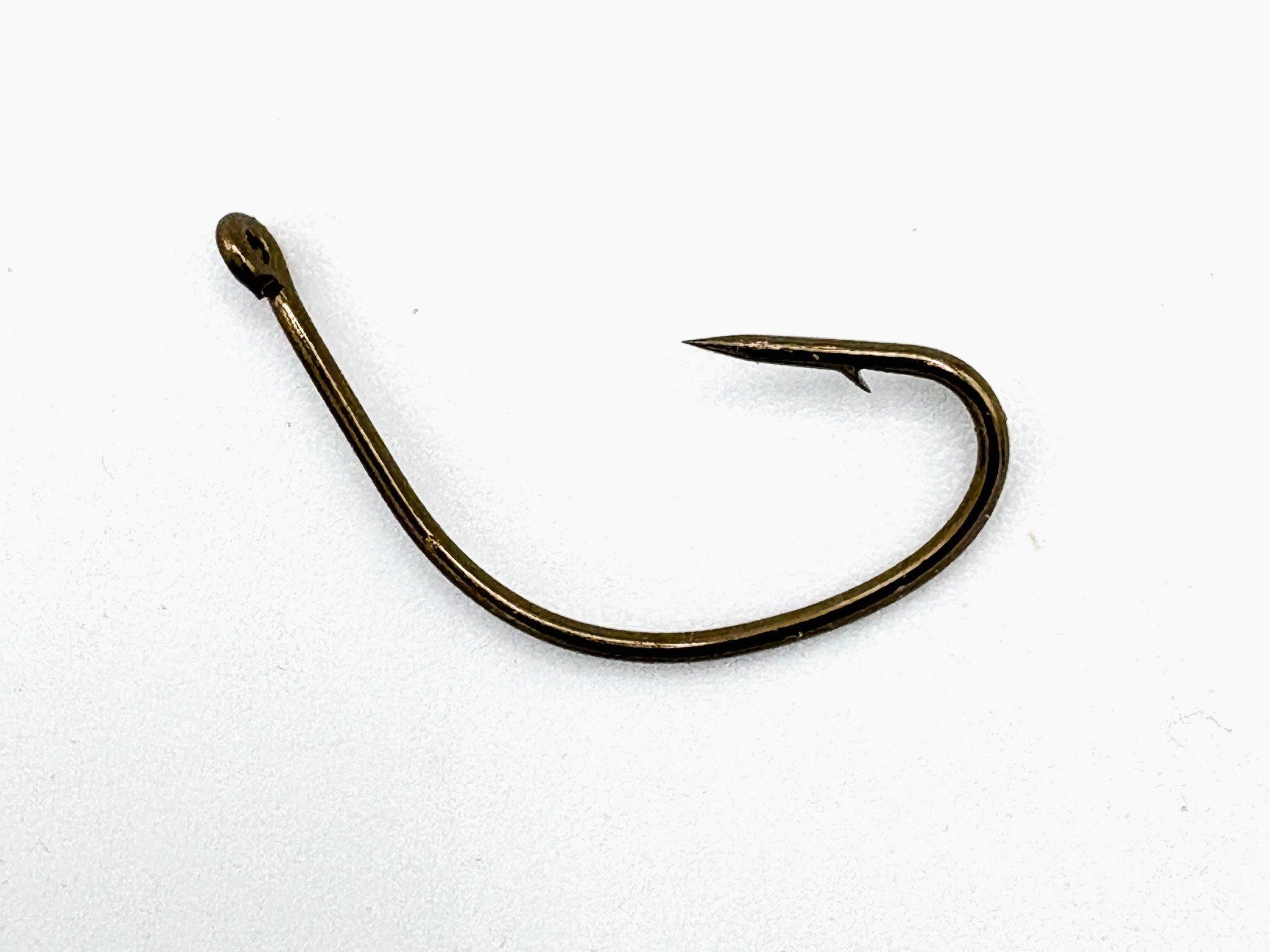
Similar to circle hooks, the Kahle style has been embraced by catfish anglers and others who target hard-to-hook fish. Image by Joe Balog
Kahle hooks excel when fishing live bait for fish that are ordinarily difficult to hook. The hook gives the fish the bait a little more, and then snatches them up.
Kahle hooks don’t require much of a hookset, if any, but setting the hook won’t blow your chances like with a circle hook. Be careful when purchasing Kahle hooks; many are still old-school bronze which has a short shelf-life in saltwater. Give them a shot; anglers often find that the more they fish with a Kahle-style hook, the more they like them.
TREBLE
- Common use: plugs for all fishing
By now, we all know what a treble hook is. Long ago, a lure designer thought “hey, if one hook catches fish, two should catch more.” Seems logical. Today, treble hooks feature three hooks (a few have four) and do a great job of grabbing fish that hit fast moving plugs.
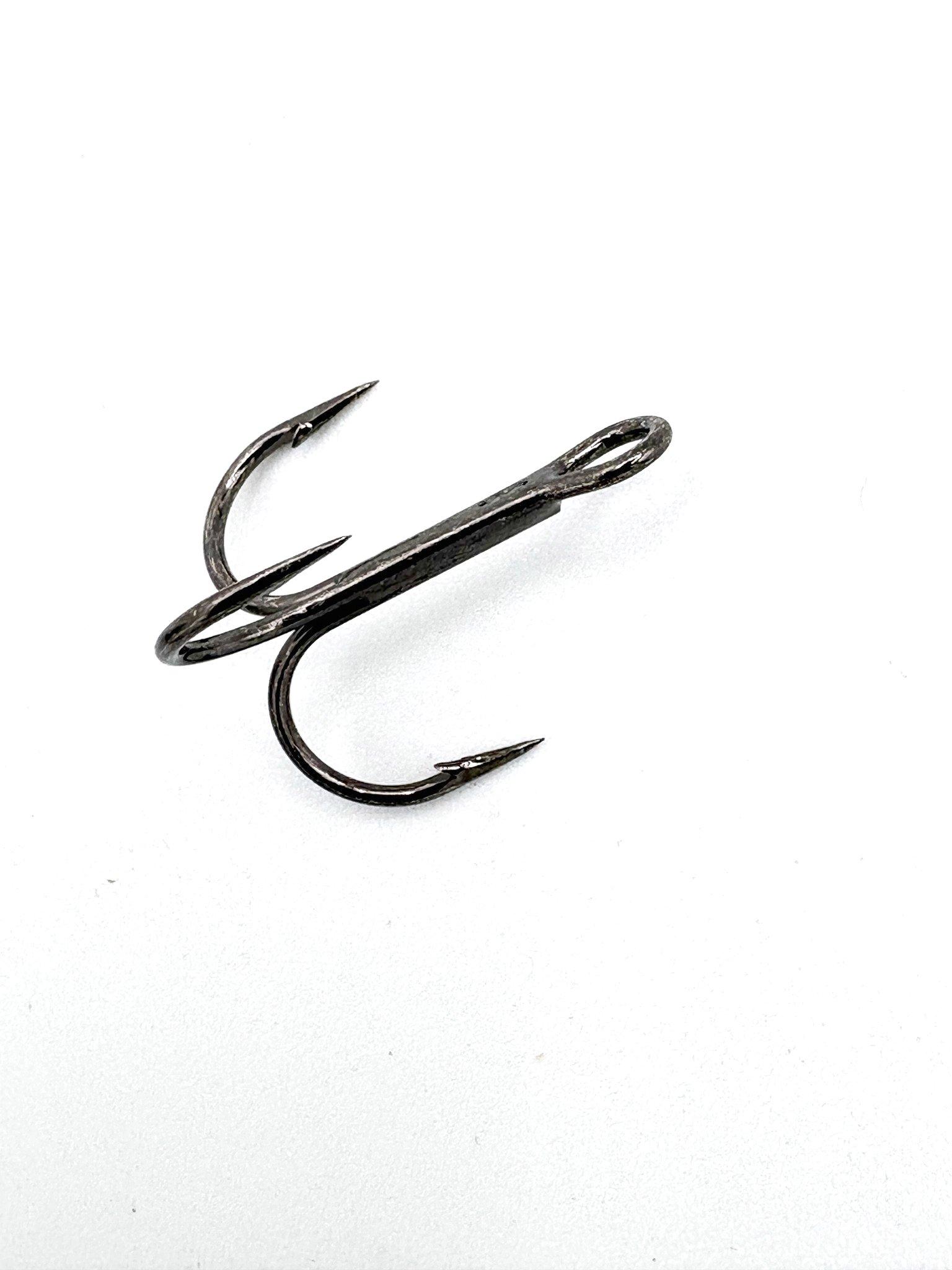
Treble hooks are used most often on plugs and lures, increasing the odds of a hookup on slashing fish. Image by Joe Balog
Other applications can apply, but be careful not to insist on trebles in too many scenarios — especially live bait fishing — as they can be deadly to fish that you may want to release. Trebles also have a tendency to end up in your hand if big, hard fighting fish are on the list, too, so be careful.
If big fish are on the list, and trebles are the chosen hook, be aware of the need for 2X or even 4X models. Muskies, mahi-mahi, and lake trout make quick work of weaker hooks.
Trebles are the one type of hook that many anglers err on the small side. Professionals often increase the size of trebles on their lures with great results. Treble hooks sharpen well thanks to their small, thin points; it’s essential to carry a hook sharpener if you do a lot of crankbait fishing. And watch that those points don’t roll over. Buy trebles in bulk and swap out often. The results will be noticeable.
Don’t Miss: 5 REASONS CHANTERELLES ARE BETTER THAN MOREL MUSHROOMS
WIDE GAP AND EWG TREBLES
- Common use: high-end bass lures.
Many anglers rely on wide-gap trebles, believing they hook, and more importantly hold, bass better. The EWG models feature an extremely deep throat. The idea there is that, once hooked, a bass has a tougher time coming unhooked. These hooks are like taking your morning vitamins. Some anglers ignore the idea, while others feel they need them to survive. Your call.
TRAILER HOOKS
- Common use: spinnerbaits, buzzbaits for bass, pike, muskie.
Trailer hooks are basically round bends (or J-hooks) with extra-long shanks and a large eye. They slip on over a lure’s primary hook, allowing a piggy-back rig of two hooks, catching short strikers. Trailer hooks are essential for many situations, but can snag in heavy weeds or brush. The old rule is use them anytime you can get away with it.
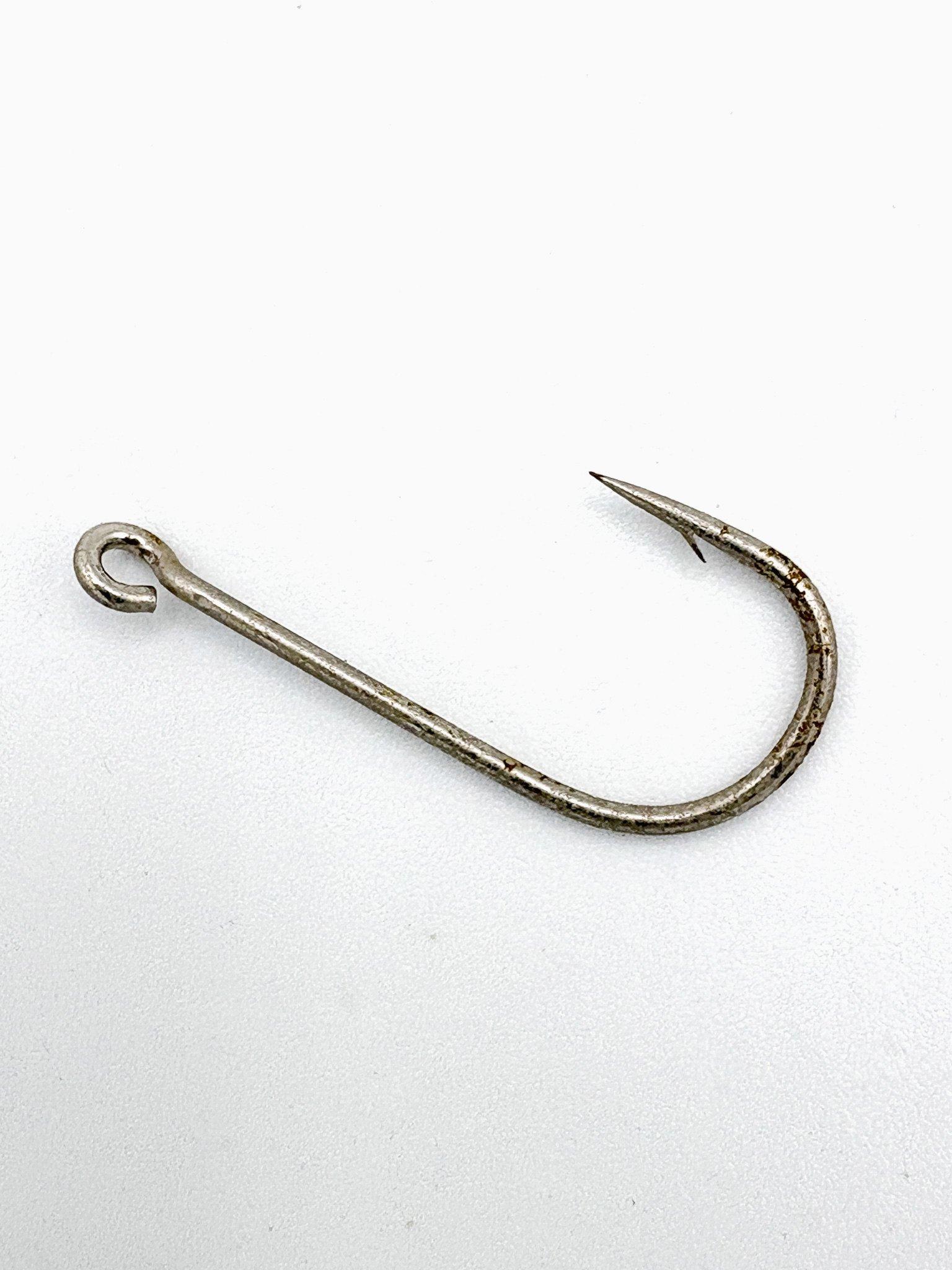
Long shanked trailer hooks are made to slip over a lure’s primary hook to catch short striking fish. Image by Joe Balog
Don’t Miss: BASS FISHING AFTER DARK!
DEEPER DIVE: OFFSET VS. INLINE HOOKS
Here, we’re not talking about offset hooks for Texas-rigging, but the actual alignment of the hook body. Looking straight at the hook, offset models have a point that doesn’t align with the hook shaft, but is instead turned out (slightly sideways).
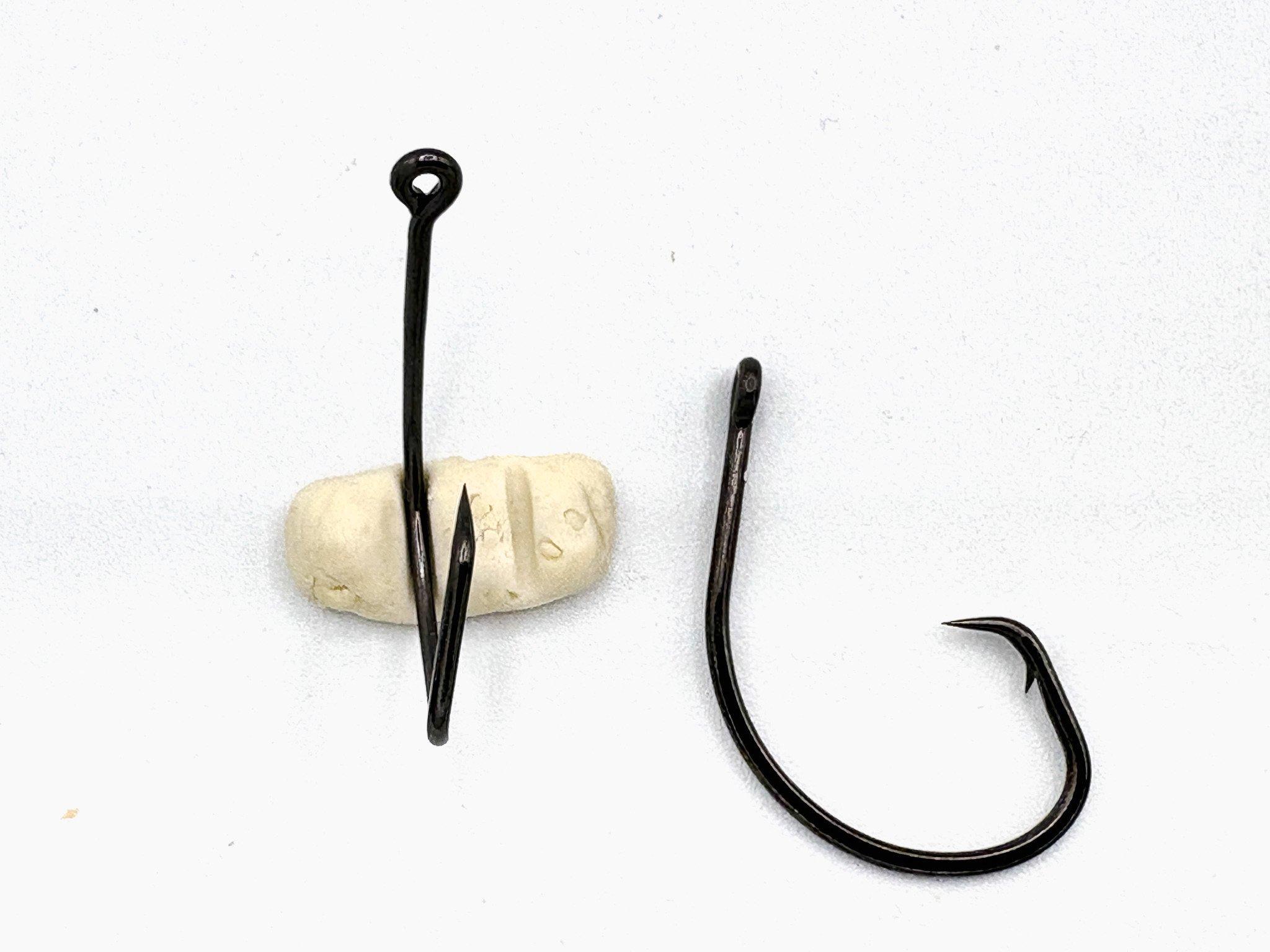
Unlike most hook styles, the point on an offset hook doesn’t align with the hook shaft, increasing the odds of a good hook set. Image by Joe Balog
Many hook types can be offered in offset models, including round bends, circle and even trebles. The purpose of the offset alignment is to grab and hold the fish when we pull back, giving another place for the hook to dig in.
Offset effectiveness is a given to some anglers, but unproven to others. In any case, offset hooks are forbidden in a few select fisheries (saltwater bottom fishing in Florida, for example) so be sure to check your local regulations.
Hopefully, we cleared up a few mysteries about fish hooks, allowing you to make an informed choice in your fishing. You only get one chance to connect. Give it your best odds by fishing with the correct hook.