How to Fish for Southern Tailwater Trout
Posted 2026-06-25 by
Big trout abound in tailwater fisheries throughout the Mid-South, and anglers can find success with a variety of tactics
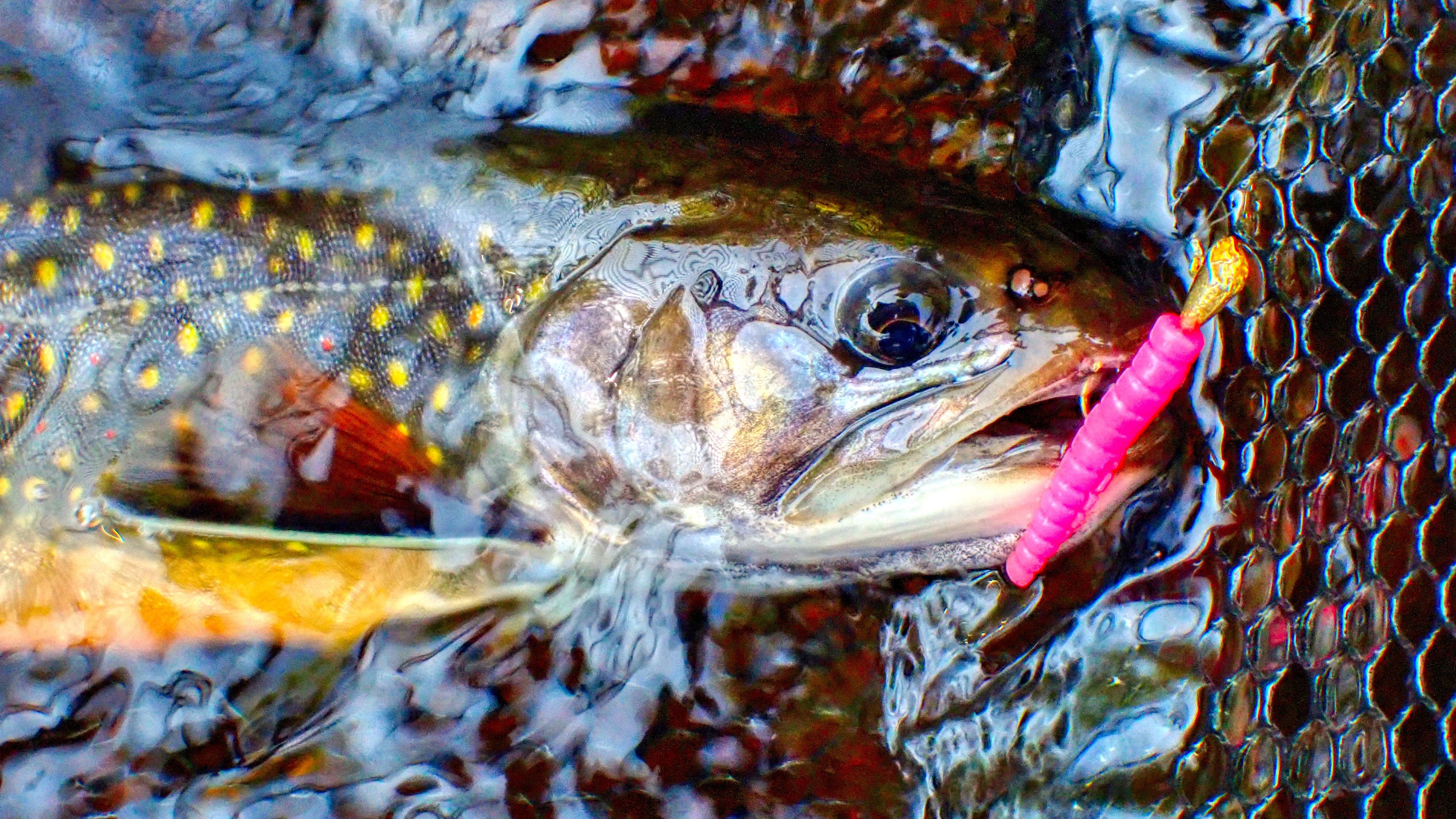
Many southern tailwaters have phenomenal trout fishing, and the fish can be caught with a variety of techniques. (Photo by Jason Sealock)
There’s incredible trout fishing to be found in many states across the Southeast. Hydroelectric dams below some deep, highland reservoirs in states like Arkansas, Tennessee, and Kentucky result in cold-water discharges that can sustain trout populations year-around. Most of these streams are regularly stocked with rainbow trout, but in some of them, brown trout populations are self-sustaining. Some of these streams are renowned for producing trophy fish, too (a former IGFA world-record brown trout was caught on the Little Red River in Arkansas back in 1992).
I’ve enjoyed the trout fishing opportunities on many of these places for the past 50-plus years. Last year, while fishing with my friend Ed McCoy and guide David Taylor on the White River in Arkansas, we were barely five minutes into the day when McCoy set the hook. Seconds later an enraged brown trout exploded from the cold water like a geyser. McCoy found himself attached to a foot-and-a-half of fury, glistening in the sun and looking more like a jewelry box than a fish. It was hooked securely in the corner of its with a tiny Trout Magnet jig.
Since he is in the business of helping create Trout Magnet lures, it is no surprise that guide Taylor's specialty is fishing Trout Magnets. How he fishes them — and taught us to fish them — is his "Magic Bullet." Using 8-foot spinning rods, we were casting the tiny, 1/32-ounce Trout Magnet jigs suspended on 2-pound test fluorocarbon leaders beneath floats as we drifted downstream. If you're familiar with "float & fly" fishing, this was it. The 2-pound test gets you more bites, but you can’t just crank a 20-inch trout to the boat. Trust me, you will get all the fun out of these fights.
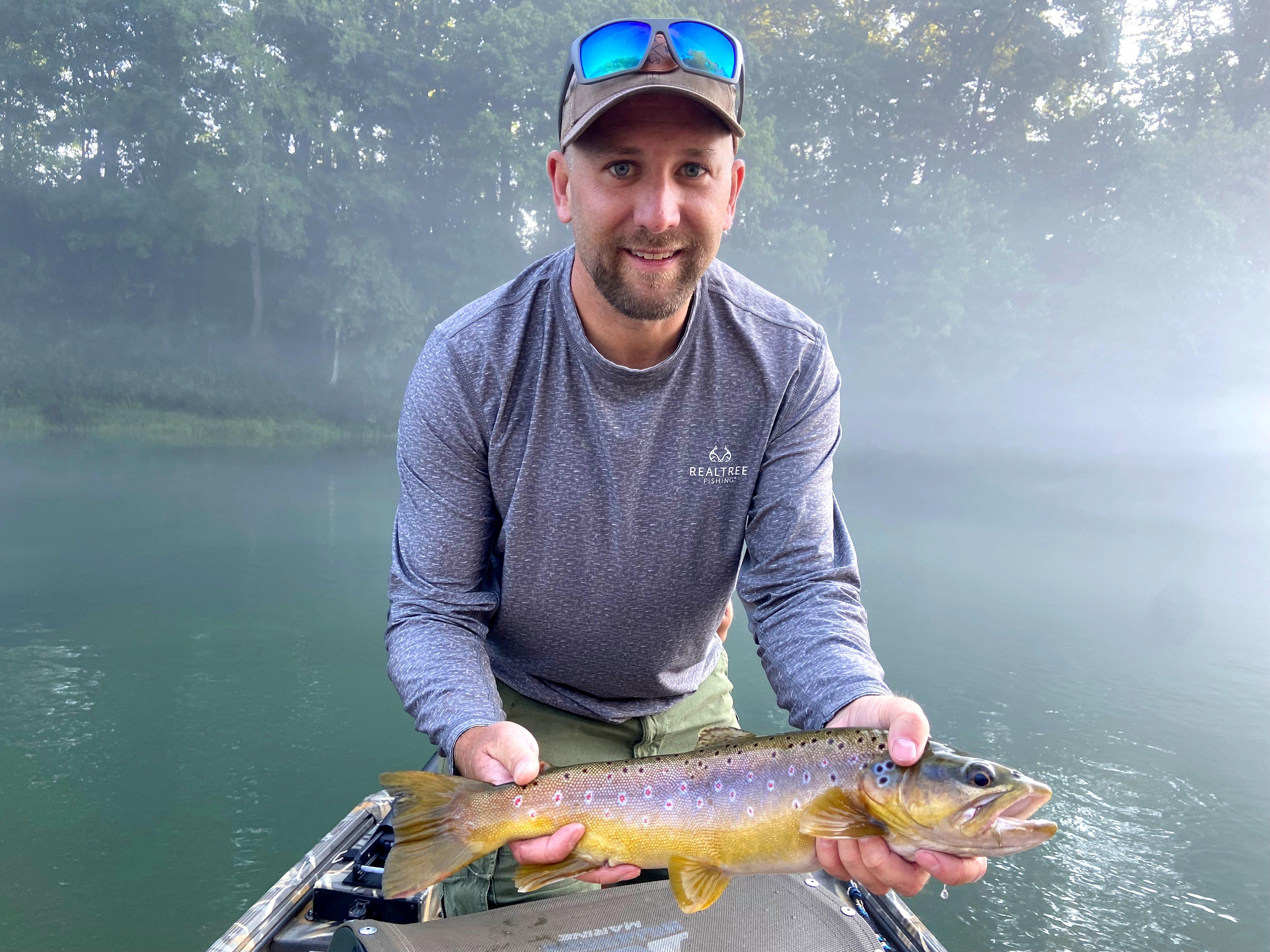
Brown trout can be surprisingly aggressive and willing to hit large lures. This one fell for a 4-inch jerkbait. (Photo by Will Brantley)
But that’s certainly not the only effective technique for tailwater trout. Roll back the clock 24 years. I was with guide Fred McClintock (RIP) on the Cumberland River near Burkesville, Kentucky. McClintock was casting what I considered to be a huge jerkbait, nearly 5 inches long. I couldn’t believe we were trout fishing with lures I’d normally use for trophy bass or even 40-pound stripers — that is, until McClintock set the hook and a nearly 5-pound brown rocketed out of the water. That day led me back to those hallowed waters time after time for many years.
Don’t Miss: 6 Ways to Catch Your Own Live Baitfish
I’ve learned that the techniques one can use to catch southern trout are as varied as the leaves on the trees. To list just a few:
* Fly fishing (with dry flies, nymphs, or streamers)
* Spin casting (with inline spinners, crankbaits, jerkbaits, spoons or live/manufactured bait)
* Tenkara (a long rod, a fixed line, and a fly. No reel. No excess gear. Just precise, controlled presentations)
Within each of those major categories, the variation of lures, techniques, and presentations can make your head spin. We’ll hit some popular highlights here, beginning with another of my most memorable trips.
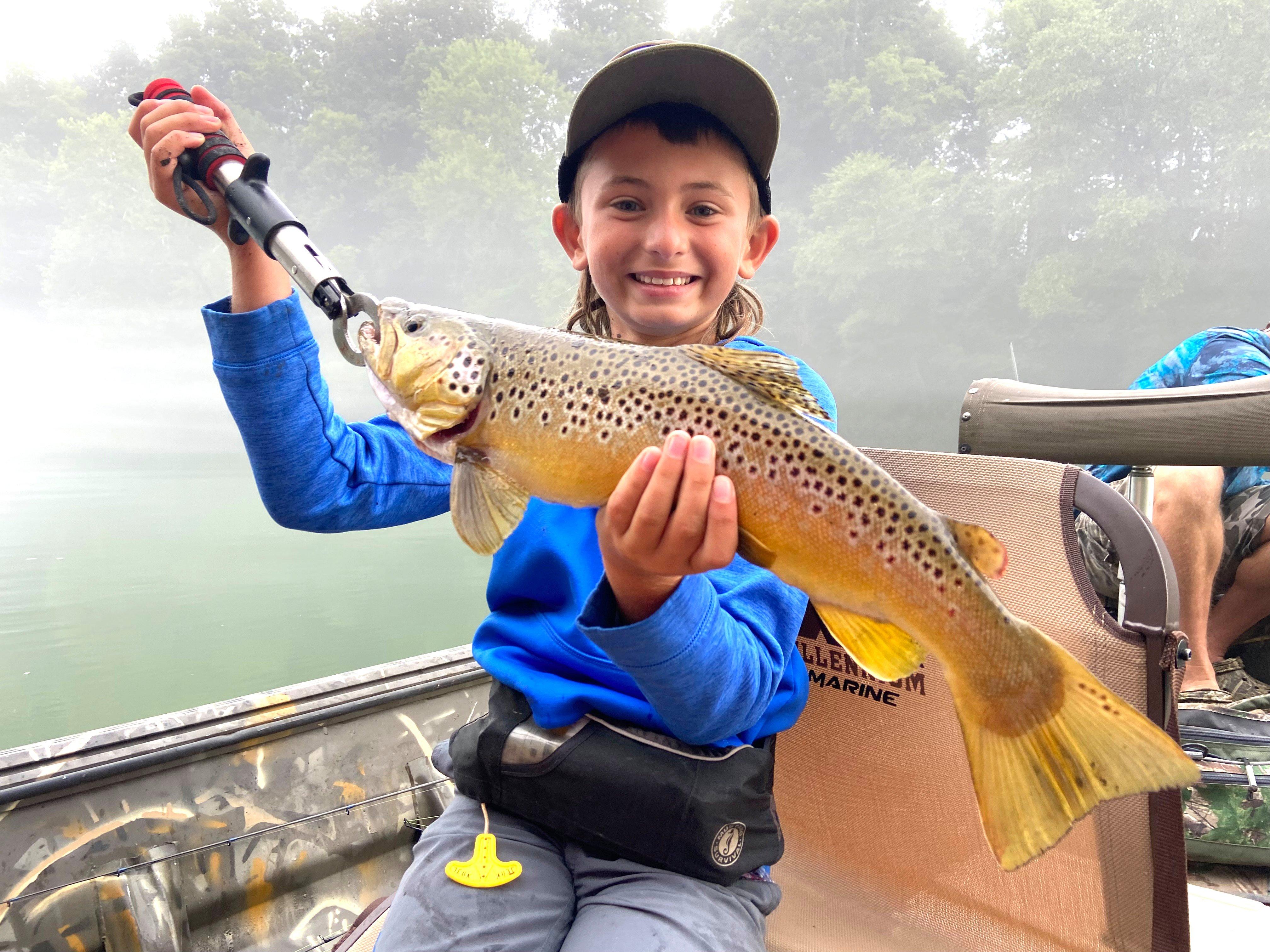
Brown trout usually feed best in low light. Early morning, late evening, and after dark are prime times to catch them. (Photo by Will Brantley)
A friend and I were fishing on Calderwood Lake on the Tennessee / North Carolina border. The clear mountain lake is nearly 200 feet deep in places. We assumed that we would find the trout on deep water points and ledges. That’s where we fished, dropping nightcrawlers, corn, and artificial lures 20 to 30 feet deep for a day-and-a-half with only one trout to show for it.
The second afternoon we gave up on trout and decided to target bluegill. We bought some crickets and began casting them under floats beneath low-hanging branches along the shoreline. You know what happened. Instead of bluegill, we caught one trout after another, our double limit of rainbows in just two or three hours. Instead of finding safe harbor in the depths, the Calderwood trout were cruising the shallows in search of bugs falling from the branches.
WHAT ABOUT FLY FISHING?
I am not a serious fly angler, but I’ve done it enough to have been taught a few lessons there as well. This time I was on the Clinch River with Mason Sims, a young trout angling champion. Wading along a shallow run squeezing around an island, Sims spotted a pair of spawning brown trout. It was November, prime spawning time for browns.
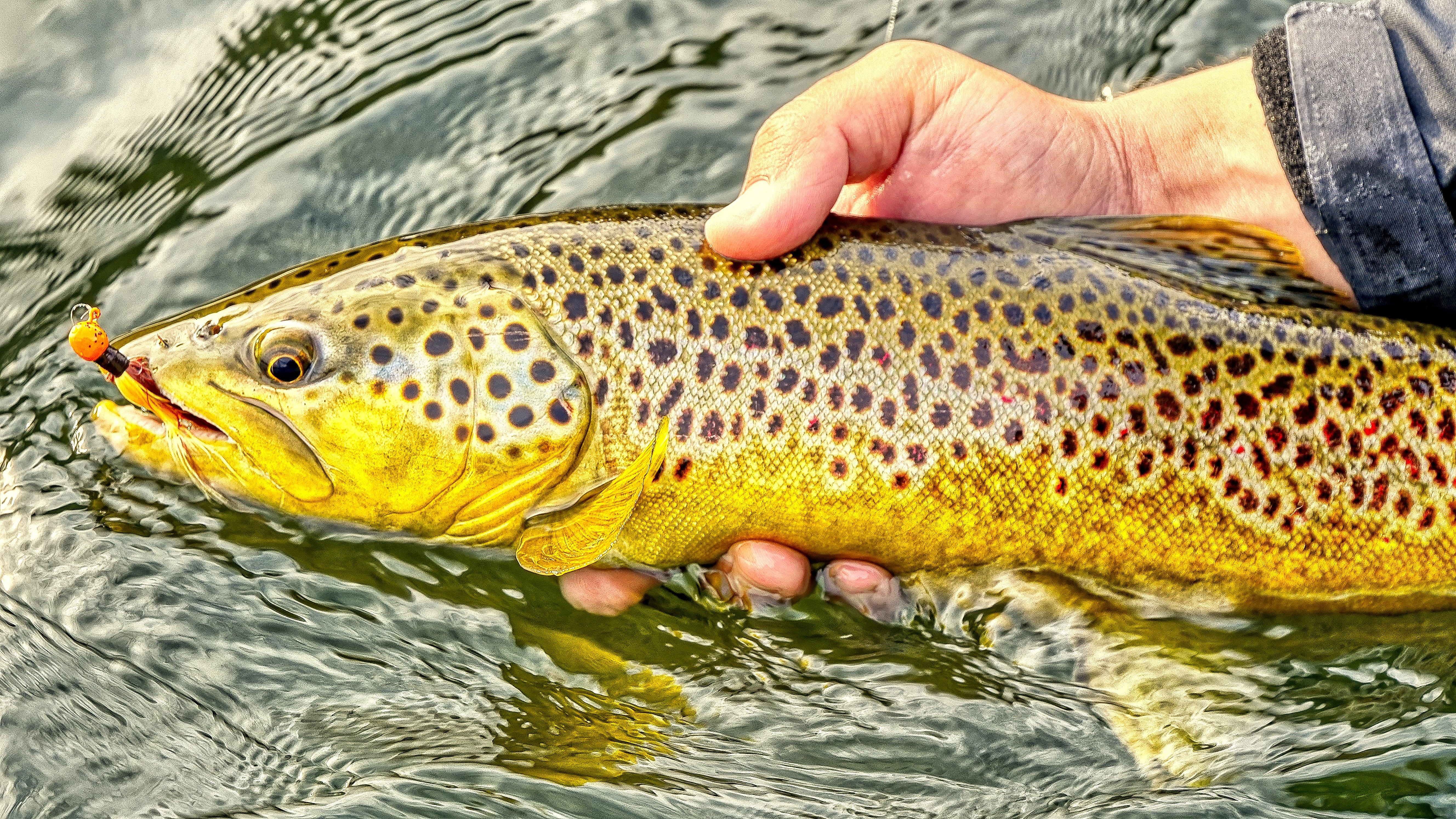
Trout Magnet jigs can be incredibly effective when tailwater trout get finicky. (Photo by Jason Sealock)
I rolled video as Sims expertly presented virtually every nymph and fly in his plentiful arsenal, watching the big browns sidestep and reject every single offering he sent floating their way.
Sims finally turned to me and said with a smile, “I hate to do it, but I know what will catch them.” He reached in his box, pulled out a fluorescent pink San Juan Worm, and tied it on.
The first big brown female never hesitated in gulping down the pretty pink offering. There were numerous spawning browns in the 100-yard run so I quickly joined the fray with my own San Juan Worm. I caught plenty of fish, and even managed to break off what I believe was the biggest brown I’ve ever hooked.
BEHOLD THE WOOLY BUGGER
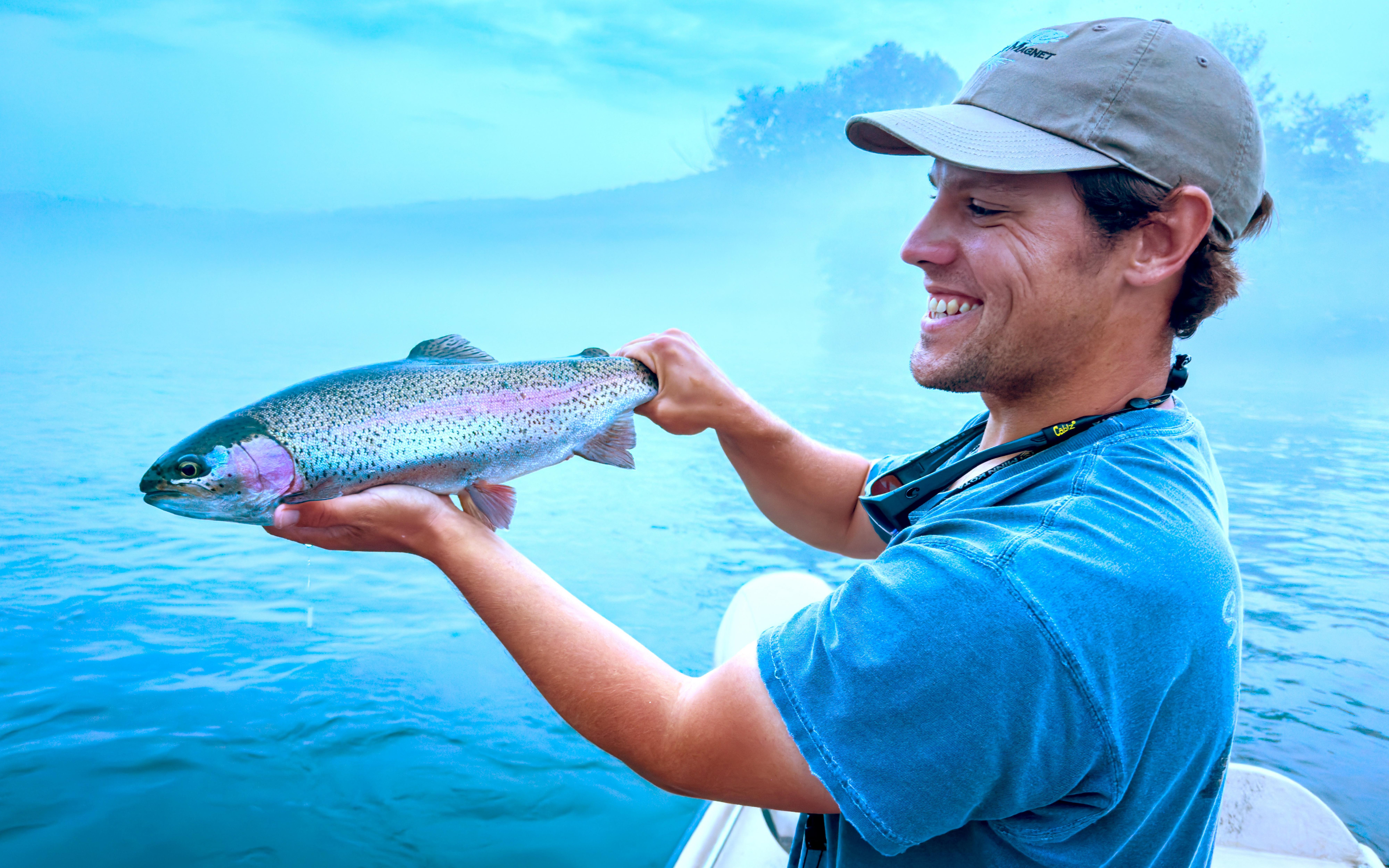
Southern trout are sustained by cold-water releases from hydroelectric dams, but a long growing season and plentiful food helps them grow quickly. (Photo by Jason Sealock)
Avid Tennessee fly angler Tom Hackney says he has one technique and lure that he will almost always start out using on any given day of trout fishing. “I will typically start out with an old fly called a Woolly Bugger,” said Hackney. The Woolly Bugger is one of the most versatile and widely used trout flies ever created. The tail is often made of marabou that pulses and breathes in the water. The body is thick and fuzzy, often wrapped with chenille. They have bead heads of various weights, depending upon the depth of water or the current you’re fishing in. It’s not an exact imitation of anything but can resemble a lot of things including small baitfish, crayfish, and large aquatic insects.
“Mostly I fish it under a strike indicator and just let it dead drift,” said Hackney. “But I have a good friend who will strip it back in like he’s fishing a streamer. It's very effective wherever and however you’re fishing it.”
FLY FISHING WITH SPINNING GEAR
It may have existed elsewhere, but another technique I came upon 45 years ago was the means to imitate a fly-fishing presentation using an ultralight spinning rod. While fishing the Hiwassee River in East Tennessee, I tied on a small, clear, torpedo-shaped casting float. Beneath the float I used a 2- to 3-foot length of 2-pound-test with a #14 or #16 pheasant tail nymph. I would cast the rig up current and simply wind up my slack line as it drifted naturally downstream past me, until it drifted as far as possible. Then I would wind it up and repeat the process. I learned that if I tipped my pheasant tail nymph with a tiny live wax worm, my catch rate would increase five-fold. Be sure that your local regulations allow for the use of live bait before doing that, however.
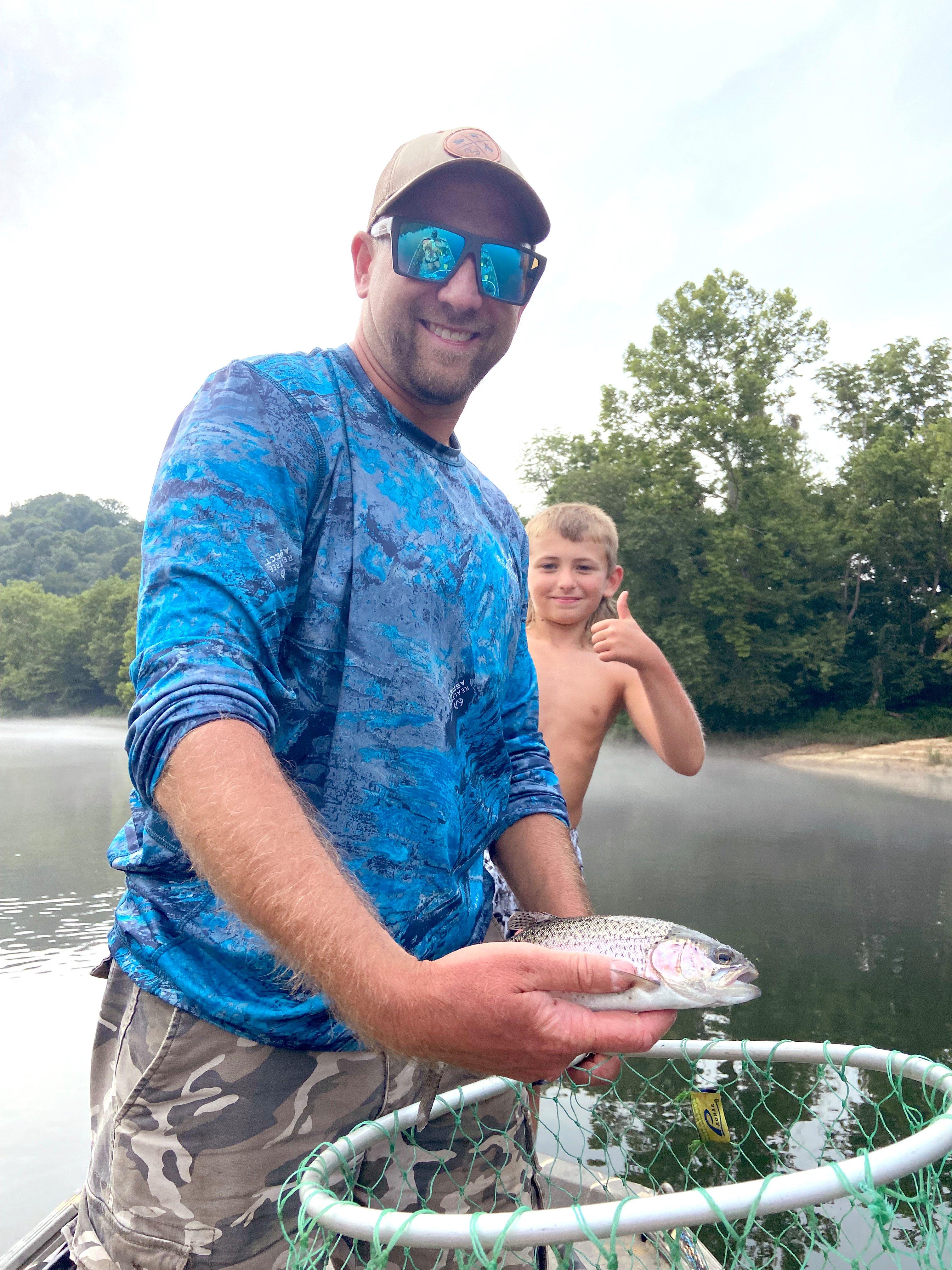
When the artificial bite gets tough, try live bait, corn, or egg imitations on slip-sinker rigs. This rainbow fell to a PowerBait rig. (Photo by Will Brantley)
MORE (AND MORE) TECHNIQUES
Some of the other time-honored favorite techniques include:
* Spin casting with inline spinners such as Roostertails or Mepps spinners. I always found Mepps spinners to be the most effective as their blades are counter-balanced and will spin effectively with a much slower retrieve compared to a Roostertail. On another frustrating day when the inline spinners were failing miserably, I pulled out a tiny Yo-Zuri L-Minnow, which is a miniscule sinking crankbait that’s only 1 3/8 inches long. For whatever reason on that day, that is what the trout wanted. My partner asked for another one, but I sadly had to tell him, with a smile, “Sorry, it’s the only one I have.”
Don’t Miss: Buffalo Fish Sandwiches
* Bait fishing is perhaps the most popular of all trout fishing techniques. While Hackney prefers fly fishing himself, he often takes his grandchildren and always sets them up for bait fishing. “You can get some worms, some whole kernel corn or there's all kinds of little commercial trout baits. All those things will always catch fish and they're pretty easy to deal with. If you just want to go have a good time with some kids, that's a great way to do it.” Hackney said he sometimes lets the kids fish bait under a float where it can drift with the current. But in slow or still water he just uses a small split shot and lets the bait sit on the bottom, waiting for the trout to come find it. In fact, I’ve caught many large (20-inch-plus) brown trout from the White River fishing with banded sculpins, a tiny bait fish, while anchored and fishing on the bottom, just like catfishing.
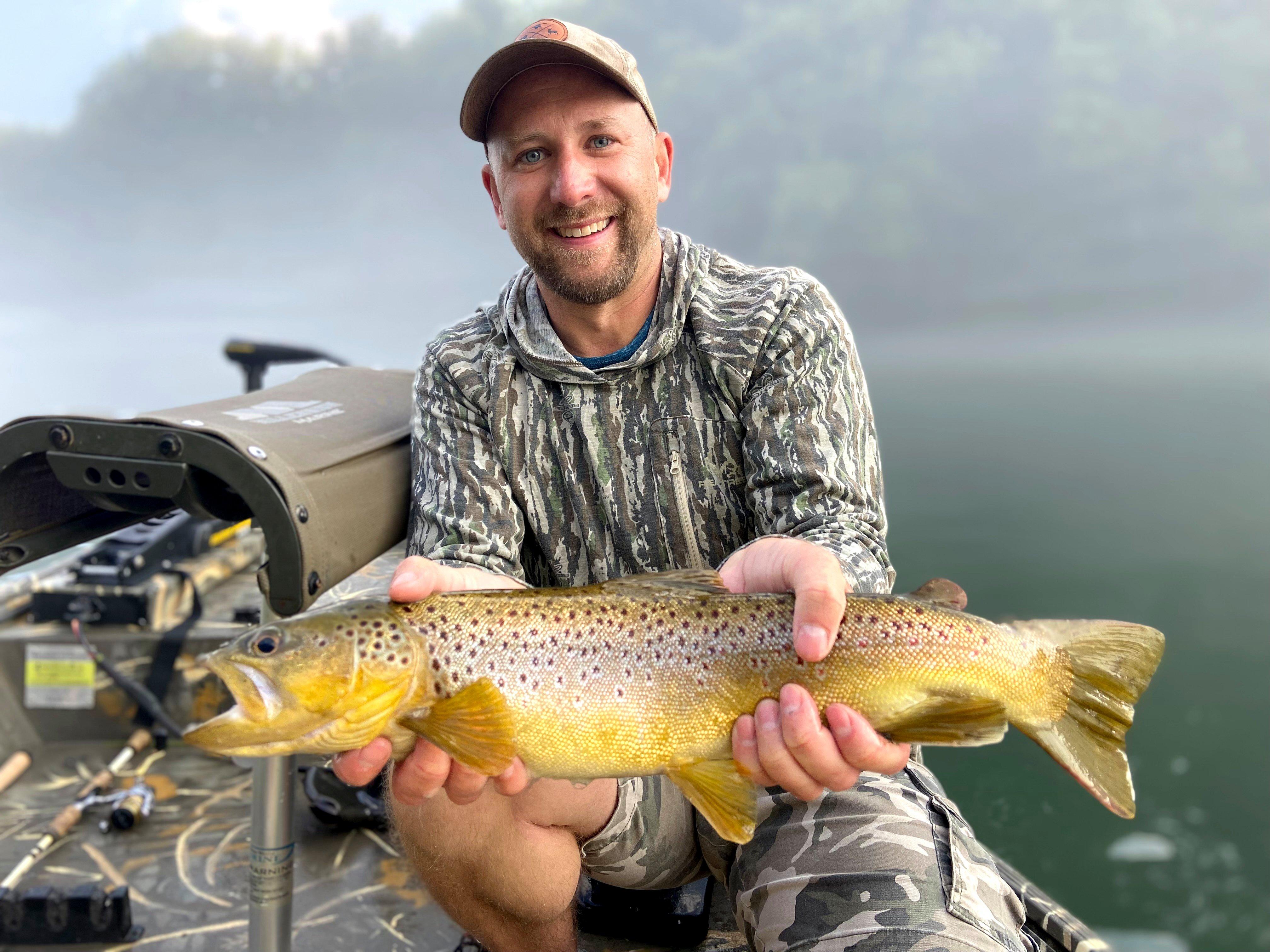
Jerkbaits, hair jigs, inline spinners, and spoons all work for covering water with spinning gear. (Photo by Will Brantley)
* Casting and retrieving hair or marabou jigs, such as a Trout Magnet D2 jig, is a great way to go for bigger browns. It’s not much different from casting jigs for bass. Trout Magnet says over the past 50 years, the D2 jig is responsible for seven line-class world records and countless trophy trout.
There is never a “one size fits all” approach when it comes to trout fishing. Well-rounded anglers adjust to different locations and conditions. The most important thing is to not become a one-trick pony who gets caught in a rut. Be prepared and willing to adapt to new techniques, physically and more importantly, mentally, and you’ll have better odds of filling limits and maybe catching a trophy tailwater trout of your own.
From Chattanooga, Tenn., Capt. Richard Simms is owner of Scenic City Fishing Charters, Inc. He began his outdoor career as a Tennessee game warden later choosing journalism (and guiding) as his chosen profession. Check out his book, "An Outdoor State of Mind." You can contact him at [email protected].