6 Ways to Catch Your Own Live Baitfish
Posted 2026-06-10 by
Nothing lures lunkers more than a big, lively, native baitfish. Here’s how to catch your own
For me, fishing started out as bait catching. The neighborhood creek served as a perfect backdrop for my sister and me, toddlers in life jackets at the time. We waded the shallow water with 2-feet lengths of monofilament tied to ice fishing rods, no reel required. Baited with a chunk of worm, I’d dip into the dark holes for creek chubs and shiners. Little did I know that my father was saving each of my catches to later use as bass bait.
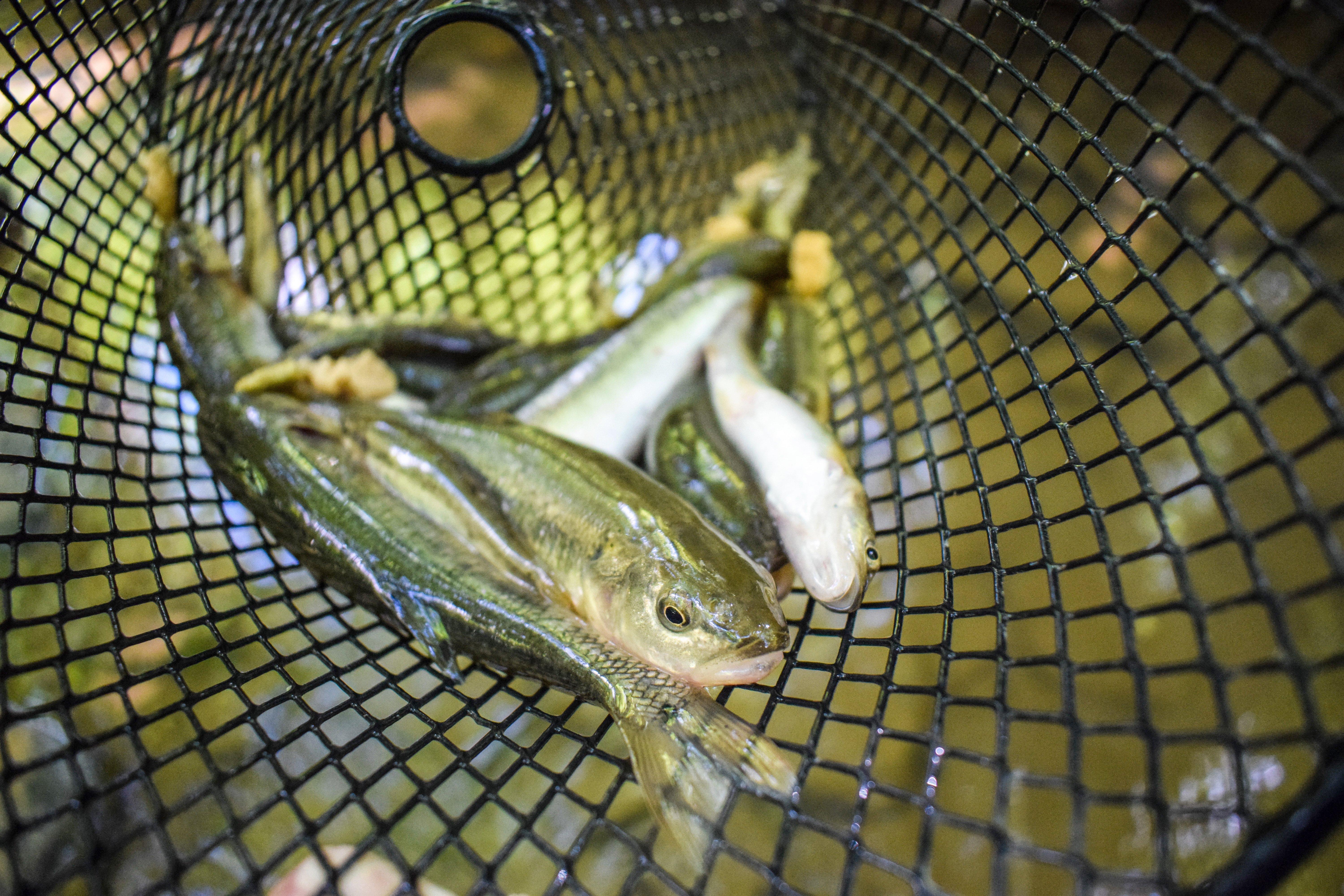
Catching your own bait is economical and can save time over running to the closest bait shop. Image by K Steve Cope
Nearly a half-century has passed, and I’m still catching bait. Creeks have been replaced with oceans, cane poles with sabiki rigs. But there’s always a common theme: it’s often hard to beat the effectiveness of live bait. And, when that’s the case, the very best bait you’ll ever use is the bait you catch yourself. Let’s look into the best methods for securing your own personal supply.
Don’t Miss: GET SMASHED: 4 GREAT TOPWATER BASS BAITS
HOOK AND LINE
We’ll start with the basics. Using an individual hook and line to catch baitfish may seem time-consuming and counter-productive, but it’s often the best method. A variety of baits that are best caught this way include:
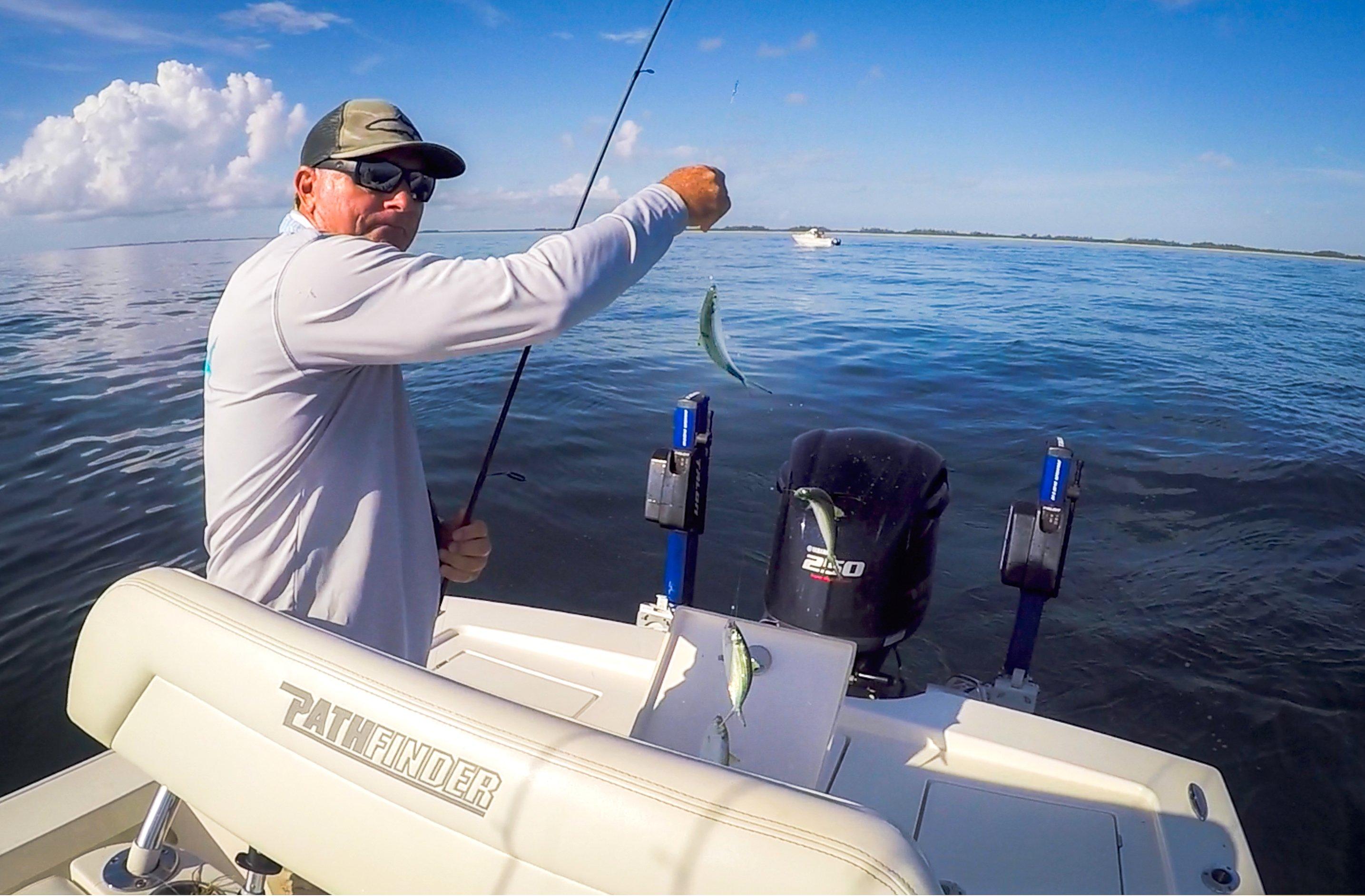
The sabiki rig can be both a fun and productive way to load a bait bucket. Image by Joe Balog
Pinfish
Whether you’re after snook, grouper, snapper, or even cobia, pinfish can be dynamite bait. While pinfish cages get all the press (as we’ll discuss), it’s often easier to catch these prickly favorites one at a time. Find some shallow grass flats or mangrove shorelines, deploy a chum bag and give it 10 minutes. You’ll likely see schools of pinfish move into the slick. From there, catch them using a #8, long-shanked (important) Aberdeen hook, tipped with a piece of squid. It’s best to crimp down the hook barb and use a small de-hooker, dropping each bait into the well without touching it. With a little practice, you’ll have a day’s supply of bait in less than an hour.
Don’t Miss: HOW TO CATCH BASS WITH SWIM JIGS
Creek chubs and suckers
Follow our story line and search for deep holes in creeks and small rivers. Bridge abutments can be real hotspots. No float is needed, just tip a small hook with a nightcrawler chunk and fish on the bottom with split shots. Keep your catch in a floating minnow bucket in the creek itself.
Wild golden shiners
These are premier trophy bass bait in Florida, and they often fetch $30 a dozen in baitshops. The key to catching shiners is to first bait the area for several days using hog or cattle feed. You’ll find shiners anywhere there’s bottom vegetation: hydrilla, lily pads, or maiden cane. The algae growing on the grass is what the shiners are after. Once an area has been prepped, come through with a sprinkling of wet oatmeal. You’ll see the shiners crash in on this “chum” and begin to feed. From there, use a long cane-stye pole and light line to present tiny dough balls on a minuscule hook. Handle the bait as little as possible with a wet hand and place the shiners in a livewell with cool water.
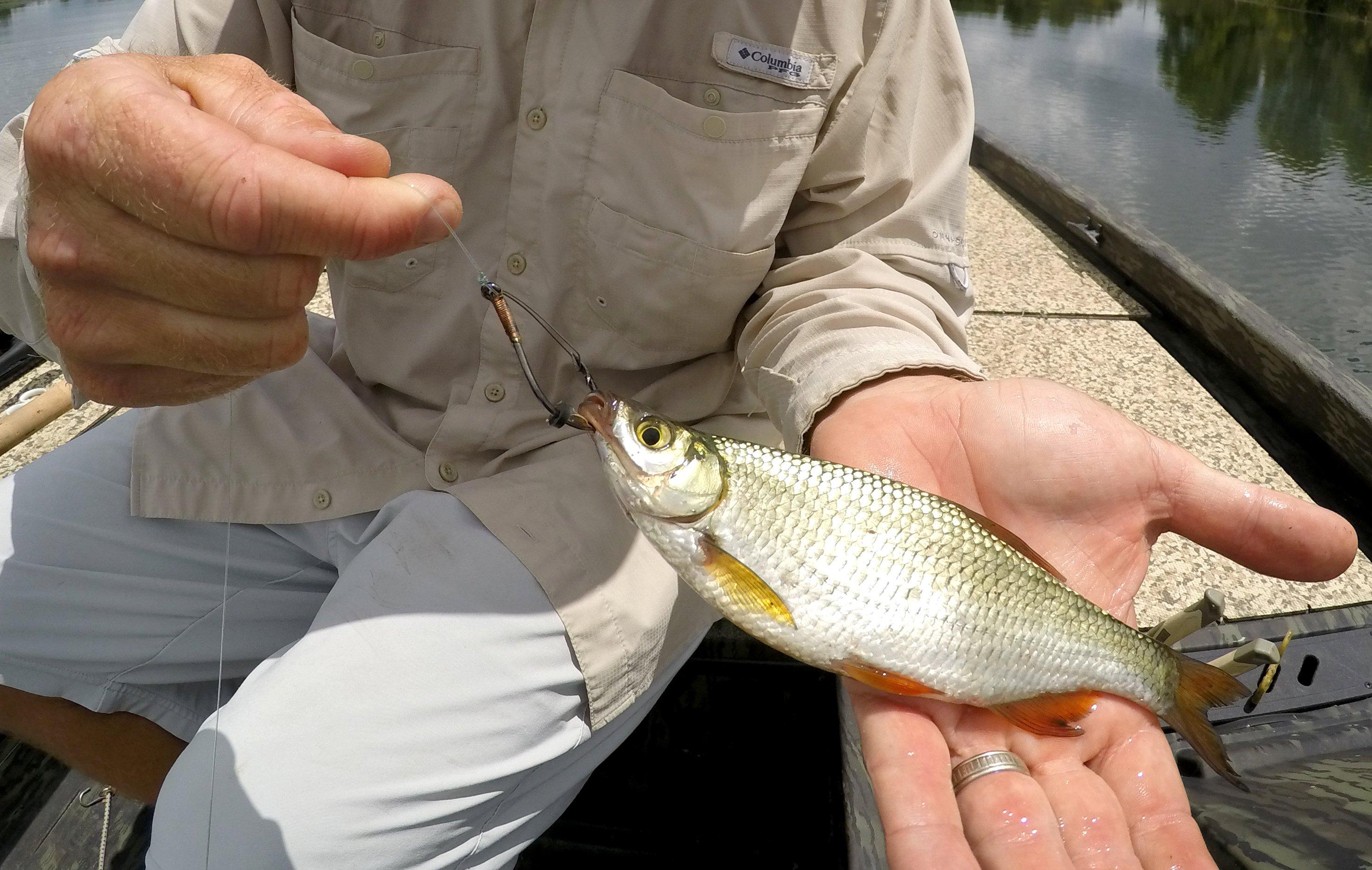
There is no better bait for trophy bass than a live shiner, but with hefty prices at the bait shop, it pays to catch your own. Image by Joe Balog
BAIT TRAPS
Wire traps are divided into two shapes: oval for “minnows” and square traps for pinfish. Minnow traps will catch a variety of bait in a number of environments. They’re deadly on freshwater creek minnows when baited with bread. A quick tip: tie the bread down with a rock (I make a “rock sandwich” with two slices). This prevents the bread from floating to the top of the trap where all the minnows get a free meal without entering. Oval traps are also great for mud minnows in tidal creeks but there, it’s best to bait them with shrimp.
Square traps are focused on pin and pigfish, and the best models have multiple openings and a cage in which to place the bait. Here, you’ll do best with fresh fish scraps from the cleaning table. Allow pinfish traps to soak overnight, but resist the urge to soak them too long. Pinfish will devour most of the bait quickly and can often find their way out of the trap.
Don’t Miss: WHEN, WHERE, AND HOW TO FISH SKIRTED BASS JIGS
CAST NET
In certain circumstances, cast nets can catch more bait than all other methods combined. Learning to throw a net is easy in the modern days of Youtube. But if you’re just starting, don’t be fooled into buying a tiny “learners net.” It’s best to start with a cast net that’s 8 feet in diameter. A mesh size of around 1/4-inch is a good choice for all around use. Certain types of baits like mullet dart out from beneath a cast net quickly, so heavier designs work best.
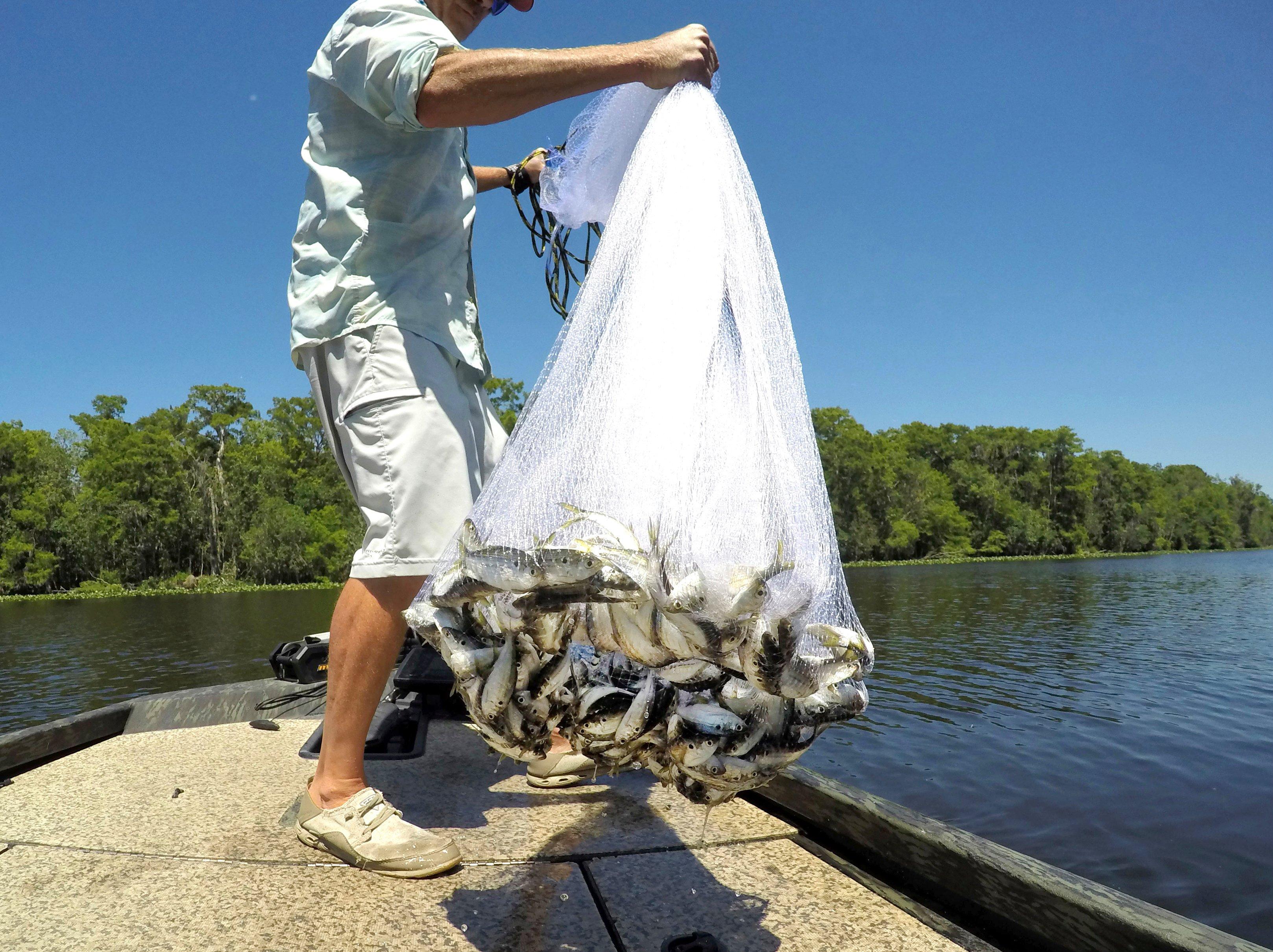
If you’re practiced in throwing them, cast nets are often the most effective way to secure a lot of bait in a hurry. Image by Joe Balog
Cast nets are most effective on baits concentrated in one area. This could be the result of chumming, current, or baitfish positioning around an object. The shallower you can find bait, the more efficient catching it will be with a cast net. Be sure to use a dump-tub when emptying the net; a big cooler or 18-gallon tote works well. Check all around your boat for likely places to snag up: cleats, hinges, windshield screws and even the buttons on your shirt sleeves can be problematic. One last tip: practice makes perfect with a cast net, and the best place to learn is in the backyard.
UMBRELLA NET
You’ll see anglers deploy these off piers to catch everything from baitfish to blue crabs. Just like the name sounds, an umbrella or “drop net” features a spring-steel wire frame holding a large net beneath. Deployed from above by simply lowering a rope, the net sinks down in the water thanks to heavy weight placed in the mesh. When bait swims over top, the net is lifted out, catching the bait.
This method isn’t wildly effective, though it will catch you enough bait for a day’s fishing. Pinfish, minnows, and more require a little chumming. For finger mullet, patience is the key, with a net deployed just under the surface and ready to pounce.
SABIKI RIG
Never heard of this one? Japanese for “bait-catching rig,” the sabiki consists of a mainline with six or eight tiny, pre-rigged hooks. Each sticky sharp hook has a small attractor tied to the shank; a tiny feather, iridescent plastic, or bead. The rig is weighted with a heavy sinker, usually about 2 ounces, that snaps on the bottom end and sinks quickly to a productive depth.
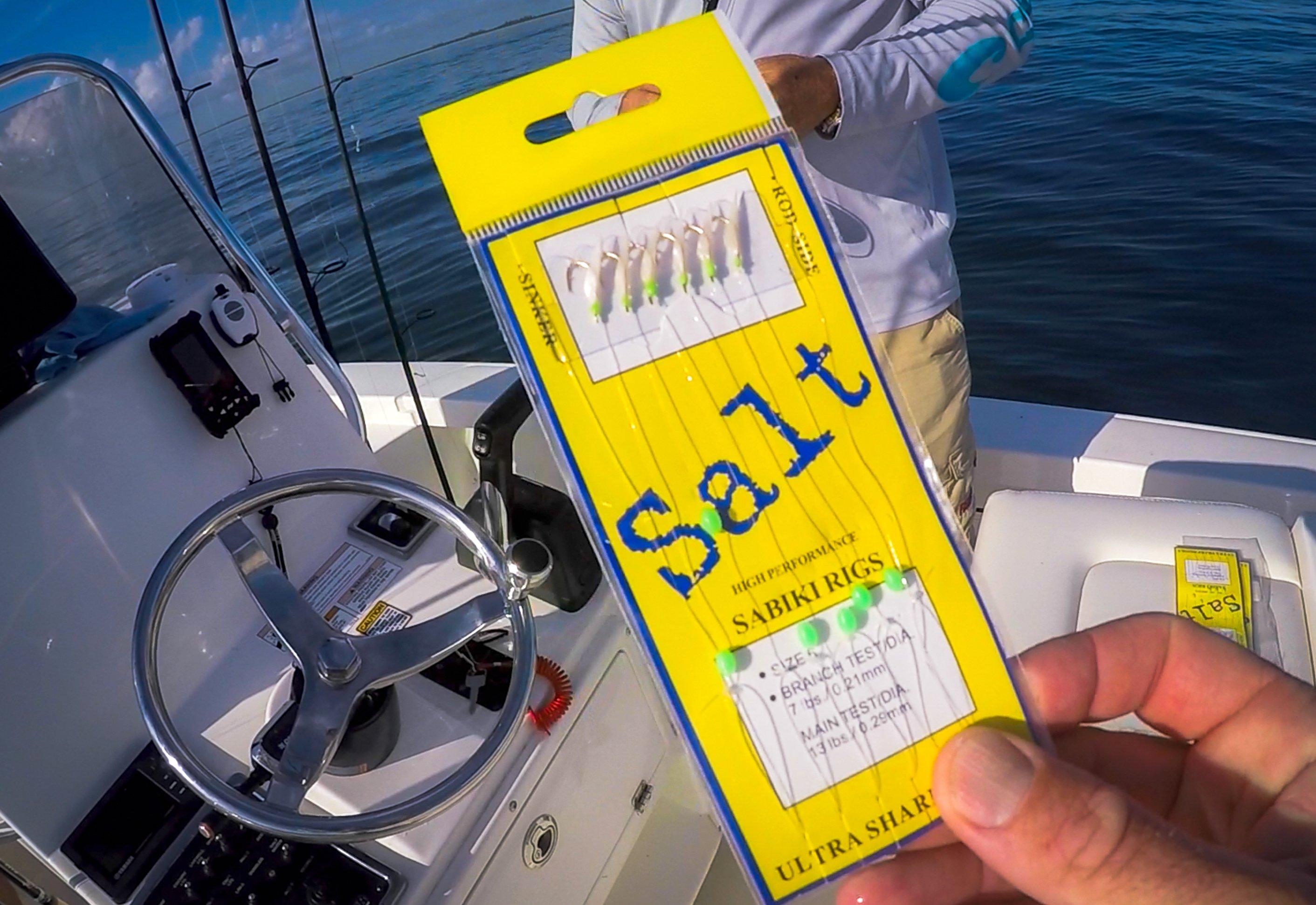
Sabiki translates to “bait catching rig” in Japanese and these little pre-tied, multi-hooked rigs can catch multiple bait fish with each drop. Image by Joe Balog
To open-water baitfish, the tiny flashing hooks look like planktonic creatures to eat. Once a bait gets a hook, others usually follow out of competitive instinct. This rig is known for catching bluewater baits like threadfin herring and pilchards, but it can also be used for freshwater crossovers like blueback herring and, occasionally, shad.
“Sabiki-ing,” as it’s sometimes called, takes a bit of practice and is one of those deceiving skill sets. An angler well-versed in the technique will out-fish others on the boat 3 to 1. The trick is to allow the rig to sink on a taught line, quickly working it up once the first tap is felt, then holding the rig just long enough for all the hooks to load up before reeling it in. Boat positioning is key to keep your rig in the fish, which can be easier said than done as the school quickly moves on.
SEINE
When in doubt, seine them out. Seining was once a common commercial method of emptying the beaches of fish, but today it’s limited to specific circumstances, often to individuals catching bait. Seining riverbanks for shad can work, especially in areas where current pushes the bait against a shoreline or abutment. For a real win, try seining a boat ramp.
This is a wintertime tactic in the North, when bait comes into harbors, and it can also be deadly on inshore and tidal areas year around. You’ll need a seine that stretches from dock to dock; two nets can readily be tied together. On each end, attach a pole that reaches bottom at the deep end of the dock. Then walk the entire rig toward shore. Everything living between the docks shows up in the seine. You’ll need an additional dip-net to go through the catch and keep what you want while safely releasing the by-catch. Be sure to check regulations in your area before using a seine to catch any fish.
Got bait? If you find yourself waiting at the bait shop in the morning only to be disappointed when you leave, the answer to your troubles is in catching your own. Remember, in most cases, that’s exactly what bait suppliers are doing: catching bait from the same water-bodies you’re fishing! Save time and money and get in the habit of doing it yourself. Immediately, you’ll notice that fresh bait is a better product. It lives longer, swims harder, and simply catches more fish.
Don’t Miss: 5 OLD-SCHOOL CRAPPIE FISHING TACTICS