How to Skin a Coyote | Step-by-Step Video
Posted 2026-02-05 by
Whether you're keeping your furs or selling them, the process for properly skinning a coyote is the same
In addition to seeing all the turkey poults that weren’t eaten during their first days of life, becoming a predator trapper has other rewards, with gorgeous furs being atop the list. There is still a market for legally selling furs, but I wouldn’t become a trapper in 2026 with designs on making a bunch of money.
Don’t Miss: The Ultimate Guide to Predator Trapping | Video
Still, there are some fur buyers who will pay enough for raw fur (that’s skinned, but not tanned) to cover fuel costs. And soft-tanned furs, whether you handle them yourself or send them to a tannery, make for nice keepsake trophies that will last for years. Tanned furs make unique gifts, too.
Whatever you plan to do with your fur, properly skinning your catch is the first step. For most predators including coyotes, bobcats, foxes, and raccoons, the skinning procedure is generally the same, and that procedure is what I’m demonstrating in this video, with a Kentucky coyote. This particular critter didn’t have great fur, but it was good enough, and you can see the cuts and steps taken to “tube skin” or “case skin” the animal, which is what a fur buyer or tannery will expect from a raw skin.
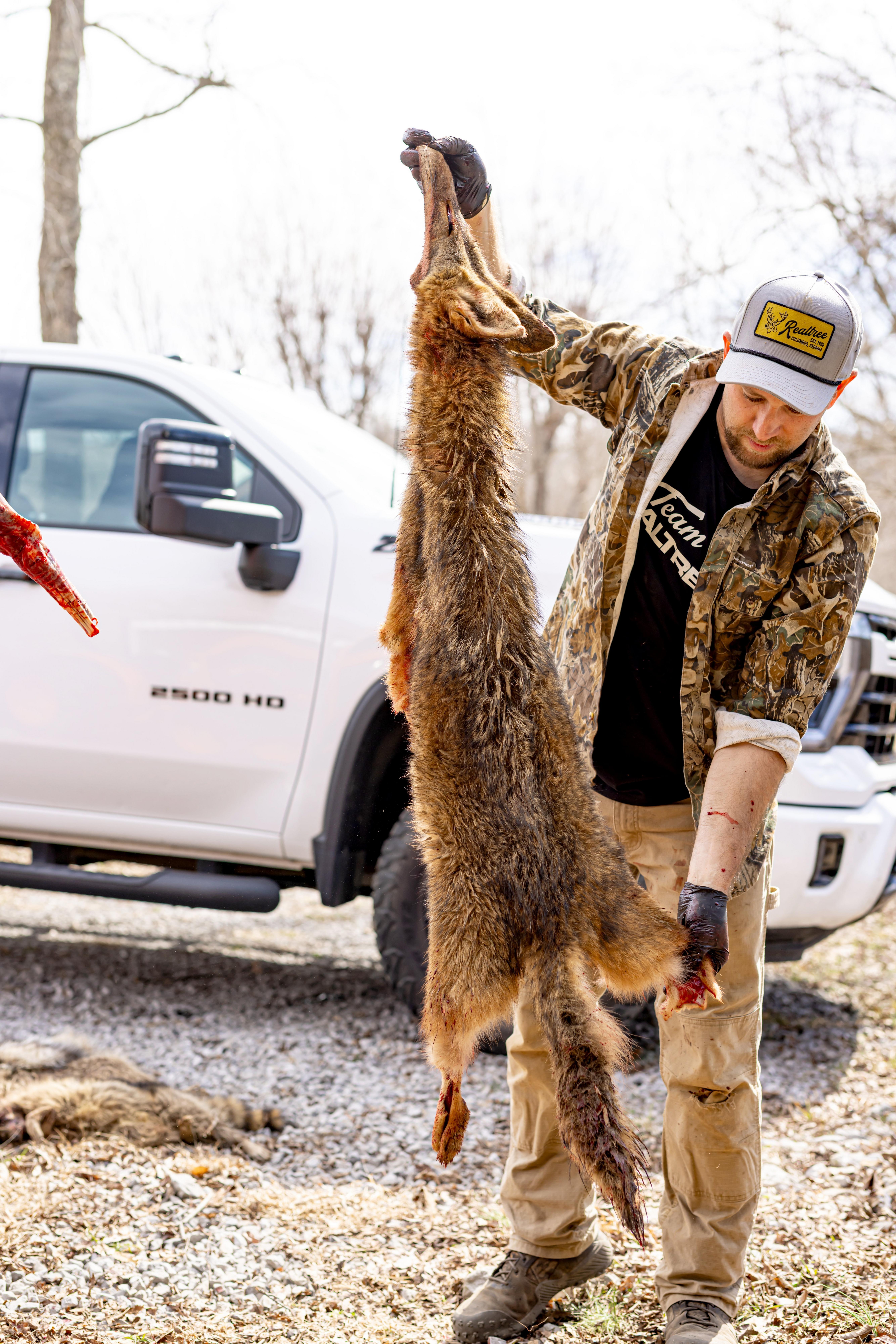
These steps will teach you how to properly case-skin a coyote so it’s ready for a fur buyer or tanning. Image by Godwin Photography.
STEPS FOR COYOTE SKINNING
I begin skinning by removing the feet, cutting through the bone or at the joints. Most tanneries will remove the feet from a finished fur unless you request to keep them on.
Next, make a pilot cut along the animal’s inner thigh, and around the anus and puppy tackle, if you’re skinning a male animal.
Hang the animal by the rear legs if possible. A gambrel works great if the animal is large enough, but a hook on a chain will suffice for smaller critters.
Begin skinning down each hind leg and onto the trunk of the animal, cutting around the tailbone.
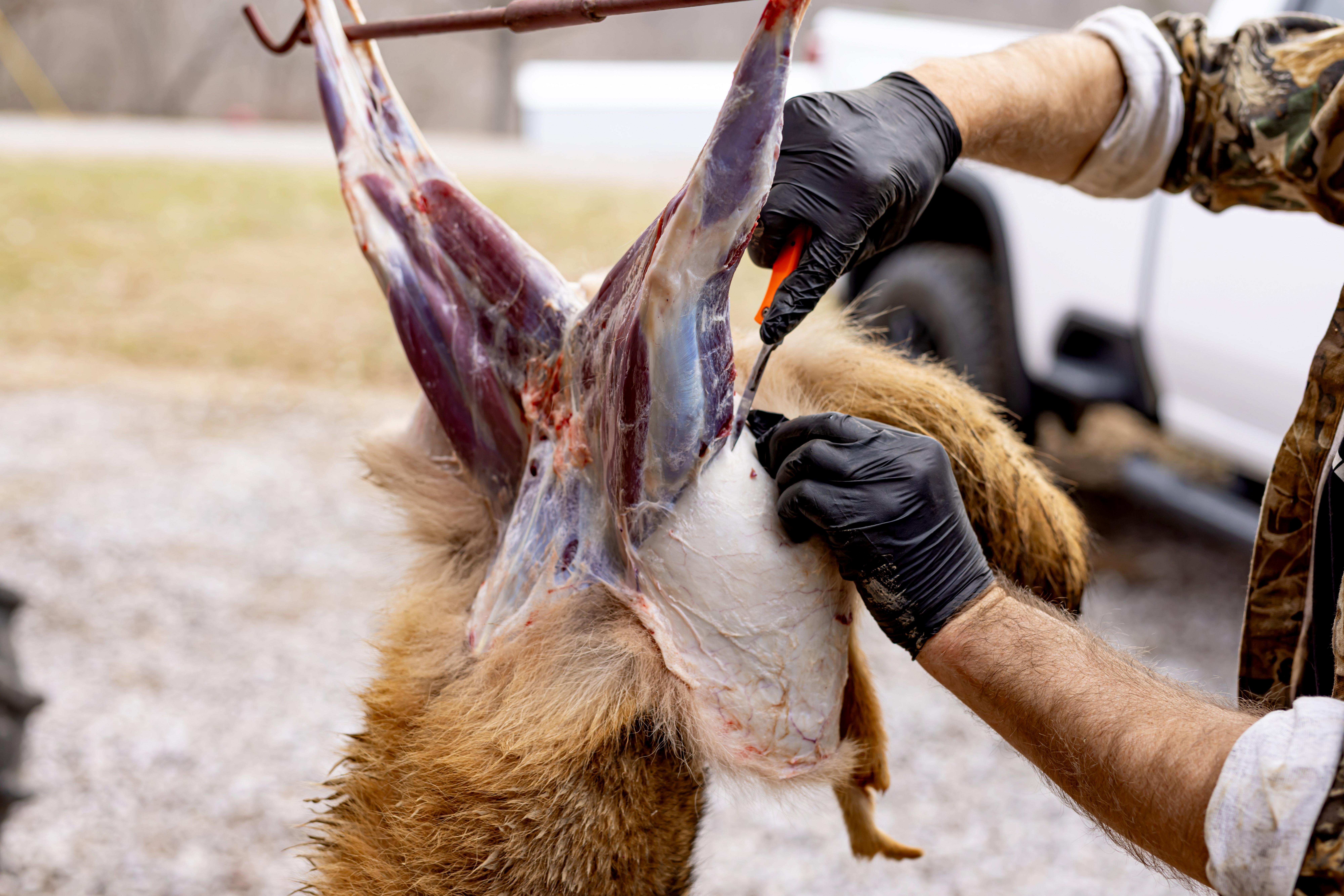
It’s easiest to skin a predator if you can hang it by the rear legs. Image by Godwin Photography.
Split the tail fur along the rear side of the bone, and carefully work it free. This is easier said than done. Use a tail-stripping tool if you have one. If you run into a snag, snip the tail bone off as close to the end as possible, and then finish skinning it out after you’ve skinned the animal. This step is easier when you can lay the tail flat on a hard surface.
Work the hide down to the shoulders. This area can get tricky, as the hide bunches over numerous joints and bones. Sometimes removing the shoulder, just as you would on a big-game animal, makes it easier. Simply discard the meat afterward, unless you’re one of those folks who just loves to eat coyotes. I’m not.
Work the hide down to the skull, making sure to cut the ears off at the bases, and to work carefully around delicate areas such as the tear ducts, nose, and lower lip.
If you’re fleshing right away, you can put the fur on a beam and get started. Otherwise, turn it hair-side out, ball it into a grocery sack, and store it in the freezer until it’s time to meet your fur buyer.
More On Predator Trapping
Essential Gear for Trapping Coyotes
Trap-Setting Basics for Catching Coyotes
10 Coyote Trapping Mistakes Beginners Make