Trap Setting Basics for Catching Coyotes | Video
Posted 2026-02-04 by
It's easy to make coyote trapping too complicated. By focusing on the fundamentals, you'll catch more coyotes
The best way to learn how to trap coyotes is to get out there and start trying. But coyote trapping is challenging, and I struggled for two full seasons before I caught my first one, and then for another season after that before I started catching coyotes with any consistency. Trapping coyotes eventually became easier when I ruled out bad habits and began focusing on productive fundamentals instead.
Don’t Miss: The Ultimate Guide to Predator Trapping | Video
I do my trapping in Kentucky, mostly in January and February. But these fundamentals will work just about anywhere that coyotes roam. This advice isn’t meant for the full-time fur trapper (though it’ll work for that, too). My trapping efforts are entirely focused on a couple of properties where I want to improve turkey poult, whitetail fawn, and small-game production via predator control. Trapping those places season after season certainly seems to have helped on that front.
There are several subjects to consider when coyote trapping, including trap preparation and essential gear, creating dirt-hole sets, and skinning your catches. Combine that knowledge with the fundamentals below and you’ll be well on your way to getting coyote numbers in check on your favorite hunting farms.
Don’t Miss: Coyote Trapping Gear Essentials | Video
THE IDEAL NUMBER OF TRAPS
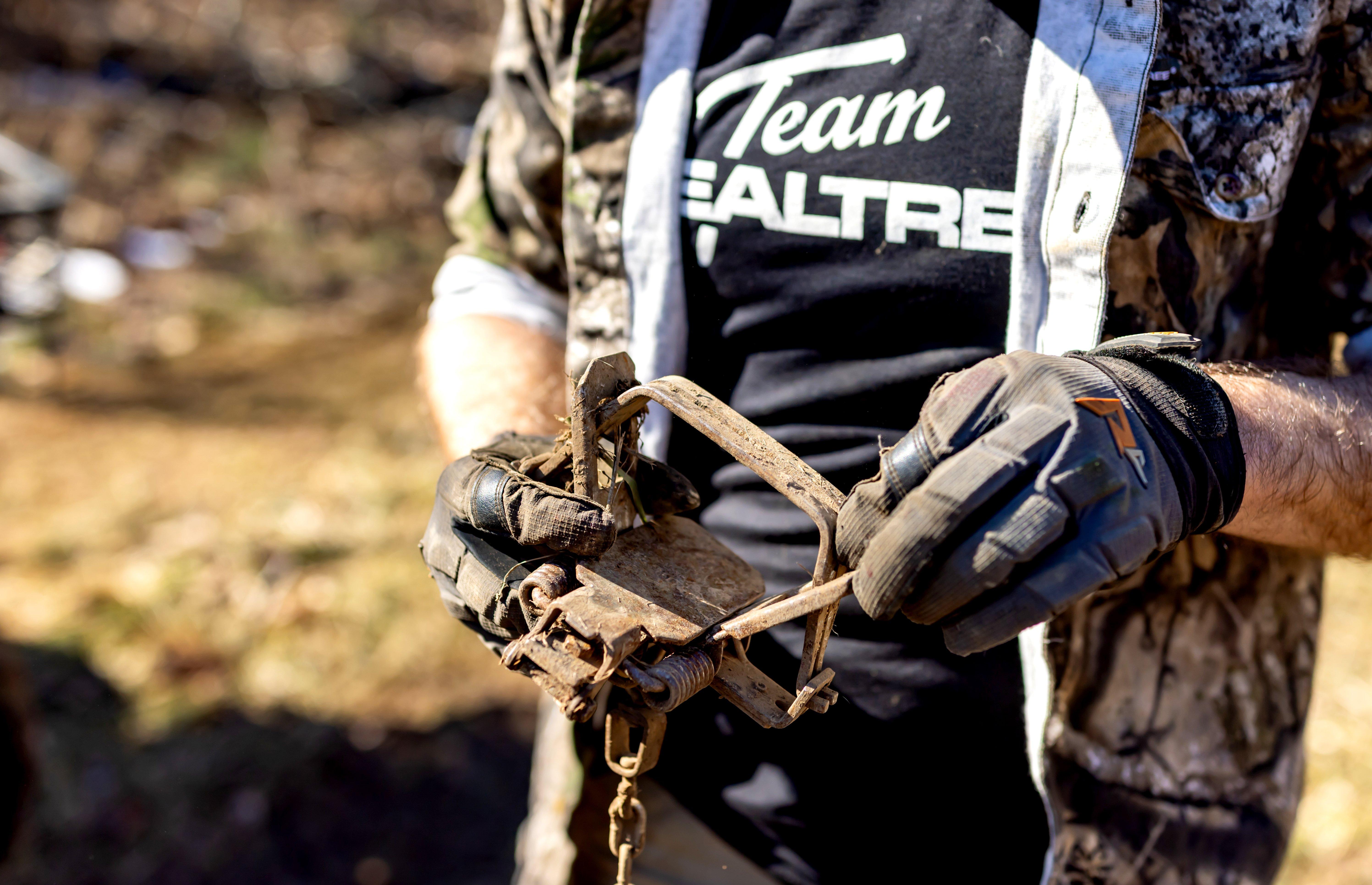
The more traps you have out, the more chances you have. But one good setup is better than three mediocre ones. Image by Godwin Photography.
There is no rule for the perfect number of traps per acre. The more traps you have out, the more chances you have. I would much prefer to have a half-dozen great sets in prime locations than 20 mediocre sets. Set as many good traps as you have time to run, and make every setup that you put into the ground as good as it can be. I can usually slip out after lunch and get 12 or 15 good sets into the ground before dark, particularly if I’ve scouted the area ahead of time. That’s also a manageable number to run at daybreak, before heading into work. I consider a dozen good sets per 100 acres to be decent coverage, and certainly enough to make a dent in the local coyote population in a few weeks.
HOW SPREAD OUT SHOULD YOUR TRAPS BE?
On any typical hunting property, a few locations will stand out as the best ones for catching coyotes. That’s where you should put your traps. Don’t worry as much about the distance between them (unless there’s a minimum distance in your state, of course). I’ve caught 30 or so coyotes, bobcats, and foxes from my 72-acre farm during the past five years, and virtually all of them have been from the same half-dozen set locations that I put along the dirt access road through the center the property. On larger properties, I’ve found that setting clusters of traps in a few good areas is the best way to catch numbers of coyotes. Leave those traps out and let them hunt. Coyotes will find them eventually if they’re around.
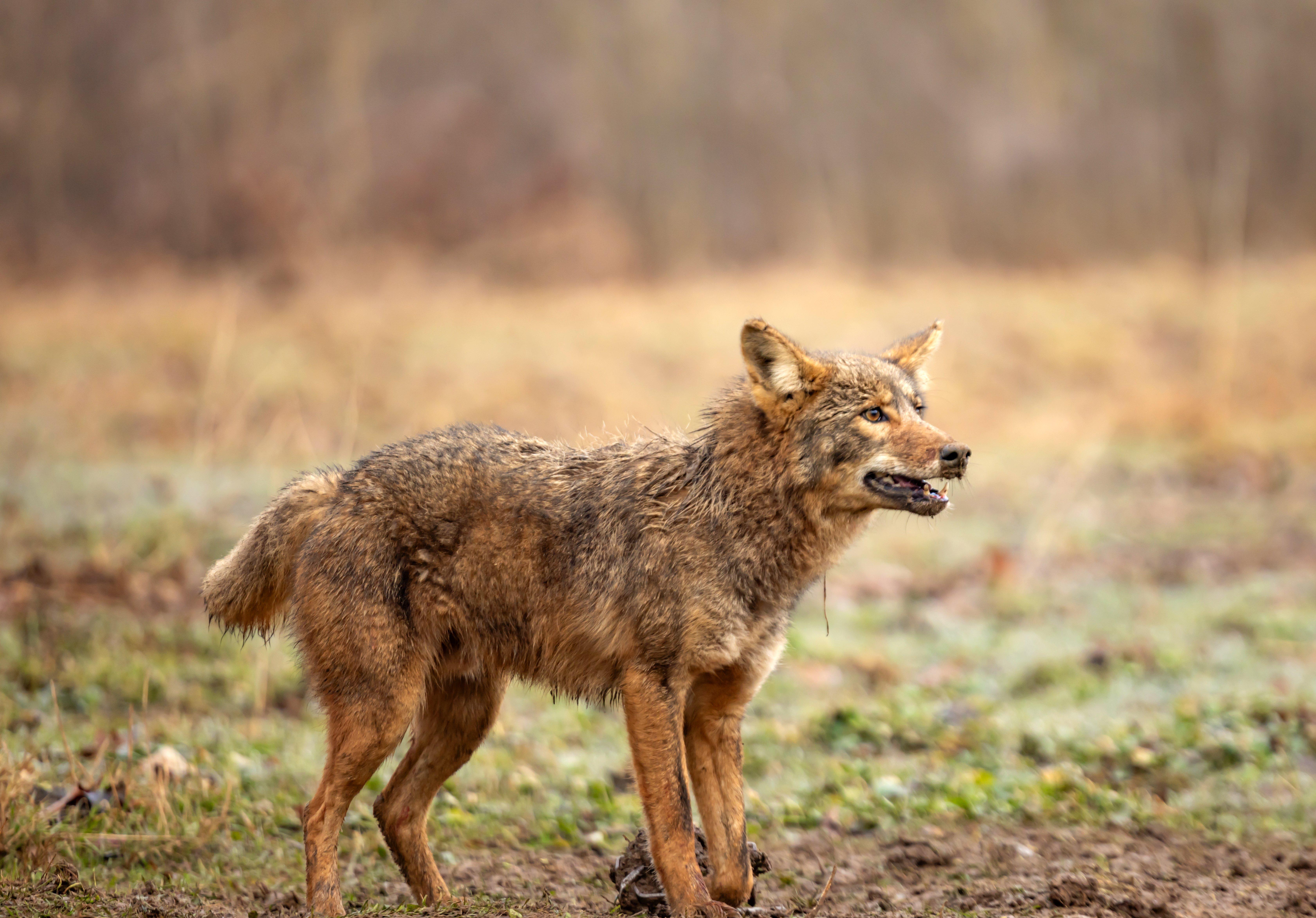
Finding preferred travel routes and setting up on fresh sign is critical for catching coyotes. Image by Godwin Photography.
GET IN THE COYOTE’S WAY
Coyotes love to travel backroads and trails, scenting for prey as they go. Intersections where one dirt road crosses another, or even where a couple of deer trails cross dirt roads, are my favorite locations for catching coyotes. Other good spots for traps include fence gaps, creek crossings, and field corners.
MAKE THE RIGHT SETUP
Virtually every coyote trap I set incorporates some version of the classic dirt-hole set. I have my traps rigged with swivels and earth anchors, and I begin the setup by looking for a subtle backing (a tuft of grass is plenty). Dig out a shallow trap bed (I want the pan barely covered with waxed dirt), and include a trench in the corner of the bed for hiding the trap chain. Dig in the dirt hole under the backing and at a 45-degree angle from the trap pan. This keeps the dirt hole from filling with water and forces the coyote to work the bait from the trap side of the setup.
You’ll learn all about the perfect trap setup in the video above, which includes tips on:
Pan leveling and night-latched traps
Trap setting
Trap bedding
Waxed paper and waxed dirt
Blending traps with native vegetation
Proper use of baits and lures
Don’t Miss: 10 Coyote Trapping Mistakes Beginners Make