4 Great Ways to Hunt Geese Over Water
Posted 2025-10-09 by
Dry fields get all the love, but you can find great honker action on lakes, rivers, ponds, and streams
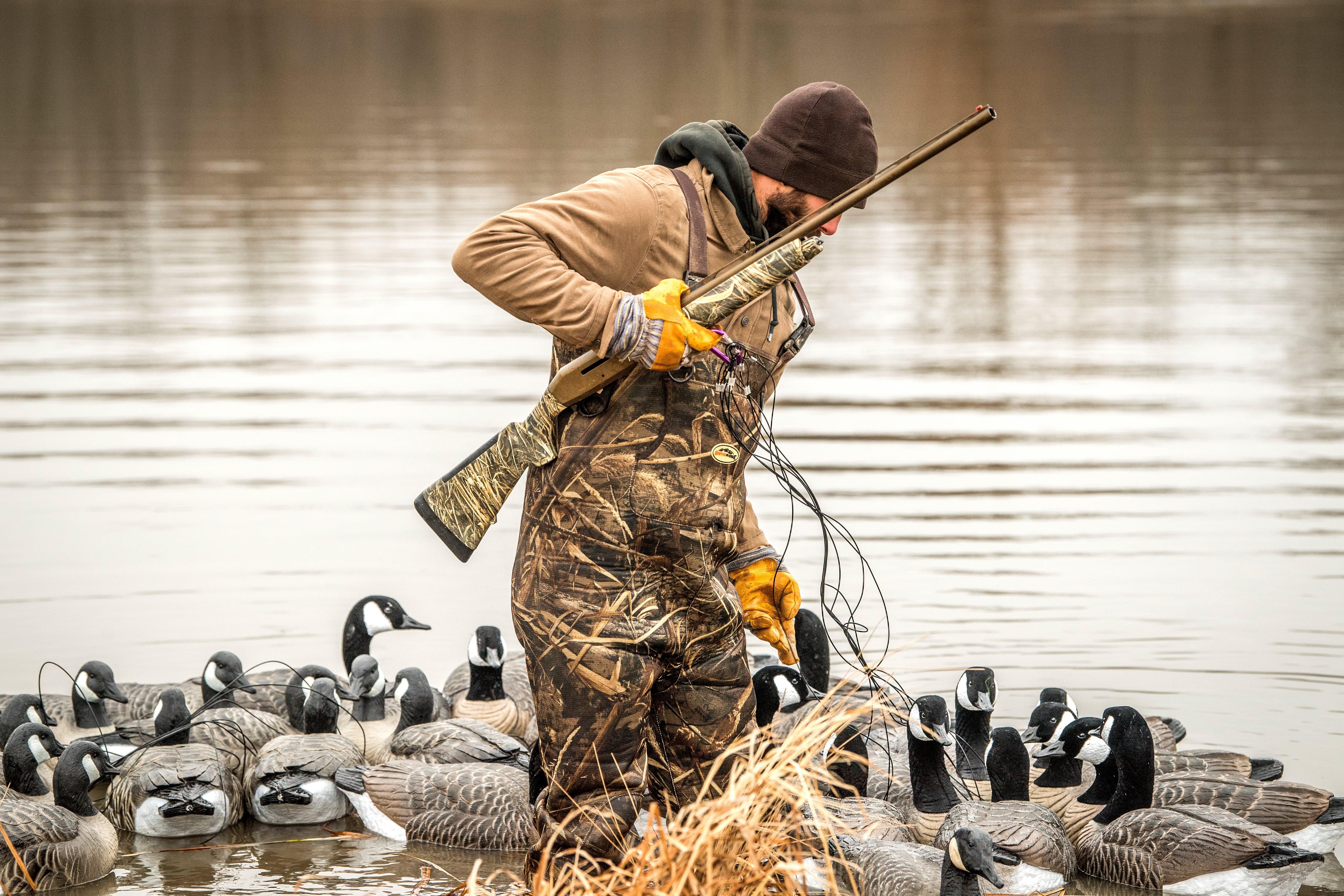
Can’t get on a feed? Hunt honkers where they loaf or travel over water. Photo by Benelli.
Admit it: Your floating honker decoys rest in the back of your garage, jammed in a deteriorating decoy bag and coated with a fine layer of dust.
It doesn’t have to be that way. Everyone loves dry-field hunts for geese, but honkers are waterfowl, and you can experience some fantastic action for them on ponds, lakes, marshes and rivers. Rescue your old floaters this season, and give these great water hunts a try.
LOAFING WATERS
Honkers typically roost on relatively large waters, hit ag fields in the morning and then spend much of the day loafing on smaller secluded waters, including ponds, stock tanks, and small lakes or rivers. Finding such spots can be a gold mine.
Don’t Miss: How Waterfowl Limits are Set
Watch geese at midmorning as they leave a feed to see where they fly. Then glass likely waters in that area to spot honkers sleeping, swimming or getting a drink. Often, loafing spots are on private property, so you’ll then have to obtain permission.
Set up with a minimalist spread — maybe a couple of floaters and a few full-body loafers on shore. Be meticulous about covering your hide, as sharp-eyed geese will spot anything that seems amiss in their safe loafing spot. Be ready soon after first light, but realize that geese might not arrive until midmorning. Keep calling to a minimum. Remember, geese want to be there anyway. And if you get a quick limit, get out, and let the spot rest for several days. It might produce again.
TEMPORARY SHEET WATER
OK, this is really a field hunt, but it’s still over water. Heavy autumn rains can drench crop fields and form sheet water in low spots, and geese seem to find such areas immediately — especially if they’re in grain fields.
Obviously, you can hunt these spots just as you would a field, but the wet conditions make it challenging. Farmers won’t want you tearing up a field with trucks or ATVs, so you’ll often have to carry in blinds and decoys by hand, which limits the scope of your spread. Depending on how many blocks you can lug, go with a few floaters, if the water is sufficiently deep, and a mix of feeding and loafing full-bodies in higher, drier areas. You can get a little more vocal on the call in such situations, as field geese are generally more talkative than birds on the water.
Setting up in sodden fields can also be uncomfortable and messy, so do your best to stay dry. Layout blinds with plastic tubs can keep you out of the slop.
Don’t Miss: Hot-Spotting and Duck Hunting Pressure
BIG RIVER TRAFFIC
This might be the most adventurous water hunt for geese: running traffic on flocks traveling along large river systems. It can be somewhat hit or miss, as with any traffic hunt. However, there’s also the potential to decoy some big groups.
First, scout to find areas where geese trade regularly. Or better, locate sandbars, lee shorelines or slack-water spots where they loaf. Setups might vary depending on water conditions. You can use layout blinds or an A-frame on sandbars or along a shoreline. Otherwise, a well-concealed boat blind works well.
Set a relatively large spread, mixing floaters with full-body loafers and sentries along the shoreline or sandbar, if possible. Don’t be shy about calling when trying to hail passing flocks, but tone it down appropriately when birds swing tighter for a look.
ICY OPEN WATER
When honkers have any open water and access to food — that is, waste grain that’s not buried in snow — they’ll stay in an area as long as possible, even when temperatures bottom out. Such conditions create unique opportunities on big water, along windswept shorelines, and on creeks and rivers that don’t freeze immediately.
Don’t Miss: 2025-2026 Mississippi Flyway Duck Hunting Forecast
It’s not tough to find geese during those conditions. Search for open water, and then look for birds. When it’s bitterly cold, they’ll often hang on the water much of the day and make one feeding flight just before dark.
Often, just a few floating decoys in open-water pockets can lure in freeze-up geese. Your setup and cover can be an issue, so really focus on concealment. Also, make safety your No. 1 priority. Ice and freezing temps are unforgiving, especially if you’re running a boat. Make sure you can get in and out of a spot safely before attempting a hunt.


?fmt=auto&qlt=default&fmt.webp.qlt=65&fmt.png.qlt=73&fmt.jp2.qlt=35&fmt.jpeg.qlt=60)