How Duck Hunters Can Adapt to Wind Changes
Posted 2025-11-20 by
When the breeze reverses direction during a hunt, try these tactics to save the day
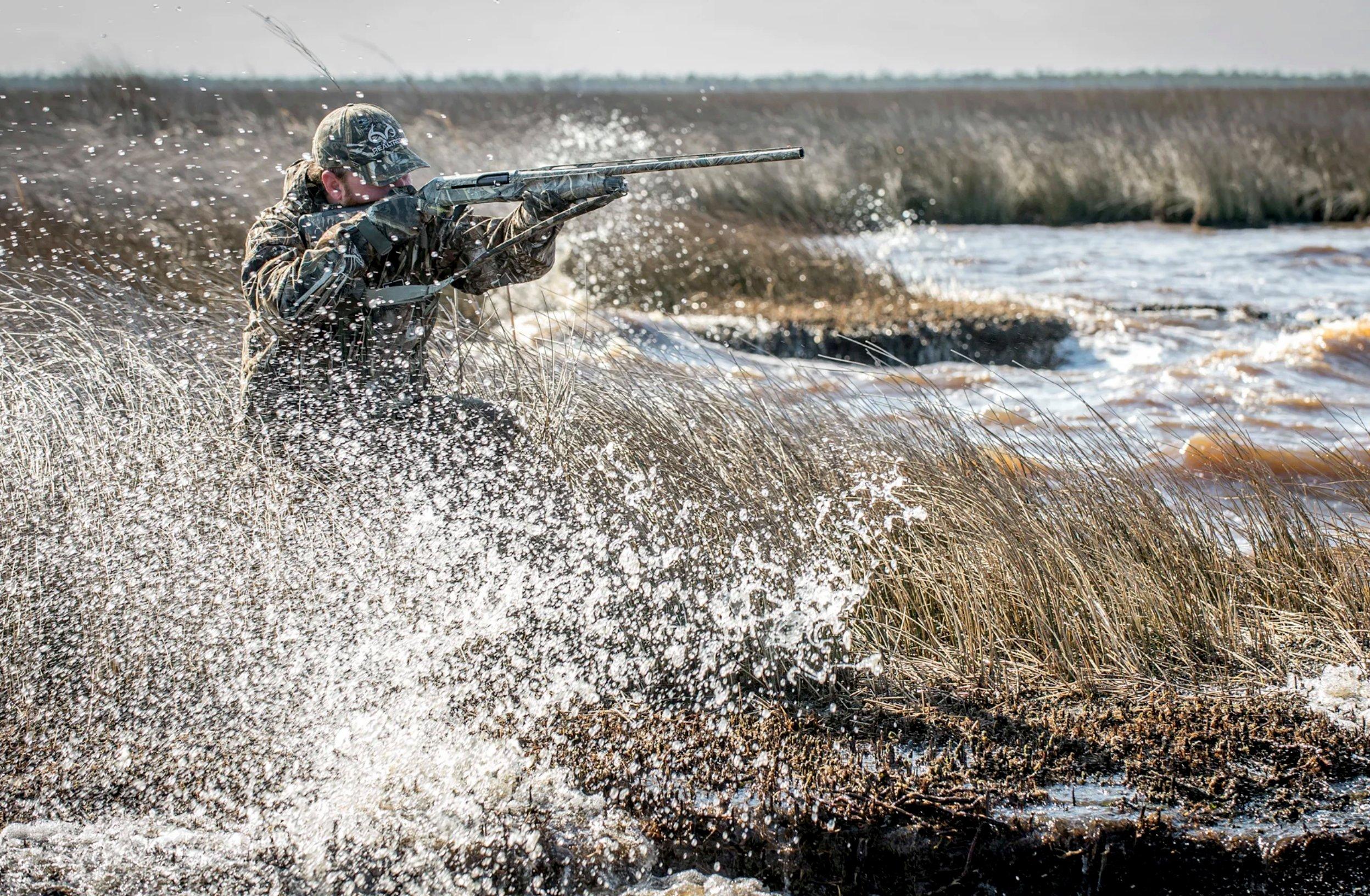
A shift in wind direction during a waterfowl hunt can leave you with a poor setup and some decisions to make. Photo by Bill Konway.
Years ago, some duck hunter must have really angered a television weatherman. Nothing else can explain the seemingly long-standing vendetta that meteorologists hold against waterfowlers.
I’m not suggesting that weather forecasters do anything truly mean to duck hunters. But it seems that they enjoy making predictions that lure optimistic hunters afield and then crush their dreams.
Forecasts for wind speed and direction are chief among those. Many predictions for friendly winds never materialize or don’t meet expectations. Worse, the wind might do almost a 180 mid-hunt, changing bird behavior, and leaving you with a nasty breeze in your face and a poor setup.
It happens every season, and you’ll have to deal with it sooner or later. The question is how?
Don’t Miss: How to Call the Shot Like a Duck Guide
MAKE THE MOVE
Forehead slap. Of course, if possible, you can simply switch the location of your hide and rearrange the decoys to fix setup issues when the wind changes. That might be as simple as moving to the other side of a pothole or island or as burdensome as picking up the spread and motoring to another area.
The latter scenario explains why many folks hesitate to relocate after a wind switch: It can be lots of work and time. But look at it this way: In many scenarios in which the wind blows in your face, you won’t get much shooting anyway. Spending an hour picking up decoys, packing up your blind and motoring or walking to a lee shoreline is a pain, but it will probably net you better action. And you likely won’t miss much shooting during that down time.
If moving is an option, don’t hesitate. Address the situation immediately, identify potential spots where you might set up with the wind at your back or side, and get after it. Procrastinating while dreading the work only eats up time you could be enjoying at a better setup.
Don’t Miss: How to Pull Off a Great Free-Lance Duck Hunt
MAKE IT WORK
Of course, switching spots isn’t always an option. Maybe you hunt a public area on the western shoreline of a large lake. When the wind turns east, you’re probably stuck. Or maybe most other decent spots are already occupied by other hunters. Sometimes, you have to stick it out and make the best of a poor wind.
Start by tweaking your decoys. When the wind blows more or less in your face, birds will want to circle over or behind your hide and then finish going away from you, into the wind. Give them plenty of room to do so by moving decoys out a bit from your boat or the shoreline.
If the wind isn’t 100% in your face — for example, if it’s blowing 30 degrees southeast or northeast if you’re hunting a western shoreline — take advantage of that angle. If possible, angle your boat or hide so you might get 90-degree crossing shots as birds finish. Also, reconfigure your decoys to take advantage of the angle. For example, diver hunters on a western shoreline can take advantage of a southeast wind by running a tail of blocks northeast. That should still lead ducks to and over the decoys, even though they’ll likely bank and finish going southeast, into the breeze.
In addition, adjust your shot-calling approach. As mentioned, even birds that finish will be going away from you, meaning they’re farther from the decoys and at a poor angle. Consider taking ducks as they swing over your spread or hide. That doesn’t mean shooting at passing ducks working other hunters’ decoys. You’ll still be shooting at birds interested in your rig but calling the shot sooner than if ducks were finishing in your face. That will usually result in tougher shots, but those chances will likely be better than shooting at ducks going away from your hide and at the edge of range.
Don’t Miss: How Waterfowl Limits are Set
FICKLE WINDS
These options don’t always save the day, but nothing works 100% of the time in duck hunting. Sometimes, a big wind shift completely changes the dynamic of a hunt and leaves you without answers. However, switching spots or tweaking your approach at the same setup can at least help put a few more ducks on the strap. And if you get off the water early enough, you’ll still have time to email complaints to your local weatherman.