How to Build a Great Duck Blind
Posted 2025-10-13 by
Whether you modify a commercial blind or build your own, the road to creating your ultimate hide involves many factors
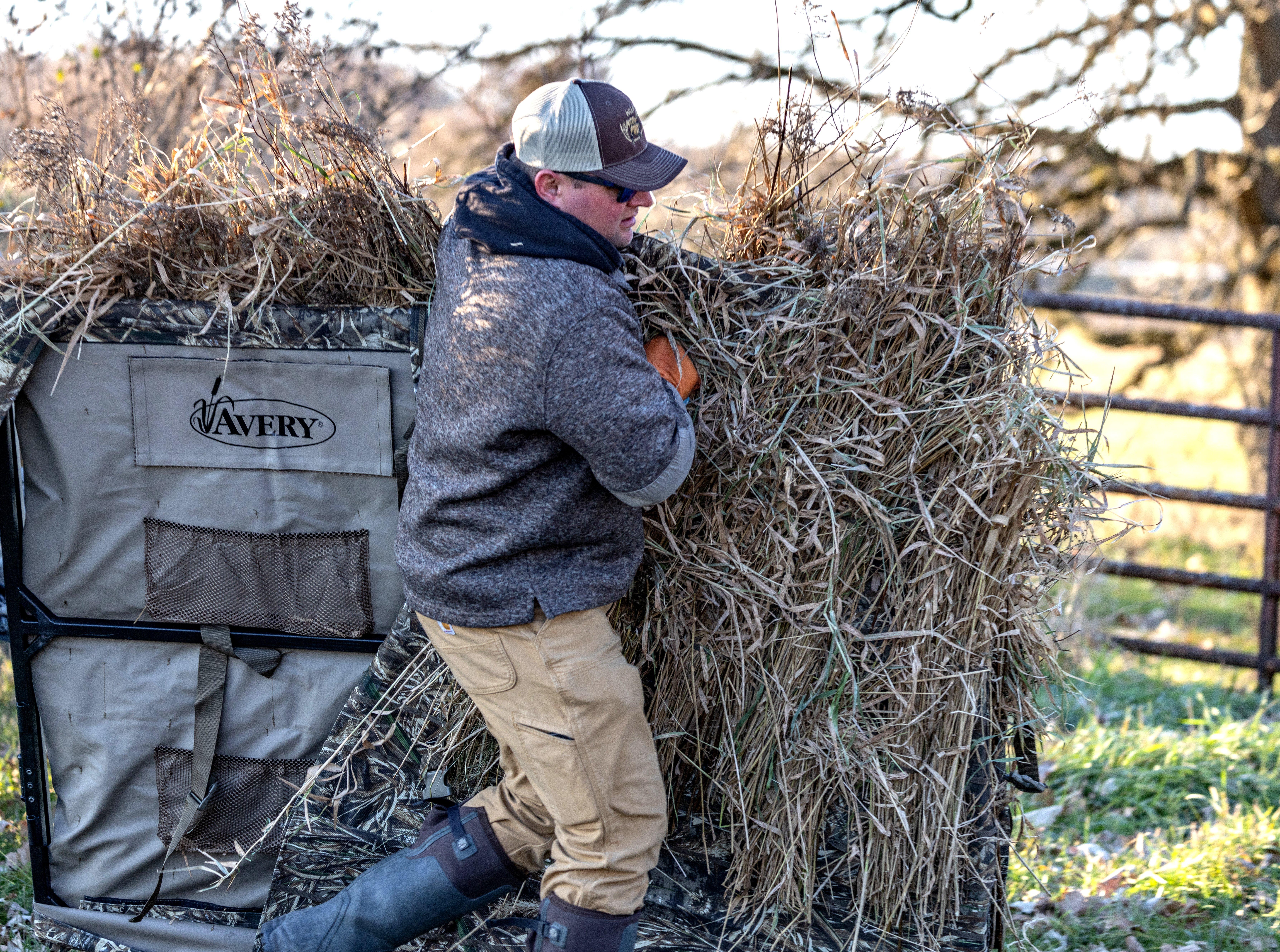
Whether you modify a commercial blind or make your own, concealment is the No. 1 priority. Photo by Tom Rassuchine.
Unless you’re snugged up against a tree or hunkered in thick natural cover, you’ll probably need some type of blind to fool the sharp eyes of ducks and geese. That sounds simple, but the process of setting up a duck blind is actually complex. Blinds take many forms, and each has a place in various waterfowl hunting situations. However you’re hunting, simply placing wood, cloth or metal around you isn’t usually enough to ensure a safe, successful hunt. Good blinds have many specialized features, and here’s how to be sure you’re hunting from a great one this season.
CHOOSING THE RIGHT BLIND STYLE
First, let’s examine what falls under the umbrella term “duck blind.” Blinds range from commercially produced layout blinds, layout boats, boat blinds, and panel or A-frame models to homemade hides made of wood, metal, cloth covering, or a mixture of natural materials. Some are intended for all-season use, but others might just fit your needs for one day or a specific hunt. For our purposes, let’s cover blinds that you construct yourself or heavily modified commercial versions.
Don’t Miss: Avoiding 7 Duck Hunting Setup Sins
“Each blind has its right spot in the toolbox for a waterfowler,” said veteran hunter Mario Friendy, of Final Approach. “The more of these you have, depending on your budget, the more options you have.”
The first consideration when building or customizing a blind is determining the type that best suits your hunting situation. That involves many variables. “Do the water conditions change, as in does it rise or fall, and if so, how extreme?” said Rusty Creasey, manager at Beauchamp Duck woods, near Bayou Des Arc, Arkansas. “Sometimes, floating blinds are best to go up or down with the water. Fixed blinds are great, but high water can make it tough sometimes. Boat blinds are great because no matter how deep the water is, you can adapt.”
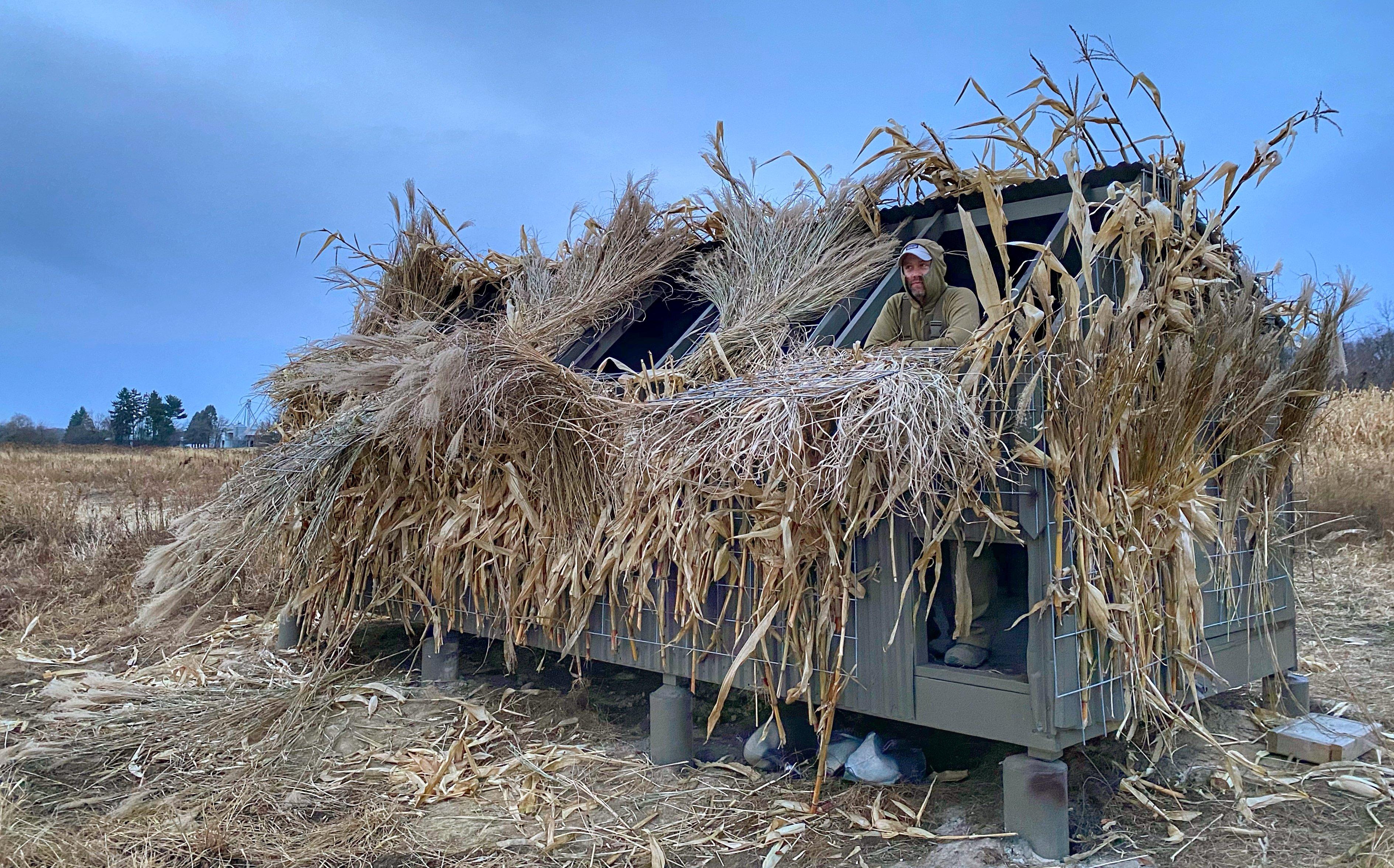
Brushing in a blind with natural materials helps it blend into the landscape. Photo by Greg Kuehl.
The next decision involves size. How many people and dogs will hunt from the blind? That can determine the type of blind you choose or the materials needed for construction or modification.
“The first thing is how big can I go and still look natural?” Friendy said. “I have built several blinds, but the biggest was a 22-foot flatbed hay trailer that turned into a monster of a build and blind. It hunts eight, with bench seats from two old pickup trucks, a roof and raised dog ladders for the dogs. We parked it in tall canary grass and planted willow trees around it. We brush it in the beginning of the season and throughout the year, and it looks incredible. Since we are so big, it does not look out of place. We also make sure to cover all the sharp edges, corners or straight lines, none of which exist in the wild.”
Price and circumstances also dictate what type of blind might work for you. Not everyone can afford to modify a commercial blind or has a hunting situation that lets them pick and choose a style. Sometimes, you must work with what you have.
Don’t Miss: How to Find the Right Duck Call
THE DIY APPROACH
Motivated hunters can construct functional, budget-conscious blinds from common items that can be purchased at a hardware store or sporting goods retailer. For example, in the Fall 2025 issue of Delta Waterfowl, editor Kyle Wintersteen detailed how he made a DIY boat blind for less than $500.
“I finally scored a semi-V jon [boat] for ‘family lake fun’ that also happened to be sized for three hunters, some decoys, and a dog. All it needed was a blind. But I wanted a lot of customization — and I’m cheap — so this meant a DIY project was in order. The result: a folding blind fitted snugly to my boat, built with my kids, and ready to make mallard memories,” he wrote.
The blind has a lightweight base/frame consisting of nine 10-foot, ¾-inch conduit pipes, cut and bent to fit, and connected with pipe hinges and T-connectors. The pipes run bow to stern, secured with zip ties, and six T-connectors accept the frame. The frame has three hinged arms per side and folds for transport. The starboard side faces the shoreline, with arms vertical for upright seating. The port-side arms are sloped to soften the edges.
“That project was actually a lot more fun and a whole lot easier than I expected,” Wintersteen said. “My estimate on price was pretty accurate, though more than I initially expected.”
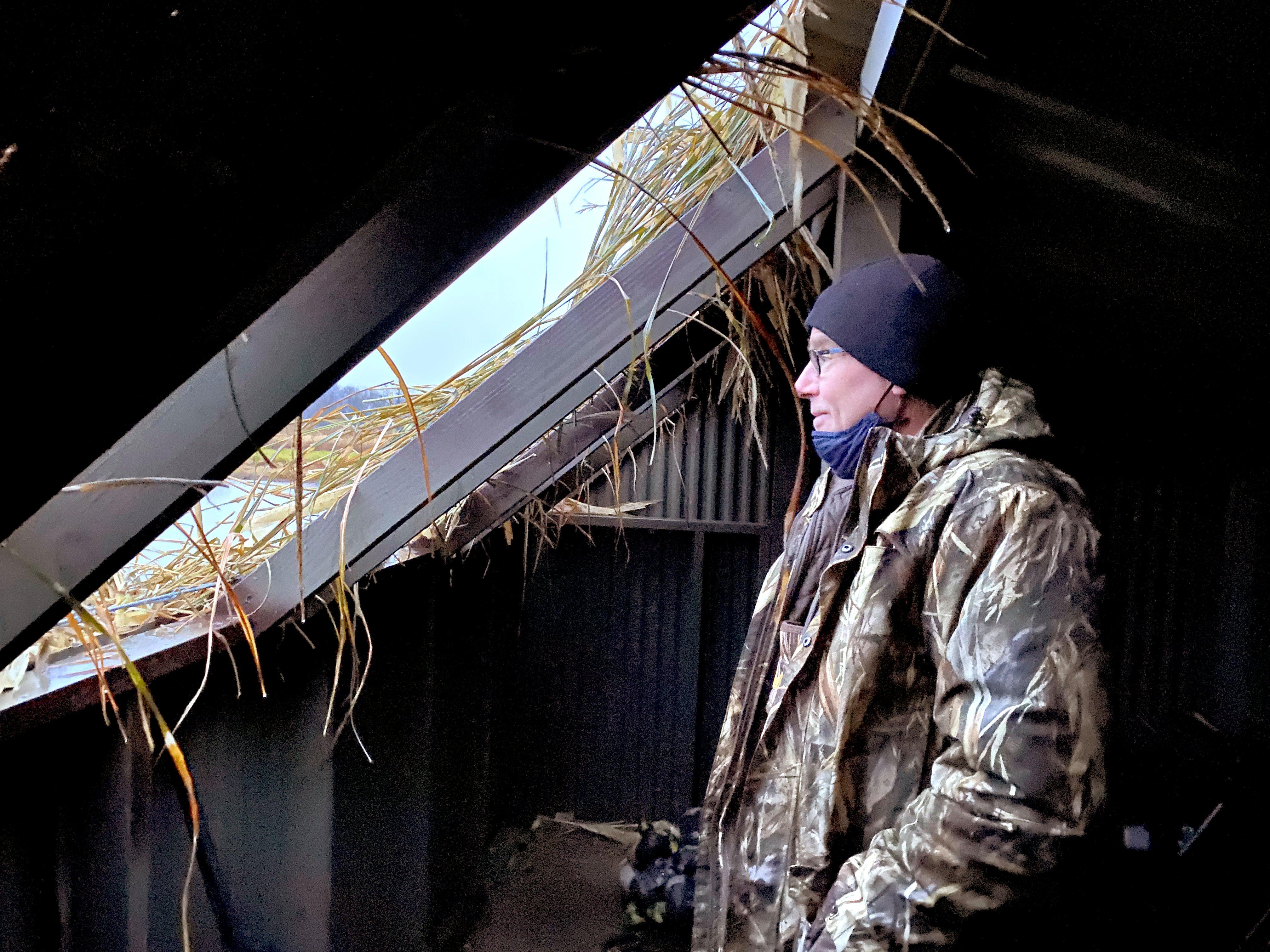
Pay close attention to a blind’s interior layout, focusing on safety and comfort. Photo by Greg Kuehl.
CONCEALMENT IS THE BOTTOM LINE
Whether you make your own blind or modify an existing model, one critical aspect takes priority: concealment. After all, if ducks and geese can see you or recognize something is out of place, even the most elaborate blind is useless.
“The most important thing about a blind is the brush,” Creasey said. “Make it match the surroundings. You usually can’t have too much brush. You still need to be able to shoot, but you can always break a limb or two to open it up some.”
Friendy often starts the brushing process on his blinds by using raffia grass or Final Approach’s Tough Brush. Then he adds natural grass, tree limbs or other natural cover, taking care to avoid brush or limbs that don’t match the surroundings.
“I have a 17-foot TDB duck boat, and there is not an inch of boat showing,” he said. “I have covered it with Whoopgrass or raffia grass so you cannot see us at all. I have a motor cover that slips over and a rain roof, all masked in fake grass, and we add natural cover when we get to where we are hunting.”
Wintersteen’s blind is wire-wrapped and camo-clad, with galvanized chicken wire that supports netting and prevents it from sagging. The military-spec net has para-cord mesh and is zip-tied to the blind’s frame. Wire-mesh flaps swing open and Velcro shut. Two other nets can be draped over the boat’s bow and motor.
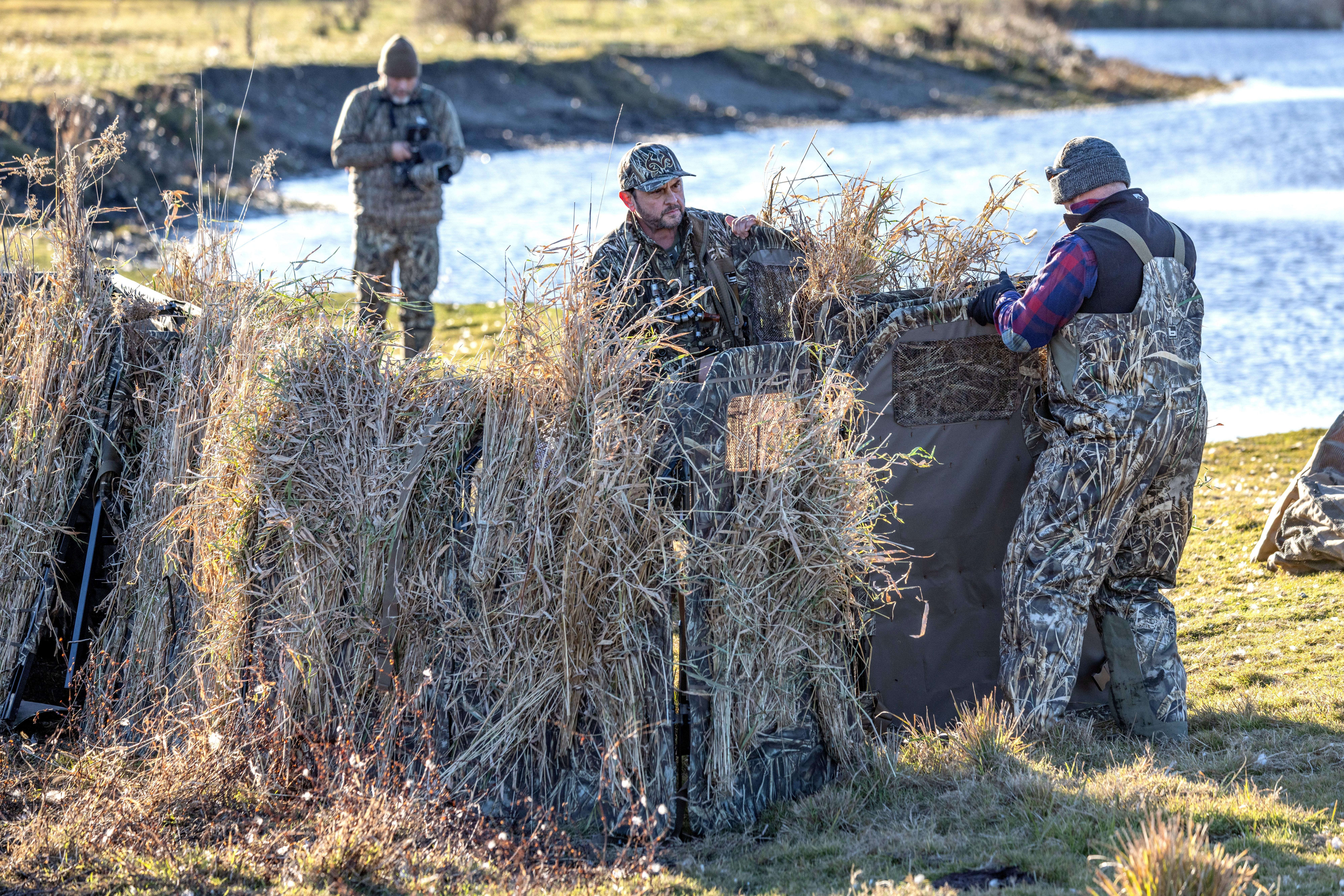
Every style of blind has a spot in the waterfowler’s toolbox. Design or customize a blind based on the situation. Photo by Tom Rassuchine.
Good concealment can also involve the placement of a blind. In many situations, you’ll want to snug the blind next to cover or a backdrop to make it disappear into the landscape (with layout blinds or A-frames in dry-field situations being exceptions).
“Also, never face the blind into the sun,” Creasey said. “No one wants the sun in their face. A western-facing blind allows you to shoot with basically any wind but an east wind.”
Don’t Miss: How to Pull Off a Great Free-Lance Duck Hunt
BELLS AND WHISTLES
After you’ve settled on the style, configuration, and concealment options for a blind, consider its interior layout, focusing on safety and comfort. For example, Wintersteen’s homemade blind has ports that are appropriately spaced for seating, dog handling, and shooting lanes.
“When building a blind, it only takes a little more time and effort to go top notch,” Creasey said. “Make it comfortable, with decent seats or benches. Equip it with a heater to stay warm or to heat a quick breakfast in the blind. Have grooves in the rail or some way to secure your gun to keep it from sliding and falling over. A gun that falls can spell disaster. Also, the roof needs to overhang enough to keep you dry but not so much that you can’t shoot.”
Further, consider how your retriever fits in the blind, and create a spot where the dog can sit comfortably and mark birds. Pay special attention to letting the pup enter and exit the blind without creating bad situations.
“If you’re a dog owner, make a nice gentle-sloping dog ramp,” Creasey said. “This will make it easier for your four-legged friend to get in and out without getting hurt.” Friendy adds one more special bit of equipment. It might seem odd, but it makes collecting cover much easier.
“The best thing I have bought in the last three years of hunting was a cordless chainsaw for the boat,” he said. “It’s an absolute game changer.”
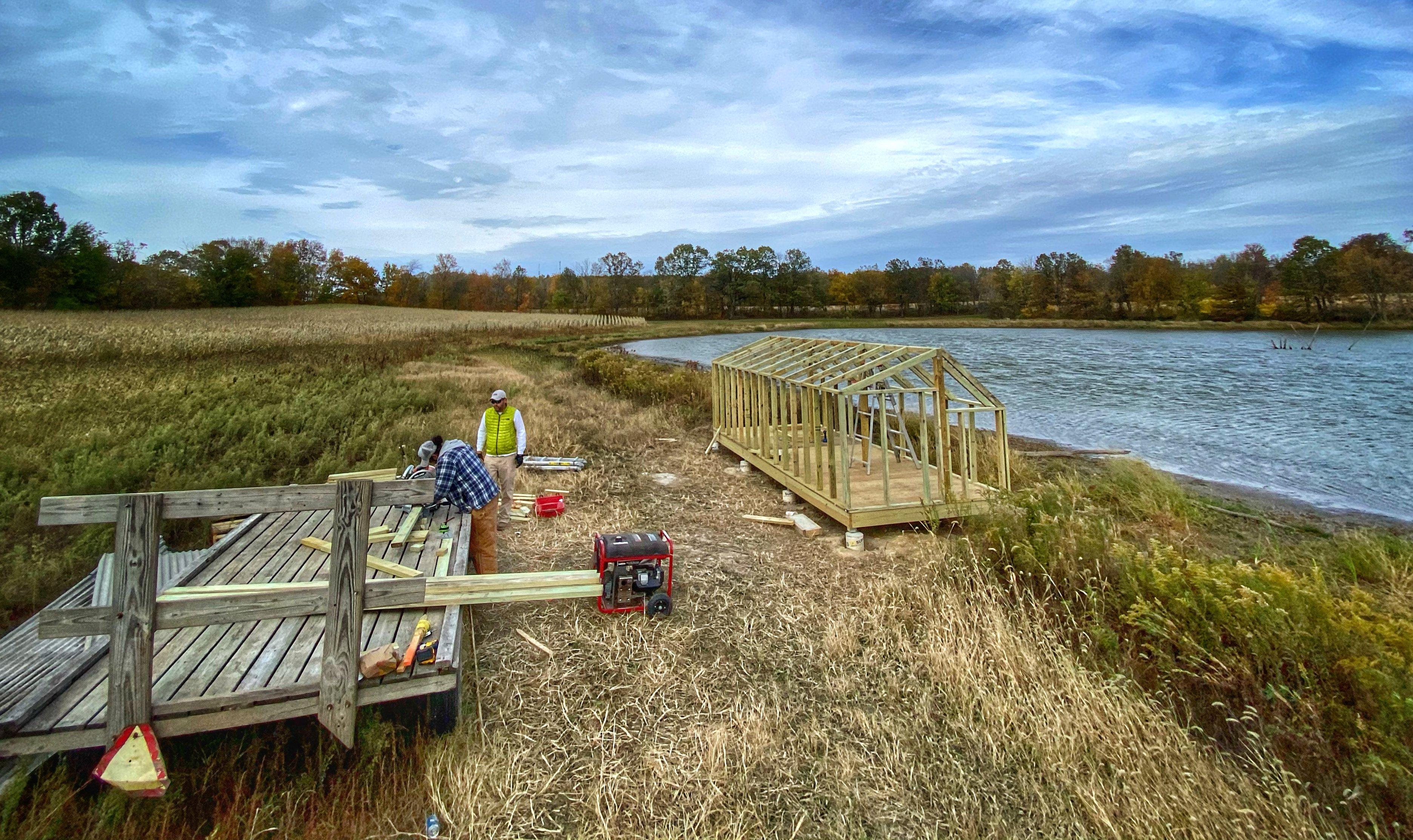
When placing a fixed-position blind, make sure it doesn’t look directly at the rising or setting sun. And consider the prevailing wind direction. Photo by Tom Rassuchine.
CONCLUSION
Ultimately, the relative greatness of a duck blind depends on how well it conceals you, and how safe, comfortable, and dependable it is. The specifics depend on your budget, hunting area, style of hunting and personal preference. Options abound, so look into the features that might form your ultimate blind. The process might take some work, but the reward could be full straps hanging inside a safe, dry, well-concealed hide.