How to Really Screw Up a September Goose Hunt
Posted 2025-08-21 by
Local honkers can throw you quite a few curveballs. Focus on the basics to find success
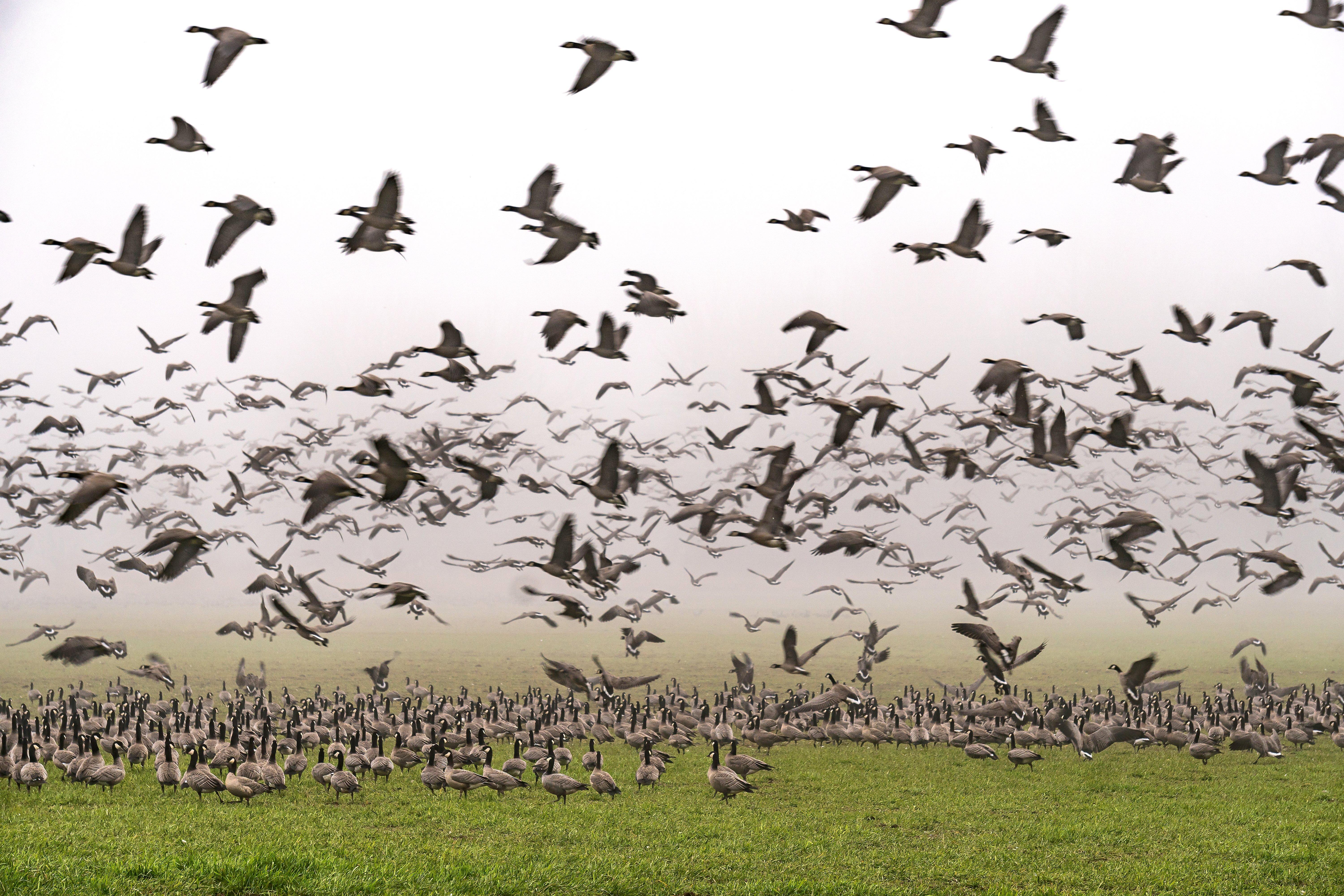
Seemingly half-tame local Canada geese are actually tough customers. You must be on your game to take them consistently. Photo by Michael Warwick.
Those local Canada geese have been lounging in plain sight since spring and fattening up in cut grain fields every morning through August. You’ve scouted hard, locked in on their routine and obtained access to their feed. Nothing can go wrong on opening day.
Or so you think.
Actually there are quite a few gremlins that can mess up autumn’s first honker hunt. Learn to identify and avoid these potential trouble spots, and start the season right.
Don’t Miss: How to Scout for Ducks and Geese in Dry Fields
DON’T SCOUT THE DAY BEFORE THE SEASON
You might glass geese in a cut field every day for a month before the opener, but don’t just assume they’ll be there forever. Locally breeding honkers move — a lot. That’s especially true when the food in a field runs low. Seemingly overnight, those regular birds might abandon the feed and reappear miles away at another spot.
Scout every chance you get, even if it seems redundant. Monitor geese the morning before the opener just to make sure they’re still on the same pattern. If they’ve moved, you might still have a chance to find other birds and save the day.
ASSUME YOU’LL BE ALONE
When seeking access from a landowner, ask point-blank if he’s given permission to anyone else. Also, inquire whether anyone else — another family member or a farmer who rents the land, for example — might have granted permission. If it seems like another group might converge on that spot opening morning, it might be wise to find a backup. Or, if possible, see if you can contact the other hunters and arrange a compromise.
Even if you’re surprised by headlamps opening morning, don’t panic. Talk with the other group to see if you can hunt together. You might even meet some kindred spirits with whom you can share future hunts.
STUBBORNLY SHOW OFF THOSE CALLING CHOPS
Calling is a big part of goose hunting’s appeal, and in the right conditions, honkers really respond well to it. But early geese can be different. Some days, they might be vocal on the ground and in the air. Other days, they might cup in silently like wraiths.
Take your cue from the birds. Sure, you’re itching to show off that new short-reed call, but it makes no sense to blast quiet or subdued birds that will likely come in anyway. Remember, you’re probably hunting a spot where geese want to congregate. Don’t be afraid to call when it’s warranted, but don’t overdo.
Don’t Miss: 5 Shots to Practice for Teal Season
FIGURE YOUR COVER IS GOOD ENOUGH
Spoiler: It’s probably not. Early season geese often feast in small-grain fields — oats, wheat, rye or barley, for example — that look like pool tables after they’re cut. And those birds can spot anything that seems out of place on their first pass.
First, use any natural cover in a field. Ditches, rock piles, or fencerows at least break up your outline and might have enough vegetation to help hide blinds. If you must supplement natural cover, get some hay from a local farmer, or bring a weed-eater to cut ditch-line weeds or grasses, and pile them high on your hide. Just make sure the cover blends in with the field.
When the wind blows, set your hide perpendicular to your decoys so geese approach from the side and won’t be staring directly at your blinds. And whenever possible, keep the sun at your back. If the first group of the day flares or lands short, immediately critique your cover and supplement it.
KEEP POUNDING THE SAME SPOT
You and your buddies had a great hunt opening morning and got out of the field before other flocks of geese arrived. Day 2 could be epic, right?
Maybe. Many times, it isn’t. Usually, it’s wise to rest a spot for a few days to make sure geese resume using it, or to find birds elsewhere. Local honkers seem to have a sixth sense about danger, especially if they’ve been spooked by human activity.
If you found several potential hotspots before the season, consider hunting an alternate area instead of stubbornly pounding your opening day spot. And scout diligently to determine how geese relocated after getting pressured on the opener. If you can squeeze in a hunt days later at your first-morning spot, great. If not, resume the search for fresh areas.
FIGURE YOUR SHOOTING WILL BE GOOD ENOUGH
Compared to a twisting teal or streaking ringneck, geese aren’t tough targets. But they aren’t easy, either, and they can be very deceptive, flying amazingly fast or flaring hard when they sense danger.
Don’t get lazy. Practice wing-shooting for geese just as you would for Mach-2 divers or high mallards. Keep that bead moving through and ahead of the target, and continue your follow-through after you touch the trigger. If possible, practice shooting a bit from a layout blind to get accustomed to the routine of opening the panel, sitting up quickly and swinging your gun while seated. When hunting with a group, always remember your safe zone of fire, and stick to it.
Don’t Miss: It’s Opening Day of Dove Season: Don’t Suck it Up
FOR OPENERS
Following these tips will help you have more successful goose openers. But if things go sideways — and they sometimes do with early-season honkers — don’t worry. Regroup and stick with the process. Before long, you’ll have geese finishing over your decoys and will make memories that will last all season.