
5 Turkey Loads That Don’t Kick (Much)
Posted 2026-04-10 by
You don’t have to be punished by a heavy-hitting magnum 12-gauge to kill a turkey. These loads are hard on gobblers but easy on the shoulders
My first turkey gun setup was a Mossberg pump with 3.5-inch turkey loads. I chose that shell because the day’s conventional wisdom said you needed the heaviest loads available to cleanly kill a turkey beyond 30 yards. If anyone had made a 4-inch shell, I’d have probably hunted with it. But that 7.5-pound shotgun punished on both ends. According to this calculator, with a 2-ounce load of number No. 5s traveling at 1200 fps, it produced right at 58 foot pounds of recoil, which is about the same as a .458 Winchester Magnum, a gun commonly used to take Cape buffalo.
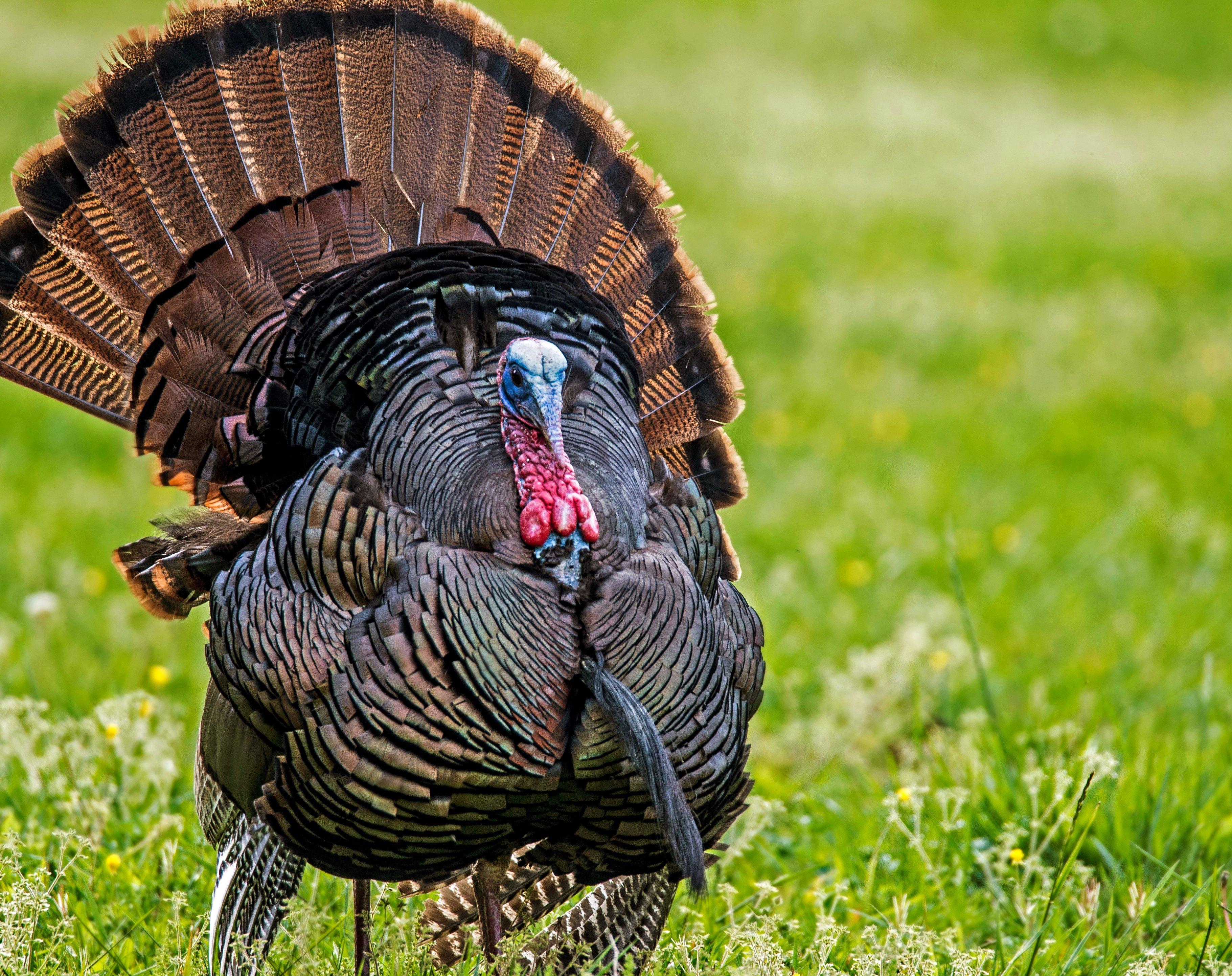
New shotshell technology means lighter loads can be just as effective on gobblers. Image by Betty Shelton
Luckily for today’s turkey hunters, pulling the trigger on a longbeard no longer needs to hurt. Advancements in shotshell technology have turned sub-gauge guns like the 20-gauge, 28-gauge, and even the.410 bore into effective turkey getters. You can also greatly reduce the recoil in your favorite 12-gauge with a number of modern 2 ¾-inch turkey loads that are more effective than the lead loads of years ago.
One of the biggest advancements in turkey loads comes in the form of tungsten super shot. The tungsten-based alloy pellets are much denser than lead shot, 18.1 grams per cubic centimeter vs. 11.34 g/cc for lead. That means you can reduce to a much smaller shot size while retaining adequate downrange energy. A No. 9 TSS pellet is comparable to a No. 5 lead pellet in terms of stopping power. That means a ⅞ ounce load of No. 9 TSS in a 3-inch .410 shell carries about the same number of pellets, and energy, as a 2-ounce lead No. 5 12-gauge load.
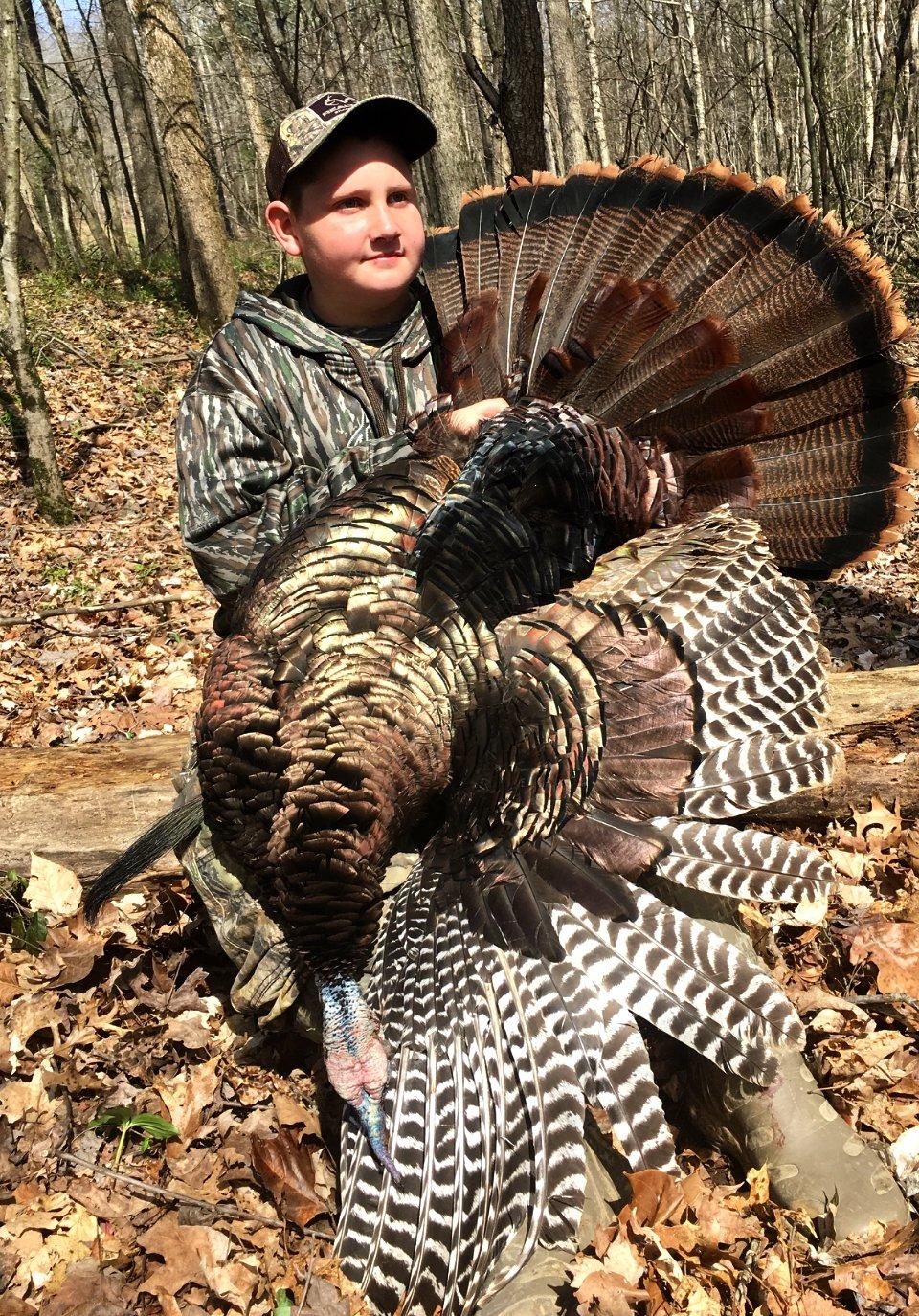
Today’s youth hunters have several choices in low recoil loads. Image by author
While sub-gauge guns do kick less as a rule, they’re not recoil-free. The smaller guns are usually lighter weight, and a heavy payload of shot over a magnum powder charge can still pack a serious wallop. Some of the 3-inch 28-gauge loads in my CVA Scout Spur single shot make you take notice. This is where new ammo technology shines. You don’t have to choose the biggest, heaviest load available to make a great turkey gun. The recoil conscious can look for lighter powder charges and payloads of shot. Don’t worry, they will still get the job done. I’ve tested a ton of turkey loads over the past few years, both on the range and on turkeys, and all of these hold a great pattern without punishing the shooter.
Don’t Miss: TURKEY SCOUTING TACTICS FOR MODERN HUNTERS
MEASURING RECOIL
There are two types of recoil: free recoil, which can be measured using a mathematical formula based on payload weight, velocity, and the weight of the gun. The second type is perceived recoil, which is the amount of kick you actually feel. You can’t change the math, but there are a few things you can do to lower the amount of perceived recoil. These tricks will help.
- Gun Fit: Recoil is best absorbed with the stock tight to the shooter’s shoulder. When the stock is too short (or too long), it is hard to get a solid bedding between shoulder and stock. Any open space allows the gun to travel freely, smacking the shoulder with a sharp impact.
- Gun Type: Gas-operated auto loaders help to bleed off some of the recoil energy from the shot as they use the energy to cycle the action.
- Recoil Pad: As the pad compresses between gun and shoulder, it spreads the impact and softens it. Think of it like jumping off of a 6-foot wall. It hurts worse if you land on concrete verses a springy trampoline.
- Gun Weight: Heavier guns absorb more energy, so don’t automatically choose the lightest gun available, particularly when outfitting a new or young hunter. Balance the ease of carry with the increased recoil of the lighter guns. If you are hunting from a blind or relatively fixed position, a heavier gun will help to ease the perceived recoil, providing it fits the shooter well.
- Hearing Protection: A significant portion of perceived recoil is the loud crack of the shot. Muffle that, and the actual shot will feel lighter, even if it isn’t. Always use hearing protection.
Don’t Miss: ARE TSS TURKEY LOADS DOOMED?
5 GOOD LOW-RECOIL LOADS
Turkey loads kick. There is no getting around it. Even the lightest loads listed below produce about the same recoil as a youth deer rifle. The heaviest compares with a magnum rifle that you would use for elk. But even the biggest load on this list produces a fraction of the recoil felt with a 2-ounce or heavier magnum 12-gauge load. Using the tips listed above, all of these choices can be shot by just about any shooter, regardless of size or experience.
.410
When reduced recoil is the main concern, it is hard to go wrong with the .410 and TSS. Most of today’s 3-inch .410 loads hold ⅞ ounce of No. 9 shot. That translates to about 300 pellets. Drop down to No. 9.5 or No. 10 shot (which is still plenty for turkeys) and you can clear 400 pellets. That is enough to form a dense cloud of shot out to 40 yards.
Federal Premium Heavyweight 3” TSS Realtree 40th Anniversary Edition
⅞ oz. No. 9 TSS, 1100 fps
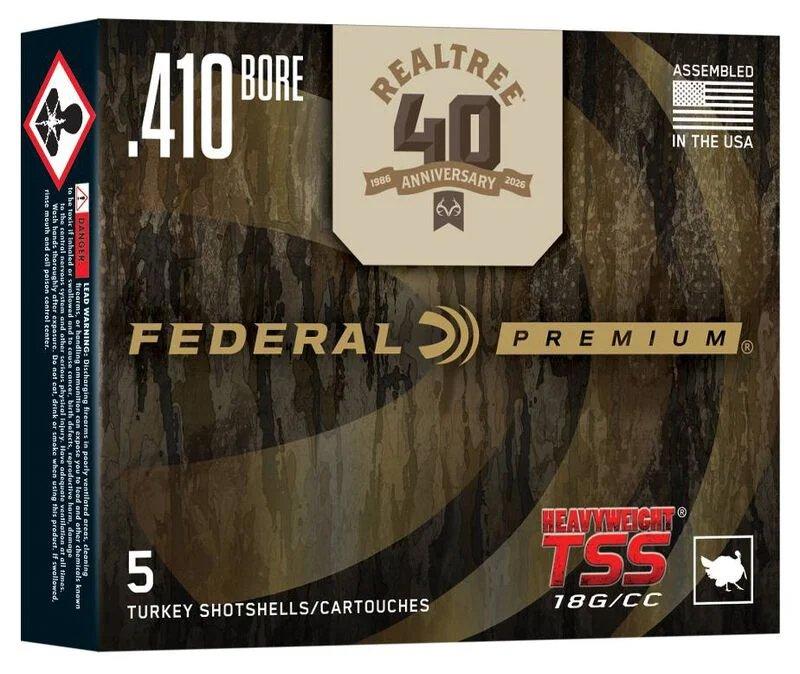
Featuring premium shot, advanced buffer materials, and a full-length wad for tight, consistent patterns, the Federal Premium Heavyweight turkey loads are always among the best performing .410 turkey loads year in and year out. While most .410 turkey loads are similar in felt recoil, this one feels lighter than most. It produces about 13.7 foot pounds of recoil energy in the average turkey gun, just a fuzz more than the .260 Remington, one of my favorite rounds for a youth deer rifle.
28-Gauge
The 28-gauge has long been popular with upland hunters since it allows a near 20-gauge payload to be fired from trim, lightweight guns. Those same attributes when paired with TSS and improved shell technology have made this little gun the new darling of the turkey woods. That said, avoid 3-inch 28-gauge loads when recoil is a factor. They pack a wallop in extremely lightweight guns. But since many older 28s only have 2 ¾ inch chambers, there are a number of good 2 ¾-inch turkey loads available.
Winchester Longbeard 2 ¾” Tungsten
1 ¼ oz. No. 9 Tungsten, 1050 fps
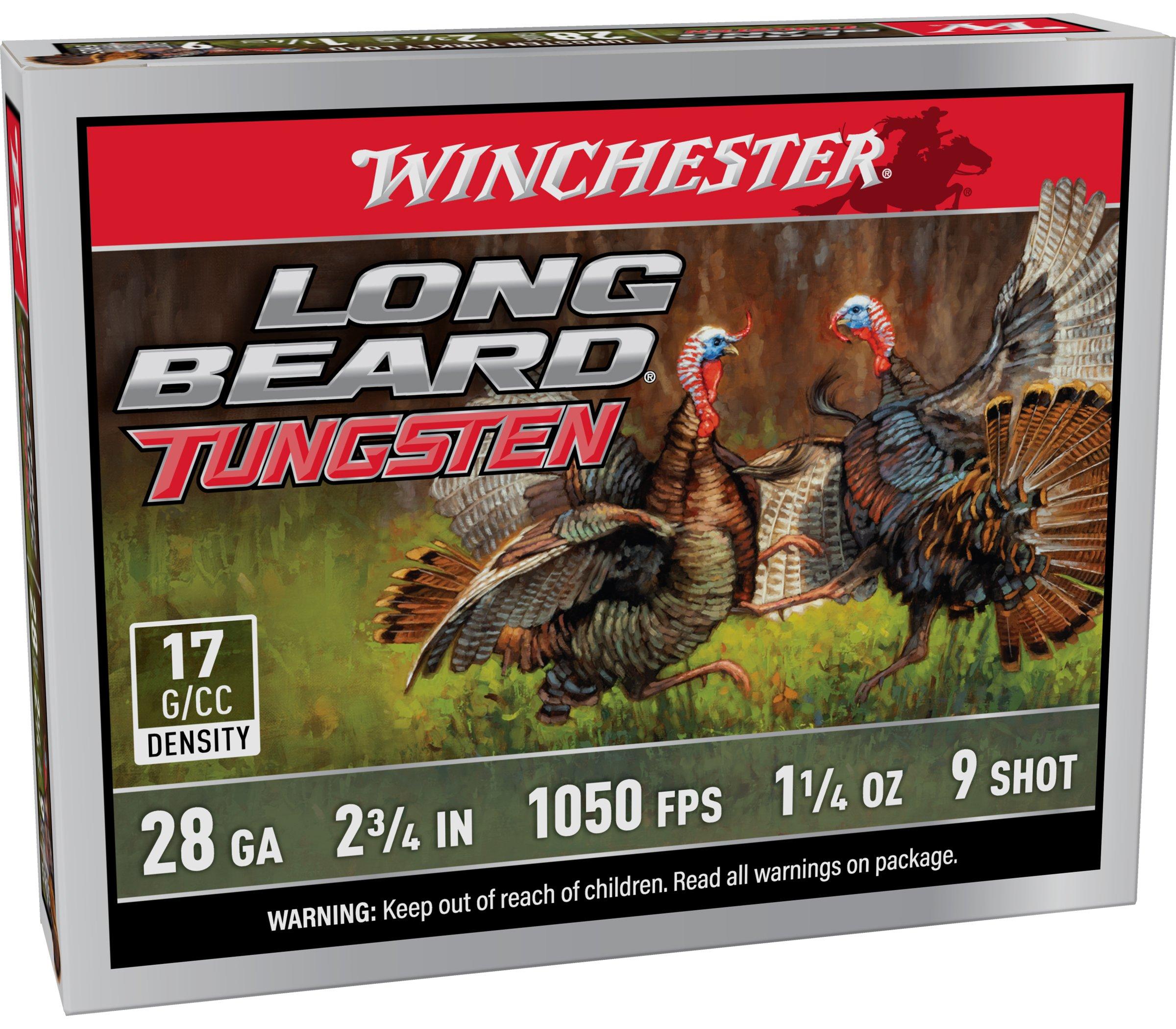
Winchester has introduced a line of new heavyweight Tungsten loads. At 17 grams/cc, these pellets are nearly identical in weight to traditional TSS while being slightly less expensive. The relatively light 1 ¼-ounce load traveling at 1,050 fps makes this a joy to shoot through any 28-gauge. The buffered payload helps the shot flow seamlessly through tight turkey chokes, resulting in consistently tight patterns down range. This load in my gun produces about 22 foot pounds of felt recoil, which is about the same as a .30-06 bolt action rifle shooting a 180-grain bullet.
Don’t Miss: THE BEST 28-GAUGE AND .410 TURKEY LOADS OF 2026
20-Gauge
For my money, the 20-gauge provides the ultimate blend of low recoil and stopping power for a turkey gun. With most TSS No. 9 shells packing between 450 and 550 pellets, a 20-gauge turkey gun can put an unbelievable swarm of pellets on target, even at extended ranges.
Hevi-Shot Hevi-18 2 ¾” TSS Turkey
1 ¼ oz. of No. 9 TSS, 1200 fps
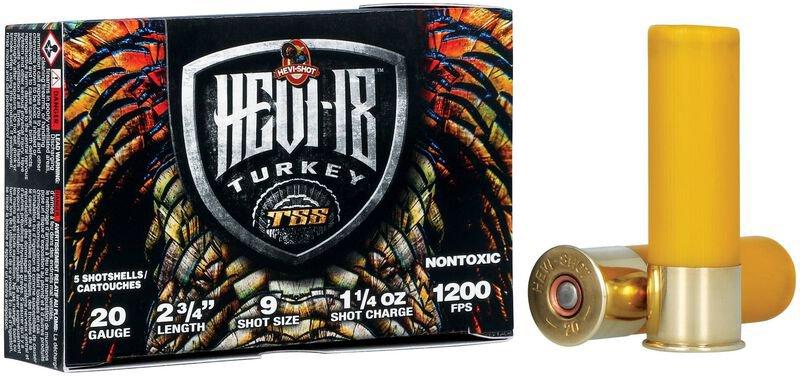
Dropping down from a 3-inch to 2 ¾ inches and 1 ¼ ounces of shot makes a noticeable recoil reduction in the 20. Loaded with premium components including No. 9 TSS, these shells are easy on the shoulder, with a minimal reduction in performance. It produces around 28 foot-pounds of recoil energy, which is less than half of what my old 3.5-inch 12-gauge produced (while still carrying many more pellets than the No. 5 lead load).
Apex LT-20 TSS
1 ⅜ ounces #9 TSS, 1150 fps
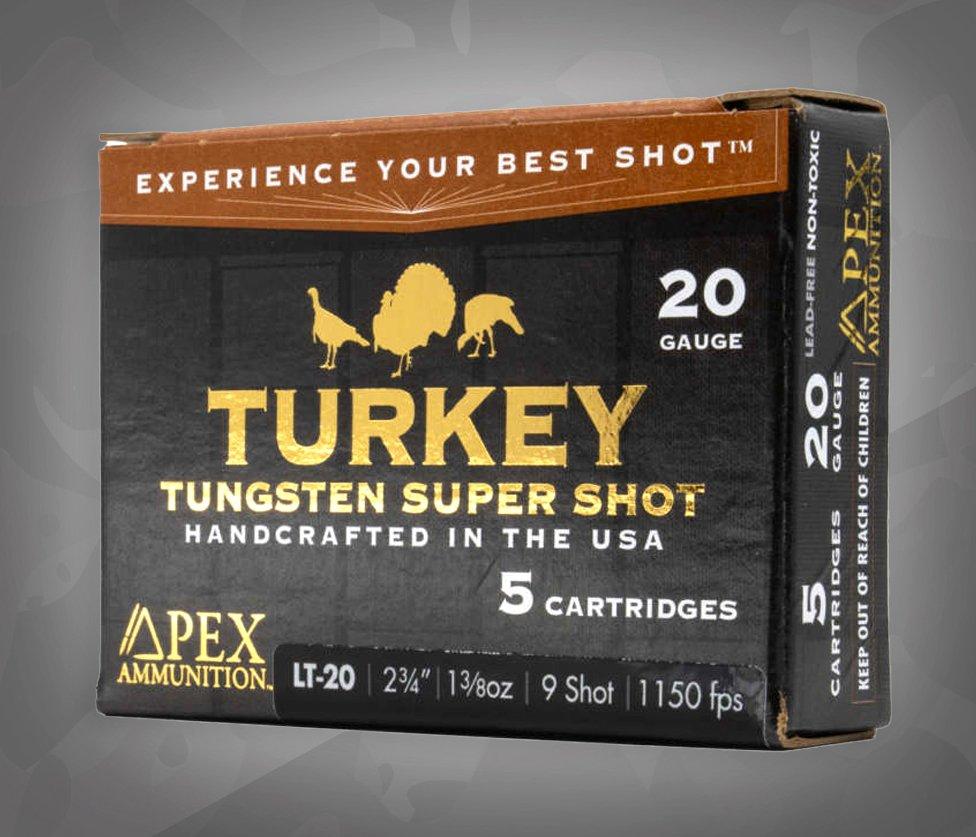
This is another great 2 ¾-inch 20-gauge load. Packing 495 #9 pellets into a 2 ¾” hull, the Apex LT (Light) loads hammer birds even at extended ranges but take it easy on the shooter at the same time. Even though it has a bit heavier payload, the slightly slower velocity on this one produces about the same recoil impulse as the Hevi-18 20-gauge load above.
Don’t Miss: THE BEST 20-GAUGE TURKEY LOADS OF 2026
12-Gauge
While the 12 isn’t known for low recoil, improvements in load technology have made 2 3/4” 12-gauge loads legitimate turkey medicine. While they aren’t as mild as some of the sub-gauge loads outlined above, they are a far cry from the magnum 3.5 inch loads.
Federal Grand Slam 12-Gauge 2 ¾”
1 ½ ounces No. 5 copper-plated lead, 1200 fps
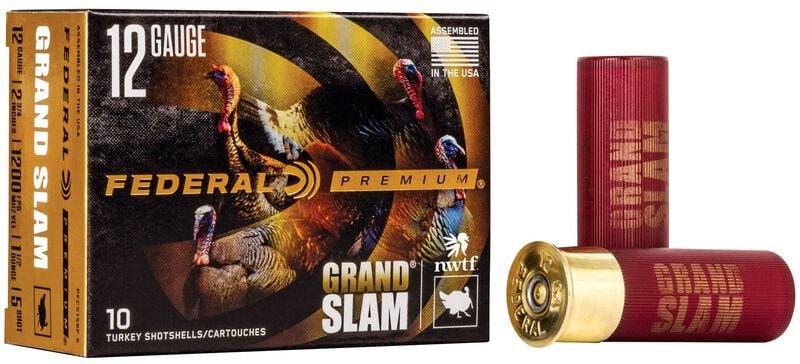
New technology has greatly improved lead turkey loads as well. Federal’s FLITECONTROL FLEX wad system surrounds 1 ½ ounces of copper plated lead No. 5s, while new buffering materials prevent deformation, keeping the pellets nice and round for great patterns. With a payload size commonly found in a 3-inch 20-gauge load, these loads have about as mild a recoil as you can ask for in a 12-gauge turkey gun. Most of my 12-gauge turkey guns weigh around 7.5 pounds, meaning these produce about 35 foot pounds of recoil energy. That’s still a lot, about the same as a .300 Remington Ultra Mag, but a far cry from the 3.5-inch loads I used to shoot.
Don’t Miss: THE BEST 12-GAUGE TURKEY LOADS OF 2026