7 Tricks and Gadgets for Easier Big-Game Retrieval
Posted 2026-09-28 by
Winches, wheels, ropes, and a little ingenuity can make moving even the heaviest game, like elk and moose, easier and safer
Hunters are a creative bunch, and some of our greatest ingenuity appears after an animal is down. Over the years, I have tried almost everything to bring home deer, elk, moose, black bears, antelope, and mountain game. Motorized access is often prohibited, impractical or impossible, leaving a successful hunter miles from the road with hundreds of pounds to move.
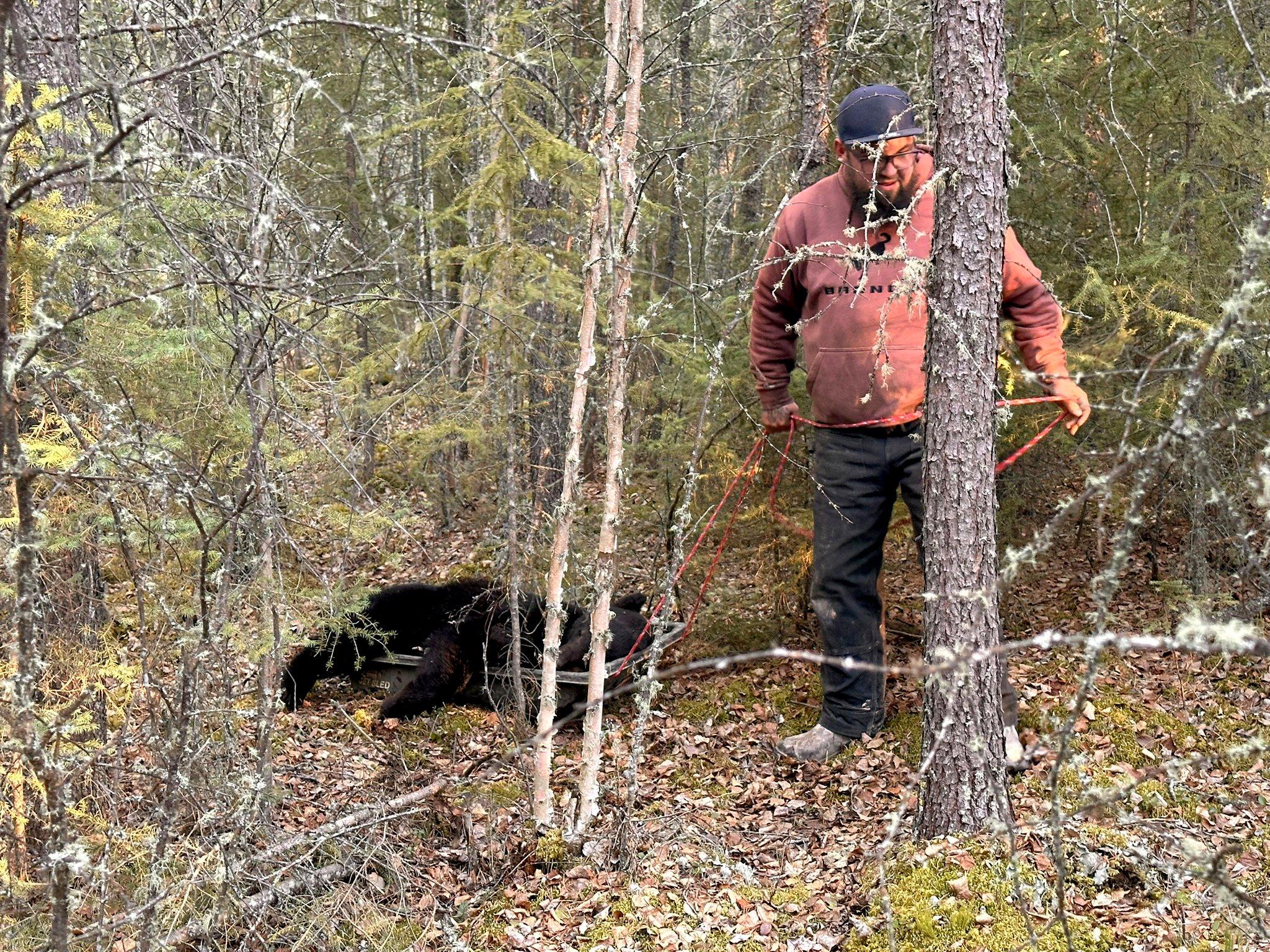
Like a lot of things in the hunting world, big game retrieval has evolved over time. Images by Brad Fenson
Extra birthdays, sore joints, and signs of arthritis have changed how I view that challenge. Wheels, ropes, pulleys, and portable power can save my energy, protect meat, and prevent injuries. The best recovery method is planned before the trigger is pulled.
THE WHEELBARROW SOLUTION
Years ago, I shot a good whitetail in a conservation area that was restricted to foot travel. A buddy arrived with a wheelbarrow. It was not specialized hunting equipment, but it worked. Keeping the load lifted and balanced strained our arms, while roots, rocks, and corners constantly tried to dump the deer. We reached the truck tired but successful.
I now own several game carts. While bowhunting prairie mule deer, I have used them to move big bucks for miles without driving across fragile native grass.
Solid tires do not go flat when they meet cactus, thorns, or sharp rocks. Center the load over the axle and strap it securely. Pulling works well on a trail, while pushing can provide better control down slopes or over obstacles. On sidehills, two people help prevent a rollover.
Check access rules before assuming a cart is permitted. Some conservation lands distinguish between foot travel, wheeled equipment, and motorized devices.
PACKS, KNIVES, AND GAME BAGS
Bigger animals create greater challenges. A properly fitted backpack has carried everything from mountain sheep to moose out of the backcountry. A good frame transfers weight to the hips and controls the load on uneven ground.
A sharp knife and quality game bags are essential. Quartering or boning reduces the weight, allows meat to cool, and keeps each load manageable.
Packing is dependable where wheels cannot travel, but it demands an honest assessment of fitness, terrain, and weight. Remember, an extra trip is better than an injured knee or back.
In warm conditions, cooling meat may be more important than moving the animal whole. In winter, snow can become an advantage.
LET SNOW CARRY THE WEIGHT
On a late-season elk hunt, my wife made an excellent 340-yard shot on a large cow. Snow was nearly waist deep and the thermometer showed minus 42°F. A landowner offered us a snowmobile, but the extreme cold prevented it from starting.
My wife was a trooper. We followed a packed trail, boned out the cow, and loaded the game bags onto a hard-bottomed skimmer, often called a trapper’s sleigh.
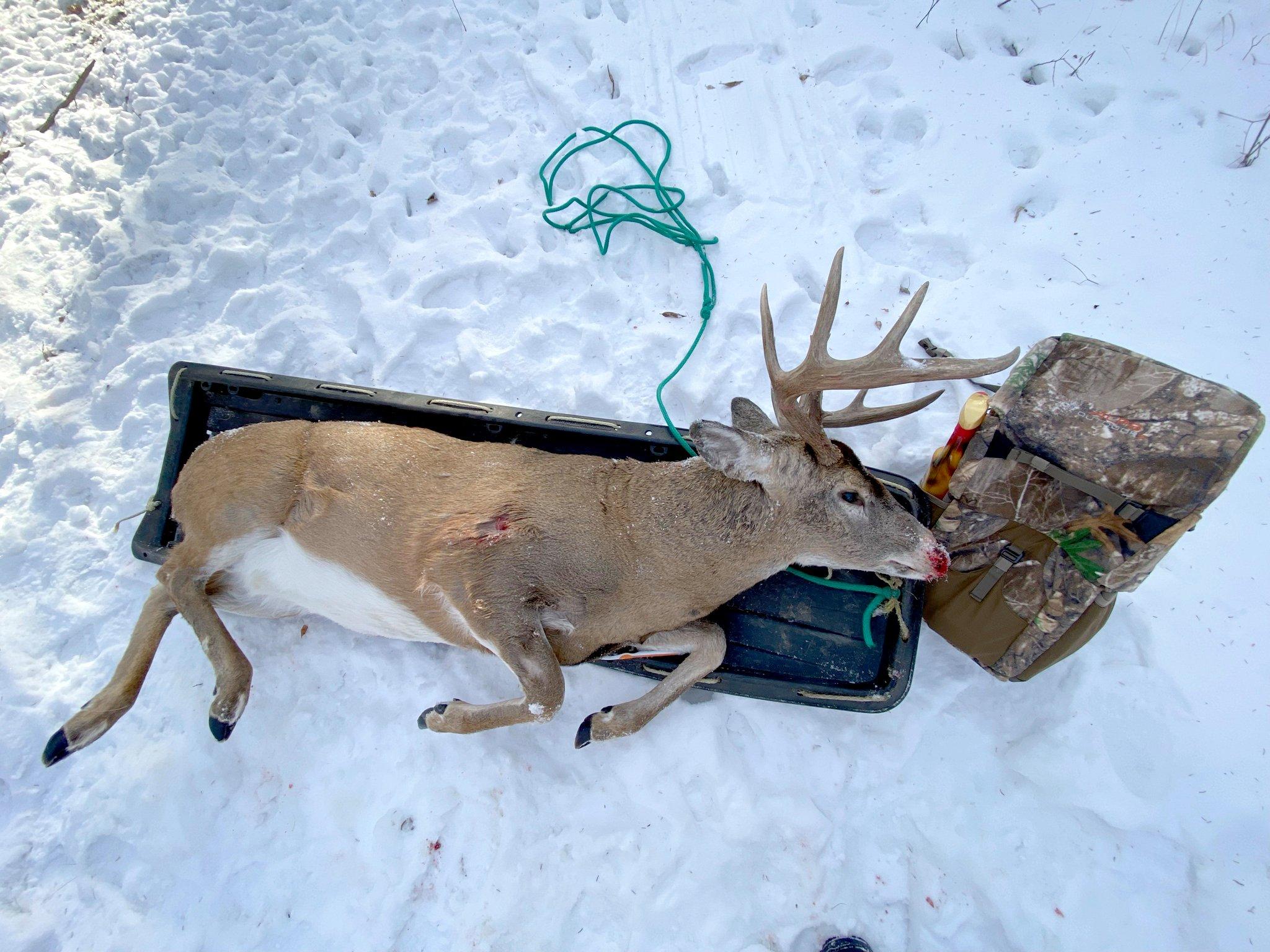
A solid snow pack and a trapper’s sleigh can make hauling boned meat or whole animals much easier.
The sleigh spread the load across the snow. A body harness transferred the pull through the shoulders and upper body instead of relying on our arms. We stopped to catch our breath, but the system turned a miserable pack-out into a manageable walk.
A tough plastic skimmer can also slide over grass, mud, leaves, and small logs. I pulled a boned-out bull moose on the same sleigh on dry, fall grass. Keep heavy bags low and secure everything to prevent tipping.
BUILDING A BETTER TRUCK
A buddy demonstrated what preparation and fabrication could accomplish when a late-season hunt left us with four elk on the ground and more than 3 feet of snow. He had mounted a large metal bale roller on strong brackets at the back of his three-quarter-ton flatbed. An electric winch on the headache rack carried 100 yards of cable.
We drove as close as access allowed and winched each elk to the truck. The roller changed the direction of pull and slid the animals onto the flatbed without lifting by hand. We took them to his shop, where clean floors, good lighting, and water made processing easier.
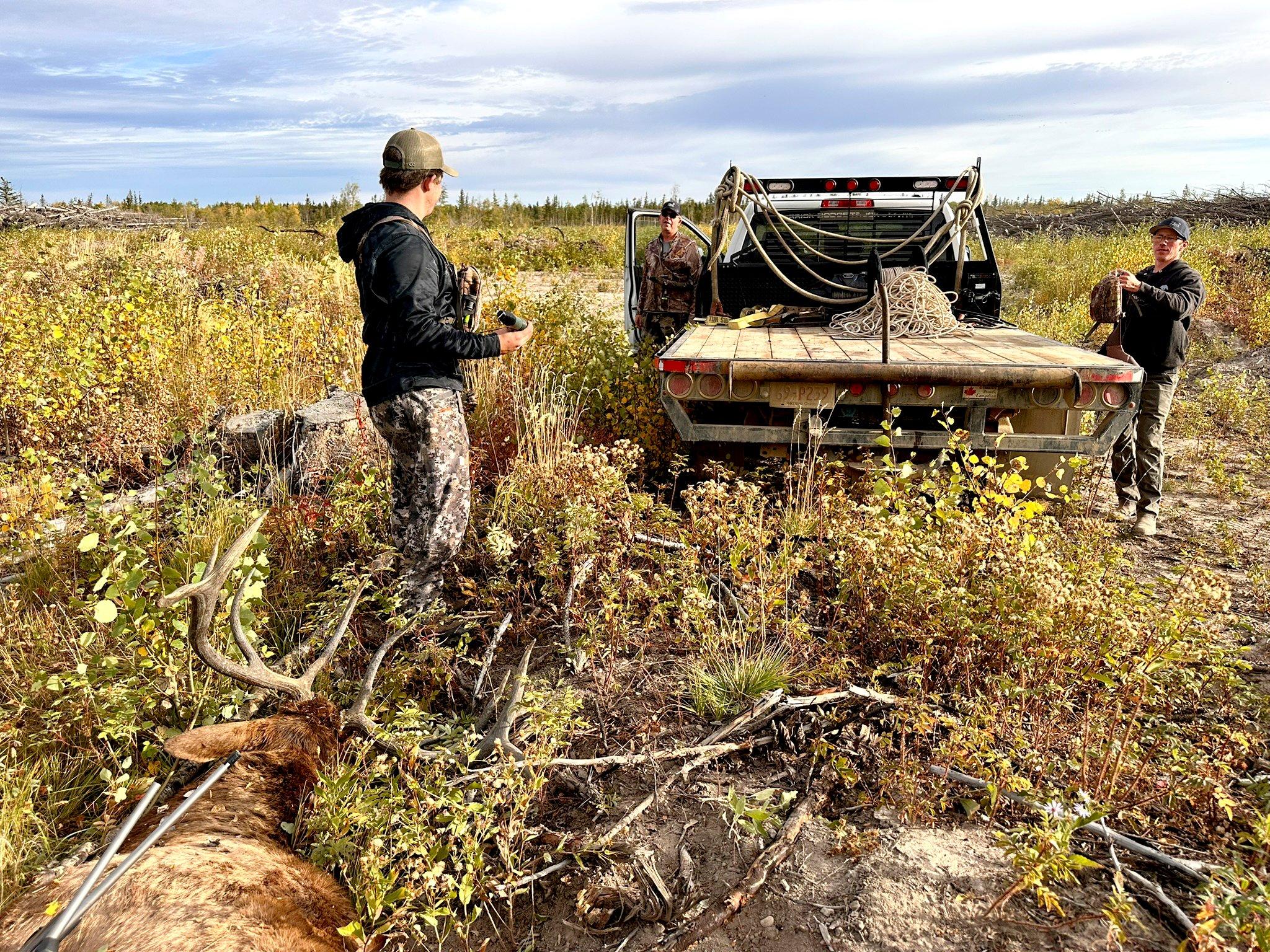
A properly equipped truck can make loading even the largest game animals easier than breaking them down and packing out the quarters.
The system eliminated repeated lifting, reduced field time and protected the edge of the truck bed from the cable. We used the truck again after I shot a big bull in country choked with willow and alder. The closest access was a distant logging trail.
My buddy produced a 2,000-yard spool of heavy rope. A metal pry bar through the center allowed it to feed from the truck. I carried the end to the elk, secured it around the neck and used a half hitch over the nose, with the crossing rope beneath the chin. The rig aligned the head and reduced snagging, with antlers draping backward.
On my signal, my friend moved slowly along the trail with the truck. The bull came through the tangle so efficiently that I could not keep up. At the road, the winch and roller loaded it whole.
Vehicle-assisted pulls demand rated rope and hardware, slow movement, and clear communication. Keep everyone away from the tensioned line.
Don’t Miss: HE SEES YOU | UNDERSTANDING WHITETAIL VISION
PORTABLE POWER
Power tools have changed fieldwork. A reciprocating saw with a clean blade can separate joints, remove lower legs or cut antlers and skull plates. Battery models are easier to carry than the generator-operated saws we once used. Work carefully to avoid contaminating meat.
The WARN Drill Winch turns a standard portable drill into a compact pulling system. The current synthetic-rope model is rated for a 750-pound line pull and includes 40 feet of 5/32-inch rope. A free-spool clutch speeds up rigging.
I have used one to pull a sleigh of game bags and move gutted moose onto a trailer. We have even recovered stuck all-terrain vehicles and trucks. Heavy jobs can consume several drill batteries, so carry charged spares.
Pulling capacity should never be confused with lifting approval. A portable pulling winch may look like an easy way to suspend an animal from a tree, but WARN specifically advises against using its winches as hoists. Vertical lifting should be done with a gambrel, pulley, or hoist rated for overhead work.
PULLEYS MULTIPLY OPTIONS
A pulley can redirect a line, change the pulling angle, or keep a winch on stable ground. A properly rigged two-to-one system can nearly double force, although friction reduces the gain and more rope must move.
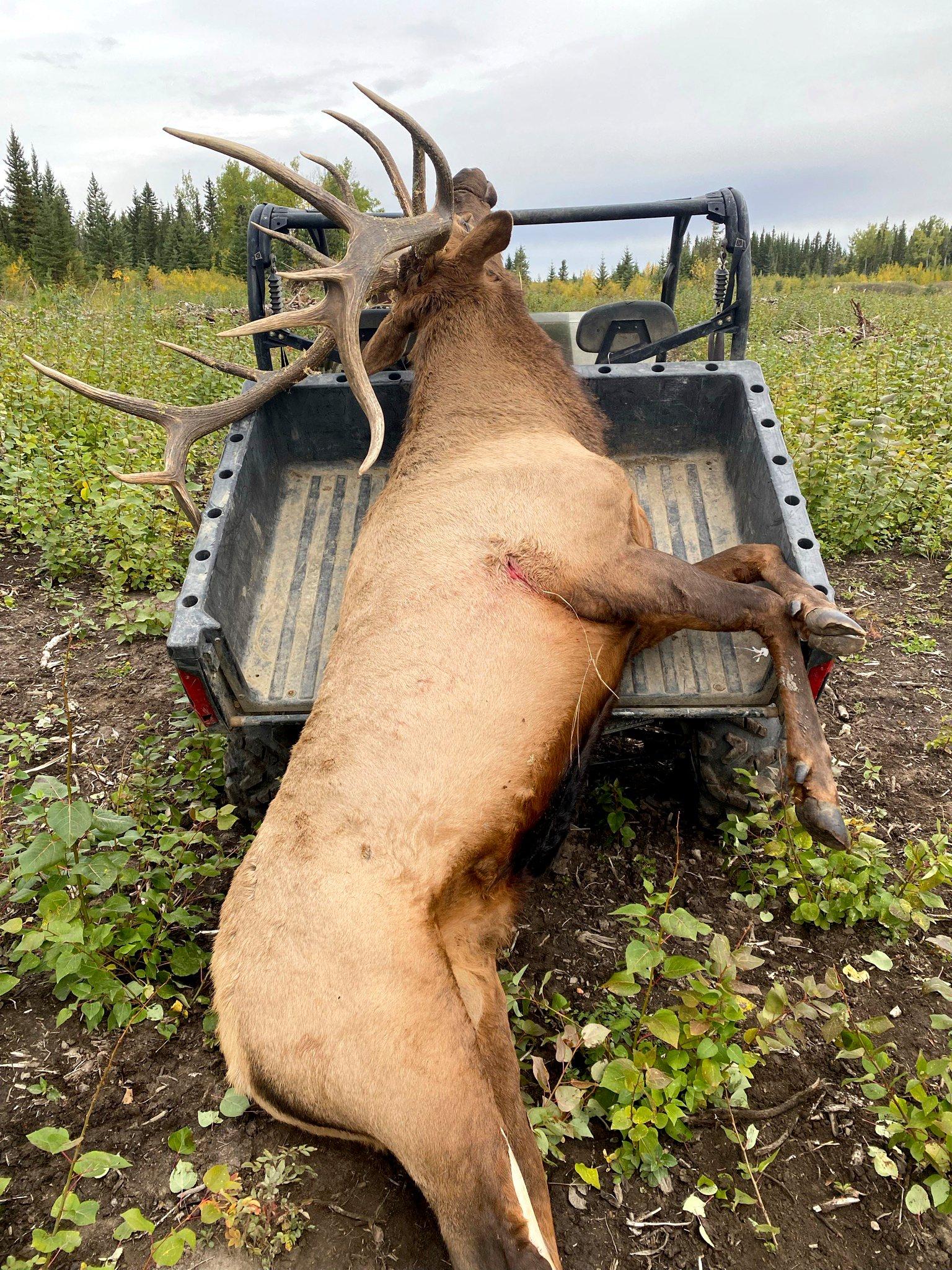
Pulleys and winches multiply the amount of force a hunter can use for moving an animal.
Use rated slings, pulleys, carabiners, rope, and anchors. Inspect every component, avoid pinch points and never stand inside a rope loop or in line with loaded cable. The anchor tree must withstand the pull.
Don’t Miss: 5 TIPS TO ACE YOUR ARCHERY ELK SETUP
CAPSTAN POWER WITHOUT A FIXED CABLE
The latest tool to change my outlook is the portable capstan winch. Unlike a conventional winch with a fixed cable, a capstan uses a rotating drum and separate rope. Several wraps create friction when the operator tensions the free end. Pulling distance is limited by the rope length carried, not spool capacity.
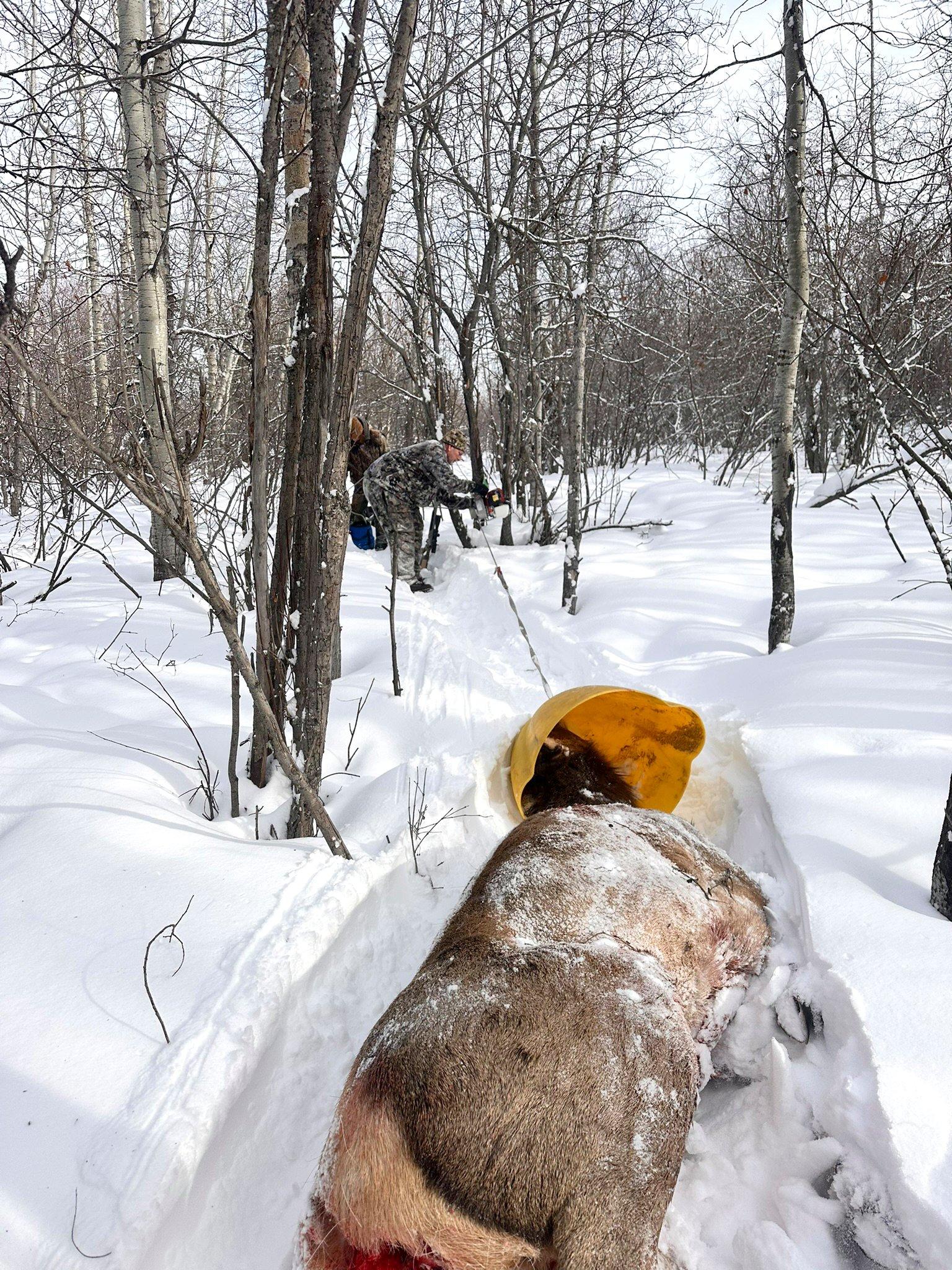
A capstan winch offers serious pulling power in a portable package.
Portable Winch offers gas and battery models. The compact PCW3000 gas model is rated to pull up to 1,600 pounds without mechanical advantage. A hunting kit can include a rope choker, hook, pulley, tree sling, and locking carabiner.
The winch can be carried in a case or pack frame and anchored to a solid tree. The operator controls the pull through tension on the free end of the rope.
I saw the system prove itself on a late-season elk hunt with more than 4 feet of snow. I shot a cow about a mile from the road after she stood from her bed. Pulling the trigger seemed like a great idea until I considered the trip out.
My buddy had brought a capstan winch. After field dressing the elk, we slid a forestry skidding cone over its head. The plastic cone created a smooth leading surface that prevented snagging on branches, deadfall and snow.
We anchored the winch to a tree and ran 100 yards of rope to the elk. The rope passed through the cone and was secured to the animal. Several wraps around the drum had the elk moving toward us at close to walking speed.
When the elk reached the winch, we moved the equipment farther along the trail and repeated the process. Five pulls brought the cow to the road. The longer the rope, the less time spent resetting the equipment.
The cone was as important as the power. Every stump and branch adds resistance. The smooth nose helped the elk slide over obstacles.
Hunting buddies have used capstan winches to pull elk through old burns and moose out of steep valleys. On one occasion, three elk were connected and pulled up a creek bank. The power is impressive, but the biggest benefit is the human energy saved.
Don’t Miss: SHOULD YOU DITCH THE PEEP SIGHT ON YOUR BOW?
MAKE RETRIEVAL PART OF THE HUNT
No tool replaces planning. Study access rules, terrain, distance, temperature, and available anchors. Decide whether an animal will be moved whole, quartered, boned, packed, wheeled, or pulled. Carry the required game bags, rope, batteries, fuel, and rigging.
Read the equipment manual, stay within rated limits and keep people clear of tensioned lines. Never shock-load a rope, use a pulling winch as an overhead hoist or trust a questionable anchor. Wear gloves and eye protection. I lost a good friend to a broken winch cable years ago, when the hook flew at him like a bullet, hitting him in the forehead. Always work smart.
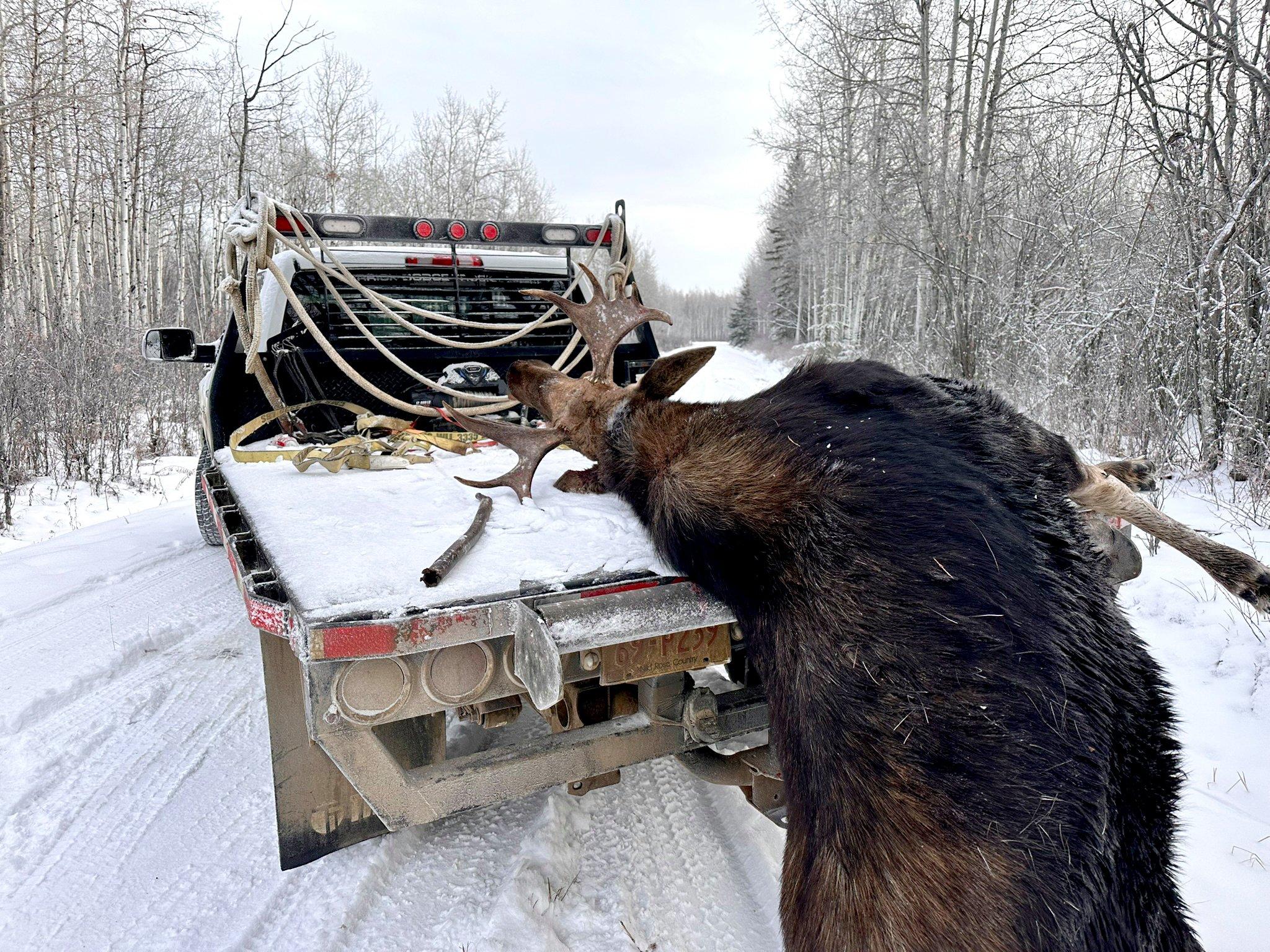
Plan ahead for game retrieval so that a successful hunt ends with a freezer full of game meat instead of a sore back.
Meat care remains the priority. Field dress promptly, cool large muscle groups and adjust the plan to the weather.
The wheelbarrow, game cart, backpack, sleigh, drill winch, homemade roller and capstan winch have all solved different problems. The older I get, the more I appreciate anything that saves my back, protects the meat and gets everyone home safely. Success should end with a full freezer and a good story, not an injury.
When it comes to retrieving big game, smarter will beat harder every time.
Don’t Miss: “BASEMENT BUCK" OUSTS JORDAN BUCK FROM NO. 2 B&C TYPICAL SPOT