Dumpster Diving for Public Land Whitetails
Posted 2026-11-05 by
These days, the best way to kill a good public land buck might be ignoring the best spots and finding the half acre nobody else wants to hunt
I've developed a pretty efficient system for finding public land that I want to hunt. First, I spend hours looking at maps and aerial imagery, and I grade every potential area from A to D. Then, I eliminate all the best places.
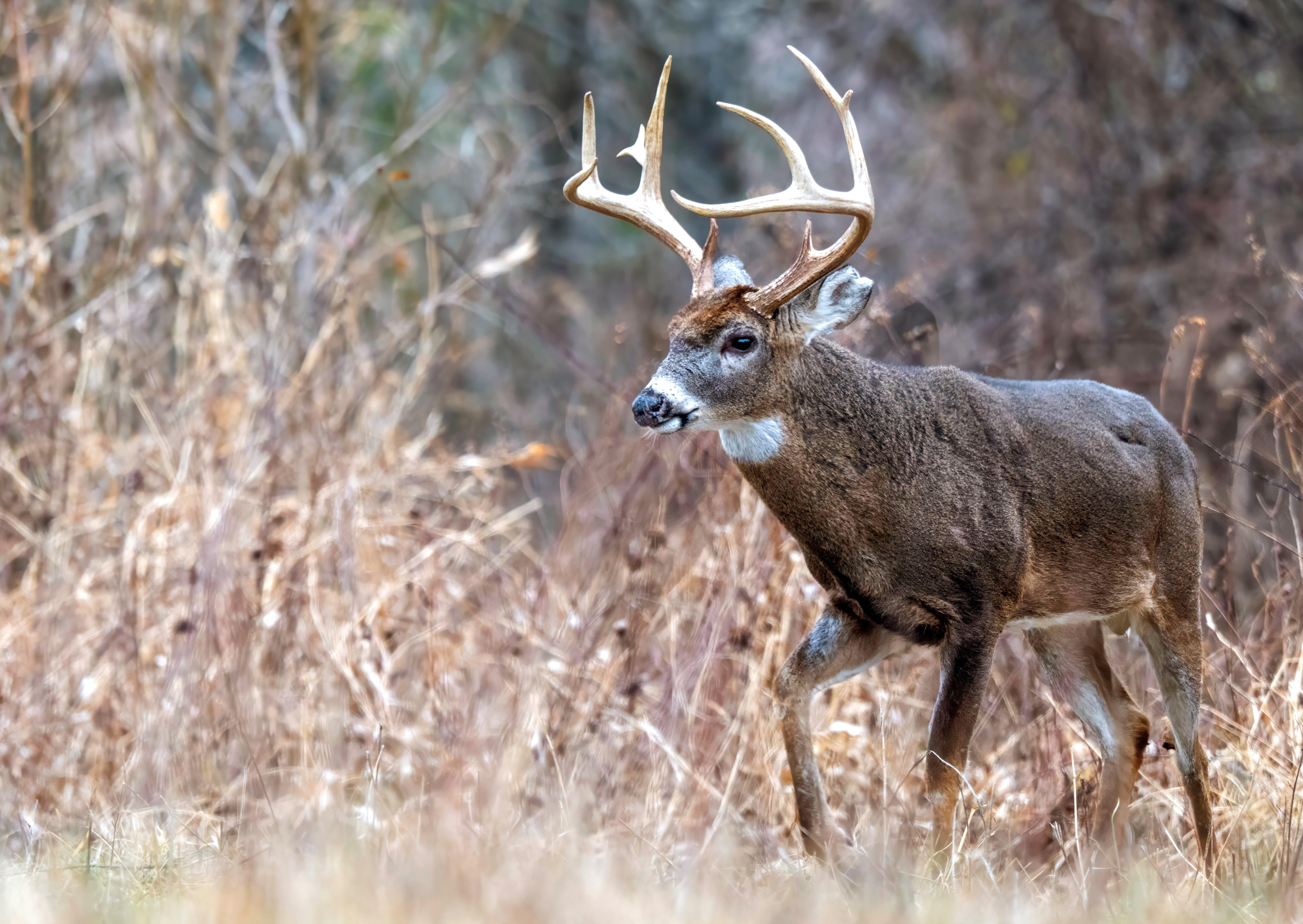
Today’s public land is more heavily pressured than ever before, and finding big bucks on a regular basis sometimes requires thinking outside the box. Image by Christopher J Barger
I'm serious. If I grade a piece of public ground as an “A,” I'm almost certainly not going to bother scouting it. Same goes for the Bs. Instead, I'm going straight to the Cs and Ds.
It sounds backward. Ten years ago, when I was among the few seriously hunting public ground for whitetails, I would have considered this backward thinking. But public-land whitetail hunting has changed in a huge way, and the way I search for places to hunt has been forced to change with it.
Today, I'm dumpster diving for deer ground.
THE GRADES
I do the bulk of my scouting before I ever leave home. I'll use onX Hunt and similar mapping tools to go through public land in an area and give each potential property a grade. It's not especially complicated. An A property is the obvious stuff. It's prime-looking whitetail ground with the ingredients we'd all identify immediately like good cover, timber, and promising terrain features. There’ll be food nearby, and multiple funnels and travel corridors. Maybe some difficult-to-access areas that look like they could hold mature bucks will stand out.
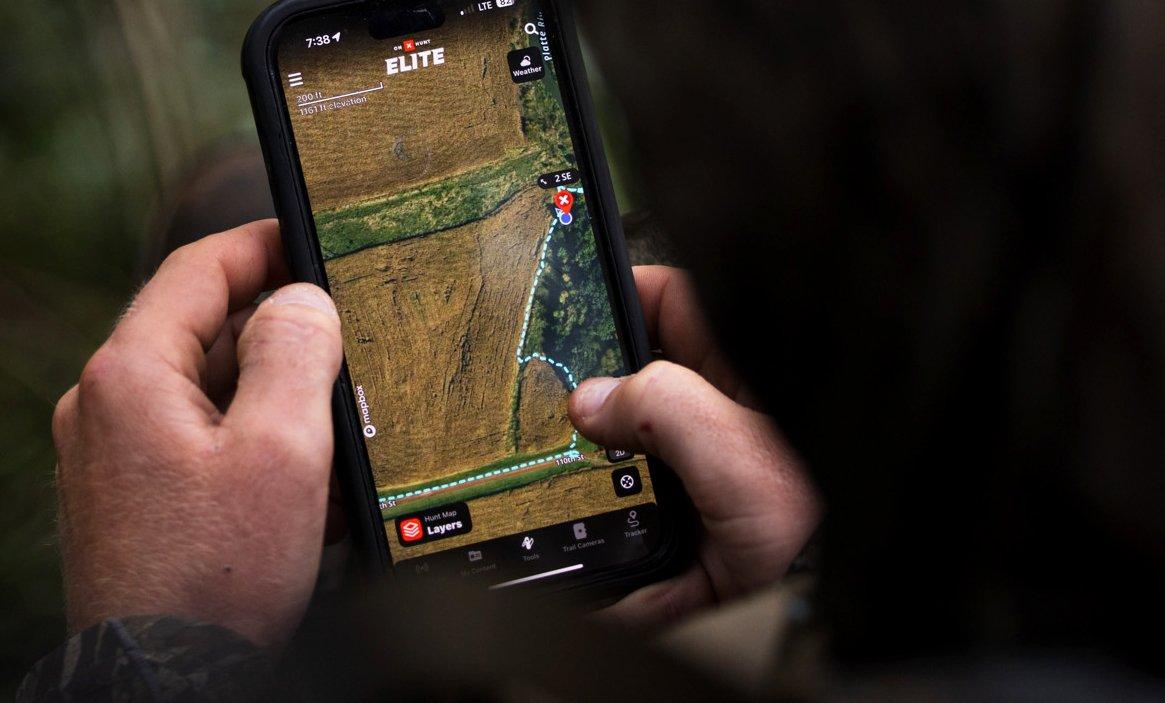
Tools like onX Hunt make long distance scouting possible. Image by Realtree
A “B” property isn't quite as perfect, but it's still really good-looking deer ground. There are enough obvious features that I can immediately identify several places I'd want to scout.
A “C” property is average to below-average. There's nothing particularly exciting about it, but there's enough habitat or location to make me think deer could use it.
A “D” property is basically junk. It’s low-quality ground with minimal huntable area. To the casual eye, it’s a massive area of near wasteland or maybe a very tiny parcel. But a tiny strip of cover, maybe in one corner, could be useful. As I e-scout, I drop waypoints on potential public areas and color-code them according to those grades. By the time I'm finished, I can look at the map and immediately see which properties I've ranked as A, B, C or D. Then, when it's time to decide where I'm actually going to put boots on the ground, I do something that would have made absolutely no sense to me years ago. I eliminate the As and Bs.
Don’t Miss: 9 MUZZLELOADER DEER HUNTING TIPS
WHY ELIMINATE THE BEST GROUND?
Because I'm not the only guy with onX. And because hunting around other hunters is a non-starter for me. I don’t enjoy it. I don’t think it’s effective. So, I won’t do it.
An A property looks good to you and everyone else. The big timber block is obvious. The nasty swamp is obvious. The funnel between the swamp and the crop field is obvious. That secluded corner 800 yards from the parking lot is obvious. Today's mapping tools are phenomenal. They've made us — all of us — much more efficient hunters. If I can sit on my couch and identify six killer-looking stand locations on a piece of public ground I've never visited, so can the next guy.
That doesn't mean A and B properties don't have good bucks. They almost certainly will. But they have far fewer of them now than in years past, and that trend isn’t improving. I can’t control what deer do. I can’t control what other hunters do. I can only control what I do. To hunt the mature deer that I’m interested in, I need to stay away from areas that draw other hunters. It’s that simple.
WELCOME TO THE DUMPSTER
It’s not that my new strategy is a fast-track secret. The hard truth about “dumpster diving” is that most of the places you find really do belong in a dumpster. Quite a few “D” properties really are Fs, with nothing to offer deer or hunters. I’ve scouted them and discovered there’s almost no cover, or the only huntable portion isn’t where I thought it was. Sometimes it only takes 30 seconds of looking at a place from the road to know I'm never coming back. That's fine, and part of the process. My goal is to find the occasional C or D place that has one thing going for it that wasn't obvious on the map.
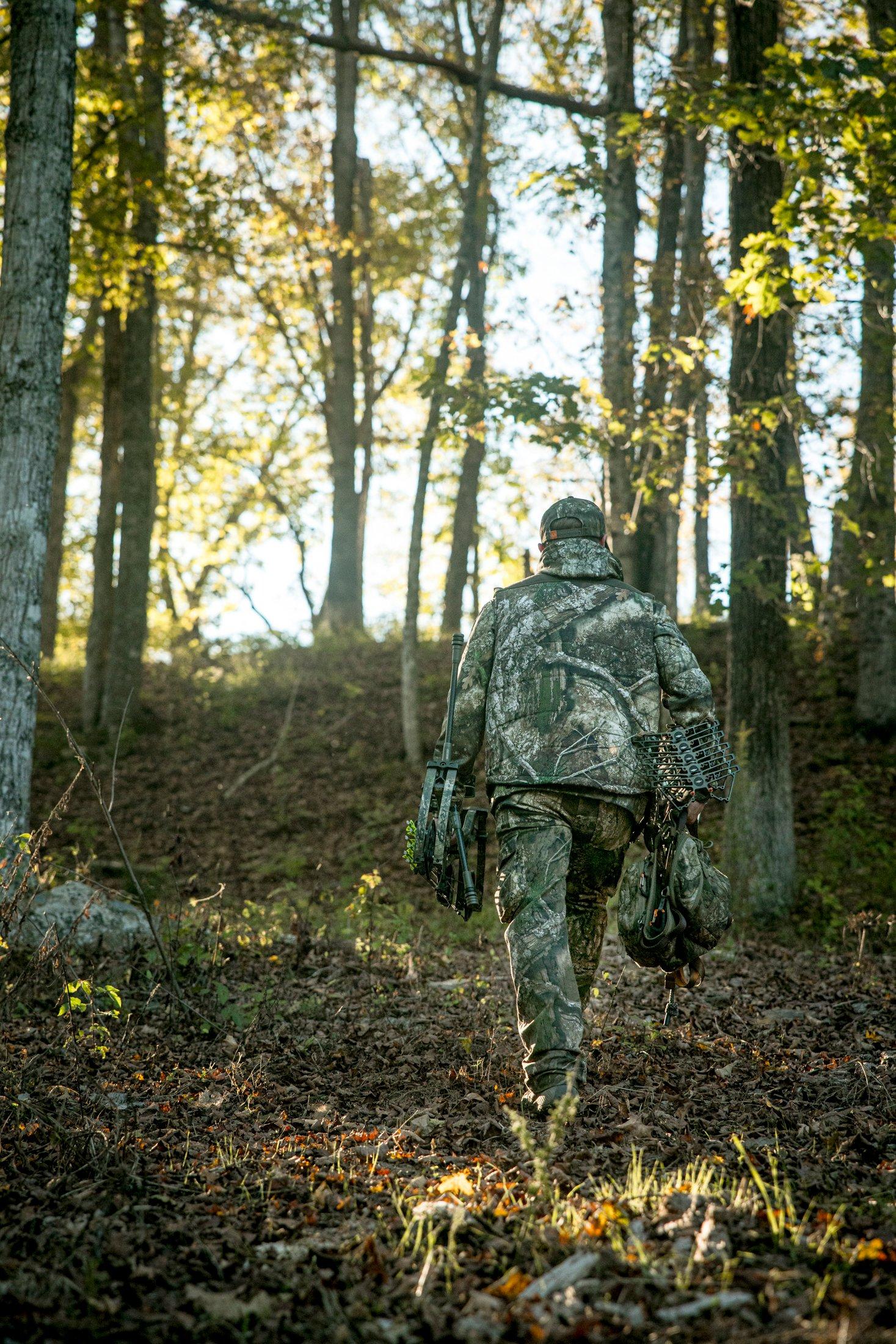
Put in the time and work to locate hidden, good areas in not-so-obvious locations. Image by Realtree.
Maybe it's a strip of cover connecting two pieces of private timber. Maybe there's a little wet pocket that doesn't show up well on an aerial. Maybe there's a tiny patch of security cover surrounded by agriculture. Some of these things are invisible to e-scouters, and they would remain undiscovered if I were distracted hunting the same stuff that everyone else is hunting.
Don’t Miss: SHOOT OR PASS? THE RISKIEST SHOTS YOU'LL FACE IN THE WHITETAIL WOODS
I ONLY NEED HALF AN ACRE
As I’ve had to focus on less-attractive ground, I’ve also learned to look at less of it overall. I don't need 1,000 acres. I don't need 100 acres. For whitetails, a half-acre can be plenty. And there's actually some math behind that number. An acre contains 43,560 square feet. Make that acre a perfect square and it measures about 69.6 yards along each side. Cut it down to a half-acre square and you're looking at roughly 49 yards from one side to the other.
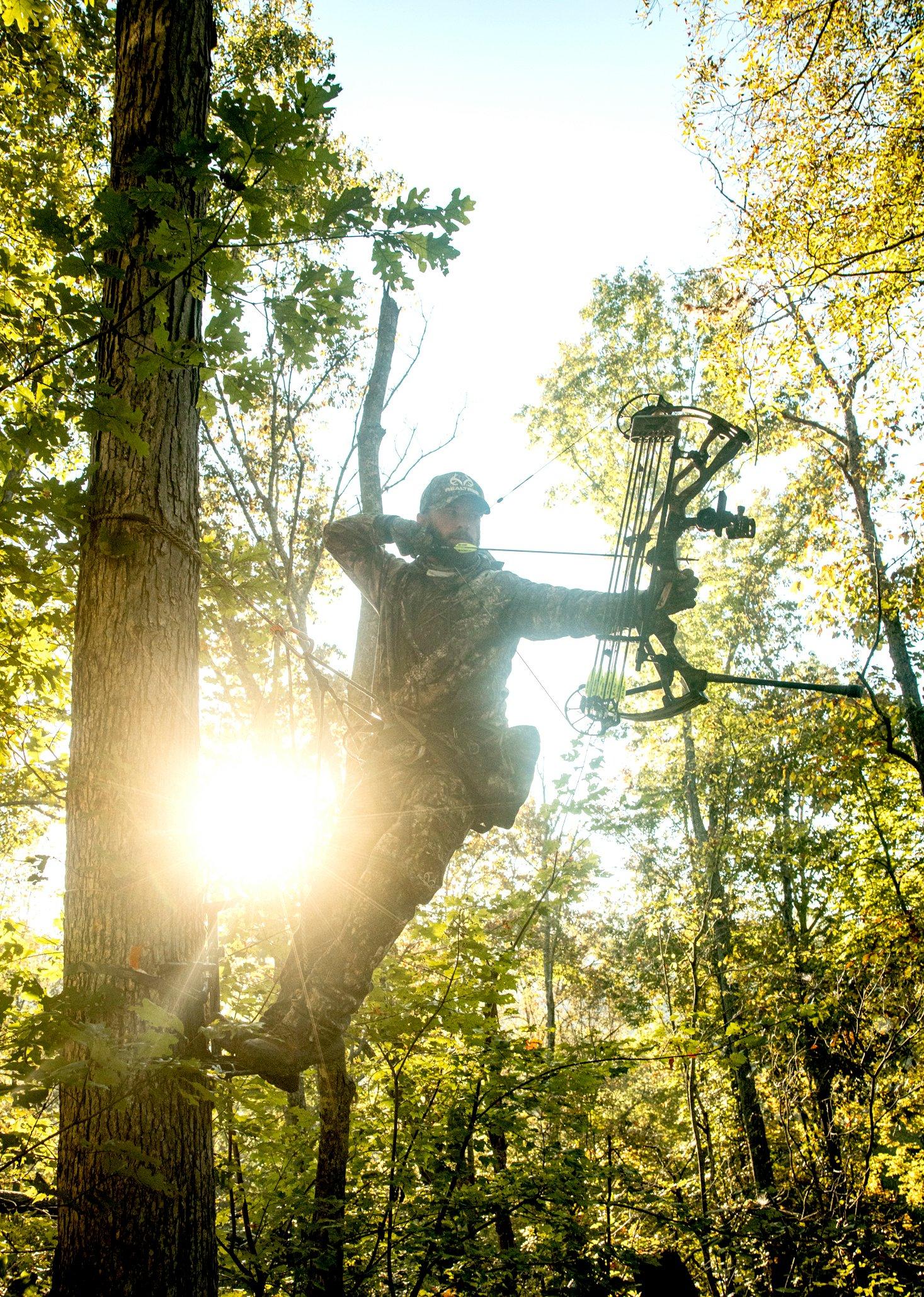
Find the right spot where a big buck might pass through on his way to or from more favorable locations and be there when he does. Image by Realtree
My maximum effective range with a bow is about 30 yards. So, theoretically, put me somewhere near the middle of that half-acre and I'm only about 25 yards from any deer on the parcel. I'm not trying to contain a buck's home range inside that half-acre. I'm not trying to provide his food, bedding, water, and security cover. He doesn't even need to spend five minutes there. I just need him to step onto that property and pass within 30 yards of me. That’s it. And I’ve learned that some C and D properties have places — maybe just one — where a big deer will do just that.
Don’t Miss: FROM HOW FAR AWAY CAN A BUCK BUST YOU?
FINDING THE RIGHT NEEDLE
I won’t pretend this system works all of the time. Most of the time, it does not. But every once in a while, when you’re dumpster diving for public land, you find just the right needle in the pile of needles. Here’s an example.
Last fall, I got trail-cam images and video of a stud buck in a place that no one else wanted to hunt. How do I know that? Because the parcel was available on a popular leasing website for months. Most parcels are gone within minutes of being listed. But this place? It’s 99% tillable ground with two huntable trees along its border. But, I knew a bit about the area and thought those two trees just might be in the right spot. Turns out, they were. I won’t even tell you what state this was in, because deer season is here again and the story is ongoing.
REDEFINING GOOD SPOTS
An “A” property is still an A property in terms of quality habitat and potential places to hunt. But hunting pressure can all but destroy “A” opportunity in places like that. That is the difference today’s public-land hunters must recognize. Habitat quality is only one part of what makes a public-land hunting spot valuable. Hunting pressure matters far more than anything else. I don’t care how good a property is. If it’s being pounded by others, it’s not for me.
I'm not looking for the best ground. Anyone can find that … and everyone does. Give me the “C” ground that nobody gets excited about. Or even the “D” ground that looks like it's barely worth scouting. All I need is a little luck, and the magic half-acre everyone else is ignoring.
Don’t Miss: 65 GREAT TIPS FOR HUNTING THE RUT