Should You Try a 28-Gauge Duck Gun?
Posted 2026-01-09 by
Once considered an expert’s choice for small game, the 28-gauge is finding a home in plenty of duck blinds thanks to new guns and non-toxic loads
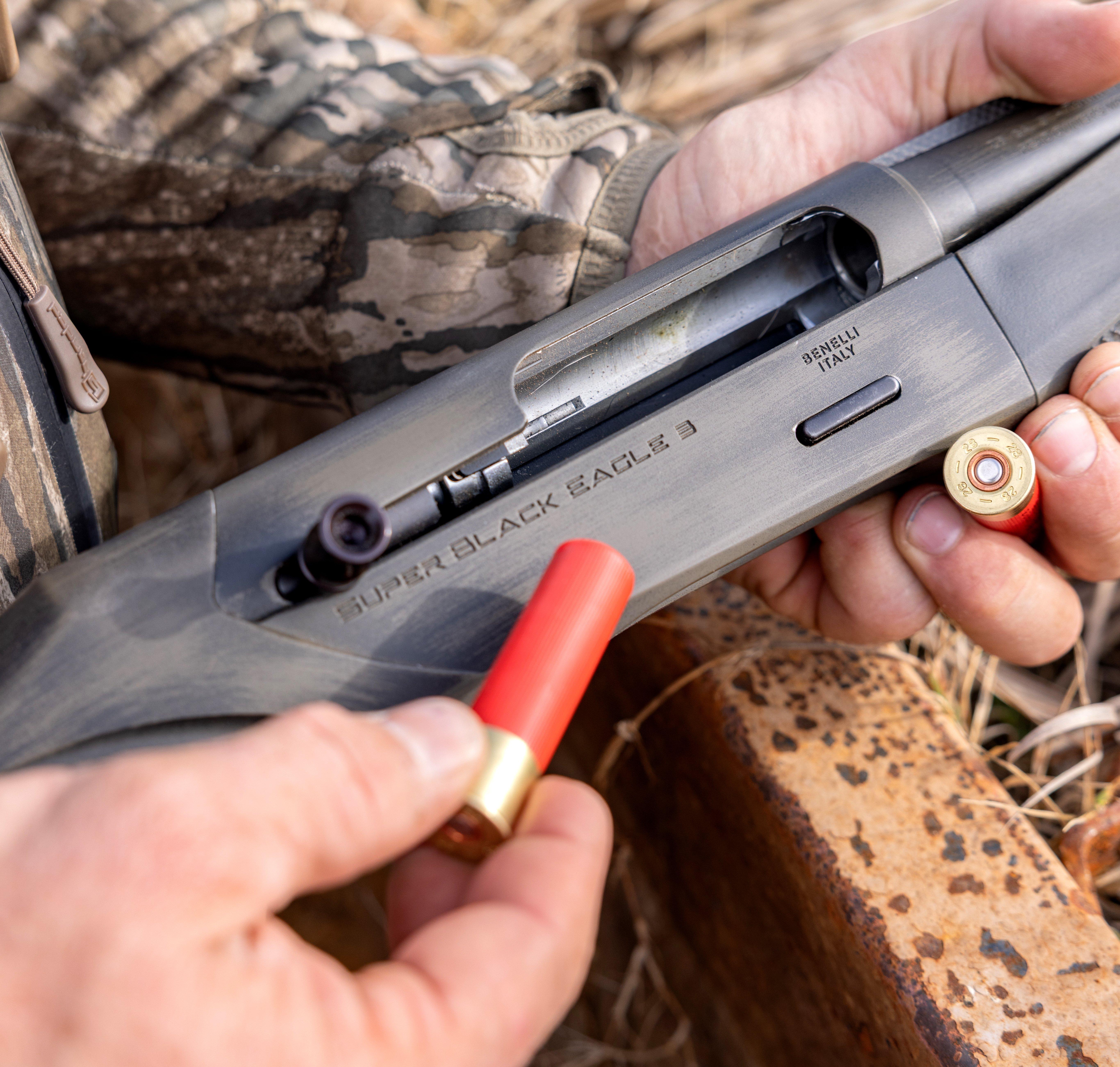
With light recoil and surprisingly lethal performance, the 28-gauge is winning over many duck hunters. Photo by The Fowl Life.
Duck hunting has always been an activity of extremes, whether it involves the environs, challenging conditions, sleep deprivation or long hours afield. Waterfowlers have even taken their shotguns to the limits, using 3- and 3.5-inch loads that produce performance we couldn’t have imagined years ago.
But extreme trends sometimes swing back the other way, and now some hunters have abandoned their big 12-gauges for lighter, sleeker 28-gauge shotguns — a move that would have seemed bizarre to rank-and-file waterfowlers just a few years ago. But there’s a reason for the trend. Modern technology has allowed the little 28 to become a bona fide duck killer while saving the shoulders of thankful hunters — plus, they’re just fun to shoot. Fans of this rising sub-gauge rave about its performance.
Don’t Miss: 4 Ways to Bag More Flooded Timber Mallards
“It’s a pleasure to shoot,” said veteran duck guide Rusty Creasey, manager of Beauchamp Duck Woods in Arkansas. “It’s really easy on the arm but has tons of power. It’s just a fun gauge, especially for waterfowl.”
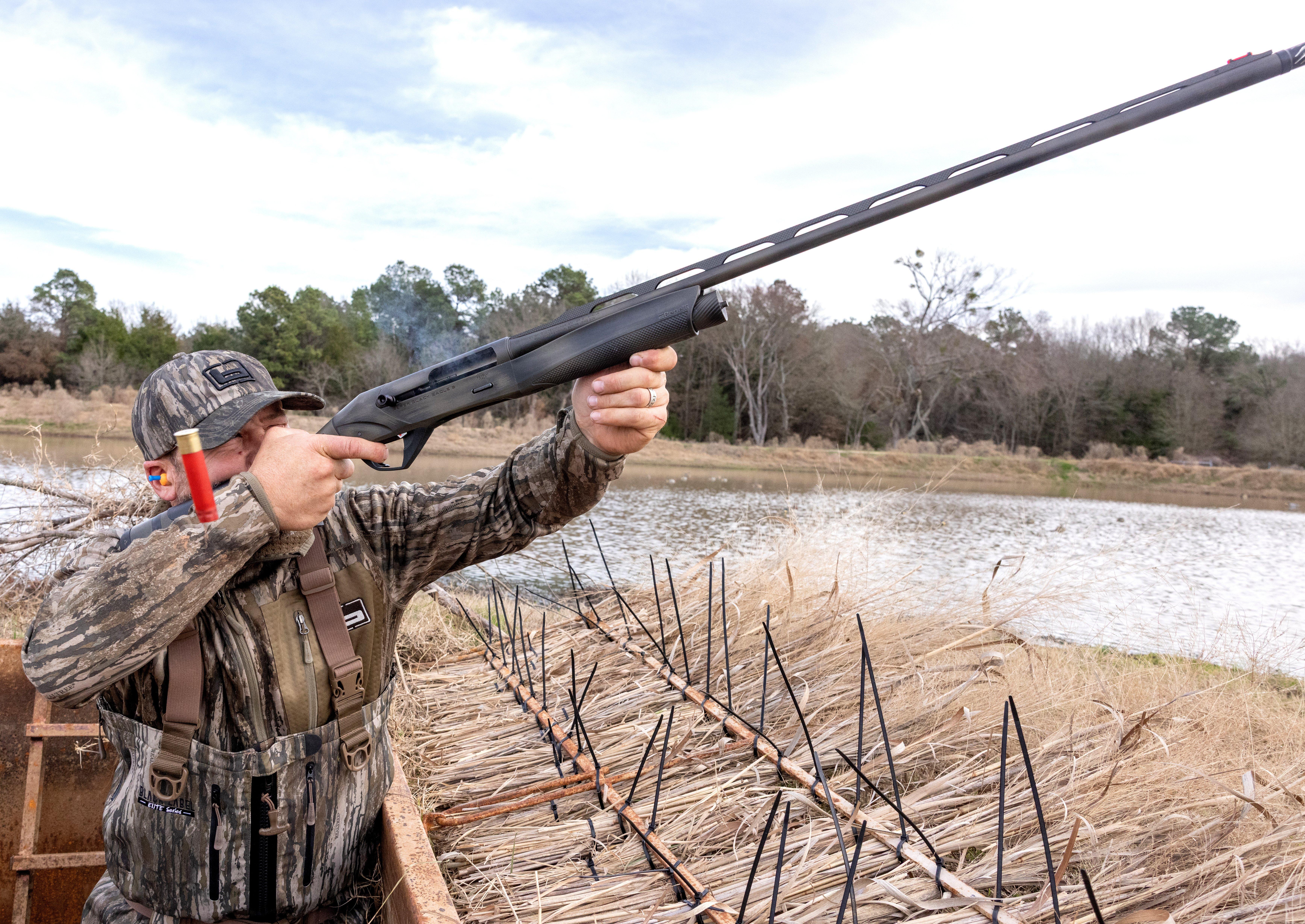
Many hunters find 28-gauges to be very maneuverable, allowing for quicker follow-up shots. Photo by The Fowl Life.
LOVING THE 28
Creasey isn’t alone in his praise for the 28. Other veteran wing-shooters tout the 28’s attributes, specifically the lightweight and maneuverable guns, and the shell’s consistent performance and low recoil, which allows quicker follow-up shots.
“It’s my all-time favorite duck gun,” said Tony Vandemore, owner of Habitat Flats near Sumner, Missouri. He started shooting a 28-gauge years ago, first just for teal hunting but then for larger ducks some days. When 3-inch 28-gauge shells became available, he made the full-time switch to his Benelli SBEIII BE.S.T. 28. “I use it every day and shoot several honkers with it each year as well. With the Hevi XII 3-inch 6s and a tight pattern, I’m confident to 35 to 40 yards and don’t think twice. That said, I shoot decoying ducks under 30 yards 99% of the time, and it’s absolutely lethal.”
Scott Turner, product manager for Hevi-Shot, began shooting 28s a few years ago and fell in love with the performance. Nowadays, after experiencing some physical challenges, he appreciates it even more. “With that light recoil, my follow-up shots are much faster,” he said. “And I didn’t fully appreciate how light the gun is. I haven’t missed a single hunt because of the weight of the firearm. It’s fun to shoot and not punishing at all.”
Turner took his Benelli 28-gauge on a duck and goose hunt in Saskatchewan. When the guide questioned Turner’s choice of shotguns, the little 28 proved him wrong. “The first flock came in on the far left, and I hit them with Hevi-XII No. 6s, flipping one goose over backward three times,” Turner said. “The guide said, ‘What are you shooting?’ I said a 28-gauge. He said, ‘Well, you’re either crushing the bird or missing it completely. You’re not wounding them.’ That’s why I love the 28-gauge.”
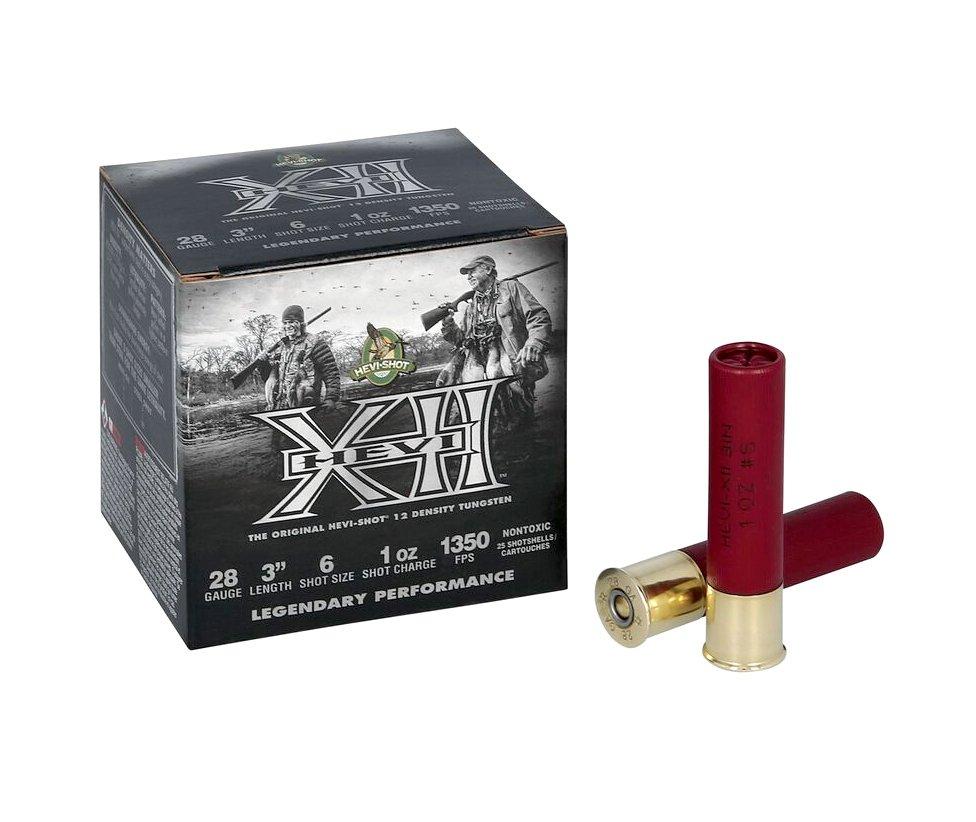
Premium 3-inch shotshells, such as Hevi-Shot’s Hevi XII, have boosted 28-gauge performance. Photo courtesy of Hevi-Shot.
Creasey started shooting his 28-gauge — a Browning Citori — a year ago and immediately appreciated the gauge’s light recoil and efficient killing power. “Prior to that, I had hunted with a .410 a good bit,” he said. “I went to a 20-gauge, but then thought the 28-gauge is a great compromise and middle ground that gives you a lot more oomph than the .410 but is still very quiet and easy on the shoulder.”
Creasey discovered another advantage as well. “After editing videos and putting on headphones and listening to audio of all our hunts, I noticed the 20-gauge was considerably quieter than the 12-gauge,” he said. “Then we went to 28-gauge and .410, and it was even quieter. As far as management, it’s awesome because it’s not nearly as loud and doesn’t spook the ducks nearly as bad.”
Don’t Miss: What Do Ducks See From the Air?
MAKING THE SWITCH
Some hunters who are intrigued by the idea of a 28 still hesitate to shoot one because of a perceived lack of performance. True, the 28 fires a lighter payload than a 12, so it’s not intended for long-range shooting. But let’s dispel the myth that a 28-gauge isn’t as powerful as a 12-gauge. Shotshell muzzle velocity and downrange performance are determined by several factors, including the amount and type of powder and weight and density of the shot. Bottom line is that pellets of the same size and weight will perform similarly, whether they’re fired from a 28 or 12. The major difference, of course, is that 12-gauge loads contain more shot.
“Some people think the 12-gauge hits so much harder, but you know that pellet is moving the same speed as with a 28,” Turner said. “If you’re a decent shot, all you’re getting [with a 12] is more pellets. If you need more pellets in the air or maybe don’t shoot your shotgun much, absolutely go with that 12-gauge.”
In recent years, modern shotshell manufacturers have boosted 28-gauge offerings and helped narrow the payload gap between the 28, 20, and 12. For example, a 2-3/4-inch, ¾-ounce load of No. 4 shot — a fairly traditional 28-gauge loading — contains about 102 pellets. However, a 3-inch, 1-ounce load holds about 136 pellets. Comparatively, a 1-1/4-ounce 12-gauge load of No. 4s contains about 170 pellets.
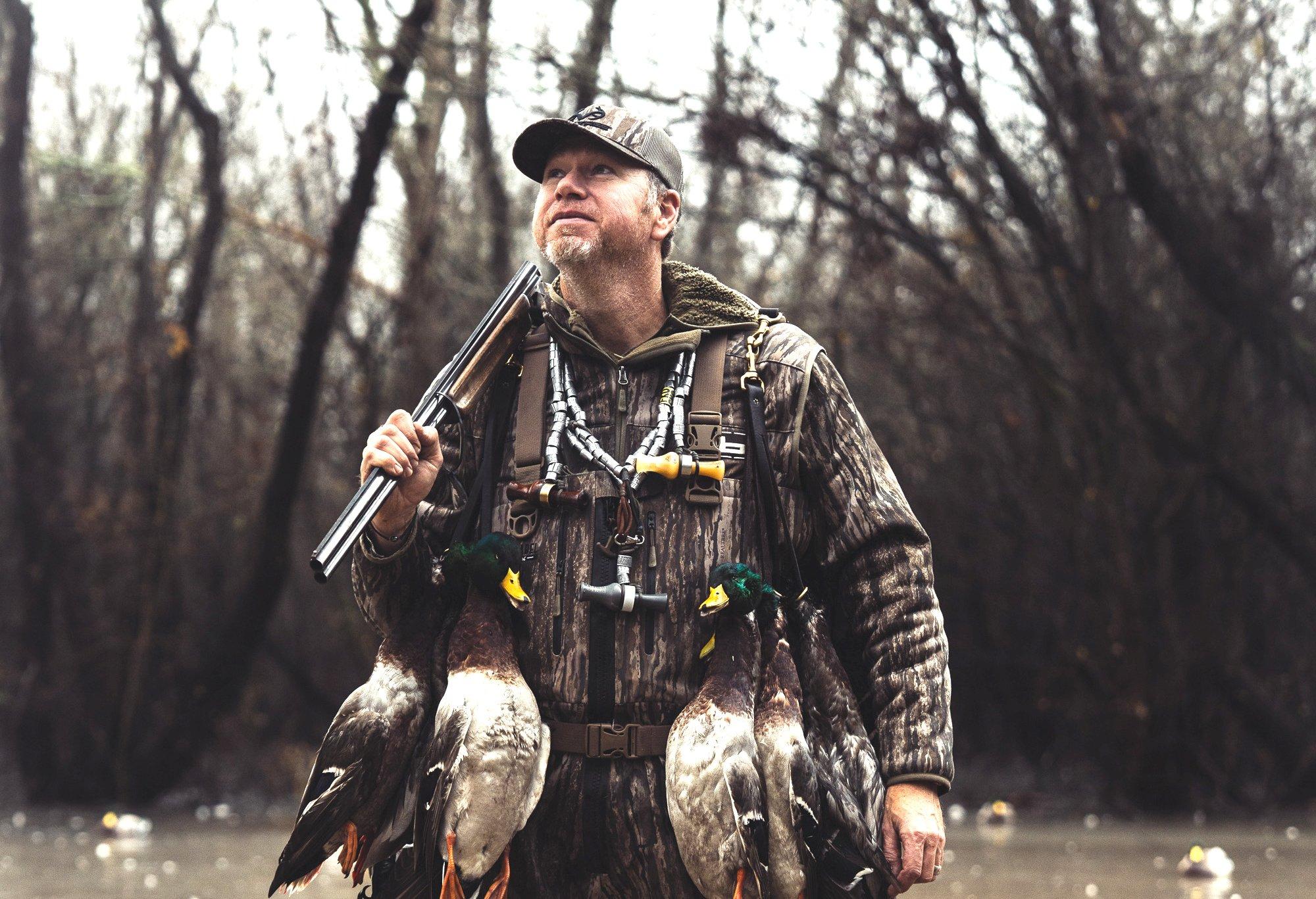
Veteran Arkansas guide Rusty Creasey loves toting his 28-gauge when hunting with friends. Photo courtesy of Rusty Creasey.
“One thing I would advise people to do is not limit themselves and make sure that 28-gauge shell is a 3-inch,” Turner said. “With today’s shotshell technology, I don’t feel under-gunned using my 28-gauge at all.”
Vandemore added that shooters can boost performance further by using a premium shell loaded with bismuth or tungsten, which lets you use smaller shot sizes than with steel loads, thereby boosting pellet count further. “It’s a much smaller payload, so make it a quality one,” he said.
Duck hunters need to consider some other things when hunting with a 28-gauge. A quality choke tube will help pattern effectiveness. Turner goes with a Rob Roberts R2 choke (designed for mid-range targets) in his Benelli, and Vandemore uses a Rob Roberts R3, which is designed for longer-range targets. Creasey prefers a straight factory modified for his first barrel and a full or modified for his second. When you find the right match, Turner said, a 28-gauge should throw very consistent edge-to-edge patterns.
Finally, it’s important to choose the right gun that fits you properly. “Pick out the gun that feels the best,” Creasey said. “I always tell people that when you pick up that old trusty shotgun, no matter the brand, it’s like being in your mama’s arms again. The Citori, no matter the gauge, always fits me. Whatever fits you, your eye, your swing or your length of pull, if you can pair your 28-gauge with the other guns you’re accustomed to shooting, there shouldn’t be any learning curve at all, and you should be able to roll right into it.”
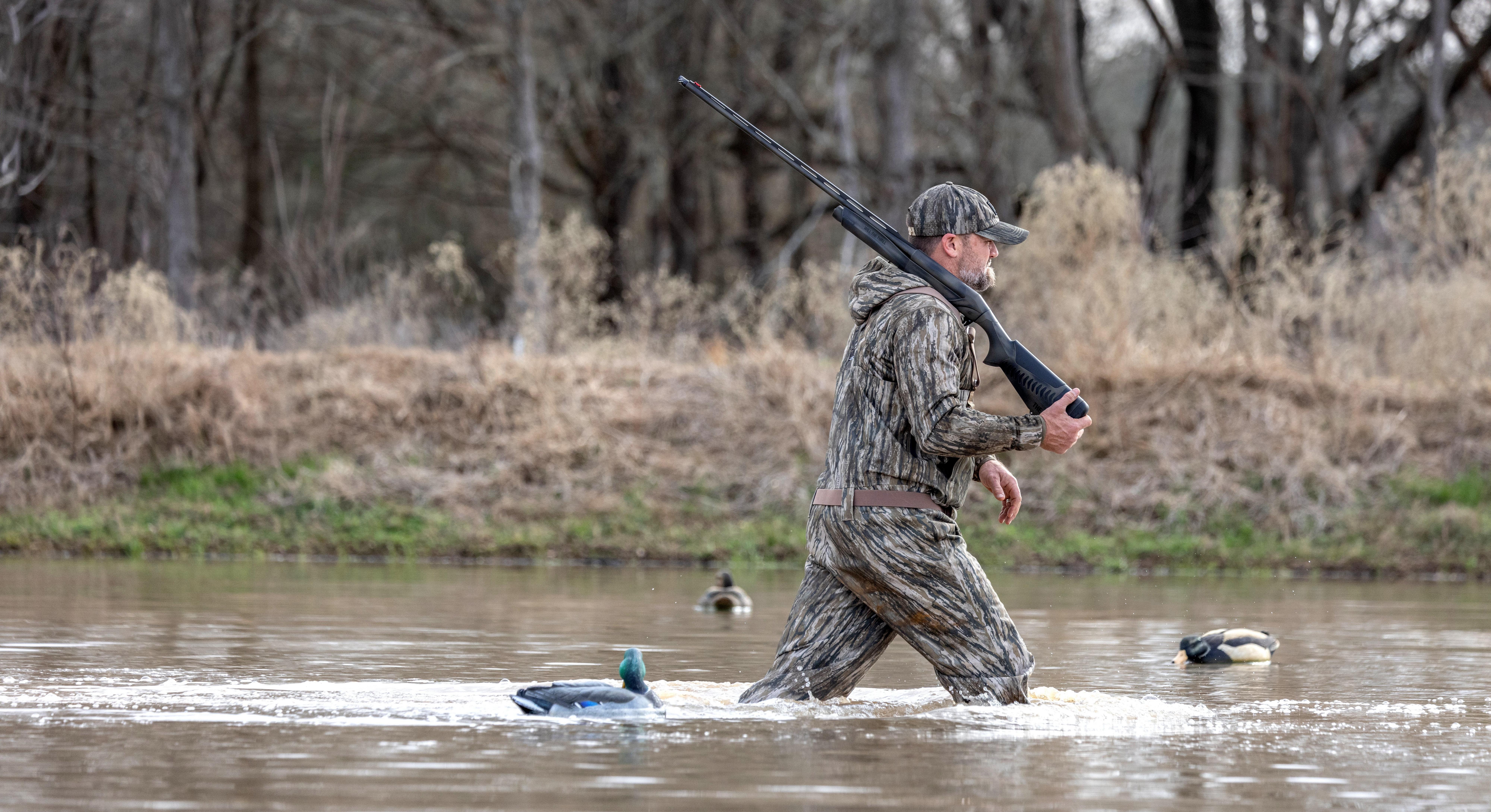
28-gauges aren’t intended for long-range shooting, but they’re perfect for taking ducks over decoys. Photo by The Fowl Life.
EMBRACING THE CHALLENGE
Despite its many advantages, the 28-gauge still isn’t a 12. Creasey still uses larger gauges when he’s guiding clients because in that role, he’s often finishing off wounded birds or taking the final shots of a volley. For that, he wants the maximum pellet count. “When it’s just me and a couple of buddies, that’s when we’ll all bump down to 28-gauges, where we can pick our shots,” he said. “As long they’re backpedaling, it’s perfect. When we’re taking guests and clients, it might not be ideal gun. But if you can take them right, tight and shoot them in the face, the 28-gauge is a great choice.”
Don’t Miss: How to Call the Shot Like a Duck Guide
Turner acknowledged that being an experienced wing-shot helps when shooting a 28. Of course, that’s true with any shotgun. Many waterfowlers simply love new experiences, and hunting with a 28-gauge is sure to provide that. “You have to be much more focused when you’re using a 28-gauge, but some people just like the challenge,” Turner said. “And I also love my friend’s faces when they see me make a great shot with that 28-gauge.”
?fmt=auto&qlt=default&fmt.webp.qlt=65&fmt.png.qlt=73&fmt.jp2.qlt=35&fmt.jpeg.qlt=60)