Do Scented Bass Baits Really Work?
Posted 2026-06-19 by
Bass anglers have been experimenting with scented and flavored lures for decades. Do they help catch more fish, or is it all a fish oil scam?
I clearly remember the first time I tried using Gulp! lures. If you’re not familiar, Berkley Gulp (usually written as Gulp!) is a heavily scented soft bait that’s similar in texture to traditional plastics, but with a fish attracting “sauce” cooked in to the material. This lure category is fairly common today, but back in the early 2000s, Gulp was brand new. And it debuted with an aggressive ad campaign that promised anglers that it was the greatest bait available — better, even, than live bait.
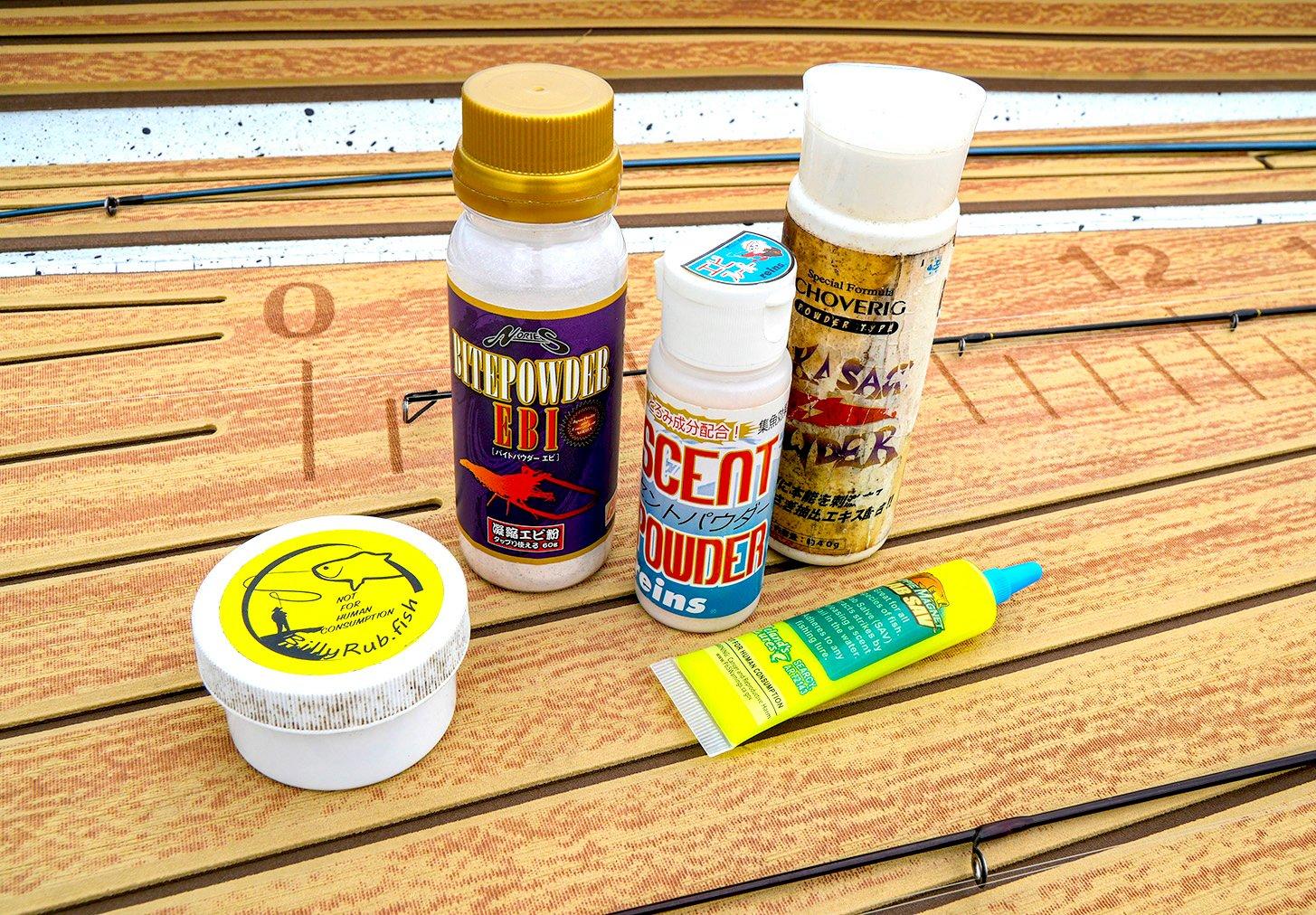
While scented baits aren’t new, today’s bass anglers will find a wide array of products, from scented soft plastics to add-ons, to help them attract and catch fish. Image by Jason Sealock
But as a serious fisherman, I had my doubts. Anything that promises positive results through scent and taste was a long shot, at best. Then one day I was drifting over a submerged reef on Lake Erie, smallmouth fishing. The fish were there but the bite had been tough, leading me to the tackle compartment. I’d tried my usual plastic drop-shot baits without much luck, and so I decided to take a gamble on the Gulp.
Don’t Miss: HOW TO CHOOSE THE BEST CRANKBAITS FOR BASS FISHING
I was immediately underwhelmed. The lures looked like little turds, misshapen and kinked, dark brown and stinking to high heaven. Compared to my sexy shad-shaped plastics, these Gulp baits looked like a joke. But I figured the fish weren’t biting anyway, and so I tentatively impaled one on a hook and sent it toward the bottom.
Twenty minutes later, I was out of Gulp. Every piece had been eaten by a giant smallmouth and thrown when the hooked fish began to jump. It was some of the greatest brown-bass fishing I’d ever experienced, totally attributed to the lure change. I’d found a secret, one that I’d use later than summer to win a major bass tournament. Gulp was truly a breakthrough.
Today, the magic seems to have faded, somewhat mysteriously. These days, I don’t seem to get any more bites on Gulp lures than any other regular plastic worm. Still, Gulp started a scent-infused revolution in bass fishing, while reigniting a belief in fish formulas and add-on scents that had all but disappeared.
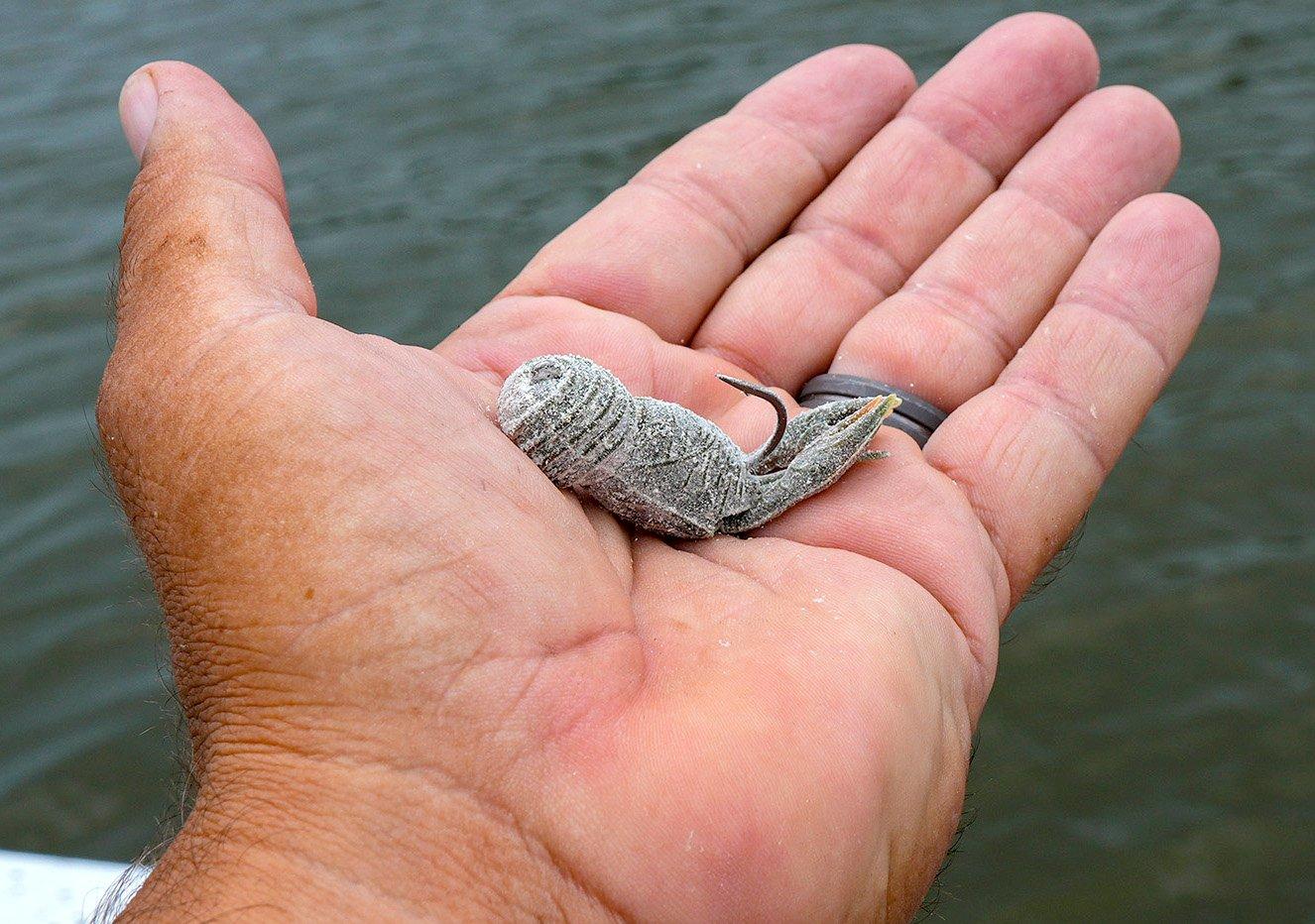
The scented bass bait trend started with odor impregnated soft plastics. Image by Jason Sealock
Today, Berkley’s Powerbait MaxScent line is stealing the show, invoking Gulp-like memories to those old enough to have them and racking up tournament dollars for believers. But just like Gulp, MaxScent took the fishing world by storm after its introduction, but the craze seems to have settled a bit. Meanwhile, anglers who are obsessed with scent are revisiting old formulas — some introduced 40 years ago — catching plenty of fish, and crediting their success to the secret sauce.
Don’t Miss: THE BEST BASS BAITS FOR EVERY SEASON
SCENTS OR SNAKE OIL?
So, what’s going on here, and why do scented lures and additives ebb and flow so much in popularity? Do they work or not? Science can clue us in. In his fabulous book, Knowing Bass, Dr. Keith Jones dedicates significant space to chemoreception and, specifically, the role scent and taste play in bass fishing. Jones notes that “scents are known to significantly enhance bass catch rates when applied properly,” yet he helps clarify that some scented products advertised as “sure things” actually have no biological chance of helping.
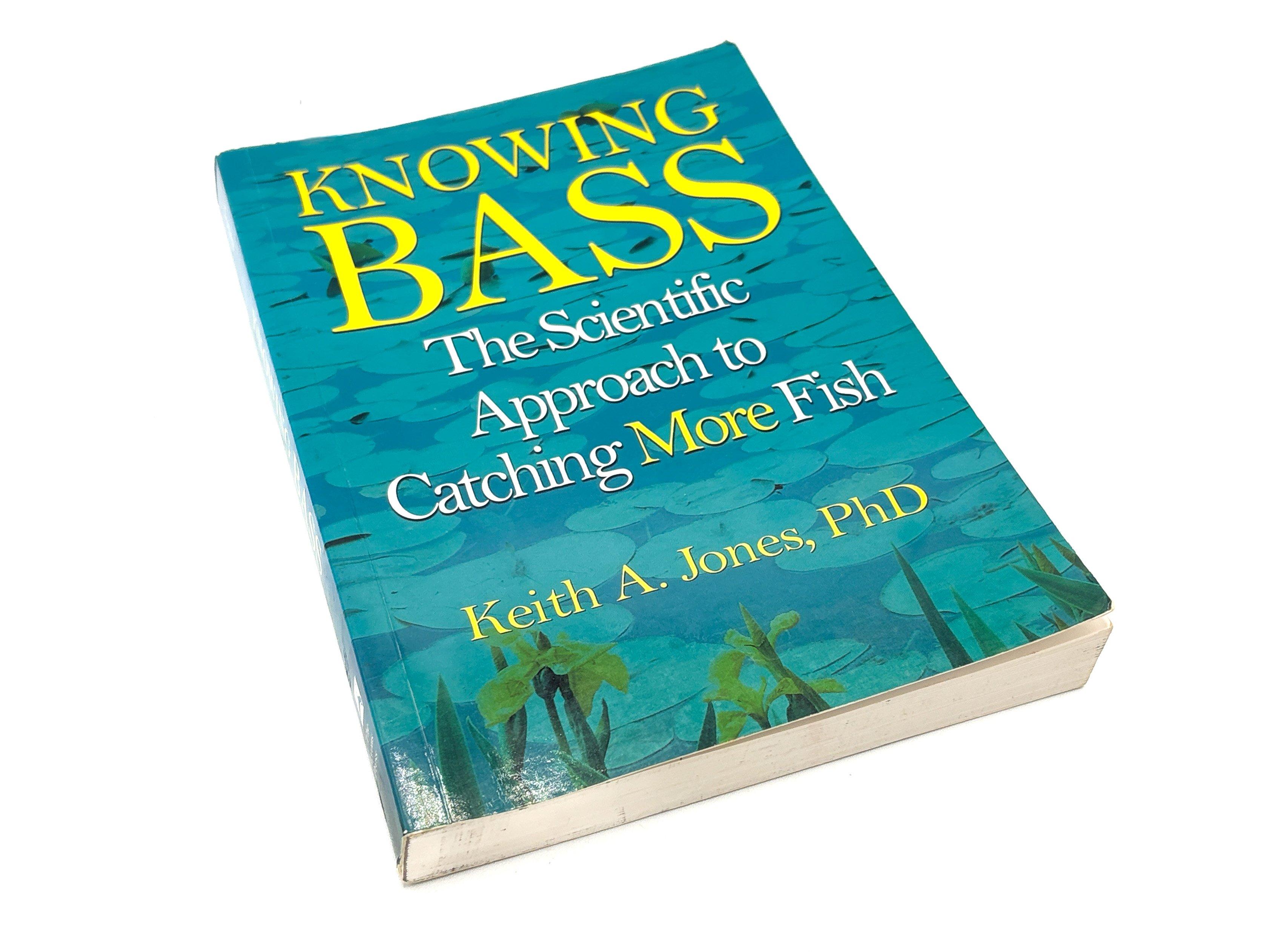
Dr. Keith Jones takes a deep dive into the role scents play in bass fishing in the book “Knowing Bass.” Image by Joe Balog
A major deciding factor in scent effectiveness is distribution. Quite simply, in order for scent to permeate the water, the scented lure or add-on product must be water-soluble. That sounds simple enough, but many products, those most notably produced from oils, are nearly totally insoluble in water. Jones illustrates how water-soluble products can and do create a scent-slick, so to speak, allowing nearby predatory fish to interpret the smell.
Bass have somewhat advanced olfactory systems. They’re nothing compared to catfish or salmon, but they are powerful enough to assume that scent plays a role in a bass’s life. Still, exactly how scent factors in has never been scientifically verified. Spawning, territoriality, and schooling behavior all have various sensory components. But, as anglers who’ve seen the difference a scented lure can make, we can assume feeding is also influenced by scent.
Don’t Miss: 5 OLD-SCHOOL CRAPPIE FISHING TACTICS
Today’s scented baits largely use water-based formulas that allow for distribution in the water. Our case in point above — Berkley Gulp! — was advertised as the first true water-soluble scented product. Still, don’t be fooled into thinking that these lures lay down a scent-trail that a bass can follow to your bait, like a buck trailing a doe in heat. Water doesn’t work that way. For the most part, distribution of scent is relatively short, in terms of linear distance. The cycling of water and current rarely allows any direct line or scent-trail coming from a lure. Moreover, bass are ambush-style predators, and wouldn’t be developed to be looking for it. Catfish and numerous saltwater species benefit from scent tracking, but bass look for a live meal they can see, and then they eat it.
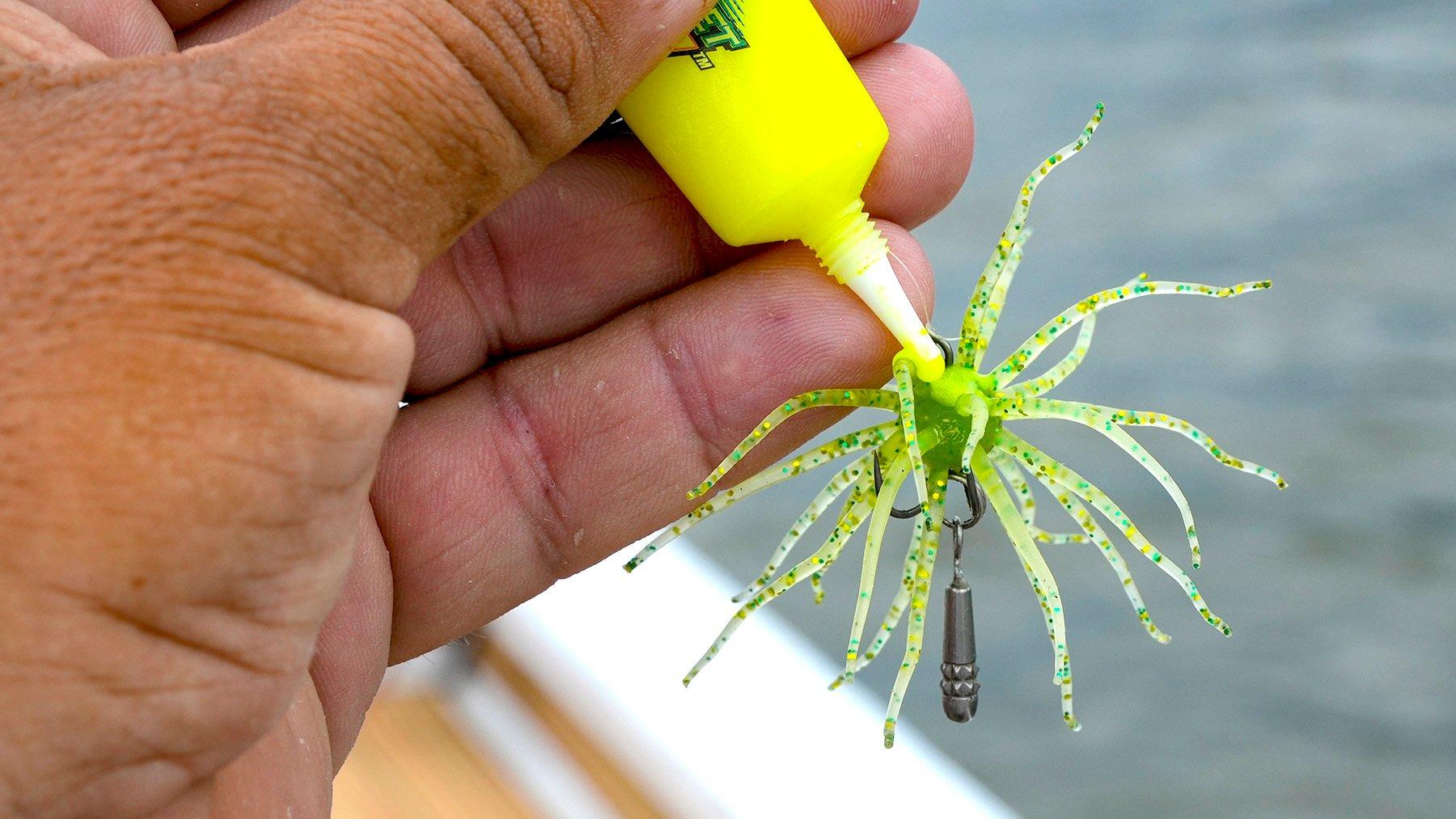
Water based formulas allow the scent to disperse into the water column, possibly making it easier for fish to locate your bait. Image by Jason Sealock.
Just to keep things confusing, we’ll discuss pheromones. These are chemicals used by members of a species for identification, reproduction, and even defensive mechanisms. A wounded prey animal, like a shiner, could produce pheromones to warn others in the school to stay away from danger. It’s reasonable to think that such a pheromone could attract a predator like bass, however, as Jones points out, the complexity of these substances makes them nearly impossible to reproduce in fishing lures.
What about taste? Again, relying on the research of Jones and others, we’re taught that bass can and do use taste as a final means of food detection. Studies show that lures infused with flavors, including hardbaits, often convince bass to inhale and hold on longer. Think about it this way: in order for a bass to inspect or sample anything, it must inhale it. It has no hands. For that reason, bass take in lots of mistakes that must be quickly rejected. They’ll hold onto a scented lure longer as it helps trick their brain into believing it’s the real thing.
Jones also points out that bass use taste as a final means of food detection. In scenarios where bass aren’t feeding aggressively, they often thoroughly inspect a lure from close range before firing. That is where both scent and taste can help seal the deal and turn a lure inspection into a strike.
One final point. Not only can the right scent and taste attract bass (worm extract is the No. 1 tested scent), the wrong scent can repel them. Insect repellents, according to study, top the list of bass repellents; they absolutely hate the stuff. Jones reports that bass can detect DEET in concentrations as little as 1 part per million and that “a single application of repellent to the hands can significantly contaminate your lures enough to repel bass for 90 minutes or longer.”
You may reconsider the next time you reach for the bug juice.
The feeding behaviors of bass are most strongly influenced by prey detection through sight, sound, and lateral-line mechanisms. But from there, scent and taste may be used in order to seal the deal at close range, meaning the difference in a strike and a snub. Bottomline, scent and taste are important in bass fishing, and that importance only grows if they help bolster angler confidence.
Don’t Miss: WHEN, WHERE, AND HOW TO FISH SKIRTED BASS JIGS