Give a Flip for Giant Bass
Posted 2026-07-10 by
Some of the biggest bucketmouths on the lake are still caught with this old-school tactic involving heavy cover, close quarters, and stout tackle
Back in the 1980s, a flippin’ stick was a mandatory piece of equipment for every serious bass fisherman. Prior to this era, anglers mainly casted to their targets. But with the advent of short-range flipping — which was popularized in early bass tournaments — efficiency skyrocketed, and big bass were hauled out of heavy cover like never before. Flipping dominated the tournament scene, particularly in the spring, when big bass were shallow, and it and solidified the careers of numerous shallow-water experts.
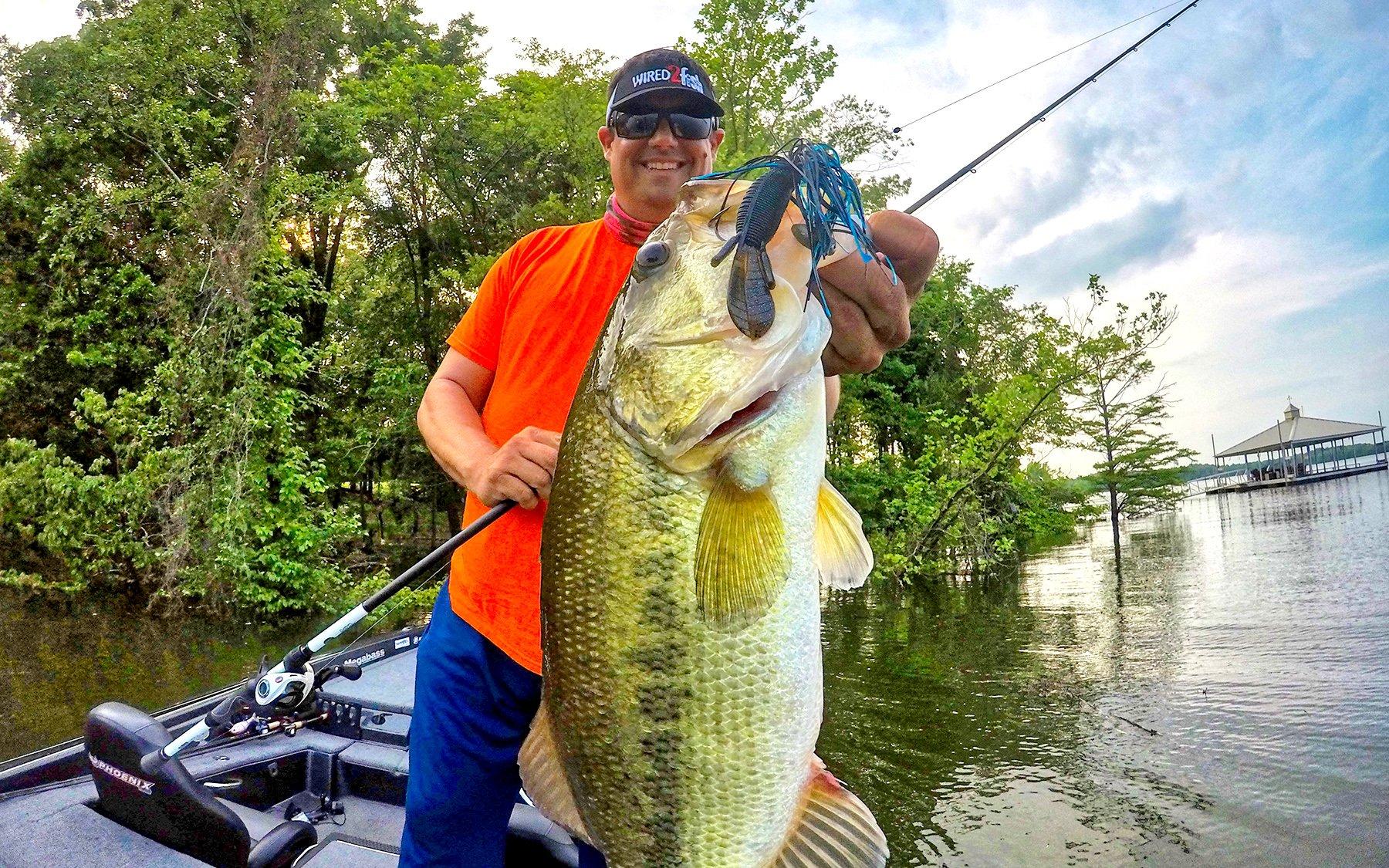
Flipping and pitching shallow cover with heavy tackle is still one of the best ways to put big bass in the boat. Image by Jason Sealock
Today, even though finesse tactics and offshore fishing dominate headlines, flipping (and pitching, in which the lure is slung a farther distance to shallow-water targets) is still a relevant technique. To me, nothing is better than presenting a bait in tight quarters and then hauling out a hawg. These methods still catch some of the biggest bass in the lake, loner lunkers holding in places most anglers don’t dare go. But what’s it take to be a proficient flipper? Just a few basic principles that are repeated and developed into a unique skill.
Don’t Miss: WHEN, WHERE, AND HOW TO FISH SKIRTED BASS JIGS
DEFINING FLIPPING
“Flipping” is a specific technique in which a fixed amount of line is used to swing a lure into a tight spot. Being a flipper doesn’t mean that an angler strictly uses the flipping technique. It simply categorizes an angler’s approach as a close-quarter, heavy-cover fisherman. A flipper may flip, pitch, and punch thick grass all on consecutive presentations. The goal is getting a lure into a tight spot in and around heavy cover. Today, we’re discussing how to become a proficient flipper, but our focus won’t be on the presentation itself; the casting methods or when to use each. Instead, we’ll concentrate on general ways to maximize on the heavy-cover bite.
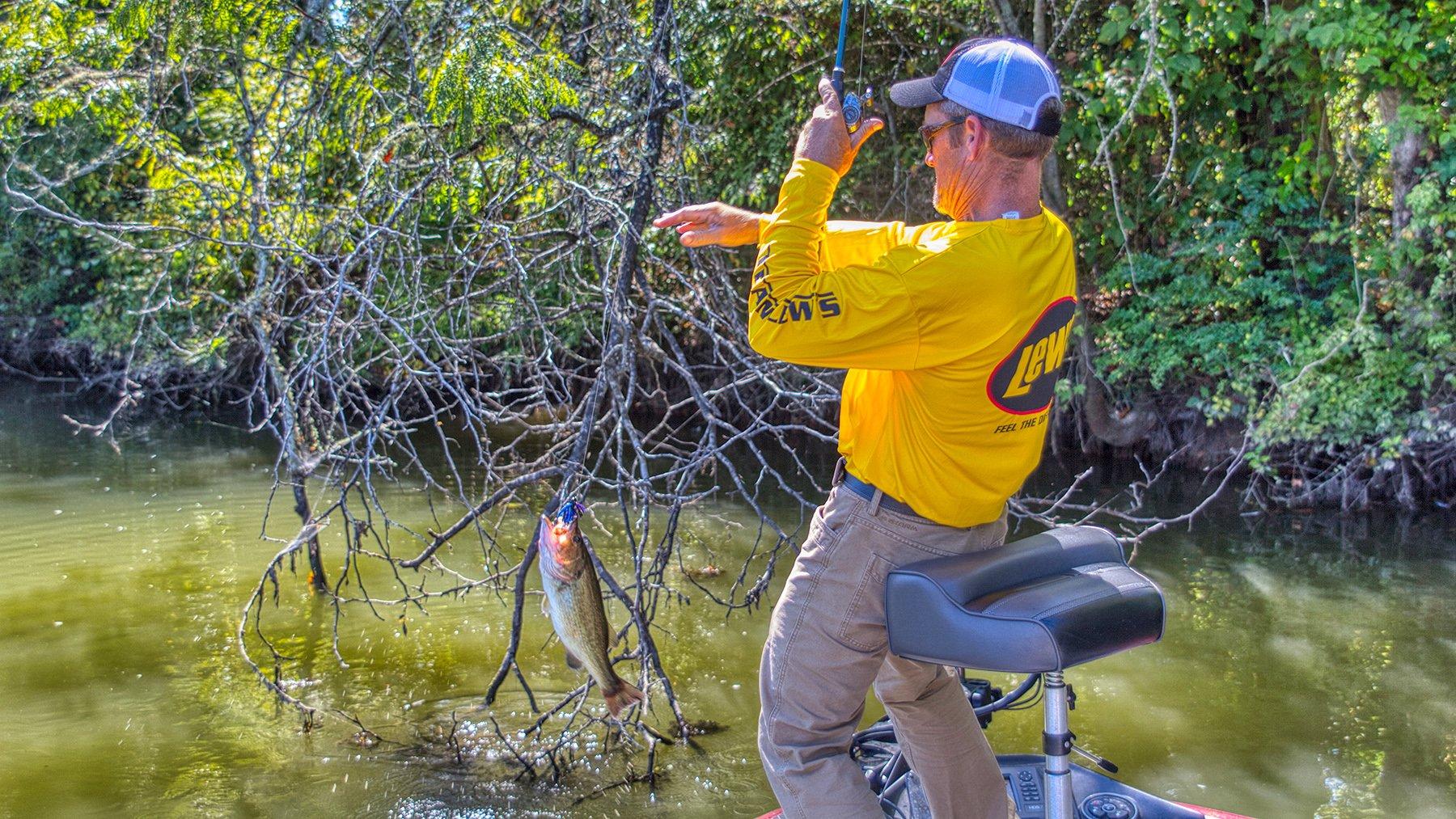
Flipping works great in the spring, but it can be equally effective in the late summer through fall. Image by Jason Sealock
GEAR UP RIGHT
The rod is the most important component for flipping. In order to present lures accurately with these methods, a long rod is absolutely critical. I suggest using the longest rod you’re comfortable with. The longer the rod, the more line can be moved on a hookset and the better you can control a big bass during the fight. One overlooked benefit of a long rod is the angle of your line to your lure. The more vertical that angle (determined by the length of your rod), the less you’ll hang up.
In the early days of flipping, rods were 7 1/2 feet long. Today, many are 8 feet or longer. Regardless, choose a rod that you can handle. If you’ll need to do a lot of pitching or skipping, an extremely long rod may become cumbersome, so scaling back is necessary. Never take on shallow cover with a rod less than 7’2”.
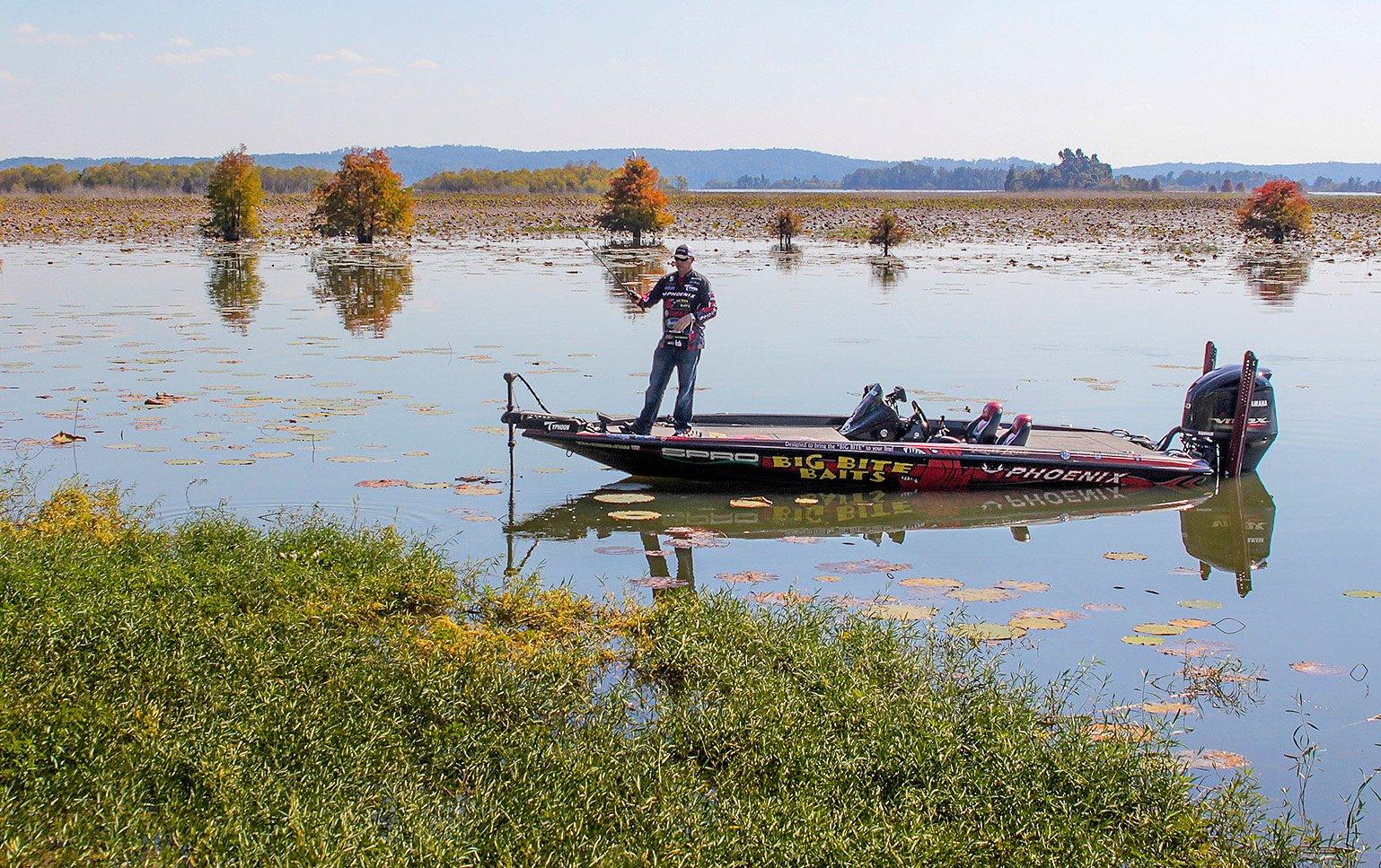
Longer rods allow anglers better control over lure placement and provide needed backbone for pulling big fish out of heavy cover. Image by Jason Sealock
You’ll be spooling braided line or heavy fluorocarbon, so get a reel that’s a workhorse and don’t worry too much about capacity. I prefer metal-bodied reels here in Florida as they don’t flex on a big fish. Some modern, graphite-framed reels are too flimsy and may lock up during battle. And one more thing: either learn to cast left-handed, or buy a left-hand retrieve reel for flipping and pitching. At first, cranking with your left hand will feel awkward to right-handed anglers, but you’ll get the hang of it quickly, and the ability to set the hook and reel immediately after delivering a lure is irreplaceable, especially when punching heavy matted vegetation.
Today’s braided lines are smoother and stronger than ever before. While many anglers turn to 65-pound test for flipping, I’ve found 50-pound braid to fish better. It’s next to impossible to break on a bass and the benefits outweigh any shortcomings. Your presentations will be smoother and longer, with improved action given to the lure.
You’ll want tungsten weights and stout hooks for plastic baits. Some hooks advertised for flipping are too big, really, for the lures designed for the technique, so don’t go overboard on massive wide-gaps. Do, however, be sure your hook is a stout, forged model, resistant to flexing. This allows all of your hookset power to transfer to the point of the hook. If jigs are your choice, again, be sure to choose a lure with a large, stout hook. Flipping jig hooks should have no noticeable flex whatsoever.
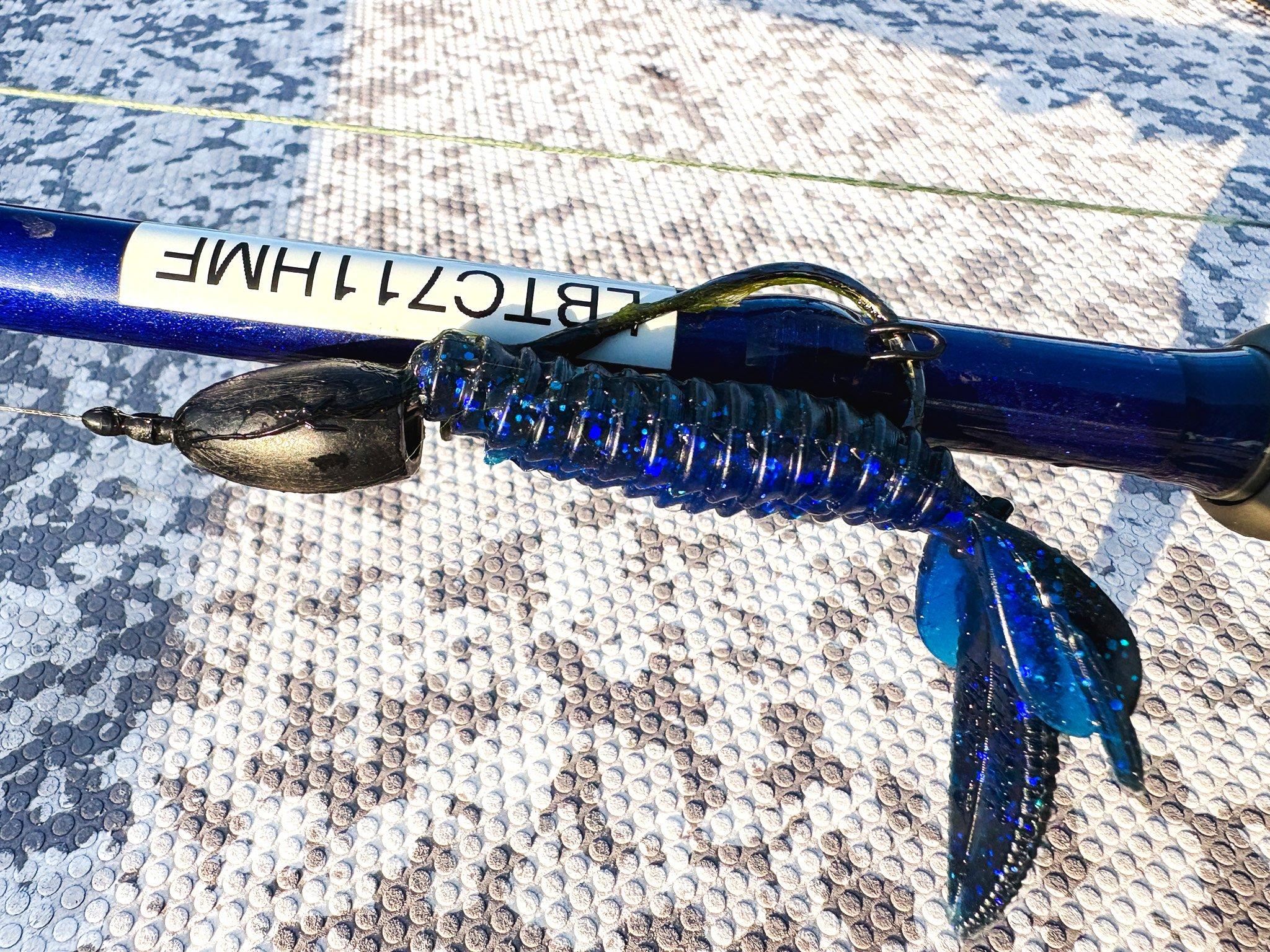
Choose heavy braid and stout hooks with little or no flex for solid hook ups on big fish. Image by Joe Balog
With the right gear in hand, the easy part is over with. So where to begin? For this type of fishing, it’s best to first break down the lake.
Don’t Miss: THE 3 BEST LURES FOR CATCHING A 10-POUND BASS
WHERE TO FLIP
We’re fishing shallow, so there’s no worry of water over about 5 feet deep. That’s eliminates a lot. From there, it’s a matter of choosing the best cover based on location and time of year.
In spring, always begin in the pockets and creeks. In summer, target cover on the main lake, very near deep water. Fall can be a mixed bag, but often extremely shallow cover in creeks is best.
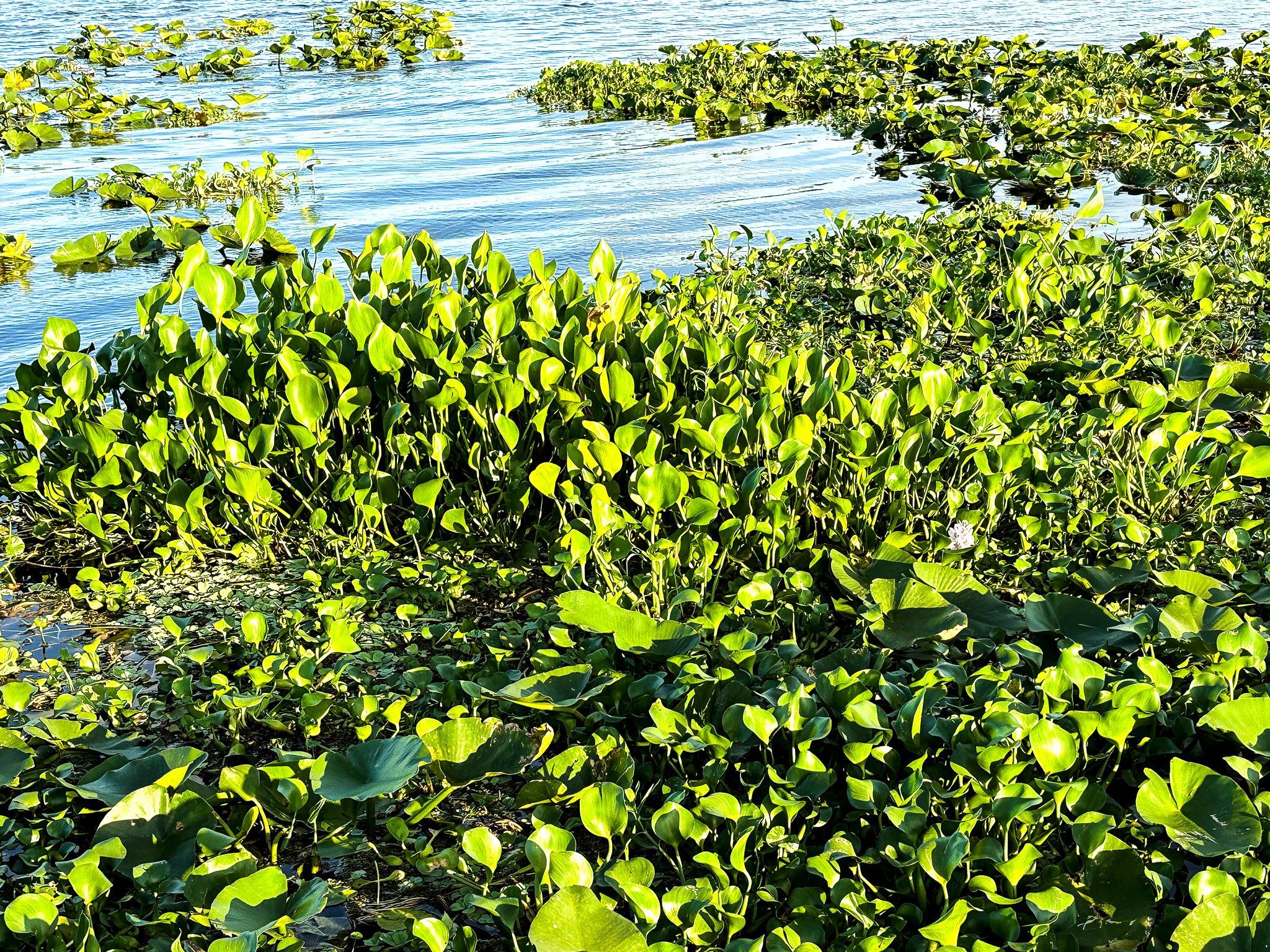
Concentrate on shallow water areas with heavy cover like brush or thick vegetation. Image by Joe Balog
Sometimes picking the best cover is easy. A lake surrounded by cypress trees or crammed full of docks makes the choice for you. However, if more than one major type of cover exists, go with vegetation first. Sure, you can catch fish from brush piles in a lake full of grass, but the majority of the bass will be using that grass day in and day out. Usually, it’s best to play the percentages. Also, freshly flooded cover like willow bushes always seems to overrule other options. Newly flooded cover hosts lots of life, attracting bait, bluegills, and big bass.
Don’t Miss: THE BEST BASS BAITS FOR EVERY SEASON
FLIPPING SECRETS
The world’s best bass anglers process information faster than the rest of us. They read the water and — most importantly — duplicate their success with uncanny accuracy. If you’ve ever heard a wining pro say that “something just looked right” in regard to their winning spot, this wasn’t just luck or good fortune. This was their intuitive ability shining through. Subtle keys signaled a good area that likely had matched a previous experience, maybe from an hour ago, maybe from last year.
A good flipper can get a bite, catch a bass, and match that spot to another very quickly. At first, this requires actively assessing each success. Later, it becomes second nature. What type of cover was the fish holding in? Was it in the sun or shade? Was there wind hitting the hideout? What was the water depth? Were other types of cover mixed in? Was the object isolated?
These are examples of questions that you’ll need to focus on at first, but that will become second-nature later on. Here are a few quick guidelines to cut the learning curve:
- In most cases, the upwind side and shady side of cover are the best.
- In summer, the deepest part of cover is usually best. Spring and fall are unknowns.
- Bass almost always hold next to the largest trunks of limbs or laydowns.
- Any area where multiple types of vegetation meet is usually a good spot.
After a while, you’ll get the hang of it and create rules of your own. This will allow you to fish quickly and efficiently, upping the odds of running into another big bass. Eventually, the choices will be made without much thinking.
Not every angler is cut out to be a flipper, but those who are live and die by the sword. There’s just something about the close-quarters, hand-to-hand feel of fighting a big bass on short line. When you flip into a flooded willow and the whole bush shakes, you know immediately that you’re alive.
What could be better?
Don’t Miss: 6 WAYS TO CATCH YOUR OWN LIVE BAITFISH