Get Smashed: 4 Great Topwater Bass Baits
Posted 2026-05-28 by
Nothing beats a strike on top from a lunker bass on a warm summertime evening
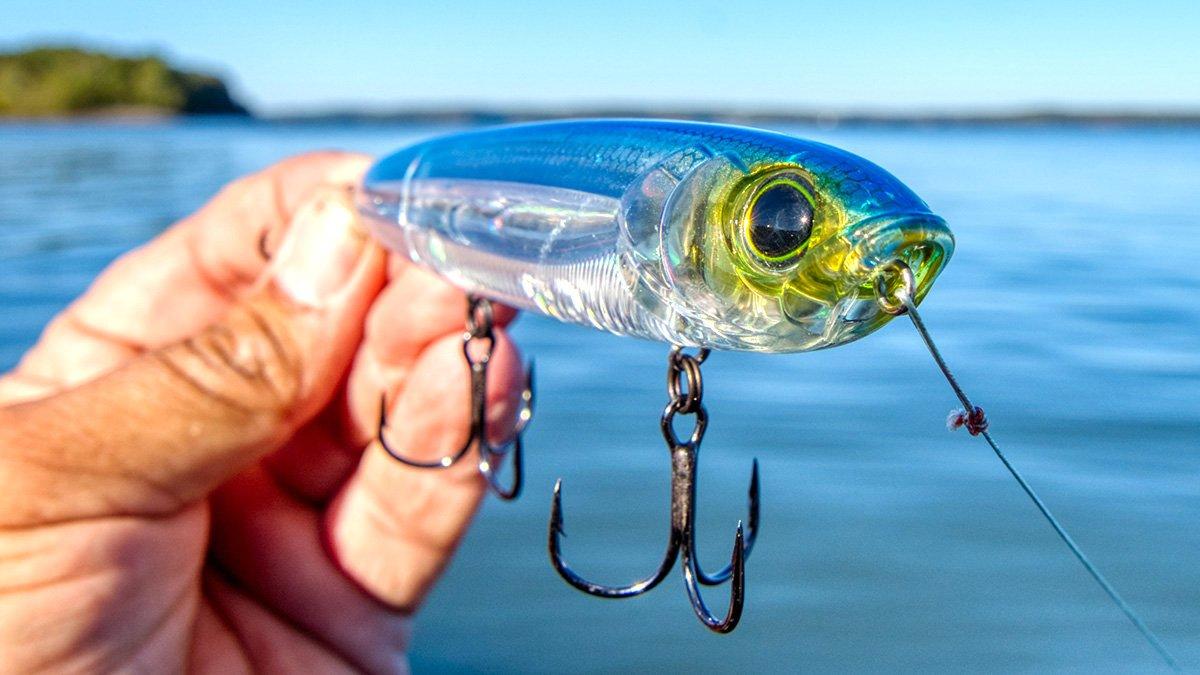
Topwater lures provide an efficient way to locate groups of fish while ruling out large areas of unproductive water. Photo by Jason Sealock.
You often will get more bites on a soft-plastic lure or jig than you will on a topwater. But quantity isn’t always the goal. Most bass anglers agree that one heart-stopping explosion on top is better than five bites on a worm. And in the summertime, topwaters can become your best option for catching bass. Warm water and aggressive, schooled-up fish create incredible opportunities, especially during low-light periods. Topwater lures allow you to cover water quickly, which is critical this time of year. But picking the right topwater for the situation at hand is half the battle. Although topwater bass baits once fit into a couple of categories, today’s bass anglers have hundreds of options available. These categories stand out for summertime success.
Don’t Miss: How to Catch Bass With Swim Jigs
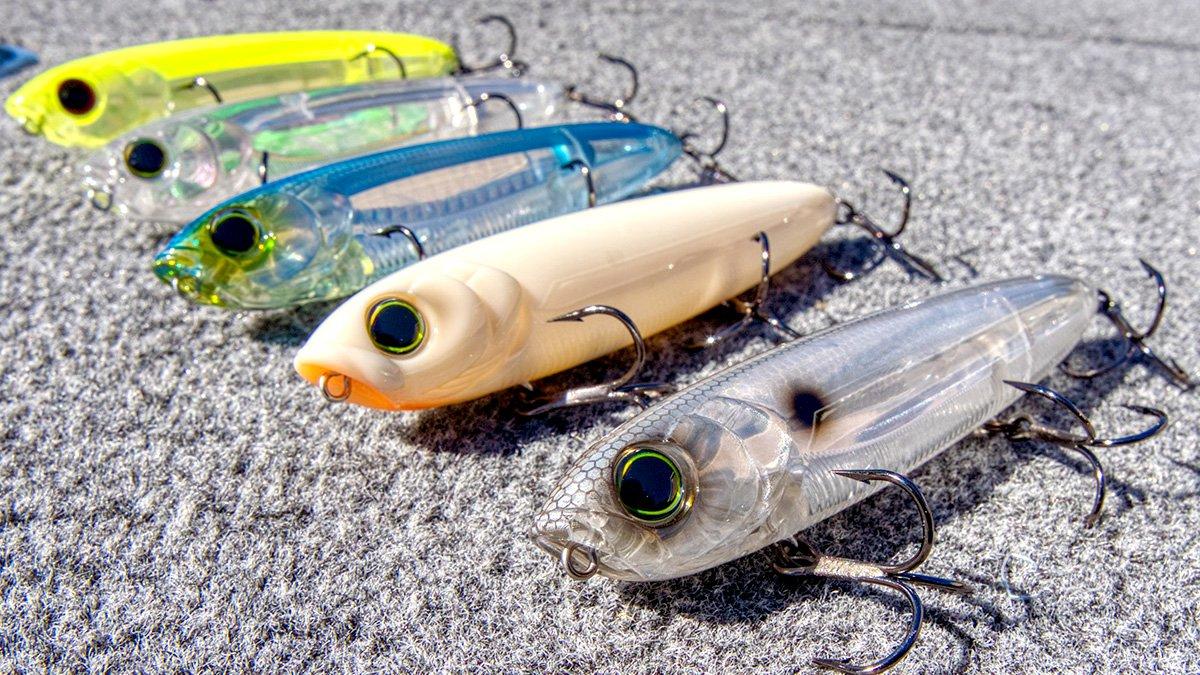
Popular walking baits let you cover water quickly and mimic various prey species. Photo by Jason Sealock.
WALKING BAITS
Let’s start with the best. Traditional walk-the-dog lures such as the Zara Spook, Sammy, and Skimmer should be the No. 1 topwater lure in your summertime tackle box. Walkers allow you to cover water quickly while still presenting a random action that mimics a variety of prey items, including bluegills, shad, frogs, and even terrestrial animals. Great colors include natural hues that imitate frogs and bluegills, but bone-white walkers have been all the rage on pro bass circuits recently. The big lures cast well, even under windy conditions, and most of them are equipped with big, powerful hooks, which is a major plus for any treble-hooked lure. When fishing walking baits, always use braided line and a long rod. That setup will allow for long casts and the best chance for controlling a big bass.
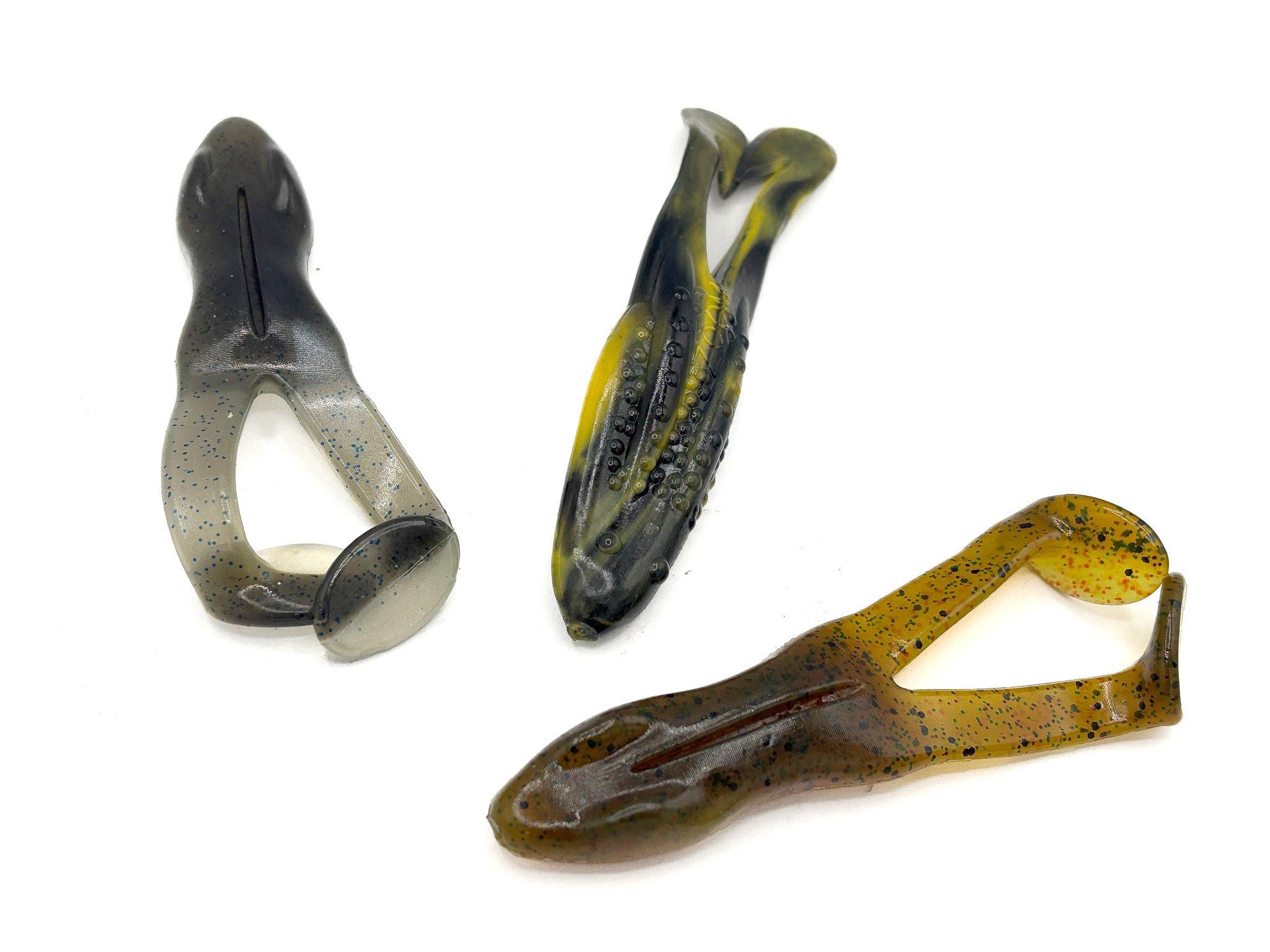
Buzz frogs require some patience with the hookset, but they’re great for fishing hydrilla and milfoil beds. Photo by Joe Balog.
BUZZ FROGS
Soft plastic, solid-bodied frogs like the Horny Toad and Ribbit allow anglers to fish over the heaviest matted vegetation with ease. Buzz frogs are easy to fish — just cast them and reel them in — and they cover water efficiently, as they’re totally weedless and rarely foul. They are the natural choice for fishing expansive hydrilla and milfoil beds. The best colors are usually white-and-silvery shad imitations or black, depending on what the bass are eating. For fishing buzz frogs, you’ll want a speedy baitcast reel and 50-pound braided line. Rig the lure on a stout 5/0 weedless hook. And have some patience, as the best tip for buzz frog fishing involves the hookset. It’s imperative to continue reeling after the strike until the bass is felt before raring back. Bass will usually hang onto these soft-plastic lures for a while before rejecting them, so take your time and connect with a good hookset.
Don’t Miss: When, Where and How to Fish Skirted Bass Jigs
PLOPPERS
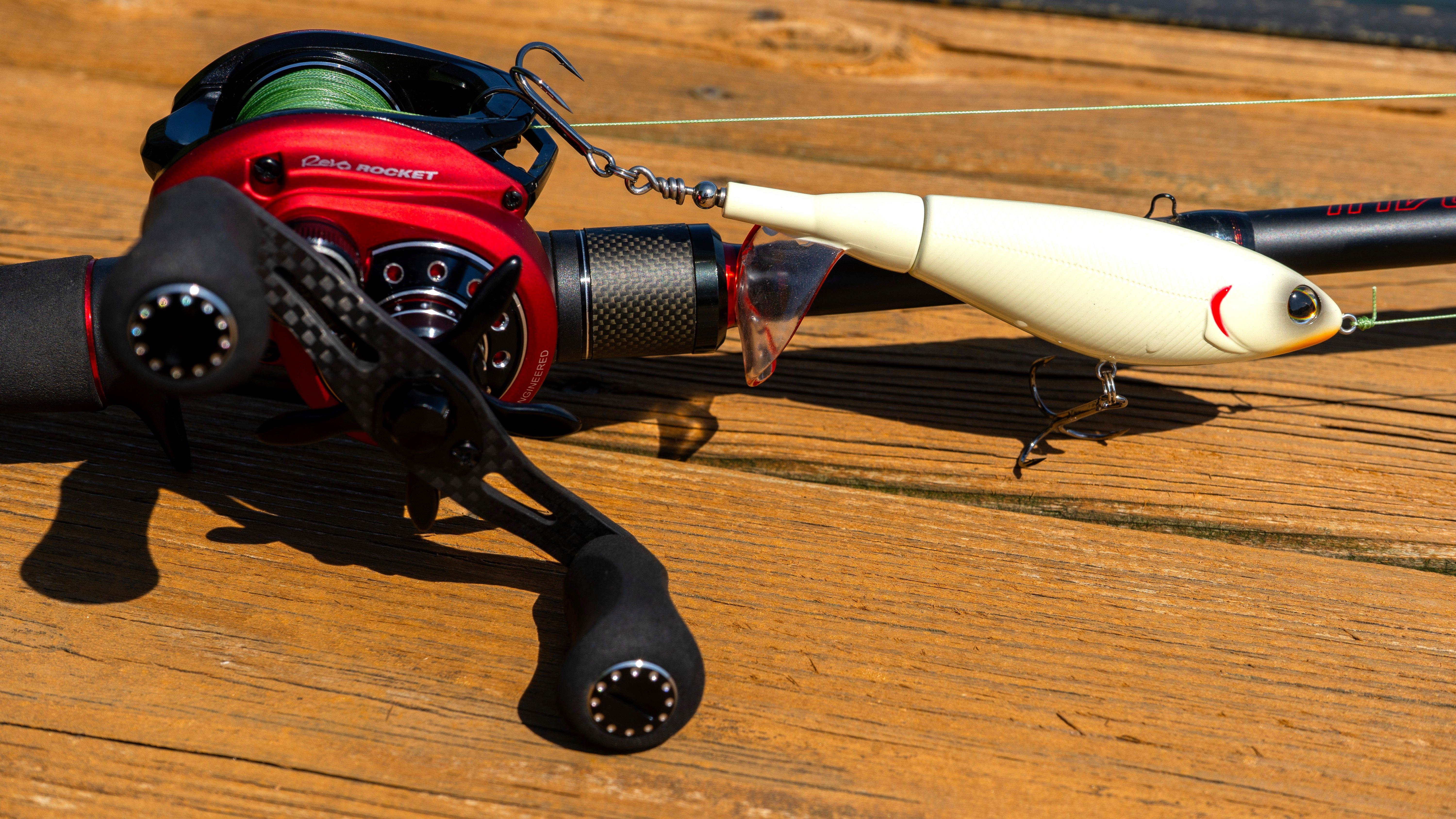
Ploppers are relatively new to many bass anglers. The Whopper Plopper arrived on the scene back in 2015, but the lure’s concept actually dates back several years earlier. It was developed originally by legendary angler Larry Dahlberg as a muskie bait, but its appeal to bass became apparent when muskie hunters kept casting it and hooking into 6-pound largemouths. Later, after ploppers became established on the bass scene, they became cult favorites among trophy smallmouth anglers. It seems anything big and mean will eat a plopper.
Today, a number of manufacturers make these unique lures, which feature a spinning rear end attached to a fixed front. They’re very heavy and can be cast a country mile. The best tackle for ploppers includes long bait-casting rods and braided line. The retrieve is another simple cast-and-wind routine. Savvy anglers are discovering unique areas to fish ploppers, including riprap banks and boulder fields for big smallies. If ploppers aren’t en vogue on your home waters, you might find their unique sound and action presents something that local bass have never seen, leading to outstanding catches for the first anglers to try them.
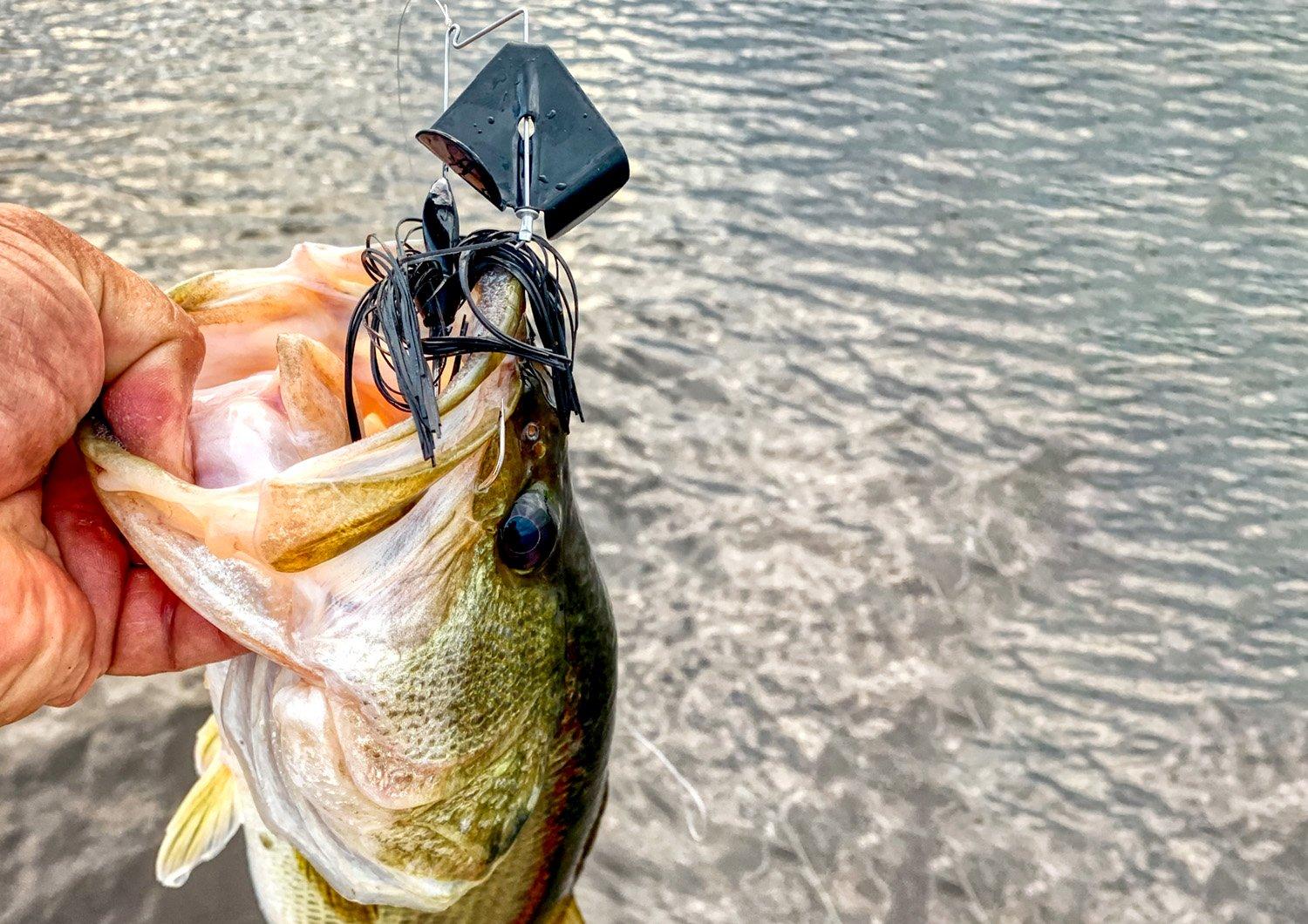
Buzzbaits have been around for decades, and bass still crush them. Photo by Jason Sealock.
BUZZBAITS
Buzzbaits have been staples in bass anglers’ tackle boxes since 1976 with the introduction of the original Lunker Lure. Buzzbaits are unique, and no one can really say what it is that they mimic from nature. But that’s not important. All we need to know is that bass — particularly big bass — will crush them.
Buzzbaits are excellent lures to fish around flooded brush, weedbeds, reeds, and even boat docks. In the early days, buzzbaits featured rubber skirts on the body. Today, many anglers remove the skirt and instead rig the lures with thick soft-plastic lures, including buzz frogs. This enables longer casts and provides a soft mouthful for bass to clamp down.
Everything about buzzbait fishing is quirky. Common thinking is that old, squeaky buzzers draw more strikes than new lures. Some anglers swear by black buzzbaits, while others use only white ones. There are single and double-propped buzzbaits, clackers, squealers, and head-bangers. All have followers who believe theirs is best.
For some reason, buzzbaits seem to catch a better grade of fish than any other topwater lure. Trophy anglers stick with them through thick and thin, although certain days and individual bodies of water seem to be better than others for buzzers. We might never know why, but that mystery is part of the fun of bass fishing.
The best topwater bite typically occurs the first hour of the day, so get out early. Photo by Jason Sealock.
These four workhorses should get you well on your way to a topwater party this summer. They provide an efficient method for locating groups of fish while ruling out large stretches of dead water. Be sure to get out early, as the best topwater bite is usually the first hour of the day. Seeing a big bass come out of nowhere to blast a topwater at dawn is well worth the early wakeup call.
Don’t Miss: 5 Old-School Crappie Fishing Tactics