5 Tips for Post-Rut Elk Hunting
Posted 2025-09-29 by
Many rifle seasons for elk don’t even begin until after the bugling is over. Here’s how to score when the going gets tough
I don’t know about you, but I have never spent an entire month, day and night, fighting men and chasing women. When I was younger I might have considered it, but the physical toll now deters me aplenty. But elk have neither the experiential wisdom nor the discernment to know the difference, and they are annually bound to this vicious cycle that — to put it plainly — is required for the survival of the species.
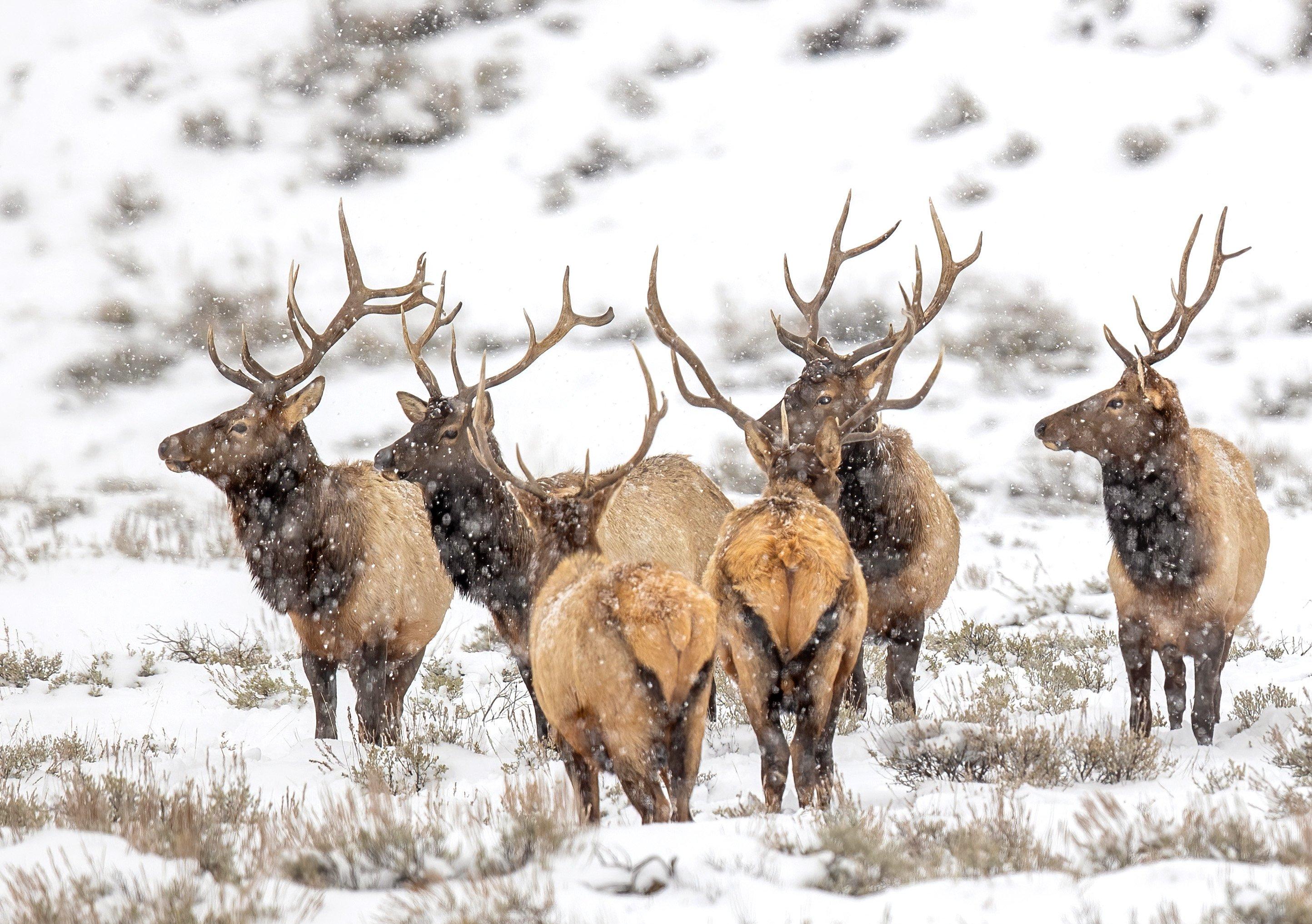
Once the rut is over, changing habits require changing tactics for a successful elk hunt. Image by Thomas Torget
Yes, it’s true that rutting bulls resemble frat boys during sorority recruitment, but once the breeding stops, they wander off into the solitude of the dark timber to lick their wounds with the same bulls they bashed heads with during the preceding weeks. This stage of the calendar falls from mid-October to mid-November, but among elk hunters it is better known as the post-rut. It’s the most difficult time of year to find a big bull, but also when hunting season is the most accessible, especially for rifle hunters, since many firearms seasons for elk don’t open until long after the rut ends. Odds are that if you ever do much elk hunting at all, at least some of it will be during the post-rut. These five tips can still help you score on big bulls even when the odds are stacked against you.
LOCATE THEIR LIFE SUPPORT
In 1981, R. Terry Bowyer published a study that showed that Roosevelt elk herd bulls only spent 24% of their day feeding during the rut, compared to 53% among non-breeding males. But once all of the cows are bred, the primary needs of dominant males shift drastically. Food and security become critical to rebuild their calorie and fat stores lost during the rut. Without either, weakened bulls likely wouldn’t survive the winter.
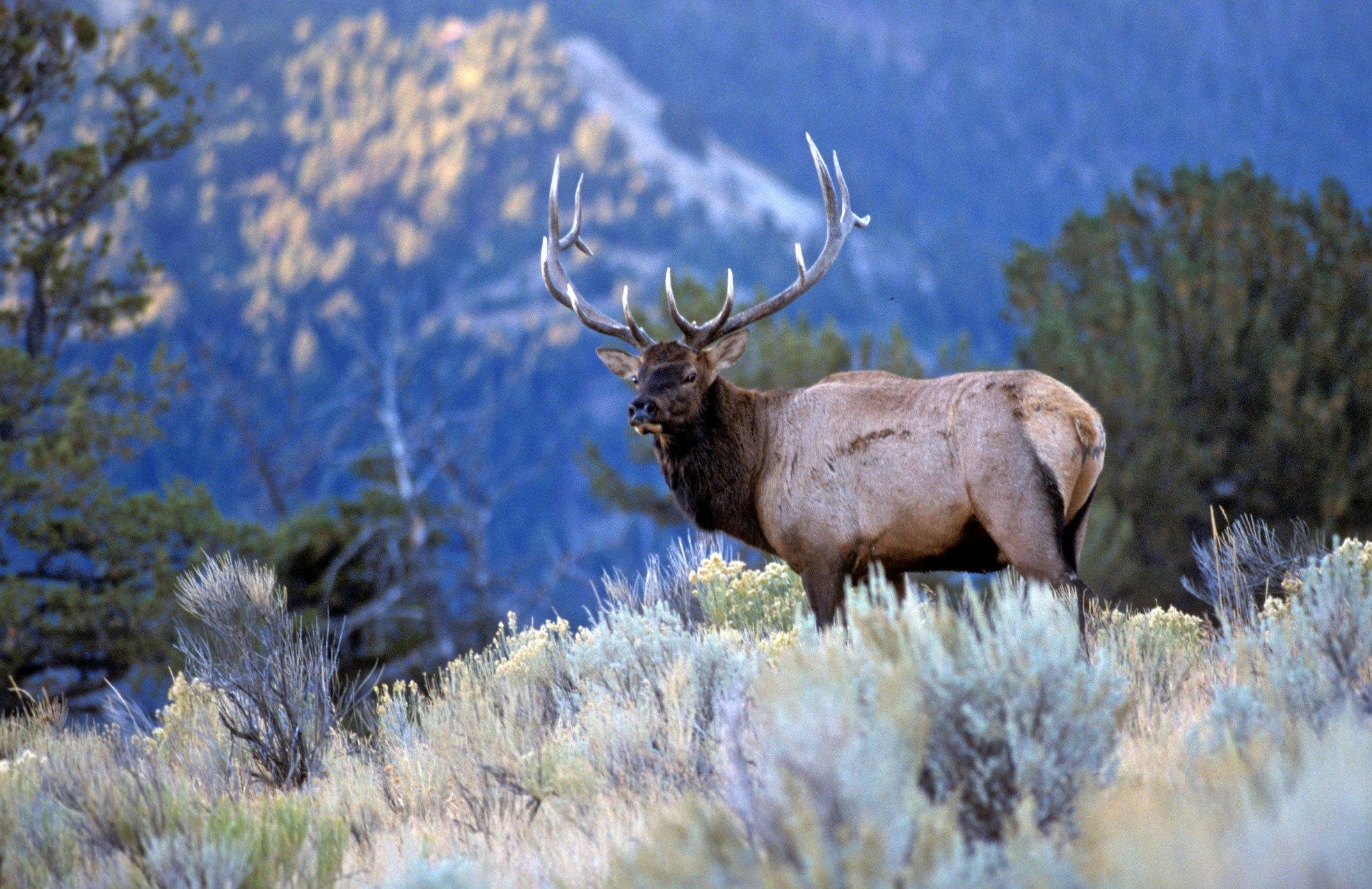
To locate post-rut elk, figure out what they are eating. Image by John Hafner
In most cases, post-rut bulls will be found at higher elevations than the herd proper and will seek areas that are sheltered from predators — namely hunting pressure. Herds of cows will dominate big, grassy meadows at daylight and dusk, but bulls will prefer more secluded areas with bedding nearby. Find spots with varied topography and good food, like avalanche chutes, burns, deadfalls, beetle kills, high basins, small parks in timber, and ridge tops with escape cover. Dark timber on north-facing slopes is a classic place to find bulls this time of year, especially in an area that’s hard to reach. If you can eliminate all of the areas that don’t meet their needs, you can narrow down a lot of country.
PINPOINT HIDEOUTS
Many places across the landscape can adequately hold bulls. Once you can locate large areas that meet their needs, knowing where to look within those areas can help to pinpoint areas of high likelihood. Elk will usually be on their feet longer into the day during the post-rut to spend more time in recovery and rebuilding fat reserves for winter. During the day, they will bed down to rest and prevent burning the calories that they so badly need.
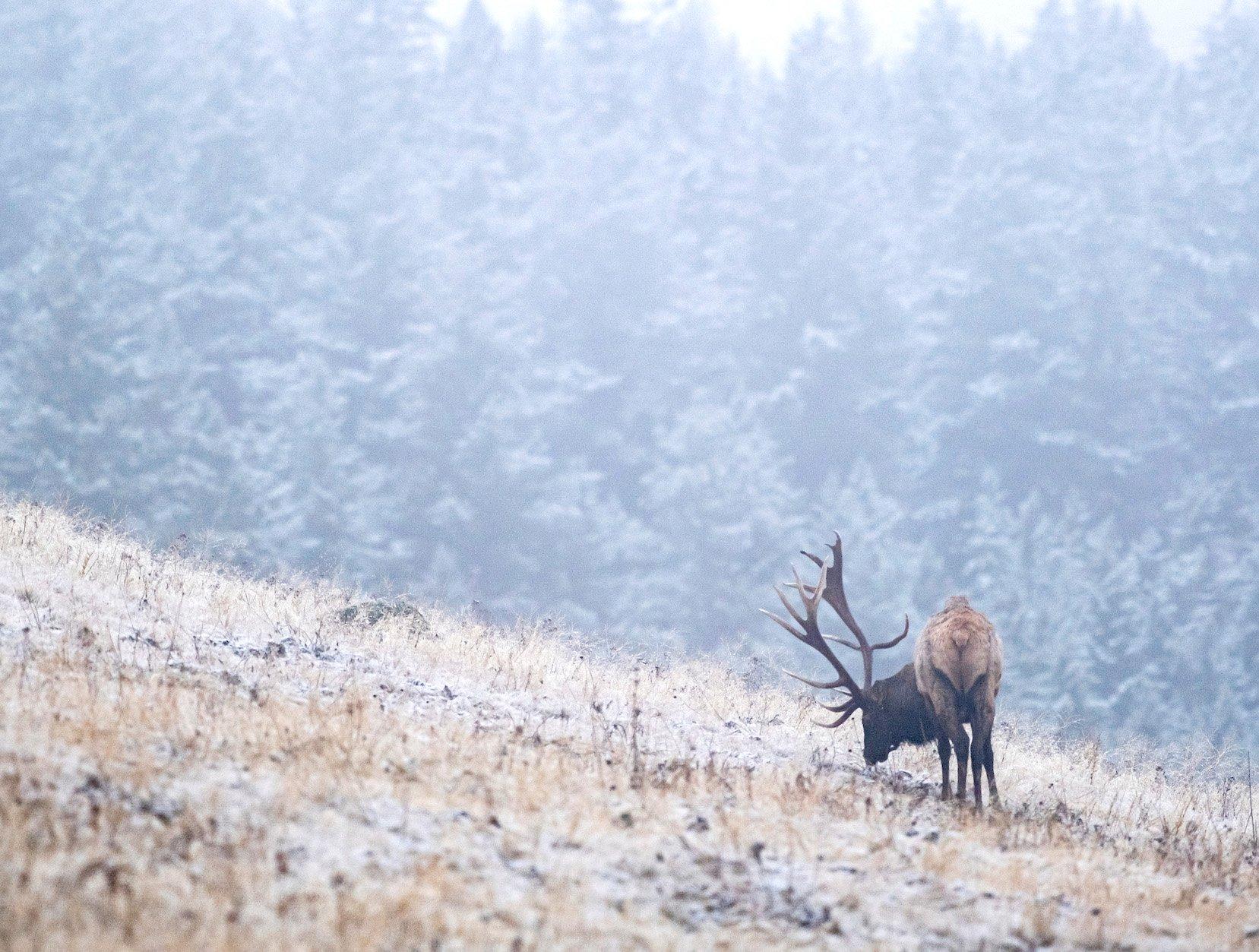
Look for high country cover and feed sources to locate late season bulls. Image by John Hafner
Find the best feed in the drainage, and you’ll probably find some elk sign. Find the best feed at the highest elevation possible, and you’ll probably find some bull elk sign. Hidden benches on slopes and wooded finger ridges are goldmines for finding elk beds. High country bowls just above dark timber can be great places to find feeding elk due to their secluded nature and good food source. North and east-facing slopes will be cooler, more hidden, and damp, while south and west-facing slopes will be more open with better feed and more sunlight for staying warm if the temperature drops. Use that knowledge to your advantage. Elk will be in different areas depending on the weather conditions. Also, don’t write off the main herd entirely. A few cows may come into a late estrus cycle and could attract a wandering bull.
Don’t Miss: 10 MISTAKES THAT’LL RUIN AN ELK HUNT
GLASS, GLASS, GLASS
Once you find areas that are likely to hold bachelor groups, focus next on finding good glassing areas. In truth, I would rather start from a good glassing spot than from a good hunting spot. Hunters can cover much more ground with their eyes than with their feet. While glassing spots aren’t always the best launching-off areas for a quick stalk, once you find a bull, he will stay in that same general area until he is forced out by weather or hunting pressure and give a hunter time to move in. However, you can’t stalk the elk if you can’t see it. Good glassing knobs should be scouted in the offseason just like you would scout for live sign.

Spend plenty of time behind glass until you locate a bull and make a plan to get close. Image by Realtree
Make sure to be in your glassing spot before daylight and after dark. To do it right, you should be walking in and out under the cover of darkness. Scan the aforementioned feeding areas at sunrise and sunset. If you find a bull, follow him back to his bedding area. In many cases, post-rut bulls will bed within a couple hundred yards of their primary feeding areas. Mark their beds on your map or phone and prepare to make a stalk. If you aren’t seeing elk, move on to your backup spots until you lay eyes on a target.
Don’t Miss: THE RIGHT OPTICS FOR EARLY SEASON ELK HUNTING
SLIP IN UNDETECTED
During the post-rut, the goal should be to glass them on their feet and follow them to their bed — a classic spot and stalk. The wind is obviously an elk’s primary tool of defense. It’s imperative to use it to your advantage. Once an elk is spotted and followed to bed with optics, plan your stalk. An effective strategy is to avoid approaching the bull from either uphill or downhill. Instead, at a safe enough distance, climb or descend the slope until your elevation parallels the bedded elk. Then move toward him while maintaining the same elevation line he is using. By doing this, you can ensure that the thermals will always be blowing uphill or downhill and always away from the elk.

Use elevation to keep thermals in your favor while slipping in close for a shot. Image by John Hafner
When approaching, move slowly, and glass a lot. I try to move about as quickly as a stalactite grows. Take a step and scan the area. Take another and scan some more. Watch for little things — an ear flicker, an antler tip, a tuft of blonde hair through the trees. Without patience and discipline, hunters can be susceptible to sloppy movements and spook the target animal. However, still hunting on a stalk is a proven strategy that will consistently allow you to move into range if you do it the right way.
Don’t Miss: HOW TO READ AND UNDERSTAND MOUNTAIN WIND
USE SNOW TO YOUR ADVANTAGE
There’s nothing better than a fresh dusting of snow during the post-rut. Elk movement is much easier to see in the trees. The change in barometric pressure will usually make the animals more active, too. An overnight snowfall can also lead to another great stalking strategy: following tracks.
If you spot an elk and begin making a stalk, fresh tracks take the guesswork out of the equation. A skilled hunter can follow those tracks right to the pot of gold. Remember, move very slowly. The elk will eventually bed, and you will eventually catch up with him. If you find a fresh cut of tracks without spotting a bull, follow it to see where it goes. If you see singular tracks in a fresh snowfall, the odds are high that a bull is close by. If you see a lot of tracks jumbled together, you probably found a herd of cows. The width of a bull track is about one and a half times as wide as a .30-06 cartridge. If the track is only as wide as the round, it’s likely a cow.
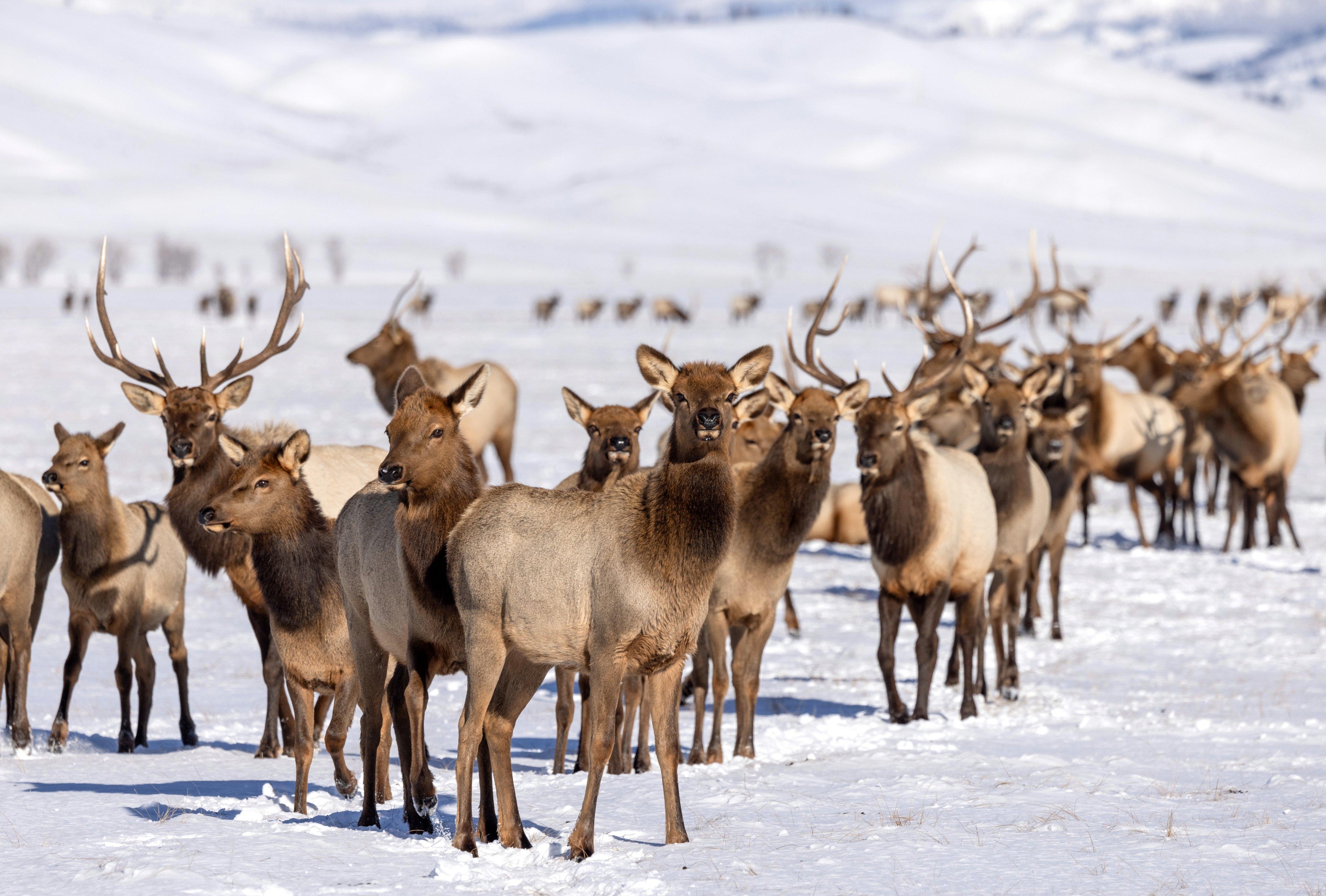
Fresh snow will concentrate elk in areas where they can more easily locate feed and makes it easier to follow fresh tracks. Image by Christy Berry
Snowfall will also help hunters narrow down an elk’s location. Elk will generally begin to migrate or move to a new area when the snowpack is about 3 feet deep. They won’t immediately take off for Florida, however. Remember their primary needs. They will descend to an area where the snowpack is shallow enough for them to find food without expending more calories than they gain. If Old Man Winter dumps a heavy blizzard, it’s probably time to start looking in lower elevations. Heck, what recovering frat boy would want to hang out in that much snow anyway?
Don’t Miss: THE 6 BEST LOW-RECOIL ELK ROUNDS