Bad Breakups: When Bachelor Bucks Call it Quits
Posted 2025-10-01 by
The transition between early season and pre-rut means the velvet is shed and buck behavior is changing fast. Here’s how it happens, and what hunters should know
One of my favorite summer pastimes is to park my truck behind the dentist’s office at the edge of town and glass the deer that graze in the field out back. A gang of five bucks usually hangs out there, like they’re in some bros-before-does fraternity. From my driver’s seat, they seem like best buds, grazing, sometimes lounging, occasionally grooming each other, and always sticking close. In a few states, bow seasons open early enough to capitalize on those lazy and predictable patterns.
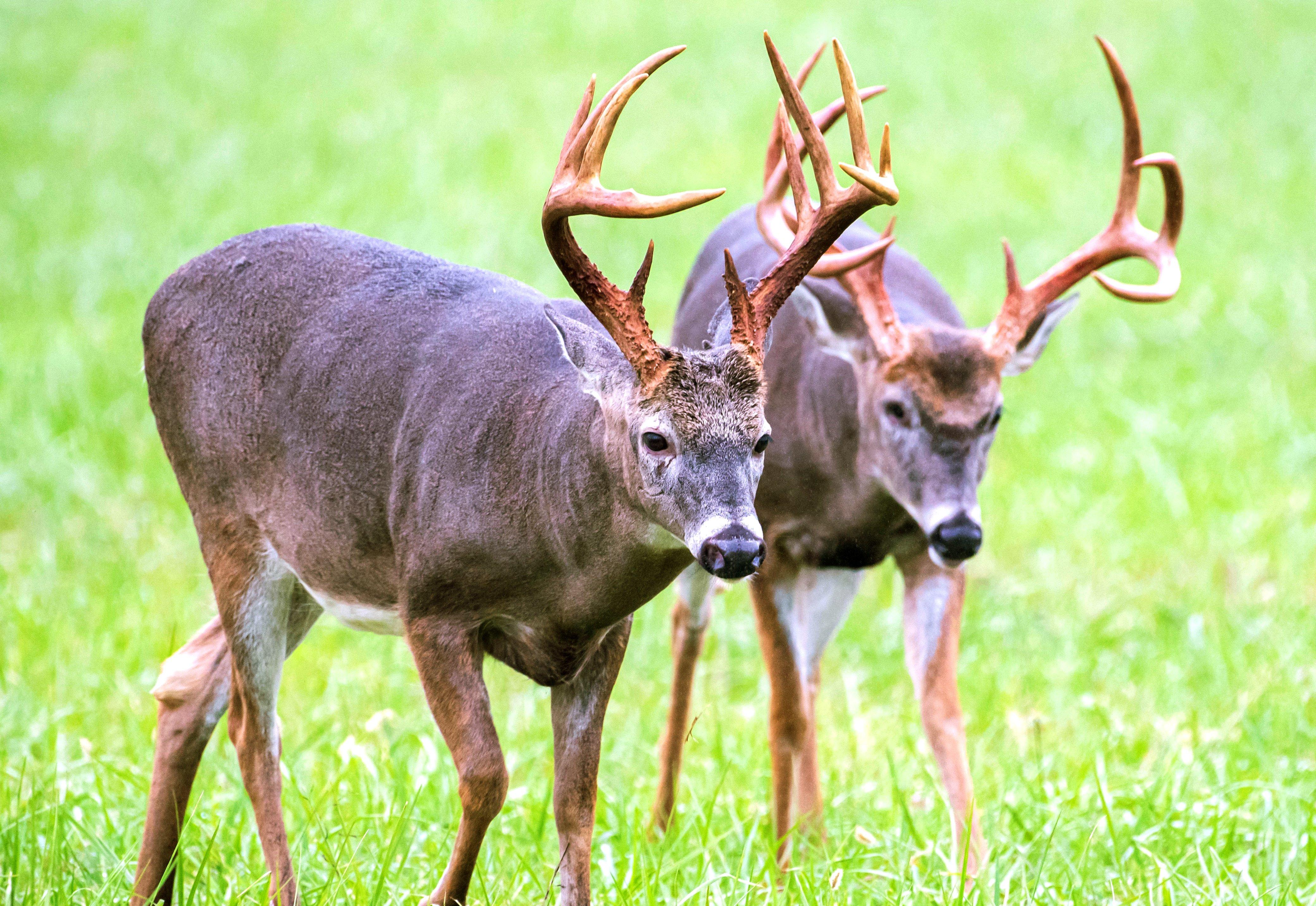
Early season bachelor groups of bucks are creatures of habit that are easy to pattern. But that changes fast when the velvet is stripped away. Image by Christopher J Barger
But as the days get shorter, summer velvet is stripped away — and bow seasons begin opening throughout the rest of the country — those once-chummy bucks aren’t quite as friendly with one another as they were just a few weeks ago. And, their behavior gets a little more mysterious and difficult to predict.
Lately, I’ve seen some cracks forming in the bachelor bond of the bucks behind the dentist’s office. A casual ear flick might turn into an antler shove, like a barroom shoulder bump that dares the other guy to say something. The bachelor pad is breaking up, and it won’t be long before those same deer are giving each other the stink eye across the crop rows instead of standing shoulder to shoulder in the beans.

Bucks that have been comfortable together all summer begin to get aggressive once the velvet comes off. Image by Karel Bock
“It’s common to observe whitetail bucks that’ve been together all summer begin to separate from each other in early fall,” says Matt Ross, senior director of conservation with the National Deer Association. In other words, the summer brotherhood is seasonal. The bucks that look like best pals in July are wired to start drifting apart once October rolls around. It’s all because of hormones, shorter days, and the hardening of antlers.
Don’t Miss: 3 SNEAKER BUCKS AND HOW TO HANDLE THEM
SUMMER BROTHERHOOD
If you like to glass summer beanfields, you’ll see plenty of bucks hanging out together like college roommates, because there are real perks to bucks sticking together. More eyes and ears mean fewer surprises from predators, and less stress makes it easier for them to grow antlers and pack on fat reserves.
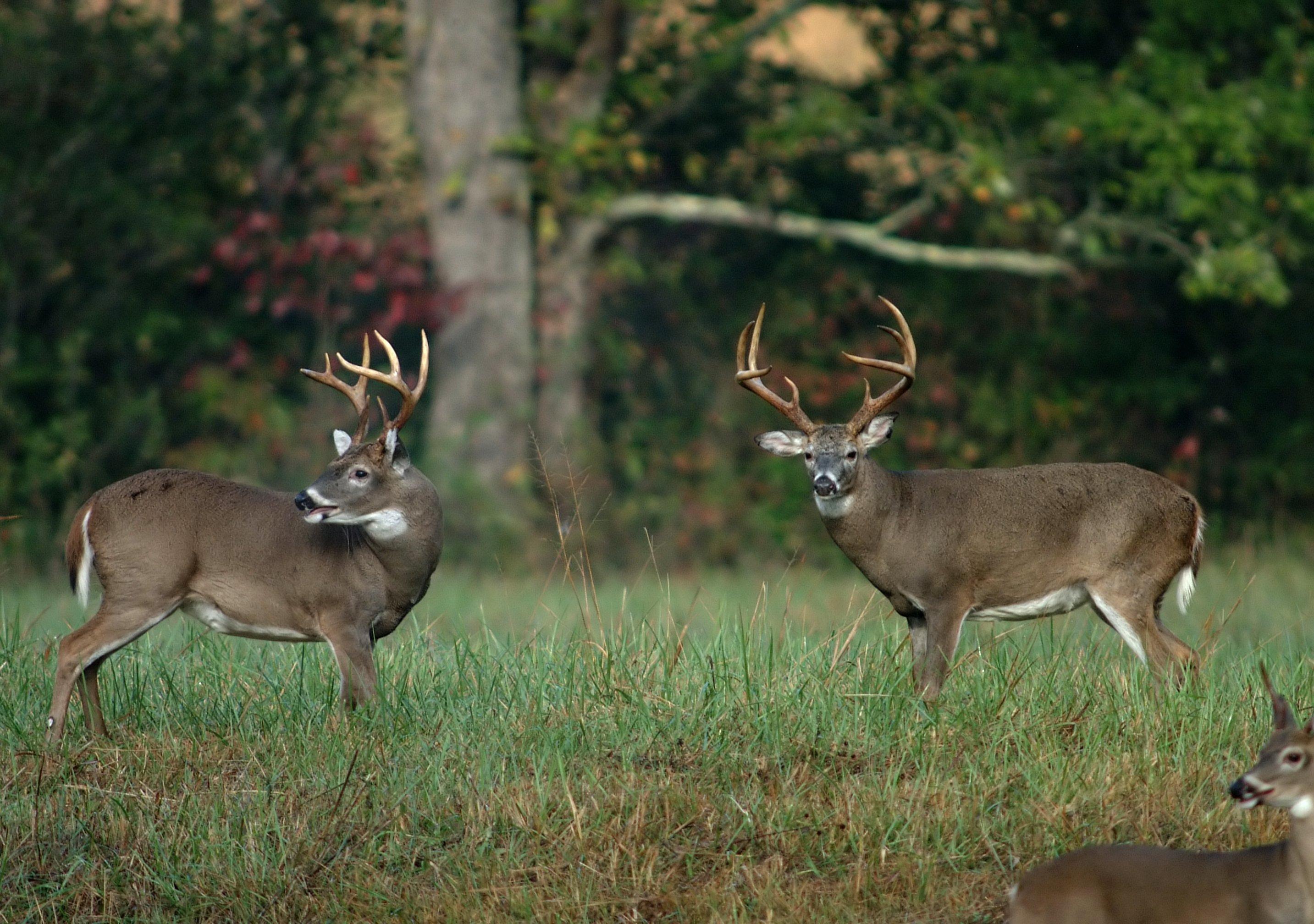
Sticking together means more eyes, ears and noses to alert the group to potential predators. Image by Tony Campbell
But their summer bromance isn’t all peace and love. Summer bucks may not be brawling like they do during the rut, but they are working out a basic pecking order. Ross says they use subtle cues like body language, vocalizations, and hoof-flailing to figure out who ranks where. By this time of year, late September into early October, the pecking order that was established early suddenly becomes a pretty big deal.
“A shift in photoperiod causes testosterone levels to rise, triggering the hardening of antlers and shedding of velvet. This hormonal change is also the main cause of bucks venturing off on their own, less tolerant of the other bucks in their bachelor group,” Ross says. The change of seasons is like Mother Nature flipping a switch. That easygoing summer vibe disappears, and bucks start getting grumpy with their buds. It isn’t personal. It’s just biology.
Don’t Miss: NO END IN SIGHT FOR DEADLY EHD OUTBREAKS
BUSTING UP THE BROMANCE
With testosterone surging, the vibe in the beanfield makes a major shift, and quickly. Those friendly summer nudges turn into something slightly more serious.
“They begin to spar with their antlers,” Ross says. “Sparring is a common activity, but it’s typically not a serious conflict and often involves bucks of differing age classes. This behavior is simply a continuation of the establishment of a dominance hierarchy that happened in the summer, as well as letting a little of that pent-up energy out.”

Once velvet comes off and testosterone rises, bucks begin to spar to establish dominance. Image by Tony Campbell
Still, early autumn sparring isn’t meant to settle scores once and for all. It’s not that serious, yet. These conflicts are more like wrestling matches between brothers, where there’s plenty of grunting and pushing, but nobody leaves the room crying. The bucks are testing and reinforcing boundaries drawn during the hot months of summer, reminding the rest of the group where they stand, and burning off a little steam in the process.
But the tone is definitely shifting. The bachelor pad that looked like a tight-knit crew in August is now a roomful of guys ready to argue. And pretty soon, those playful pushes will give way to fights where the stakes are real.
HIERARCHY IN ACTION
By the time the rut rolls around, every buck in the area has a pretty good idea of who he can push around and who he shouldn’t tussle with. That summer pecking order, reinforced through early fall sparring, keeps the woods from turning into a constant brawl.
“As the rut approaches and testosterone continues to rise, bucks gradually become even less tolerant of each other,” Ross says. “But this is a time when the previously formed ‘pecking order’ matters most. If a particular buck has already established its place on the hierarchy, a full-blown fight is unlikely.”
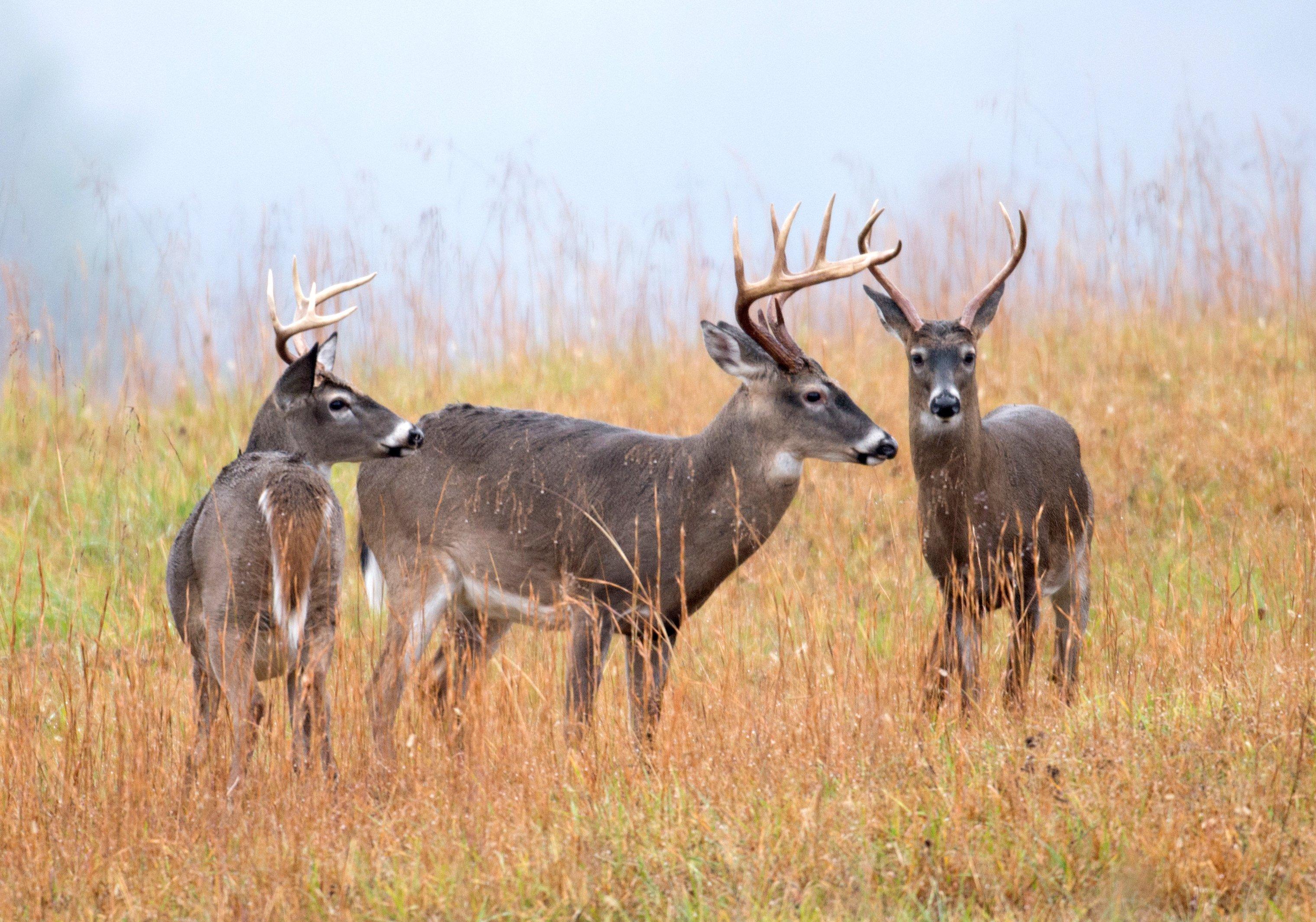
Once the rut begins, bucks already know where they stand in the pecking order, making dangerous fights less likely. Image by Tony Campbell
That doesn’t mean fights never happen. When two strangers of the same age and size cross paths, all bets are off. That’s when you see the knock-down, drag-out battles that can leave a buck with a limp or a fresh scar to put him in his place.
“Obviously, dying isn’t the goal; breeding is,” Ross says. “That’s why all that time spent figuring out their place on the ‘pecking order’ ahead of the rut is really an important survival strategy for the species. It allows most bucks to do their thing and pass on genes with minimal negative impacts. That’s why drag-down, to-the-death fights are relatively uncommon.”
For hunters, that hierarchy means the buck you watched boss others around at the end of summer is probably still the one running the show come November. And if you happen to know where he likes to hang out, you just might score a front-row seat to the rut.
Don’t Miss: 6 TENDENCIES OF BIG WHITETAIL BUCKS
THE FINAL BREAKUP
The bachelor party usually wraps up by the time the first leaves start turning, which is about this time of year in much of the country. Of course, that’s also when many bow seasons are opening, and the change in behavior can make all your pre-season glassing and scouting efforts seem like they were for nothing. Those frat-boy bucks from summer have gone solo, trading late-night snacks and shoulder bumps for a little personal space.
Still, don’t mistake the breakup for chaos. It’s all part of the survival plan. Going solo lets bucks avoid unnecessary fights, conserve energy, and make sure they’re in prime shape when the rut hits full throttle. And as bucks break up and establish new territories, they also provide new opportunities for hunters to dial into their core ranges.
Early rubs and scrapes are the first signs that the bachelor band has busted up. The dominant bucks do most of the heavy advertising, marking territory to show who’s got the goods. A younger or subordinate buck might still check out his old buddy’s scrapes, even mimic a few, but they generally stay on the edges, careful not to step on the toes (or tangle with the antlers) of the dude who put him in his place back in that hot summer beanfield.
By the time the rut rolls around, the summer buddy system is long gone. What you’ve got now are solitary, sharp-minded loners. The big boys move with purpose, mark their territory with confidence, and play the long game before the season heats up. By then, the summer bachelor pad is ancient history. Fall is a game of every buck for himself.
If it feels like your beanfield glassing went cold overnight, it doesn’t mean the bucks that hung out all summer totally disappeared. They’ve just tightened their ranges, changed their habits, and decided to go it alone. This is the time to shift the focus from those wide-open fields to look for fresh sign. Rubs and scrapes aren’t just window dressing. They’re a buck’s calling card. Find them, and you’ll know exactly where to crash the after-party.
Don’t Miss: 6 FOODS YOU DIDN'T KNOW DEER EAT