Elevate Your Ground Blinds for Increased Deer Hunting Success
Posted 2025-10-06 by
A 6- to 8-foot platform paired with a ground blind provides many of a shooting house’s advantages without the added expense and weight
I don’t like heights. I’d use climbing stands, lock-ons, and ladder stands when I was younger, but I never was happy about it. These days, I do most of my hunting either from pop-up ground blinds or permanently fixed shooting houses. Both have their pros and cons. Shooting houses are warm, waterproof, and comfortable. Most of them are on elevated platforms that provide a great field of view and maximum concealment. But they are expensive and, once they’re set, they’re hard to move.
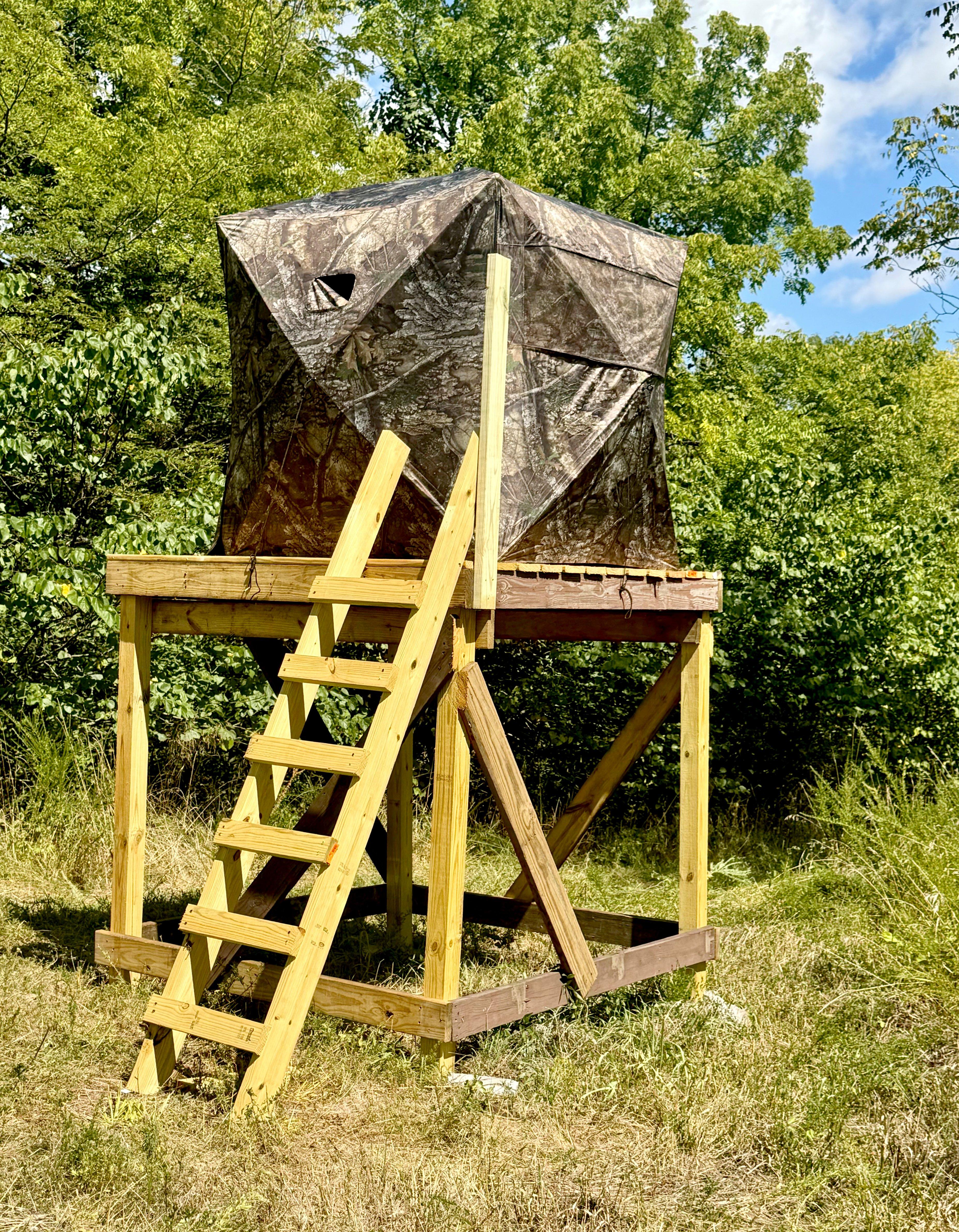
A hub style blind on an elevated platform offers many of the benefits of a permanent shooting house without as much cost and in a more portable solution. Image by author
Hub-style ground blinds are better than they’ve ever been. They’re lightweight, portable, and mostly weatherproof. One of the biggest issues with them is that they’re on the ground. Scent control can be a problem, particularly in light, swirling winds. It’s easier for game to pick you out inside, since pop-up blind windows are right at eye level. Dry leaves and limbs on the ground can create extra noise when positioning for a shot.
So, I’ve become a fan of pairing pop-up blinds with portable elevated platforms. By raising your blind anywhere from 4 to 8 feet above the ground, you get many of the benefits of a permanent shooting house while maintaining most of a ground blind’s portable advantages. Here are some good options.
Don’t Miss: BAD BREAKUPS: WHEN BACHELOR BUCKS CALL IT QUITS
THE PLATFORM
You can purchase aluminum platforms like the RTT-502 from Rhino, the Muddy 5' Blind Platform, or the Guide Gear 4x4 6' Tripod Tower and Blind if you prefer to go the pre-fabricated route, or you can build your own from treated lumber.
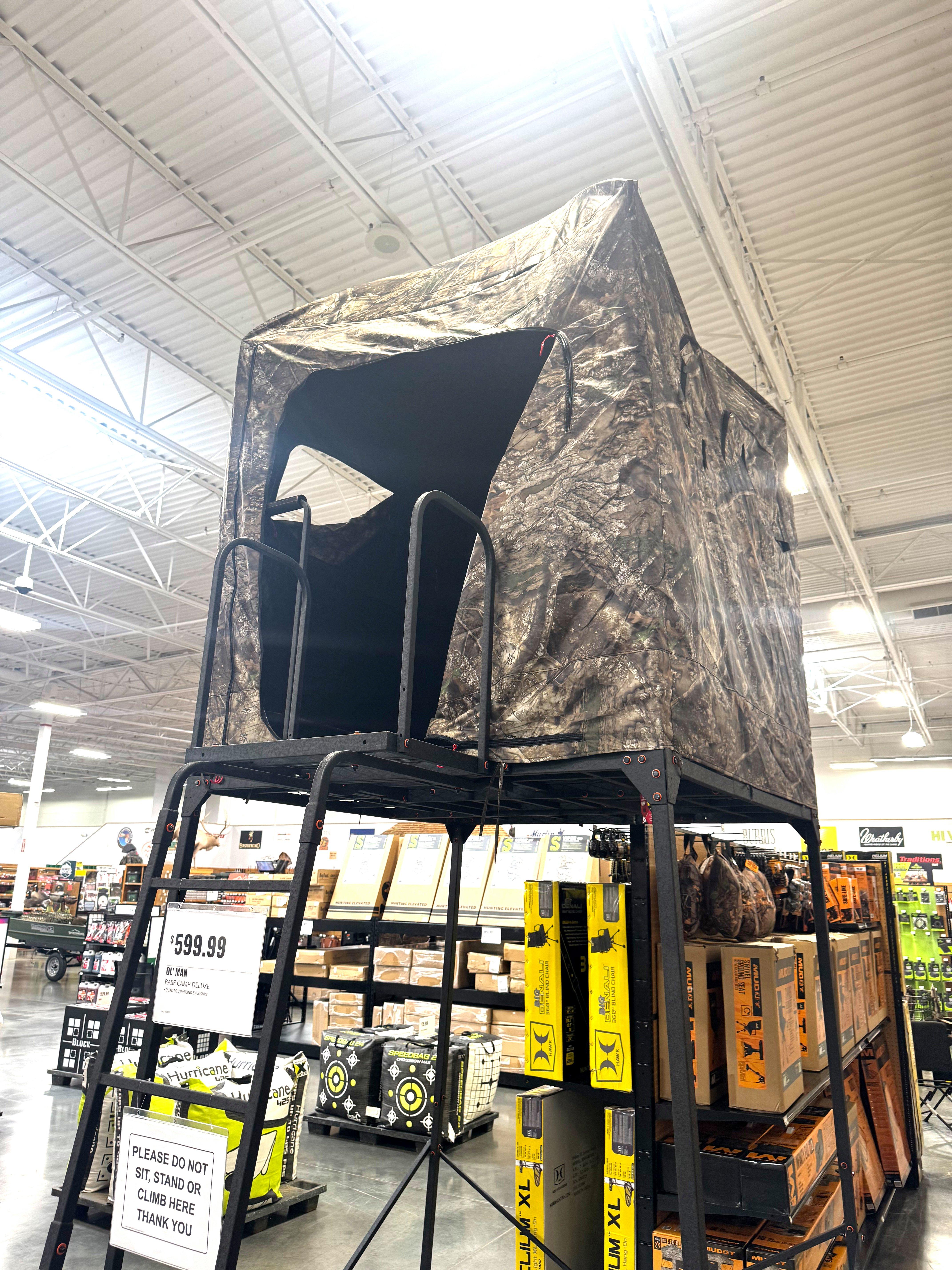
Many manufacturers offer factory built platforms in steel or aluminum.
While the aluminum models are easier to move around after construction, I do prefer the latter. The lumber needed for a 6’x6’ platform, 6 feet off the ground, comes in at a lower cost than similar sized commercial models and a well-made deck-style wooden platform just feels more solid to me.
I won’t go into materials needed or design here, since they will vary greatly according to size, weight load and weather conditions where you live, but check your local deck building codes and follow those for maximum stability.
Don’t Miss: 5 FASCINATING FACTS ABOUT BUCK ANTLERS
If you think you may want to adjust the location of your elevated platform, don’t set the legs in concrete. Build a freestanding platform so that it can be moved with just a bit of help and a pickup, tractor, or side by side. Depending on slope, you might need to do some dirt leveling with a shovel or use concrete blocks to adjust the leg height for a level shooting and sitting surface.
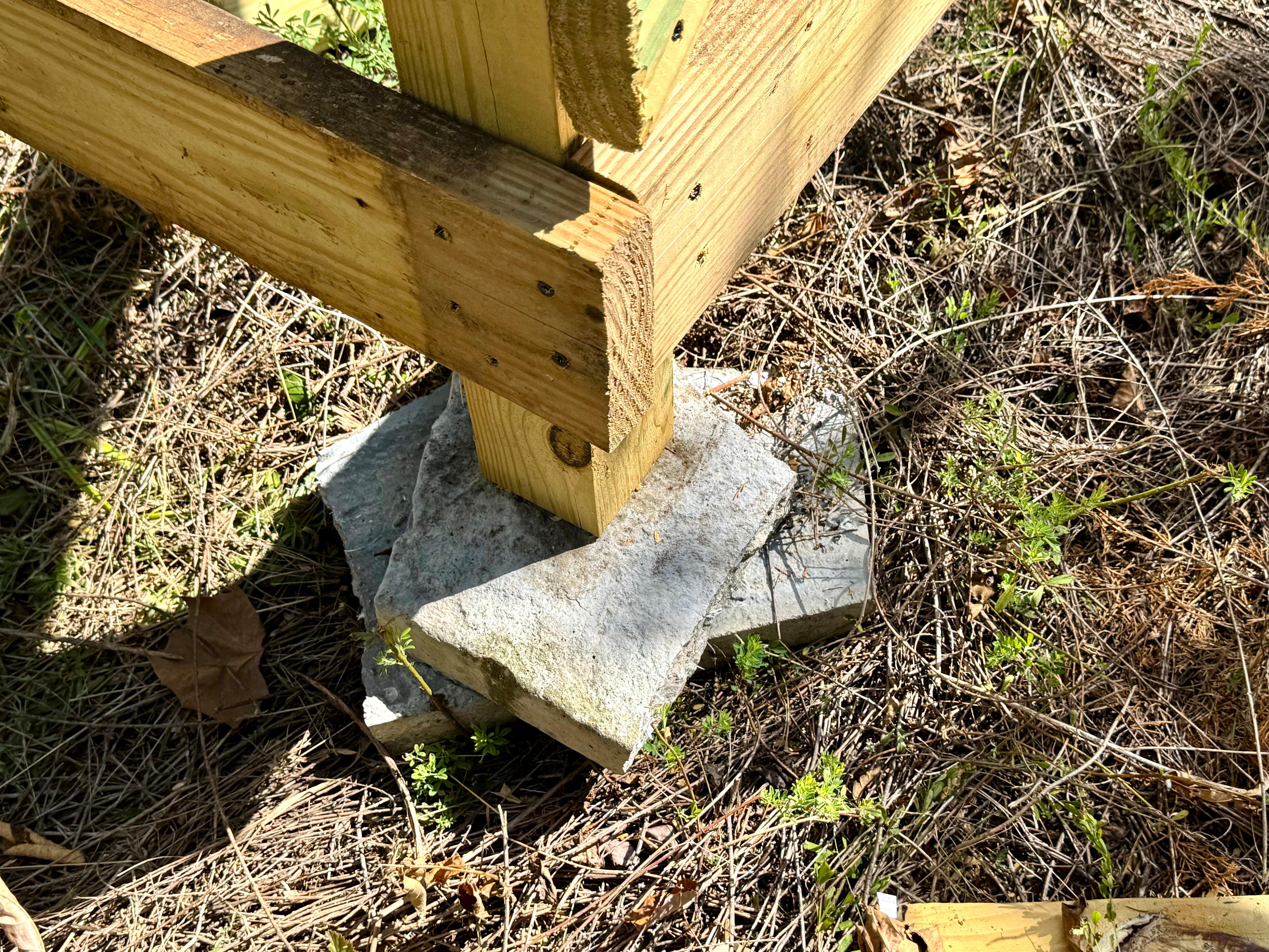
Building your blind platform level and adjusting under the legs with concrete blocks or flat rocks gives you the option to move the blind to different locations, no matter the elevation change.
In areas of high wind, it’s helpful to secure your platform to the ground to keep it from tipping over. Mobile home or playground style ground anchors secured to the corners with cable will hold tightly in all but tornado or hurricane force winds and are easy to remove if you decide on another location.
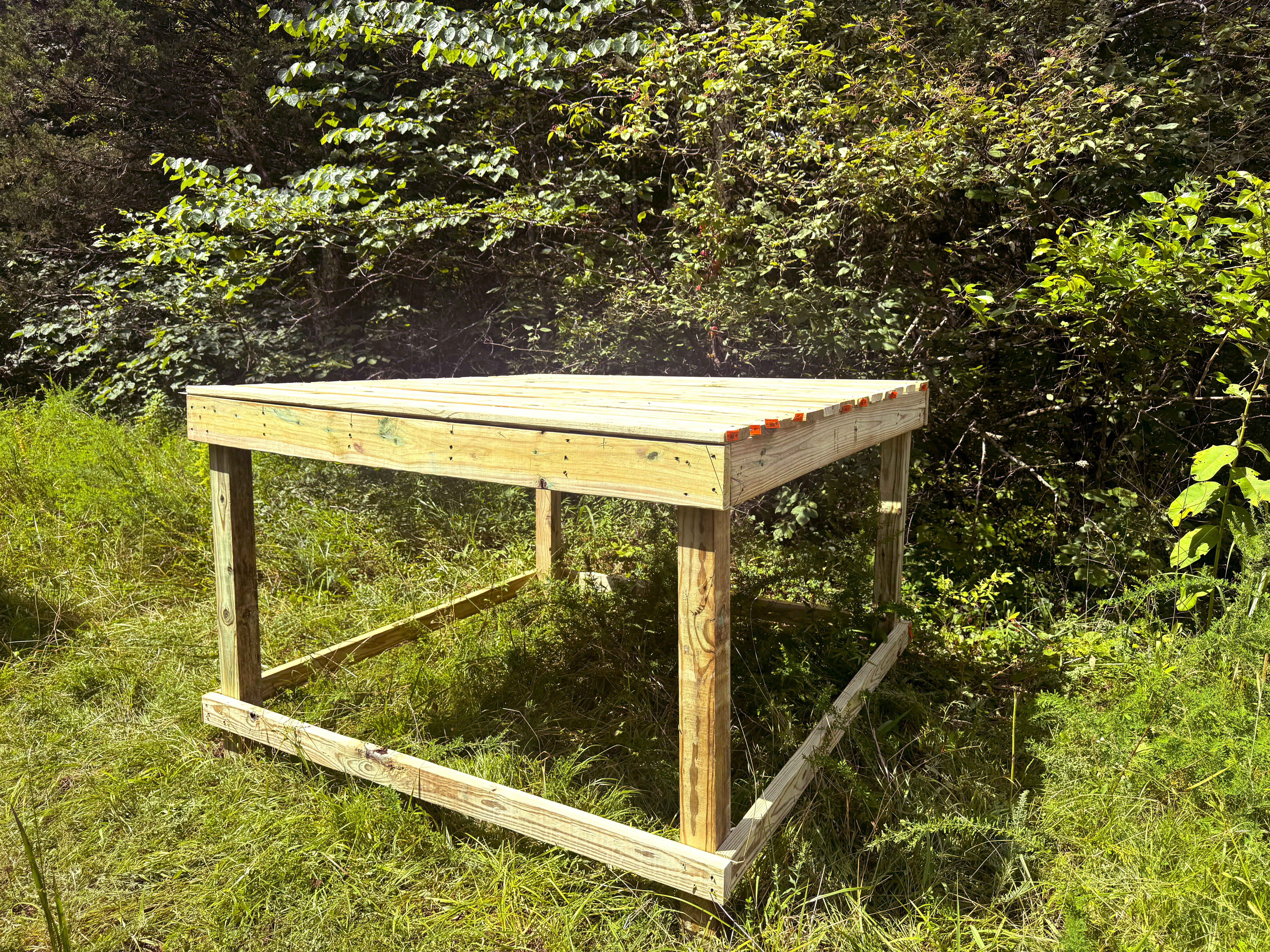
Height is up to you, but I prefer 4 to 8 feet above ground for maximum stability.
When it comes to platform size, I like a bit of extra room to make climbing in and out of the blind easy and safe. Since most ground blinds have a footprint in the 60-inch-by-60-inch range, making your platform 72 inches square gives you a nice lip to stand on when climbing in and out. The beauty of building your own platform is that you can adjust the size to your liking and to your favorite ground blind. You can also adjust the height. I usually build mine anywhere from 4 to 8 feet above ground, with 6 being the most common for my applications.
Don’t Miss: THE VORTEX VIPER HD 3000: THE PERFECT DO-IT-ALL RANGEFINDER
BENIFITS
Better visibility:
By getting above the ground and any nearby cover you get a much better view of the area around the blind.
Better scent control:
While ground blinds do help contain a hunter’s scent, being at ground level leaves you at the mercy of swirling thermals and puts your scent directly in line with a deer’s nose. Getting up in the air, even a few feet, helps to pull your scent into the more direct wind. You still need to play the wind direction, but being elevated helps to keep your scent moving in one direction instead of swirling around your blind.
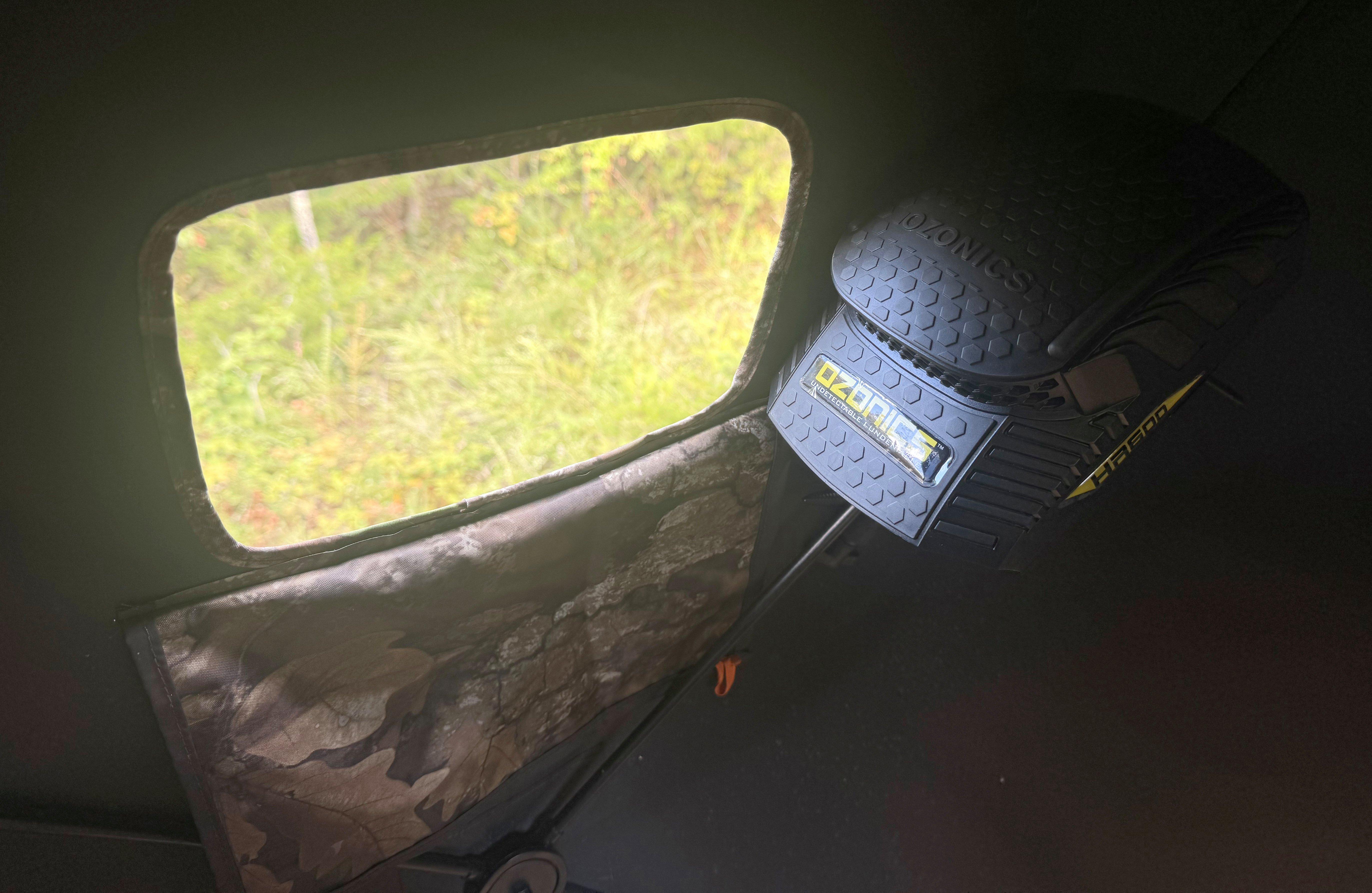
The Ozonics HR600 unit has proven valuable this season in keeping even mature does from catching my scent when they pass downwind of my blind.
This year, I’ll be employing an Ozonics HR600 ozone unit in addition to playing the wind. While effective at overcoming a hunter’s scent in a tree stand, these units shine in an enclosed area like a hunting blind by producing a cloud of ozone that destroys human scent.
Less Chance of Being Spotted:
Ground level blinds put your windows directly in a deer’s line of sight. Even with camo shoot-through windows, movement inside the blind can easily be picked out by a big buck or old doe in archery range.
Getting a few feet above the ground hides movement from ground level by changing the sight line. Deer look up to see only the solid bottom portion of the blind, allowing the hunter to position for a shot without being seen.
Better Shot Angle:
One issue I’ve had with archery hunting from a ground blind over the years is that my shots tend to be level with the deer. This sometimes results in higher than optimum exit wounds. High exits mean less blood. By shooting from an elevated position, exit wounds tend to be lower on the animal, speeding the blood trail formation.
Economical:
Many shooting houses cost $3,000-plus. I can build a 6- to 8-foot platform and top it with a high-quality hunting blind for less than $500.
Comfort:
I spend a lot of time in the deer woods. I’m also not as young and limber as I used to be. My knees hurt, so does most of the rest of my body. Comfort is crucial these days. A nice chair on a solid floor makes spending an entire day in the woods a breeze. Add in a small propane heater on a cold late season day and an elevated blind is a great way to spend your time in a deer stand.
TIPS:
-Get your blind out at least a couple weeks before you plan to hunt.
An elevated blind is more noticeable to a deer than one you brushed in at ground level. But deer do get used to them quickly, same as permanent shooting houses. I’ve put up new platforms and blinds and had mature bucks and does both on camera well within archery range just two days later. Get it out a couple weeks before season then stay out of the area. By the time you climb in to hunt, even mature deer will be used to the blind and pay little attention to it.
-Use treated lumber.
While much more economical than commercially produced hard-walled shooting houses, these platforms are still an investment and you want it to last for several years of safe hunting. Treated lumber will stand up to the elements without decay much longer than untreated.
-Play the wind.
Even with an Ozonics unit in the blind, I still want to be down wind of my target. Since these elevated blinds are economical, I’ll sometimes place two or three in close proximity on opposite sides of the main deer trails. That way I can hunt the best location for the conditions.
-Safety first.
While you may not be as high up in a tree as you would in a lock-on or climber, a fall from 8 feet up will still hurt. And the doors on some ground blinds will make even a limber person beg for mercy. As mentioned above, give yourself a little extra room for climbing in and out. I also add an upright hand rail where the ladder meets the blind platform to hold onto when transitioning from one to the other and bending over to climb inside.
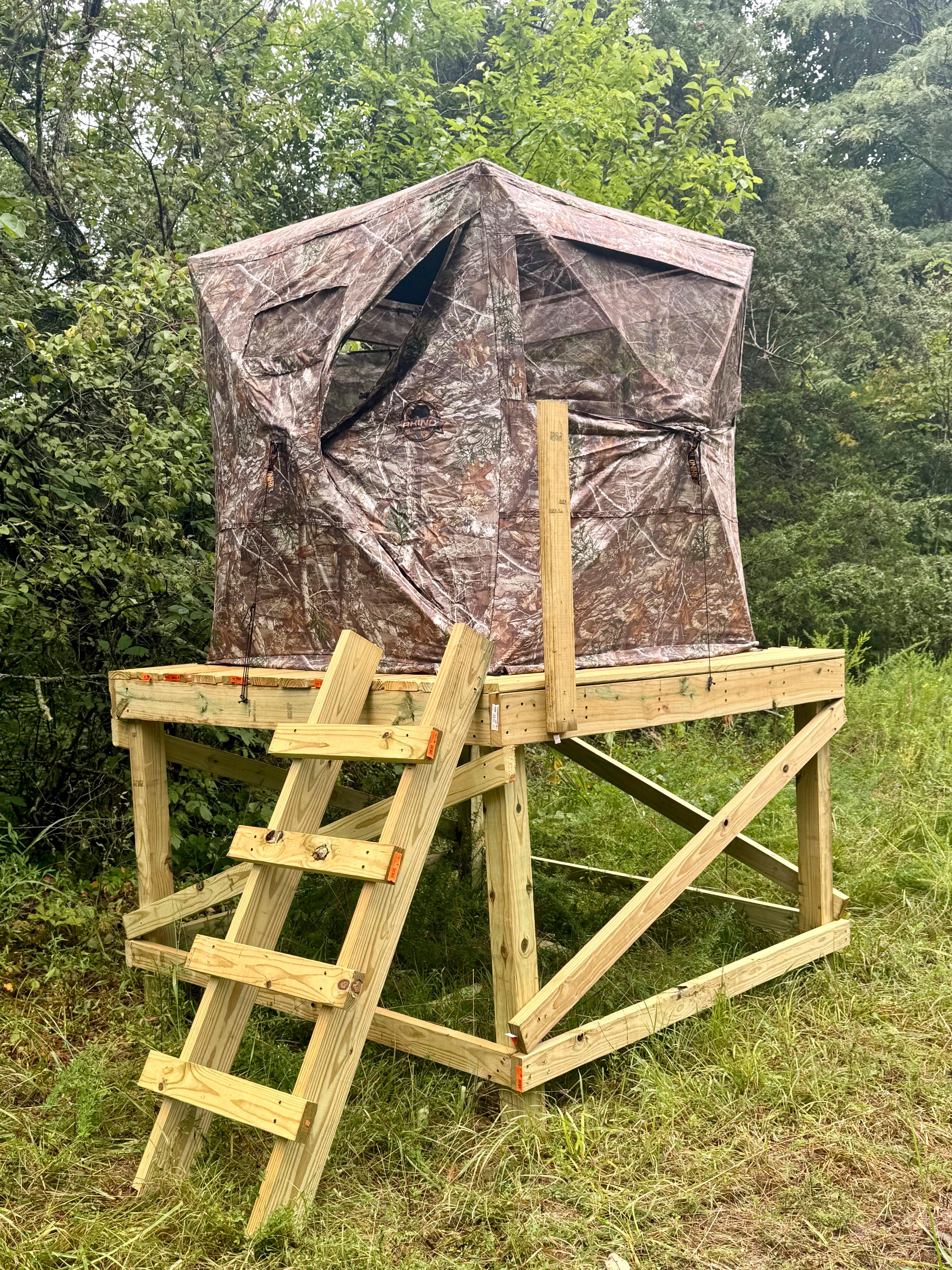
A hand rail at the top of the ladder improves safety and makes an easier transition from ladder to blind.
-Secure your blind.
Being several feet above ground exposes it to higher winds without much surrounding cover to provide protection. Secure your blind by screwing the corner loops directly to the wood. I also drop the guide lines straight down and screw them directly to the platform. The combination will keep your blind in place in even the worst storms.
-Extend the life of your blind.
While today’s blinds are better constructed than those of the past, they still break down in sunlight and weather. Remove your blind before heavy snow storms and once season goes out and store it inside, out of the elements.
If you join me in an aversion to being higher above the ground than a creature without wings should ever be, but don’t enjoy the closeness of being on the ground just yards from your quarry, give an elevated platform a try. It provides the best of both worlds, and can be built to your needs while saving a pile of money in the process.
Don’t Miss: 5 REASONS WHY TARGET BUCKS VANISH