
Night Shift | Catching Channel Catfish After Dark
Posted 2026-06-26 by
From a boat or the bank, catfishing at night is one of summertime's best traditions
When I was a boy, growing up in the Midwest, nighttime catfishing was a summer tradition, like hot dogs on a charcoal grill. It’s just the way things were done. Today, we know more about channel catfish than ever, and daytime fishing is often just as productive as cattin’ in the dark. But there’s something about a cool summer evening that, to me, still smells like catfish.
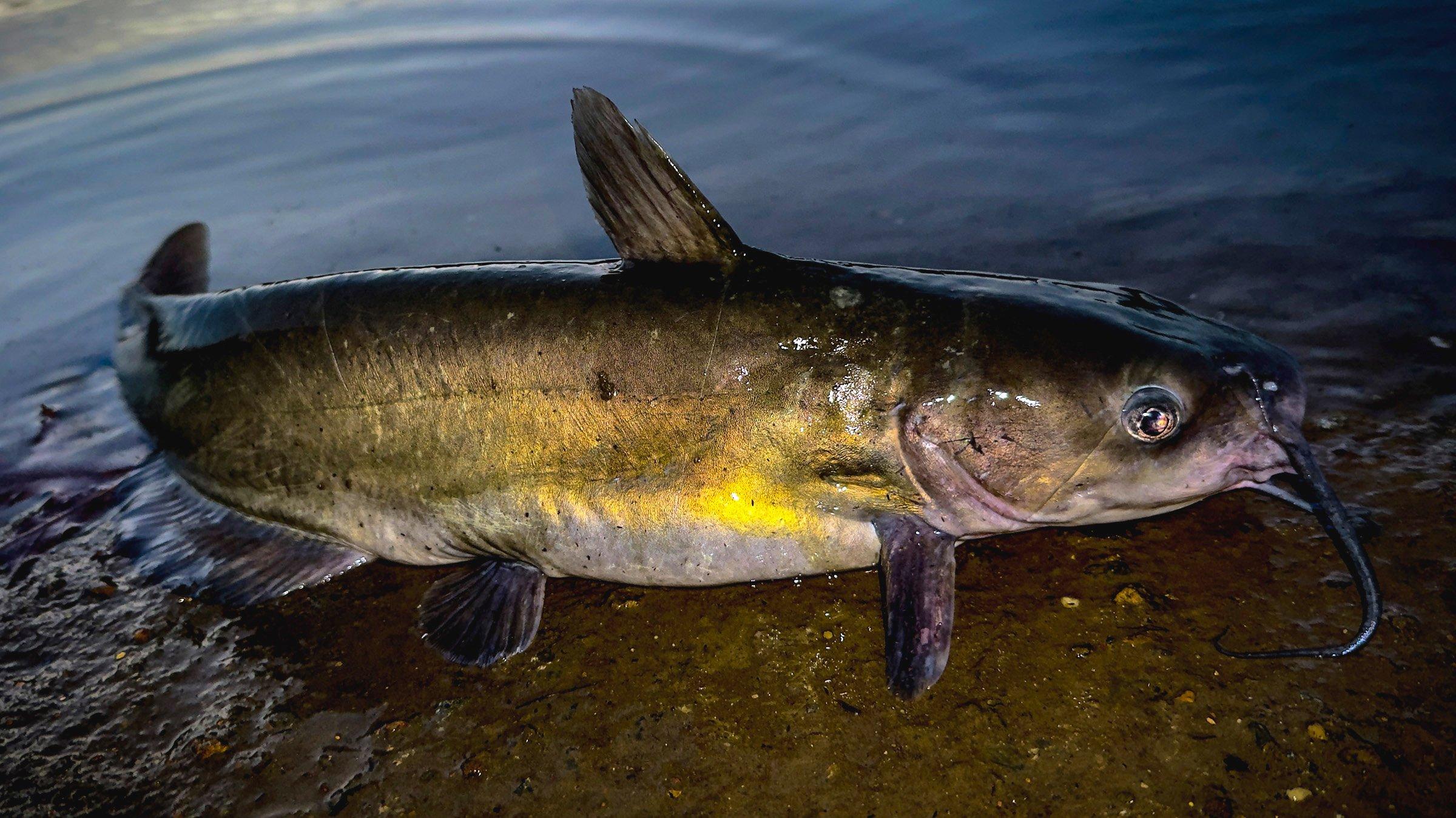
When many anglers think of catfishing, they think of nighttime forays for summertime channel cats. Image by Jason Sealock
I’m no catfishing expert, but I’ve always caught enough of them to scratch my itch and produce a few good meals. That’s the best part of the sport: sophistication and a wealth of knowledge aren’t necessary for success. A few guidelines, though, should always be considered:
FROM BOAT OR BANK, LOCATION MATTERS
The old adage repeats itself: you can’t catch fish where they’re not. In the case of any form of still fishing, it’s imperative that your targeted quarry is within range. For channel cats, be sure to place your baits in areas where shallow flats meet deeper basins. Moderate water flow, in the form of natural river current or a wind-swept shoreline, is mandatory. Avoid stagnant, dead-end coves or canals.
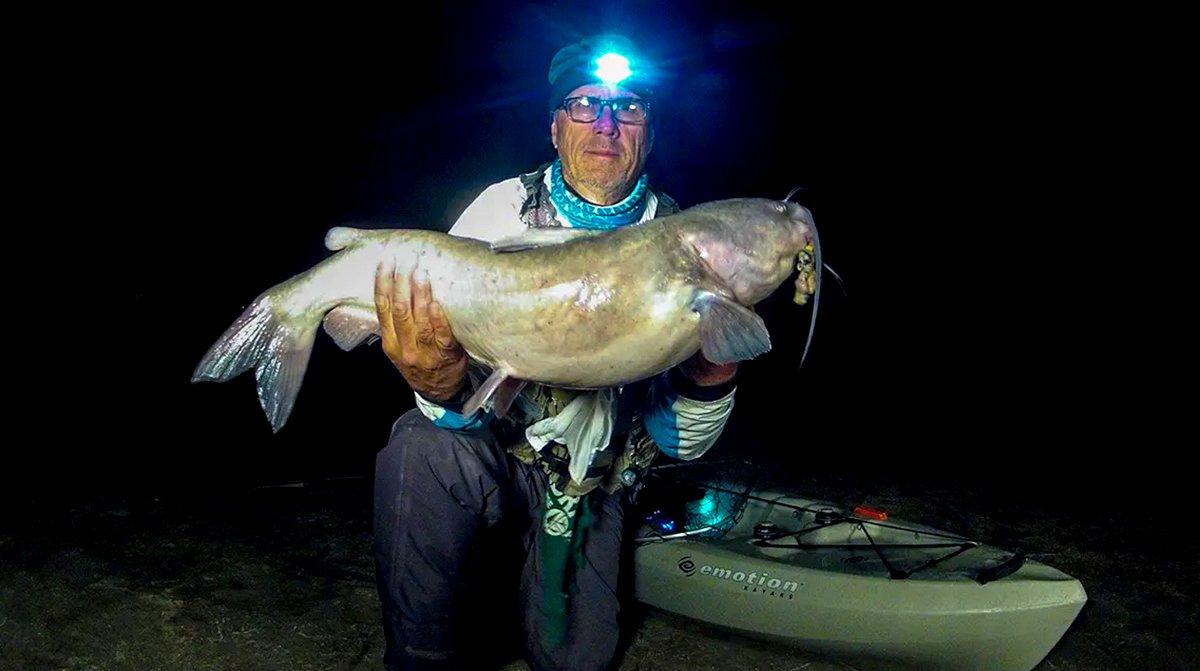
You don’t need a big boat for summer channel cats. Bank or kayak fishing can be just as effective if you find the right location and water conditions. Image by Jason Sealock
Channel cats are effective predators, but also opportunists. They’ll eat a live shad and a dead one too in the same night, plus a few freshwater mussels and maybe a crawfish. They’re roamers that feed best along edges with soft bottoms and ample shallow cover. The edge of a weedline or open water adjacent to a lily pad-filled bay are ideal places. Shallow sandbars abutting deep river holes filled with brushy snags are worth checking as are long, tapering points at the mouths of major coves. Don’t be convinced you need to fish the deepest, most remote catfish hole to be successful because that’s not the case at night. But do have deep water nearby.
SCOUT DURING THE DAY
The best way to find productive areas is to scout during the day. Obviously, using quality electronics in a boat shortens the learning curve. But if you’re a shoreline angler, daytime recon can be equally helpful. A quick depth check can be obtained by casting a heavy sinker from a productive-looking bank to get a feel for the proximity of main lake basins. Topo maps aid in the search as well. It’s important for shore-bound cat fishermen to prep their chosen fishing spot. Pick a place clear of brush, or trim it yourself. This will pay off dividends when casting in the dark.
Don’t Miss: 5 OLD-SCHOOL CRAPPIE FISHING TACTICS
TACKLE AND RIGGING
Catfishing tackle is basic but effective. For an all-around winner, pick a 7-foot, medium-heavy-power baitcaster paired with a level-wind reel. Classic cat gear involves a bait-clicker, and for good reason. Often a fish will ease off with your bait unexpectedly, and the clicker never lies. A quick tip for fishing baitcasters at night: tighten up on the cast control and magnetics. Your heavy catfish rig will cast easily, and chances are wind won’t be an issue at night. Backlashes in the blackness are no fun at all.
If you insist on spinning gear, consider a “bait runner” model that allows line to peel off when activated, but tightens up when you begin reeling.
Spool your reels with moderate monofilament or braided line, but understand that overruns or knots in braid can result in game-over problems. Fifteen-pound mono is forgiving and tough to beat. And don’t forget rod holders if you’re fishing from the bank. You’d be amazed at how hard it is to find a good forked stick at a popular catfishing hole.
Terminal rigs consist of everything from three-way swivels to Carolina setups to simple split shots. You’ll want your rig settled on the bottom, but there’s no use in overdoing it. Use just enough weight to hold, and a leader long enough to allow the bait to sweep a bit in the current.
Slip floats are deadly sleeper rigs for nighttime cats. Again, it’s best to prep a bit during daylight because you’ll want to set your float so the bait is just 6 inches off the bottom. A moderate flow or light breeze will move your bait around thanks to the float, allowing you to methodically fish large areas. When things are right, slip-float systems will perform better than any other rigging method.
Don’t Miss: DO SCENTED BASS BAITS REALLY WORK?
BEST BAITS
The top bait for nighttime channel cats is a chicken liver. Or is it a hotdog? Or nightcrawlers? Searching the internet for productive catfish baits results in thousands of returns because, at times, everything works.
As I stated earlier, channel cats are opportunistic feeders and — when feeding — will eat most anything. But, just like any fish, channel cats aren’t always grocery shopping so sometimes they need to be tempted. Day in and day out, a real winner is a piece of a fresh cut fish, with oily fish being the most popular. In your part of the world, that might mean gizzard shad. Asian carp and skipjack herring have local followings of their own. In any case, when using cut bait at night, it’s best to prep in the daylight by cutting it into bite-sized chunks and soaking the fish in its own blood for use later.
Stink baits and dip baits have a big following in today’s world of channel catfishing, and rightfully so. This method has come a long way since my boyhood days of the “Little Stinker” goo. Prepared cat baits are a science, effective and user-friendly. They’re worth a shot.
Finally, if using chicken livers, do yourself a favor and cure them out first. This can be done with a heavy dose of garlic salt and a few hours in the sun, or by using commercial curing compounds. The end result will be a liver that stays on the hook longer and is equally effective at tempting cats. Just remember, no matter what bait you pick, another cat-angler will swear theirs is better. I once fished with a guy — in the Midwest, mind you — who used nothing but octopus, and he smoked me.
Don’t Miss: 6 WAYS TO CATCH YOUR OWN LIVE BAITFISH
NEVER LEAVE BEHIND …
The first time you go fishing at night, you’ll realize just how many obstacles you take for granted during the day. Take bugs. You’ll need a heavy dose of bug juice when cattin’ in the darkness. Thermacells help, too. Be sure to have a headlamp and area lamp if you’re with a group. Chances are, when you need a light, both of your hands will be tied up working on whatever you need a light for.

Don’t forget a headlight for hands-free use and some bug spray or a Thermacell for insect control. Image by Dmitry Sedakov
Pliers are mandatory; always keep them attached to your belt with a lanyard. That the best way to find them in the dark. And don’t forget a stringer if you intend to keep a few fish.
Finally, prepping an area for a small bonfire adds to the ambience of nighttime catfishing and makes a trip with friends unforgettable. Bring marshmallows for s’mores.
If the stink bait isn’t working, I hear catfish love ‘em.
Don’t Miss: GET SMASHED: 4 GREAT TOPWATER BASS BAITS